Part II of a three-part series
The best part of the economic stimulus package moving through Congress is that it calls for a significant down payment on a new energy economy. One of its weaknesses is that it doesn’t give the American people a clear, exciting vision for what that new economy can do.
The stimulus package is clear on goals. The bill passed by the House last night talks about developing clean energy, transforming the economy with science and technology, modernizing roads, lowering health care costs, helping workers and investing in education.
But are those goals descriptive enough to show how the new energy economy will improve the fabric of our lives or how the benefits to our children are worth the mortgage we’re taking out on the future? I don’t think so.
The stimulus needs compelling themes that make clear how tomorrow will be better than today and how every American can answer President Obama’s challenge that we all do our part.
Here are some suggestions:
Revitalizing Rural America: Rural America has been the orphan of the economy for generations. I can’t think of any other sector that has given us so much and prospered so little. But the new energy economy offers the potential for rural America to become our wealthy new Persian Gulf and our principal source of profitable carbon sequestration services.
Wind farms already are providing new jobs, tax base and income in parts of rural America. In the new energy economy, renewable energy production will join the production of food and fiber as the three legs of rural prosperity. Wind farms, solar farms and locally owned biorefineries, and the conversion of agricultural wastes to energy all will provide new industry. Dedicated non-food energy crops will mean new markets and income for farmers. Careful husbandry of private forest lands and responsible cultivation of soils will help America keep carbon out of the atmosphere, and farmers will be paid for that service in a growing carbon market.
The stimulus package moving through Congress allocates billions of dollars for renewable energy generation and transmission, grants and loans to rural small businesses; and economic development assistance. The Presidential Climate Action Project is among those who have conjured up all sorts of additional ideas for federal policies and programs that would pump blood back into rural America.
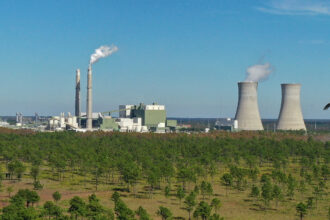
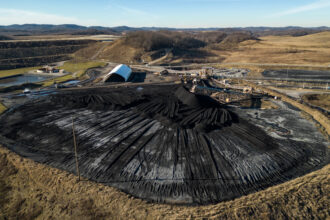
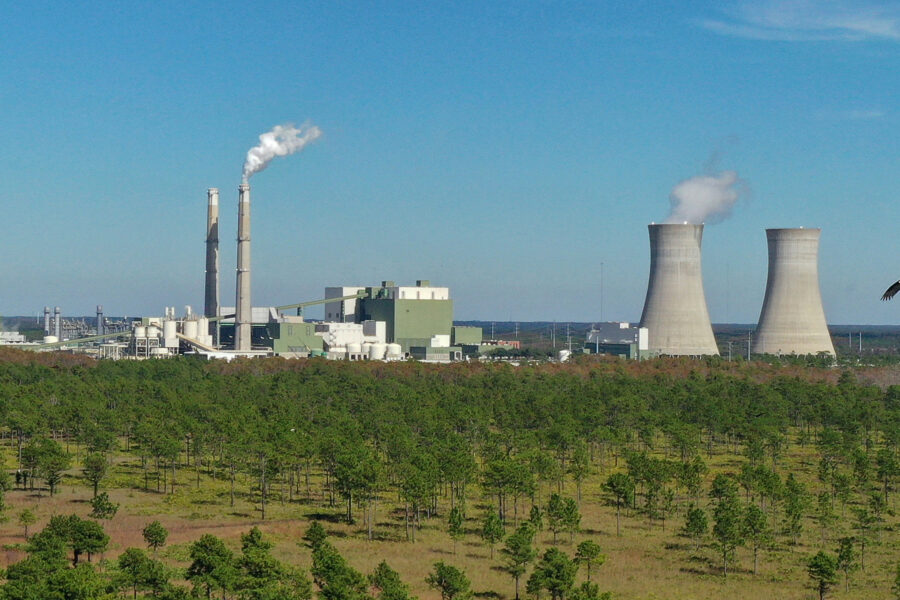
Clean Energy Enterprise Zones: Let’s be frank. The workers and communities that continue relying on fossil energy production will be losers in the new energy economy. In the short term, the things we must do to reduce carbon emissions and environmental blight – including a ban on new conventional coal-burning power plants, a withdrawal from dependence on oil, and an end to destructive practices like mountain-top removal and drilling on sensitive lands – will mean fewer jobs in the coal and oil industries.
The message to those workers should not be that they’ll lose their jobs; we will help them change jobs, shifting to growth skills and industries in the new economy.
Regions whose economies are dependent on fossil energy production already are showing signs of trouble, despite the Bush-era boom in oil and gas extraction and our failure so far to put a price on carbon. For example, an analysis of counties in the Western U.S. by the independent research group Headquarters Economics finds that:
- Counties that rely on fossil energy production are underperforming economically compared to counties with little or no energy extraction.
- Income and jobs grow more slowly in counties relying on fossil energy extraction. Between 1990 and 2005, the average rate of growth in real personal income was 2.3 percent annually in extraction counties, compared with 2.9 percent in non-extraction counties; job growth in extraction counties was only 1.8 percent, compared to 2.3 percent in non-extraction counties.
- Only one of the 26 energy counties in the analysis ranks among the top 30 economic performers in the West.
- The share of jobs in energy-related fields in the extraction counties declined from 23 percent in 1982 to 14 percent in 2005.
- The economies in fossil-dependent counties have less diversity and resilience, lower levels of education in the work force, higher rates of net outmigration and greater household income disparity.
It’s not just the West. Coal mining accounts for only 83,000 jobs in the U.S. today, a fraction of the nearly 785,000 jobs during the industry’s peak in 1920. In the 34 counties with coal mines around the United States, the poverty rate was 17 percent higher than the national average in 2005, and per capita income was 25 percent lower.
Despite these signs of decline, or in reaction to them, the battle lines are hardening between the old economy and the new. Fossil energy companies and the people who work in them are mobilizing to fight threatening policies like carbon pricing, environmental protection and renewable energy subsidies. As The New York Times reports, energy geography is dividing Democrats:
By coincidence or design, most of the policy makers on Capitol Hill and in the administration charged with shaping legislation to address global warming come from California or the East Coast, regions that lead the country in environmental regulation and the push for renewable energy sources. That is a problem, says a group of Democratic lawmakers from the Midwest and Plains States, which are heavily dependent on coal and manufacturing.
Should we be surprised that fossil energy companies and workers will fight policies they believe will turn them into losers? Can we show them the roadmap to a new economy in which they, too, will be winners?
One way is to help them attract green industries and train people to work in them. Even before the economy begins moving again, we need more wind turbines and the plants to produce their many parts; we need wind turbine towers and blades; we need more high-tech windows, the manufacture and assembly of photovoltaic panels and concentrating solar power systems, equipment for modern light- and high-speed rail systems; and much more.
The stimulus package on the Hill includes money for economic development and training for “green collar” jobs. It includes grants for communities to support jobs programs and new support for small business development. The federal government already offers a variety of economic development assistance for economically depressed and disadvantaged areas. It is money that could be used to make sure coal and oil country have the transportation systems they need to move materials and products for new green manufacturing plants. Before carbon pricing takes effect, the stimulus package should channel some of that help to “Clean Energy Enterprise Zones” that must make the transition from fossil and green jobs.
Clean Energy Surge: The United States is among the most inefficient economies in the world, contributing to our excessive greenhouse gas emissions and causing a hemorrhage of wealth from virtually every household budget, building, vehicle, business and community. As I’ve argued in previous posts, it’s impossible to fill a bucket that has a huge hole in it, and the U.S. economy is riddled with holes.
Recent energy legislation and the new stimulus packages contain provisions to help plug the leaks, including appliance efficiency standards, major new funds to weatherize the homes of low-income families, energy conservation block grants for communities, tax credits for consumers and new funding for State Energy Offices.
What’s lacking is a bold national campaign that enlists every American in a “clean energy surge”, more ambitious than War Bonds and Victory Gardens during World War II. Some of us will be able to afford only to turn down our water heaters and caulk around our windows; others will be able to insulate their attics; others may be able to afford a plug-in hybrid or an Energy Star appliance. The bottom line is that there are energy-saving opportunities within the grasp of every one of us, no matter what our income.
Energy efficiency is the economic stimulus that keeps on stimulating with savings on every energy bill and gasoline fill-up, President Obama might say. It’s a fast way for every household to earn the equivalent of new tax-free disposable income. It reduces pressure on the electric grid and our investments in new electric generation. It’s the best way for Americans to begin preparing now for rising fossil energy prices, whether they’re caused by OPEC or by carbon pricing.
For a quick start, the Obama administration can implement the National Action Plan for Energy Efficiency Vision for 2025 created by the U.S. Environmental Protection Agency, the Department of Energy and 60 partner organizations, including major gas and electric utilities. Its goal is to achieve all cost-effective energy efficiency by the year 2025. According to EPA, our potential is to meet 50 percent or more of our expected electric load growth over the next 15 years, saving $100 billion annually on energy bills by 2025 as well as cutting greenhouse gas emissions.
The More Mobility (Mo-Mo) Program: I pointed out in Part I that new fuels and vehicle technologies aren’t the only, and perhaps not even the best, answer to reducing oil imports and carbon emissions from transportation. A key strategy is to give Americans more mobility while reducing our dependence on passenger vehicles and their problems – congestion and lost productivity, air pollution and associated health problems, and the waste of valuable urban space to park, service and move automobiles. In many cases, because of the If We Build It, They All Come principle, new roads to relieve congestion have resulted in more congestion. If we invest only in new vehicle and fuel technologies, all we may achieve is traffic gridlock with cooler cars.
Since the topic is economic stimulus, we should note that alternatives to private vehicles save money. Cars are a relatively expensive form of transportation when you count not only the cost of the car and the interest on your loan, but also your fuel, insurance, maintenance and taxes, plus your share of the cost of roads and other infrastructure. (Check out the true costs of your car here.)
As Smart Growth advocates long have pointed out, we have designed our cities to move cars, not people. There are many other ways to move people and we should invest more in them, including safe and convenient mass transit, intermodal connections (bus and rail) at airports, high-speed rail between cities, and transit-oriented urban development.
The stimulus plan introduced in the house proposed $30 billion for fast-track highway and bridge projects, but only $10 billion for transit and rail projects. President Obama has proposed a new National Infrastructure Reinvestment Bank funded at $60 billion over 10 years to work on highways, bridges, roads, ports, air and train systems.
One sure way to pave the road to climate hell and economic purgatory is to keep encouraging more vehicle miles traveled.
Better wordsmiths than I can give these initiatives the compelling titles they deserve, but you get the point: We who advocate a green economy and work to make it happen can do a better job helping the American people understand how economic transformation will improve the fabric of their lives. With a little help, even the captains and workers of the old economy might come to see the promise of the new energy economy.
See also:
Economic Stimulus (Part I): Only 16% Green?
Economic Stimulus (Part III): Can the Recipients Handle It?
Video: The Economic Wisdom of a Green Recovery
Simple Fix in Stimulus Plan Could Boost Impact of Billions of Dollars for Energy Efficiency
Investors Tell Congress: Go Green Now and Private Investment Will Follow
Invest in Green Energy for a Long-Term Stimulus
About This Story
Perhaps you noticed: This story, like all the news we publish, is free to read. That’s because Inside Climate News is a 501c3 nonprofit organization. We do not charge a subscription fee, lock our news behind a paywall, or clutter our website with ads. We make our news on climate and the environment freely available to you and anyone who wants it.
That’s not all. We also share our news for free with scores of other media organizations around the country. Many of them can’t afford to do environmental journalism of their own. We’ve built bureaus from coast to coast to report local stories, collaborate with local newsrooms and co-publish articles so that this vital work is shared as widely as possible.
Two of us launched ICN in 2007. Six years later we earned a Pulitzer Prize for National Reporting, and now we run the oldest and largest dedicated climate newsroom in the nation. We tell the story in all its complexity. We hold polluters accountable. We expose environmental injustice. We debunk misinformation. We scrutinize solutions and inspire action.
Donations from readers like you fund every aspect of what we do. If you don’t already, will you support our ongoing work, our reporting on the biggest crisis facing our planet, and help us reach even more readers in more places?
Please take a moment to make a tax-deductible donation. Every one of them makes a difference.
Thank you,