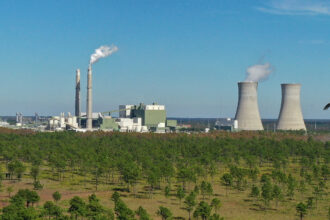
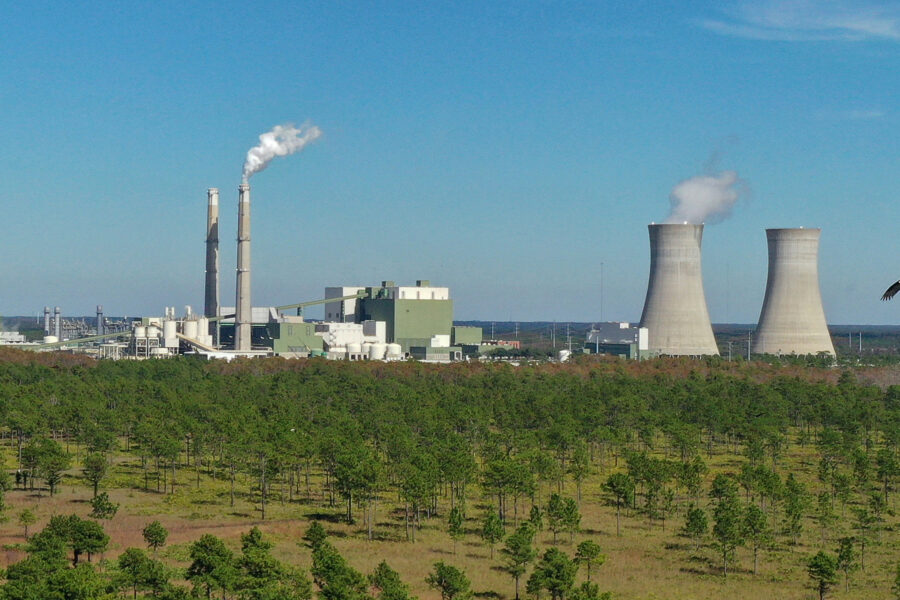
While other states are backing away from coal power, the Kansas Legislature seems dead set to clear the way for Sunflower Electric to build two huge, coal-fired power plants on the state’s western plains.
To get those power plants – and the 11 million tons of CO2 they’ll produce each year – lawmakers will first have to circumvent Kansas Health and Environment Secretary Rod Bremby. They tried three times last year and were slapped down by the governor’s vetoes. Now they’re trying again, and they might have the votes this time to succeed.
Bremby made history a year and a half ago when he became the first state official to refuse to issue an air permit based, not on sulfur or mercury emissions, but on the potential danger posed by CO2.
In denying Sunflower’s request for the air permit, Bremby wrote:
It would be irresponsible to ignore emerging information about the contribution of carbon dioxide and other greenhouse gases to climate change and the potential harm to our environment and health if we do nothing.
To get around Bremby, coal-supporters in the Kansas Legislature are going after the secretary’s very authority to regulate power plant emissions. The House Energy and Utilities Committee could vote as early as today on a bill that would prevent the Health and Environment secretary from regulating any power plant pollutants that are not regulated by the federal government.
CO2 is not on the U.S. Environmental Protection Agency’s list, at least not yet.
The EPA has the authority to regulate CO2 under the Clean Air Act, it just needs to make the move. As Kansas Sierra Club legislative director Tom Thompson told us:
Everybody’s saying, ‘Damn it, why doesn’t the president and EPA issues some carbon regulations and rules?’
In 2007, about six months before Bremby rejected Sunflower’s air permit, the U.S. Supreme Court ruled that the EPA has the authority to regulate greenhouse gases and that it cannot refuse to use that authority simply because of policy preferences. The court ordered the EPA to make a determination based on science. If the agency found a danger to public health and welfare, the EPA would have to begin setting standards to regulate greenhouse gases emissions from motor vehicles.
The Bush administration never acted on the ruling.
The Obama administration is looking at the case now. When we asked the EPA last week if it would take up the issue, the response was: "EPA is confident that people will be satisfied by how quickly and carefully the agency addresses this matter." That sounds promising.
In the meantime, the Sunflower coal plant legislation is moving along. Sunflower’s supporters nearly had enough votes to override Gov. Kathleen Sebelius’ vetoes last year. If they tuck this year’s bill into a larger energy package, as it appears they will, they just might succeed.
Simran Sethi, creator of the Sundance series The Good Fight and a lecturer at the University of Kansas, described on Huffington Post what will happen if those two 700 MW plants become reality:
If built, the plants in Holcomb, Kan., will belch out about 11 million tons of carbon dioxide a year to become the largest new source of greenhouse gas emissions in the United States, equivalent to putting an additional 1.7 million gas-powered cars, light trucks and SUVs on the road. The expansion could increase the mercury emitted from coal-fired power plants in Kansas by up to 80%.
The kicker: Most of the power generated by the two plants wouldn’t even help Kansans – it would go to Colorado instead. Kansans would just get the pollutants blowing back across their state.
Republicans frame their argument for Sunflower’s coal plants as a way to protect jobs and keep the government from overzealous regulation. Republican Rep. Carl Dean Holmes, chairman of the House Energy and Utilities Committee, put it this way:
Today, we decide on electric power plants; tomorrow, maybe, refineries; the next day, cement kilns. It goes back to the rule of law. He [Bremby] made the law individually.
Other states have been backing away from plans for new coal-fired power plants, partly out of concern for the environment and largely because the federal rules are likely to change under the Obama administration.
Yesterday, South Carolina Gov. Mark Sanford came out against state-owned utility Santee Cooper’s plans for two new 600MW coal-fired power generators. Sanford, who called for investing in nuclear power instead, said the federal government’s new rules on mercury emissions and the caps expected soon on CO2 emissions would double the cost of coal plants.
In Nevada, NV Energy cited increasing environmental and economic uncertainties when it postponed its plans earlier this week for building a disputed coal plant near Ely. Michigan Gov. Jennifer Granholm last week put seven proposed coal plants on hold in her state citing similar concerns.
Sebelius, a Democratic governor in a heavily Republican state, would like to see Kansas do the same, as she noted earlier this week:
The Kansas Energy Council, after careful study and with data from our utilities, concluded that we have enough base load electricity to power us for nearly a decade into the future. Meanwhile, the president has promised a new federal energy policy and swift action. Kansas, as one of the nation’s worst offenders in per capita carbon emissions, is vulnerable to the costs and penalties of that imminent federal regulation.
All of these facts has led us to one conclusion – now is not the time for new coal plants in Kansas.
If only the Kansas Legislature would listen to reason.
UPDATE: The Sunflower legislation was approved by the House Energy and Utilities Committee and rolled into a larger energy bill, substitute House Bill 2014. That larger bill also includes the governor’s proposals to require net metering and to set renewable energy portfolio standards for utilities at 10 percent of power from renewable sources in 2010, 15 percent in 2016, and 20 percent in 2020. The Kansas House is expected to debate the bill on Wednesday, Feb. 18, and will likely vote on Thursday, Feb. 19.
About This Story
Perhaps you noticed: This story, like all the news we publish, is free to read. That’s because Inside Climate News is a 501c3 nonprofit organization. We do not charge a subscription fee, lock our news behind a paywall, or clutter our website with ads. We make our news on climate and the environment freely available to you and anyone who wants it.
That’s not all. We also share our news for free with scores of other media organizations around the country. Many of them can’t afford to do environmental journalism of their own. We’ve built bureaus from coast to coast to report local stories, collaborate with local newsrooms and co-publish articles so that this vital work is shared as widely as possible.
Two of us launched ICN in 2007. Six years later we earned a Pulitzer Prize for National Reporting, and now we run the oldest and largest dedicated climate newsroom in the nation. We tell the story in all its complexity. We hold polluters accountable. We expose environmental injustice. We debunk misinformation. We scrutinize solutions and inspire action.
Donations from readers like you fund every aspect of what we do. If you don’t already, will you support our ongoing work, our reporting on the biggest crisis facing our planet, and help us reach even more readers in more places?
Please take a moment to make a tax-deductible donation. Every one of them makes a difference.
Thank you,