Inaction is action when it comes to climate change.
EPA administrator Lisa Jackson drove that point home yesterday when she announced she would review a Bush-era memo stating that carbon dioxide is not a “regulated pollutant” under the Clean Air Act.
Within hours, Jackson’s “hold on, let’s think about this” announcement was reverberating through the energy industry.
AES Corporation, one of the world’s largest power companies with almost $14 billion in revenues in 2007, announced it would withdraw an application to build a new coal-fired power plant in Oklahoma. The company, which would not comment beyond its three-sentence announcement because it is in a quiet period before announcing quarterly earnings, said the decision to withdraw plans for the 600MW plant was “part of our broader strategy to re-evaluate our growth plans.”
The EPA review effectively put a moratorium on all coal-fired plant projects, says David Bookbinder, Chief Climate Counsel for the Sierra Club, which asked the EPA to reconsider the Dec. 18, 2008, memo from ex-agency Administrator Stephen Johnson.
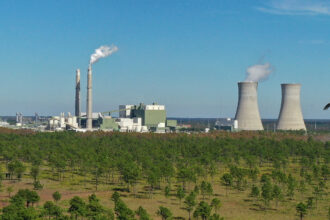
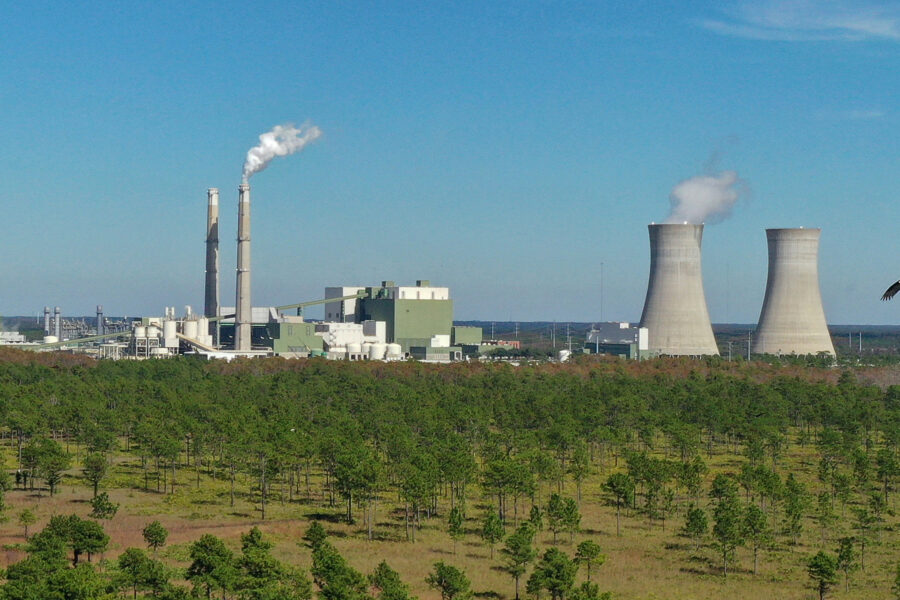
Proposed coal plants on federal land, such as the Bonanza Plant in Utah and the White Pine and Tuquop plants in Nevada, are already on hold. In Florida, a Seminole Electric plant in Palatka under litigation could have its permit revoked if the EPA decides to regulate greenhouse gas emissions.
In Louisiana, at least three proposed coal-fired power plants or plant expansions that are now undergoing state review could be affected: Little Gypsy, Big Cajun 1 and Big Cajun 2. The EPA went after the owner of Big Cajun 2 today when it sued Louisiana Generating, alleging that the company violated the Clean Air Act by not installing modern pollution control equipment when the plant underwent major modifications. The Justice Department characterize the case as part of “a national initiative targeting electric utilities whose coal-fired power plants violate the law.”
Jackson says it’s clear that the Clean Air Act can be used to address more pollutants. As she told The Associated Press yesterday:
If EPA is going to talk and speak in this game, the first thing it should speak about is whether carbon dioxide and other greenhouse gases endanger human health and welfare. It is a very fundamental question.
With the new EPA’s review of the Johnson memo coming up and the agency’s obvious willingness to act on greenhouse gases, Bookbinder says, “states would be well-advised not to issue permits until EPA has finished its process, because it is likely EPA will say, ‘Look, you need to do best available control technology for carbon emissions.'”
Jackson’s promised review of the Johnson memo – which included a warning that the memo should not be considered the final word on the Clean Air Act – is also buttressing attempts by several governors to halt construction of new coal-fired plants in their states.
Michigan Gov. Jennifer Granholm put seven proposed power plants on hold late last month in an effort to shift her state to clean, sustainable power, and she has been battling legislators and energy companies ever since.
In Kansas, Gov. Kathleen Sebelius has vetoed three attempts by her state’s legislature to ram through approvals for two huge coal plants proposed by Sunflower Electric, and she may be forced to issue a fourth veto soon.
The Kansas House is expected to vote as early as tomorrow on a bill that would strip Kansas Health and Environment Secretary Rod Bremby of his power to regulate new coal-fired power plants based on any emissions not regulated by the federal government. In 2007, Bremby became the first state official in the country to deny air permits for a power plant based on the potential harm to “our environment and health” posed by its expected greenhouse gas emissions.
Even if the Kansas Legislature succeeds this time and overrides a veto, Sebelius and Bremby will likely regain the power to block Sunflower soon, says Abigail Dillen, a lawyer with Earth Justice, a non-profit environmental law firm.
Once the EPA dismisses the Johnson memo, as it is widely expected to do, and declares that greenhouse gases are federally regulated pollutants,
“then the Kansas agencies can say, we have authority under the Clean Air Act that is now clear, and we think you have to use best available control technology to reduce CO2 emissions and you can’t build this plant as currently proposed, or you have to sequester this CO2. And at that point the plant developers might think that the plant wasn’t worth doing.”
Bookbinder believes that the EPA’s eventual decision could affect all plants approved since April 2, 2007, the date the U.S. Supreme Court ruled in Massachusetts v. EPA that carbon dioxide could be regulated as a pollutant under the Clean Air Act, and the government had a responsibility to issue a determination based on science. The Bush administration never acted on that ruling, but Jackson’s EPA has promised to move soon.
If the EPA does decide that all plants approved since April 2, 2007, need to employ the best available technology for reducing greenhouse gas emissions, Bookbinder estimates that dozens of plants could be affected.
He is confident that the Obama EPA will decide that greenhouse gases should be regulated as pollutants:
They’re not reconsidering it to say, ‘Oh, Stephen Johnson got it right.’ They’re reconsidering it to say, ‘The EPA got it wrong.’
See also:
A Storm Brews in Kansas Over Dirty Coal
Obama’s EPA Calls a Time-Out on Dirty Coal
EPA Begins Untangling Bush-Era Policies, Starts California’s Waiver Review
About This Story
Perhaps you noticed: This story, like all the news we publish, is free to read. That’s because Inside Climate News is a 501c3 nonprofit organization. We do not charge a subscription fee, lock our news behind a paywall, or clutter our website with ads. We make our news on climate and the environment freely available to you and anyone who wants it.
That’s not all. We also share our news for free with scores of other media organizations around the country. Many of them can’t afford to do environmental journalism of their own. We’ve built bureaus from coast to coast to report local stories, collaborate with local newsrooms and co-publish articles so that this vital work is shared as widely as possible.
Two of us launched ICN in 2007. Six years later we earned a Pulitzer Prize for National Reporting, and now we run the oldest and largest dedicated climate newsroom in the nation. We tell the story in all its complexity. We hold polluters accountable. We expose environmental injustice. We debunk misinformation. We scrutinize solutions and inspire action.
Donations from readers like you fund every aspect of what we do. If you don’t already, will you support our ongoing work, our reporting on the biggest crisis facing our planet, and help us reach even more readers in more places?
Please take a moment to make a tax-deductible donation. Every one of them makes a difference.
Thank you,