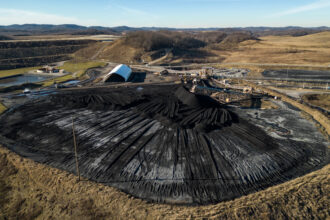
The governments of Alberta and Canada have championed carbon capture and storage (CCS) as a creative solution to the growing clouds of greenhouse gases from bitumen production in the tar sands.
Bitumen is one of the world’s dirtiest hydrocarbons, producing two to six times more climate changing gases than light oil. So Canadians, the chief exporters of “dirty oil” to the United States, keenly want to start a clean energy dialogue with President Barack Obama. They made their first overture last month when the U.S. president visited Ottawa and agreed to collaborate on developing energy technology, including CCS.
Alberta, home to the tar sands, proposes to clean up its ugly bitumen with the magic of this largely unproven technology. Local politicians now boast that Alberta is the only jurisdiction in the world to have set aside $2 billion of taxpayer’s money to give carbon a proper funeral in a secure cemetery: old oil formations or salt aquifers.
But fools often rush in where Angels fear to tread.
Chasing CCS is a money burner and an energy hog, and it may not deliver much carbon savings. The whole reactive proposition raises extreme security and liability issues for industry and taxpayers alike.
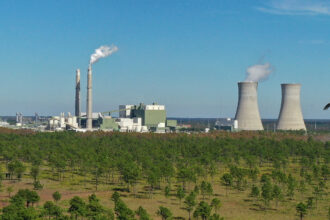
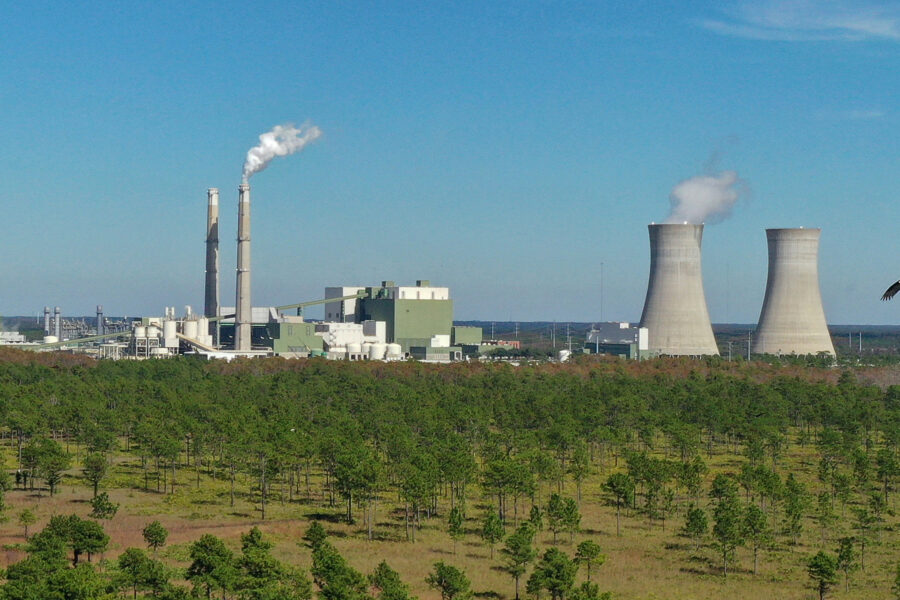
Although Canadian politicians often mention CCS and the tar sands in the same breath, they aren’t being square with Canadian taxpayers or U.S. drivers. For starters, CCS is really geared to retrofitting coal-fired plants and expanding the economic life of coal. The cumbersome technology can’t really capture carbon from 400-ton mining trucks or most tar sands steam plants, nor can it vacuum methane from tailing ponds.
Canada’s federal government recently admitted in fine print that the “oil sands operations are so diverse … that only a small portion of the CO2 streams are currently amenable for CCS.” So CCS won’t clean up “dirty oil” or Canada’s global image.
It Takes Energy to Bury CO2
The chief obstacle to CCS is cost. Right now, no country buries lots of CO2 because it is not economical. John Pavlish, a senior U.S. researcher on CCS at North Dakota’s Energy and Environmental Research Center, notes that CCS would raise the cost of a power plant by 35 to 100 percent which, in turn, would increase electric bills by 30 to 80 percent. Without a $40 to $80 price tag on a tonne of CO2, not much carbon will ever get buried.
It takes a lot energy to capture, compress and inject CO2 into the ground. In fact 30, percent of the power generated by a coal-fired facility or tar sands power plant would be cannibalized by a CO2 retrofit.
That’s great news for coal companies because CCS demands that utilities burn more coal instead of building windmills. But CCS may be bad news for bitumen, the world’s most capital intensive hydrocarbon. Larcina Energy Ltd, a tar sands developer, recently concluded that “Carbon mitigation costs will negatively impact project economics” because “bitumen is a poor quality hydrocarbon and priced accordingly.”
Alberta is Like a Pin Cushion
Security of storage is also a concern. Not too many places in North America are suitable for carbon burial due to earthquake risks or high density oil and gas drilling. Improperly sealed wells or faulty cement jobs could invite great volumes of CO2 back to the surface. Leaks could also acidify groundwater.
The Intergovernmental Panel on Climate Change, for example, dutifully notes that Alberta is a pin cushion. With more than 350,000 oil and gas wells, it is one of the most intensely drilled landscapes in the world. In other words, CO2 could find its way back to the surface and into people’s basements and wells.
CO2 injection may also cause man-made earthquakes. The rapid depletion of gas wells and the water flooding of oil wells have caused a series of documented earthquakes in Alberta, Texas and the Netherlands. Geologists call it “induced seismicity.” The largest earthquakes ever recorded in Alberta were triggered by oil and gas activity. Natural Resources Canada recently studied a series of earthquakes caused by sour gas removal at the Strachan gas plant in Rocky Mountain House.
Scaling Up Would Take Decades
Scale is another critical obstacle. Some oil projects (Statoil) can now bury about a million tonnes of CO2 into the ground a year. But pumping a high volume CO2 stream (5,000 or 10,000 tonnes a day) really hasn’t be done yet.
“We are ten to 20 years away from major commercialization,” says Pavlish. One Alberta company modestly adds that “Industry needs to advance technology by 10 to 20 times at lower capture pressures and at lower CO2 content.” That won’t happen overnight.
Given the scale issues, CCS really isn’t a timely option for battling climate change.
Vaclav Smil, the great energy economist at the University of Manitoba, argues that any proper scale analysis easily demonstrates that CCS is a Disneyland cartoon about wishful thinking. In a 2008 letter to Nature, the eminent scholar calculated that the world would have to double its oil and gas infrastructure just to bury 25 percent of the world’s carbon.
“Carbon sequestration is irresponsibly portrayed as an imminently useful large-scale option for solving the challenge,” Smil wrote. He prefers the disciplined conservation of fossil fuels.
Although the technology for capturing, compressing and piping carbon is doable, not much is known about rapid CO2 injection into old oil reservoirs or salty aquifers.
Independent research by University of Calgary engineer Minzghe Dong shows that each and every reservoir behaves differently and has to be carefully prepared. If most of the oil and water isn’t removed, the reservoir will chemically react with CO2 and limit the amount of disposal space. Scientists have yet to show that the rock cap sealing salt aquifers can actually safely contain CO2.
Liability is no small cross in the carbon cemetery either. Buried CO2 must be monitored for thousands of years, a task few regulators really want to undertake. Industry doesn’t want to invest in CCS until government (read taxpayers) assumes the liabilities of leaks and groundwater contamination. Wyoming, the largest coal producing state, wisely passed legislation that places the liability for the unintended consequences of CCS on the utility or oil company that injects it.
Greenpeace and the Economist Agree
Neither Greenpeace nor the Economist thinks that CCS is the right answer for climate change. Greenpeace, the noisy green group, argues that renewable energy combined with greater energy efficiency can reduce CO2 emissions much more cheaply and quickly than coal retrofits. The Economist, the conservative business magazine, actually agrees and calls CCS “mostly hot air.”
When both Greenpeace and the Economist suggest the business case for CCS is bad, it probably is.
Because neither Alberta nor Canada has a credible program to encourage renewable energy use or fossil fuel conservation, both governments have carelessly pinned their climate action programs exclusively on CCS.
Alberta hopes to have three to five CCS projects up and running to store approximately 5 million tonnes by 2015 at a cost of $2 billion. That works out to about $400 a tonne. (Emissions in the tar sands province increased by 60 million tonnes over a five year period.)
The province’s Auditor General, who appears to read the Economist, concluded in 2008 that the province’s hastily constructed CCS program could have two results: “Alberta could spend a lot of money but not achieve emissions targets. Or it could achieve targets, but not cost-effectively.”
Cost effective solutions do exist but aren’t being pursued in Canada, for example:
- Tackling fugitive emissions from the petroleum sector (a source of 10 percent of the nation’s emissions) would save money and clean the air.
- Grading bitumen deposits according to their carbon content and energy intensity could shift production away from the dirtiest deposits.
- And providing incentives for small companies to explore and produce small bodies of conventional light oil could also reduce CO2 emissions.
- Hard targets for renewable energy, public transit and efficient housing are being pursued around the world, but not in Canada.
To date, national leaders have preferred to keep their heads in the sand.
The bottom line for CCS is stark. It is neither a silver bullet nor a reliable lead one for the tar sands, Canada’s largest growing source of greenhouse gas emissions.
It is reactive program, not a proactive one. The technology costs too much and won’t scale up in time to make a difference. It directly robs taxpayers and subsidizes the world’s wealthiest industry. And it steals dollars from renewable programs. What CCS does is give coal and oil companies taxpayer money to accelerate hydrocarbon consumption by nearly one third.
See also:
Canada’s Tar Sands, America’s Problem
Canada’s Montaintop Mining: The Tar Sands
In the Tar Patch, Bitumen Comes Before Fish
Alberta Tar Sands to Poison U.S. Great Lakes Region, Too
Tar Sands: If You Have Tears, Prepare To Shed Them Now
About This Story
Perhaps you noticed: This story, like all the news we publish, is free to read. That’s because Inside Climate News is a 501c3 nonprofit organization. We do not charge a subscription fee, lock our news behind a paywall, or clutter our website with ads. We make our news on climate and the environment freely available to you and anyone who wants it.
That’s not all. We also share our news for free with scores of other media organizations around the country. Many of them can’t afford to do environmental journalism of their own. We’ve built bureaus from coast to coast to report local stories, collaborate with local newsrooms and co-publish articles so that this vital work is shared as widely as possible.
Two of us launched ICN in 2007. Six years later we earned a Pulitzer Prize for National Reporting, and now we run the oldest and largest dedicated climate newsroom in the nation. We tell the story in all its complexity. We hold polluters accountable. We expose environmental injustice. We debunk misinformation. We scrutinize solutions and inspire action.
Donations from readers like you fund every aspect of what we do. If you don’t already, will you support our ongoing work, our reporting on the biggest crisis facing our planet, and help us reach even more readers in more places?
Please take a moment to make a tax-deductible donation. Every one of them makes a difference.
Thank you,