Kathleen Sebelius’ swearing in as Secretary for Health and Human Services was a bitter sweet moment.
She has been a strong public servant. A dedicated, principled, thoughtful, and courageous leader who won respect and admiration from Kansans. The nation — and the tough challenges of American health care — merits having someone of her qualities in that seat.
On the other hand, there were two aspects of this appointment that were troubling.
As with former Arizona Gov. Janet Napolitano, now head of Homeland Security, appointing Sebelius to the Cabinet moved from an almost assured (if she chose to run) Democratic Party pick-up in the 2010 Senate to, at best, a long shot that a Democratic candidate can win the seat. (And, as well, lowered by two the number of women likely to be part of the Senate come January 2011.)
Secondly, there was the question of how her state would be governed in her absence. In Arizona, Napolitano handed the keys over to a Republican. In Kansas, Sebelius handed keys over to then-Lt. Gov. Mark Parkinson, a “Democrat” (not that long ago Republican) who had promised, reportedly, to govern in much the way Sebelius governed. From an interview, last Friday:
The Eagle: Can you give us a specific way that your administration will differ from your predecessors?
Parkinson: Even though the governor and I agree on virtually every issue, the difference that you will see will be in emphasis. Governor Sebelius is a policy matter expert on health issues and so her focus for her 23 years of public service has been health issues. I have learned a lot about energy issues, so my emphasis is going to be a lot on energy.
And, when he said “energy”, what did he mean?
I don’t really care to have a legacy. But here is what I hope to do for the state, and if I could just pick one thing, what I would hope to do is to put us on a path so we are the renewable energy leader in this country. Because I view it as not only something good for the entire country, but I view it as a form of economic reinvestment for Western Kansas. I just view it as a continuation of everything we have done as a state. …
The second thing I hope to bring to the table… I really believe that I have a track record of being able to bring people together that have disputes and getting them resolved. Some of that could be in a very public setting such as trying to get the budget issues resolved. Some of it can be very private, for example going to the utility companies who had never built wind power before and getting them to build 1,000 megawatts.
The chair behind the Governor’s desk was still warm when Parkinson gave the lie to those promises and indications.
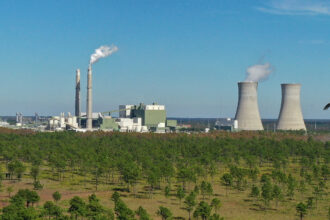
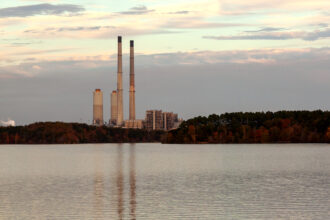
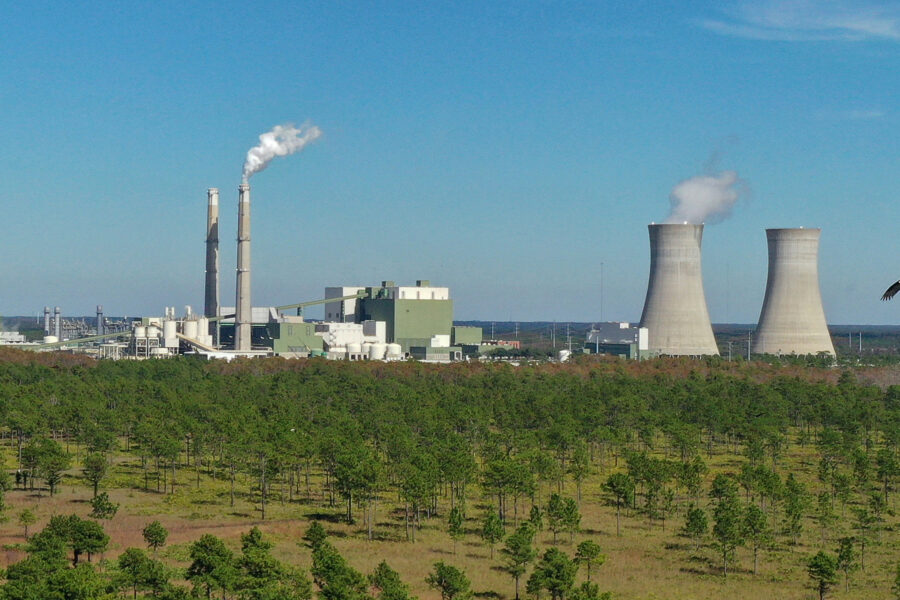
Sebelius won the admiration of many for her tough fight against Sunflower Electric’s fossil-foolish plans for building two new coal-fired electricity plants (totaling 1,400 megawatts of capacity).
In addition to the basic questions as to whether the new plants were even required and how building such polluting plants would be against concepts of helping build a sustainable energy future, an investment firm analysis concluded that moving forward with Sunflower’s plans would place “Sunflower Electric’s ratepayers … at significant [finanicial] risk.”
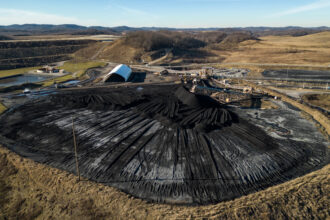
The concept was a lose-lose-lose situation, except for Sunflower Electric (who would be guarantee a profit) and the coal companies guaranteed decades of seeing their product go up in smoke.
Sebelius measured the situation and fought tenaciously against global warming denier (anti-science syndrome suffering) Republican Kansas legislature efforts to drive through these plants. And, right behind her (sometimes almost in front of her) in this fight was Lt. Gov. Parkinson, who bluntly stated that there would be legal action even if the legislature overrode Sebelius’ vetoes:
“We’re certainly going to evaluate all of our options,” Parkinson said. “I assure you, there are multiple options, and if Sunflower’s out there telling people that all they need to do is get this veto overridden and the plants will be built, and if they believe that, they’re sadly mistaken.”
[…]
Later, Sebelius spokeswoman Nicole Corcoran was more conciliatory than Parkinson. She said the governor hopes her vetoes will be sustained and is still working toward a compromise.
“But we recognize that there are numerous other barriers to the plant projects,” she said. “Litigation is likely, and there is real financing uncertainty with the increased costs of the new coal plants.”
Sebelius resigned a week ago to join the Obama administration. With the chair still warm, Parkinson began negotiating to enable Sunflower to build its coal-fired power plant.
Parkinson promised Sunflower CEO Earl Watkins that he would no longer block construction if the company agreed to build one coal-fired unit producing close to 900 megawatts of power – and 6.7 million tons of CO2 a year – rather than the proposed two, which would have produced 1,400 megawatts of electricity. Sunflower also agreed to close two oil-burning power plants and eventually establish 179 MW of wind power and 126 MW of biomass energy.
This move “is a stunner, sure to rock Topeka in the closing days of the legislative session.”
Is this better than the original Sunflower Electric proposal? Yes. Did Parkinson achieve anything close to what Sebelius would have fought for and achieved? Absolutely not!
The governor’s press release is disconcertingly entitled "Kansas to Take a Significant Step Forward on Renewable Energy Policy". This announcement, not surprisingly, doesn’t truly address the climate or carbon dioxide. There is a claim that this agreement will “allow Sunflower to construct one 895 megawatt coal plant with an unprecedented level of carbon mitigation.” Unprecedented level? This one requires far more explanation than a pat-on-the-back press release.
The majority of the press release, in fact, is handed over to quotes from Earl Watkins, Sunflower’s president and CEO, who fosters a false sense of a ‘balancing’ of economy and environment.
“This effort will move the project forward bringing much needed economic activity and jobs to Kansas,” Watkins said.
“This agreement meets the goals of our project, but will also address concerns of our coalition partners that the regulatory process is clear and follows the federal clean air act. The legislative proposal will move Kansas toward a comprehensive energy policy that utilizes all forms of generation, encourages the wise use of energy and balances concerns for cost and the environment.”
Sigh.
Secretary of Health and Human Services Kathleen Sebelius. One Step Forward.
Governor Mark Parkinson. Two steps back?
(Originally published at Get Energy Smart! Now!!!)
See also:
New Kansas Gov. Greets Dirty Coal with Open Arms
Economic Fears Put Pressure on Western Climate Initiative
Vetoed Again, Sunflower Electric’s Kansas Coal Plant Plans Lose Support
Deja Vu: A Storm Brews in Kansas over Dirty Coal
Report: New Kansas Coal Plants Will Lock In Decades of Rising Electricity Prices
About This Story
Perhaps you noticed: This story, like all the news we publish, is free to read. That’s because Inside Climate News is a 501c3 nonprofit organization. We do not charge a subscription fee, lock our news behind a paywall, or clutter our website with ads. We make our news on climate and the environment freely available to you and anyone who wants it.
That’s not all. We also share our news for free with scores of other media organizations around the country. Many of them can’t afford to do environmental journalism of their own. We’ve built bureaus from coast to coast to report local stories, collaborate with local newsrooms and co-publish articles so that this vital work is shared as widely as possible.
Two of us launched ICN in 2007. Six years later we earned a Pulitzer Prize for National Reporting, and now we run the oldest and largest dedicated climate newsroom in the nation. We tell the story in all its complexity. We hold polluters accountable. We expose environmental injustice. We debunk misinformation. We scrutinize solutions and inspire action.
Donations from readers like you fund every aspect of what we do. If you don’t already, will you support our ongoing work, our reporting on the biggest crisis facing our planet, and help us reach even more readers in more places?
Please take a moment to make a tax-deductible donation. Every one of them makes a difference.
Thank you,