President Obama sketched out a roadmap for a green revival of the struggling U.S. auto industry today, basing it on tough new fuel efficiency standards and the first nationwide regulation of greenhouse gas emission from cars and trucks.
At the same time, he sent a message to other polluters that the deal reached between the auto industry and federal and state regulators is an example for how industry and government can and should work together to begin weaning the nation off its fossil fuel addiction.
“In the past, an agreement such as this would have been considered impossible,” the president said. “That is why this announcement is so important, for it represents not only a change in policy in Washington, but the harbinger of a change in the way business is done in Washington.”
At the heart of the auto industry’s green makeover is the highest increase in fuel efficiency standards that the United States has seen in decades – a leap from a fleetwide average of about 25 mpg to 35.5 mpg by 2016. The increases start in 2012, rising 5 percent each year to get cars to 39 mpg and trucks to 30 mpg.
By meeting that fuel efficiency standard, automakers will be lowering their greenhouse gas emissions enough to comply with the second part: a planned EPA rule that tailpipe emissions be below 250 grams per mile by 2016.
Together, the two federal standards are expected to cut tailpipe emissions by 30 percent, eliminate the need for 1.8 billion barrels of oil, and prevent the production of 900 million metric tons of greenhouse gases for the life of vehicles produced through 2016.
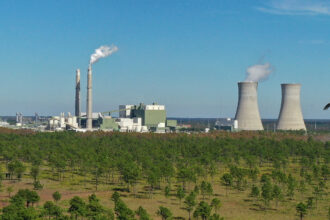
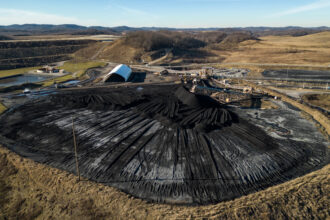
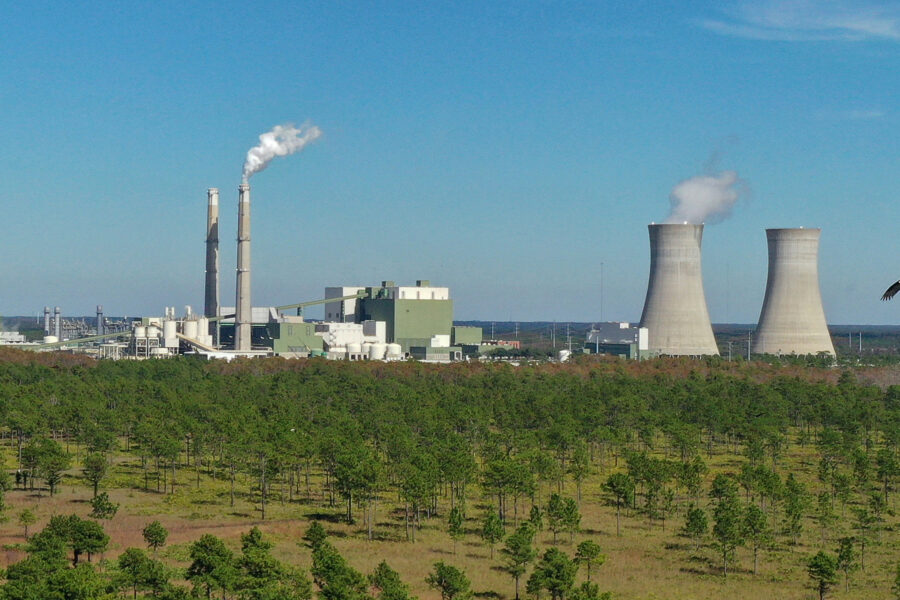
That’s the equivalent of taking 177 million cars off the road or shutting down 194 coal plants, White House Climate Advisor Carol Browner said.
To get to this point required automakers calling a truce after years of fighting regulators and agreeing to work out a deal that would help the struggling industry reinvent itself.
The Obama administration began working on stronger vehicle emissions standards shortly after its arrival in January. Several swift actions by the new EPA, on top of pressure from the automakers’ federal bailouts, likely helped convince the auto industry that it was time to give up the fight and make a deal.
First, the EPA suggested it would approve a waiver that would let California and other states set stricter tailpipe emissions limits than the federal government’s.
The second move was the EPA’s proposed ruling, following the U.S. Supreme Court’s 2007 decision in Massachusetts v. EPA, that would declare greenhouse gas emissions a danger to the public health and welfare and begin regulating them under the Clean Air Act.
The industry prefers a coordinated national standard, rather than facing the prospect of individual state standards. Under the agreement with Obama, California will accept the federal standard through 2016, which is only slightly lower than what the state approved in 2004.
California Gov. Arnold Schwarzenegger skipped a special election on Tuesday to be at the White House for the announcement.
“California’s relentless push for greenhouse gas reductions from automobiles is paying off, not just for our state, but for all Americans, for our environment, for automakers and our economy,” Schwarzenegger said. “This historic agreement to reduce greenhouse gases will mean cleaner air for our children and grandchildren, greater economic security as we rely less on foreign oil, and a chance at renewal for our auto industry.”
Also joining the president in the rose garden for the announcement were 10 auto industry CEOs, the governors of Michigan and Massachusetts, labor leaders, regulators and environmental groups.
The image of auto industry officials and regulators standing side-by-side behind the president was a stark contrast to the behavior in the halls of Congress, where power companies and industries have been fighting tooth and nail to continue pumping out their pollution for free.
“What everyone here believes, even as views differ on many important issues, is that the status quo is no longer acceptable,” Obama said during the White House news conference. “All these folks here today have demonstrated that this kind of common effort is possible. They’ve created the template for more progress in the months and years to come."
The president alluded to the Congressional climate battle when he described the enormity of the challenge of shifting to a clean energy economy. He urged everyone involved to look past their differences to get create a safer, more prosperous and more sustainable future:
“Too often, lost in the back-and-forth of Washington politics, absent in arguments where the facts opponents use depend on the conclusions they’ve already reached, absent all that is this: Ending our dependence on oil, indeed, ending our dependence on fossil fuels, represents perhaps the most difficult challenge we have ever faced – not as a party, not as a set of separate interests, but as a people."
The timing is close to perfect for an extreme makeover of an industry that is struggling with sales and has received billions of dollars in government bailout cash to avoid bankruptcy.
The Big Three automakers have already started trimming back brands and refocusing their fleets on vehicles that can help them compete against higher-efficiency foreign vehicles, including high-tech hybrids and electric vehicle. The federal government has also set aside billions of dollars in additional support through the stimulus package for developing cleaner technologies.
"When candidate Obama went to Detroit, he told the automakers what they needed to hear—they had been making bad choices, and as president, he would steer a new course and revitalize the industry by bringing more fuel efficient vehicles to market," said Michelle Robinson, director of the Union of Concerned Scientists’ Clean Vehicles Program.
"Now President Obama is delivering on his promise to strengthen the auto industry, while reducing vehicle pollution and our dependence on oil."
General Motors President and CEO Fritz Henderson said his company was “fully committed to this new approach”:
“Energy security and climate change are national priorities that require federal leadership and the president’s direction makes sense for the country and the industry. Harmonizing a variety of regulations will benefit consumers across America by getting cleaner, more efficient vehicles on the road quicker and more affordably. In turn, GM and the auto industry benefit by having more consistency and certainty to guide our product plans.”
Under the proposed regulations, each class of vehicles will have its own standards, meaning big new SUVs will still pollute more heavily than small cars, but those SUVs won’t pollute as much as their predecessors do today, Browner explained. The way the rules are written, automakers also won’t be able to meet the standards by simply focusing on a few smaller, more efficient vehicles – they will have to tend to the gas guzzlers, too.
The administration estimates the overall cost to meeting the 2016 regulation to add about $1,300 to the cost of building the vehicles, costs automakers and sellers will likely pass right along to the consumer. However, Browner pointed out that consumers will be making that up in the gas they save. With gas prices under $4, they could make up the difference in less than three years.
Perhaps you noticed: This story, like all the news we publish, is free to read. That’s because Inside Climate News is a 501c3 nonprofit organization. We do not charge a subscription fee, lock our news behind a paywall, or clutter our website with ads. We make our news on climate and the environment freely available to you and anyone who wants it.
That’s not all. We also share our news for free with scores of other media organizations around the country. Many of them can’t afford to do environmental journalism of their own. We’ve built bureaus from coast to coast to report local stories, collaborate with local newsrooms and co-publish articles so that this vital work is shared as widely as possible.
Two of us launched ICN in 2007. Six years later we earned a Pulitzer Prize for National Reporting, and now we run the oldest and largest dedicated climate newsroom in the nation. We tell the story in all its complexity. We hold polluters accountable. We expose environmental injustice. We debunk misinformation. We scrutinize solutions and inspire action.
Donations from readers like you fund every aspect of what we do. If you don’t already, will you support our ongoing work, our reporting on the biggest crisis facing our planet, and help us reach even more readers in more places?
Please take a moment to make a tax-deductible donation. Every one of them makes a difference.