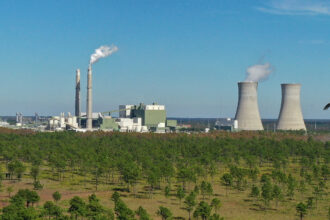
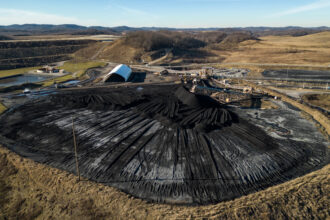
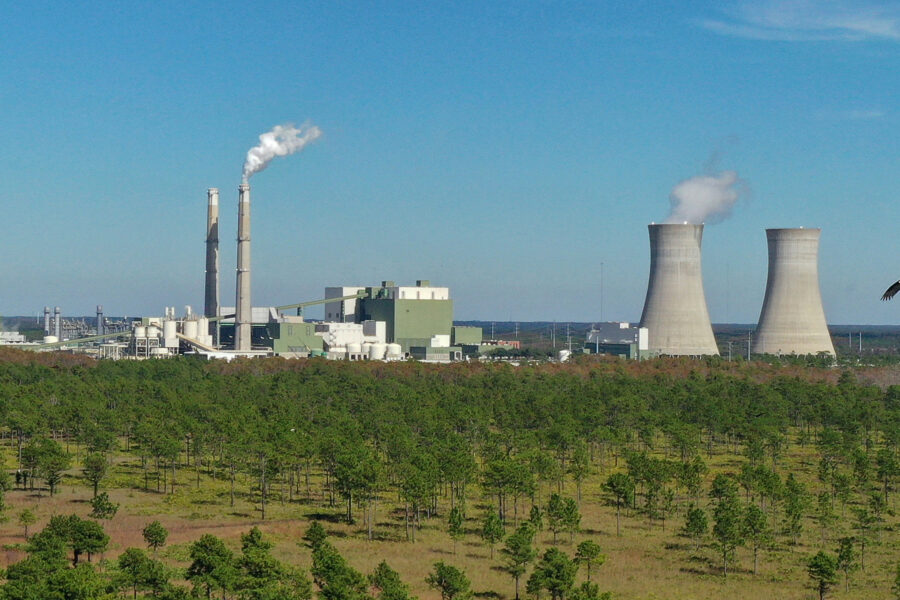
Under pressure from environmental groups, the EPA shifted course today and published the government’s once-secret list of 44 power plant coal ash impoundments that pose the highest danger to human life if they were to break.
The list is a reminder of just how unclean coal power is, not just through the pollutants and greenhouse gases that its power plants pump into the air but also in the residue left behind.
These impoundments hold millions of gallons of fly ash, bottom ash, coal slag and flue gas desulferization produced as waste by coal-fired power plants. The mixture can contain arsenic, selenium, cadmium, lead and mercury that can pose a danger to human health, water supplies and the environment.
The 44 impoundments on the list – largely in the eastern mountains, but also in Arizona, Indiana, Illinois and Montana – aren’t necessarily in danger of breaking, the EPA stressed. They made the list out of 427 nationwide because of their location and what might happen if they did.
“The presence of liquid coal ash impoundments near our homes, schools and business could pose a serious risk to life and property in the event of an impoundment rupture,” EPA Administrator Lisa Jackson said in releasing the list.
She said the EPA was assessing each site’s vulnerabilities and working with state and local officials to minimize the danger.
The massive TVA coal ash spill last year at Kingston, Tenn., was a wake-up call for the government.
Around 1 a.m. on Dec. 22, a wall of toxic coal sludge broke through a dike near the TVA’s Kingston Fossil Plant, starting a billion-gallon flood that surrounded homes, covered hundreds of acres of property and farmland, and killed fish and wildlife as it oozed into Swan Pond Creek and the Emory River (see TVA photo above).

Last week, engineers hired by the TVA to investigate the cause of the disaster described the break as a perfect storm. The impoundment had a thin layer of unstable ash that the TVA hadn’t detected. Retaining walls had been built on the ash, and the ash was saturated. When one internal wall collapsed, it started a chain reaction. The government is still cleaning up the mess and expects to be doing so into next year.
Earthjustice attorney Lisa Evans, who helped pressure the EPA to release the coal ash impoundment list, doesn’t buy the TVA’s “once-in-a-lifetime” description for the Kingston rupture. She points to the 1972 Buffalo Creek coal slurry disaster that killed 125 people in West Virginia as just one example.
“Dumping millions of tons of heavy, wet toxic coal ash in unregulated or poorly regulated impoundments, high above residential areas, is a recipe for disaster, whether that disaster is unleashed in a matter of minutes, or more gradually as the poisons seep through the ground and poison nearby wells,” Evans said.
“Nearby communities deserve to know whether they are in harm’s way.”
Earthjustice, the Sierra Club, the Environmental Integrity Project and the Natural Resources Defense Council filed a Freedom of Information Act request earlier this month for the list of high-risk coal ash impoundments. Sen. Barbara Boxer (D-Calif.), chairwoman of the Senate Environment and Public Works Committee, also urged the EPA to release the list. The federal government had argued that making the list public would pose a national security risk.
The EPA’s list covers only coal ash impoundments connected to electric power plants. In Appalachia, however, many more communities sit downslope from coal sludge impoundments that hold waste water and debris from mining sites. The students of Marsh Fork Elementary School, where NASA climate scientist James Hansen was protesting mountaintop mining before he was arrested last week, attend school below one of the largest. Under the official evaucation plan, the students would have less than five minutes to escape if the dam failed.
The EPA’s list of high hazard power plant coal ash impoundments includes the following utilities and locations:
American Electric Power is responsible for 11 of the sites, found in Kentucky, Ohio, West Virginia, and Indiana. Duke Energy owns 10, all in North Carolina. Louisville Gas & Electric has an ash pond in Louisville, Ky., the largest city on the list.
Kentucky Utilities has ponds at Harrodsburg and Ghent, Ky.; Georgia Power has one at Milledgeville, Ga.; Allegheny Energy has a site at Willow Island, W.Va.; Progress Energy Carolinas has two ponds at Arden, N.C.; First Energy Generation has one at Shippingport, Pa.; and Dynegy Midwest has sites in Alton and Havana, Ill.
In the West, Arizona Electric Power Cooperative has seven ponds at Conchise, Ariz.; Arizona Public Service Co. has two at Joseph City, Ariz.; and PPL Montana has ponds on the list at Colstrip, Mont.
See also:
West Virginia Coal Ash Dams Seldom Inspected, DEP Says (Coal Tattoo)
Dam Breach in Tennessee Releases Tsunami of Toxic Coal Sludge
TVA’s Inspector Says It Misled Public About Ash Spill
A Tale of Two Disasters: Coal Ash and Tar Sands Tailings
About This Story
Perhaps you noticed: This story, like all the news we publish, is free to read. That’s because Inside Climate News is a 501c3 nonprofit organization. We do not charge a subscription fee, lock our news behind a paywall, or clutter our website with ads. We make our news on climate and the environment freely available to you and anyone who wants it.
That’s not all. We also share our news for free with scores of other media organizations around the country. Many of them can’t afford to do environmental journalism of their own. We’ve built bureaus from coast to coast to report local stories, collaborate with local newsrooms and co-publish articles so that this vital work is shared as widely as possible.
Two of us launched ICN in 2007. Six years later we earned a Pulitzer Prize for National Reporting, and now we run the oldest and largest dedicated climate newsroom in the nation. We tell the story in all its complexity. We hold polluters accountable. We expose environmental injustice. We debunk misinformation. We scrutinize solutions and inspire action.
Donations from readers like you fund every aspect of what we do. If you don’t already, will you support our ongoing work, our reporting on the biggest crisis facing our planet, and help us reach even more readers in more places?
Please take a moment to make a tax-deductible donation. Every one of them makes a difference.
Thank you,