On January 18, the second to last day it was in power, the Bush administration finalized 6,000 miles of energy corridors for new transmission lines in 11 Western states.
Ideally, those lines would carry renewable energy to the cities. Instead, the corridors were drawn to promote fossil fuel use, 11 environmental groups and Colorado’s San Miguel County allege in a lawsuit filed this week against the Departments of Interior, Energy and Agriculture, the Bureau of Land Management and the Forest Service.
The agencies did not consult local organizations or look to include areas rich in renewable energy sources, says Katie Renshaw, associate attorney at EarthJustice, which filed the lawsuit in U.S. District Court in California.
“If you juxtapose the corridors on a map with existing and proposed coal plants, they’re all served," Renshaw says.
"This case is saying that the agencies need to step back, rethink this process, and say, ‘What is the purpose of these corridors? Should it be to perpetuate dirty energy? Or take the opportunity to move towards clean, 21st-century energy sources?’”
The outcome is important, and not just for the 3.2 million acres affected in the West. The same process for finalizing the energy corridors in those 11 states will be used to determine how energy corridors are drawn in the other 39 states.
The lawsuit claims that the government didn’t take into account impacts on climate change or numerous endangered species, thus violating several federal laws, including the Energy Policy Act of 2005 and the Endangered Species Act.
"The National Environmental Policy Act requires agencies to look at environmental impacts of their decisions and to consider alternatives to their decisions. They didn’t consider any alternatives here,” Renshaw says.
The plaintiffs also contend that the plans flouted the Federal Land Policy Management Act because the states involved were not consulted.
Another point of contention is that the corridors were drawn with dots and dashes – and the plaintiffs say connecting those dots requires running lines through private land.
"We’re saying, ‘That’s not an okay way to manage either federal land or transmission generally,’” says Nada Culver, senior counsel for The Wilderness Society, one of the plaintiffs.
The group suggests that a good model for moving forward would be the Western Governors’ Association and Department of Energy’s Western Renewable Energy Zone Initiative, which Renshaw describes as a “coalition-type decision-making process.”
The WREZ aims to identify areas of the West that have renewable resources and that can deliver energy to areas of high power use, partially to help the WGA fulfill its goal of developing 30,000 Megawatts of clean energy in the region by 2015. The WREZ operates under what it calls a “transparent and stakeholder-driven process” that consults non-governmental organizations, industry, advocacy groups and all levels of government and solicits public comments.
How the energy corridors in the West are determined will influence how they are drawn in the rest of the nation – whether by the top-down approach used by the Bush administration, or by an inclusive process that consults local land managers, private land owners, the state and other stakeholders.
The Energy Policy Act of 2005 decreed that the Western energy corridors should be designated within two years, and the rest of the country within four. (They are behind by two years, so no plans for the East have been finalized.) Once the corridors are set, the agencies will be obliged to expedite applications for building or modifying oil, gas and hydrogen pipelines and electric transmission lines and facilities within the boundaries.
“There are local concerns at public meetings in the West: ‘Well, I connected those two segments and they went through my public school or down Main Street or over my house.’” Culver says.
“I think on the East Coast, you have even more of a problem, because there’s less available federal land to designate the corridors on.”
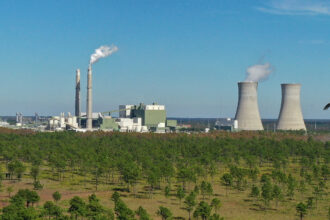
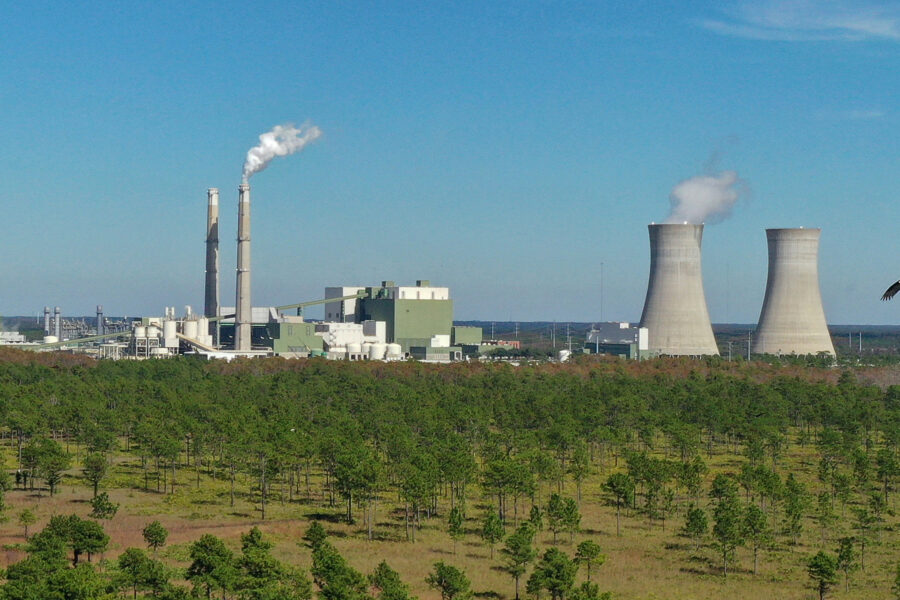
The East Coast also faces the likelihood that transmission lines will benefit dirty energy from coal-fired power plants. Some of the proposed routes would link directly to aging coal-fired power plants, and the rules governing the flow of power on the grid say the cheapest power gets to market first, says Chris Miller, president of the Piedmont Environmental Council.

For the Western lands, the transmission lines, if not carefully sited, could threaten already endangered wildlife and run through public lands such as New Mexico’s Sevilleta National Wildlife Refuge and Utah’s Grand Staircase – Escalante National Monument and Arches National Park.
Endangered species that could be affected by the lines include Coho salmon, Chinook salmon, steelhead trout, arroyo toad, desert tortoise, bighorn sheep, and others.
Culver says the energy corridors pose a danger to threatened or endangered species because they effectively turn habitat into an industrialized area.
“We’re not talking about a couple of wooden posts with a line connecting them. We’re talking about the large transmission lines that hum so you can hear them and feel them – and multiples of those, so there’s a lot of surface destruction of habitat and fragmentation of the habitat. There’s also maintenance, which requires people. So you’re basically saying, ‘This is a place you’re going to industrialize.’”
The federal government can respond to the lawsuit in two ways: either with a settlement in which it agrees to redo its analysis of environmental impacts and the corridor plans, or by taking the case to court.
Culver believes the odds of a settlement are good:
The Bush administration released the plans at the midnight hour because “this new administration, even before it was sworn in, had already been very vocal about a transition to a new energy economy and supporting renewable energy and to making sure that when we develop energy – be it fossil fuels or renewables, that we look at the balance – wildlife, wilderness and people.”
Indeed, after taking office this year, Secretary of the Interior Ken Salazar issued a secretarial order in March making the production, development, and delivery of renewable energy top priorities for the department.
“This is an opportunity to move the energy corridor designation in line with their priorities," Culver says.
See also:
Smart Grid: Digging The Foundations
Energy Secretary Pick Steven Chu on Climate Change, In His Own Words
Transmission Superhighway On Track to Carry Cheap, Dirty Coal Power to Northeast
House Testimony Undermines Wisdom of Massive Electric Grid Expansion
Palin’s Pipeline: Clean Energy for the Lower 48 or Power for the Tar Sands?
Offshore Wind: The Best Energy Investment America Could Make?
America Closes 2008 as World’s No. 1 Wind Power Producer
About This Story
Perhaps you noticed: This story, like all the news we publish, is free to read. That’s because Inside Climate News is a 501c3 nonprofit organization. We do not charge a subscription fee, lock our news behind a paywall, or clutter our website with ads. We make our news on climate and the environment freely available to you and anyone who wants it.
That’s not all. We also share our news for free with scores of other media organizations around the country. Many of them can’t afford to do environmental journalism of their own. We’ve built bureaus from coast to coast to report local stories, collaborate with local newsrooms and co-publish articles so that this vital work is shared as widely as possible.
Two of us launched ICN in 2007. Six years later we earned a Pulitzer Prize for National Reporting, and now we run the oldest and largest dedicated climate newsroom in the nation. We tell the story in all its complexity. We hold polluters accountable. We expose environmental injustice. We debunk misinformation. We scrutinize solutions and inspire action.
Donations from readers like you fund every aspect of what we do. If you don’t already, will you support our ongoing work, our reporting on the biggest crisis facing our planet, and help us reach even more readers in more places?
Please take a moment to make a tax-deductible donation. Every one of them makes a difference.
Thank you,