Amid the trade-offs that went into the writing of the American Clean Energy and Security (ACES) bill, someone took a hammer to a crown jewel of U.S. environmental law: the Clean Air Act.
The climate bill’s fate is in the Senate’s hands now, and the progressive grassroots movement MoveOn.org, other environmental groups and members of Congress are ramping up the pressure on senators to save the Clean Air Act from being shut down when it comes to CO2.
Buttressed by three rounds of amendments over the decades, the Clean Air Act has been effectively battling smog and other air pollution since 1970, providing the rulebook for the Environmental Protection Agency’s work.
Its New Source Performance Standards for Hazardous Pollutants have cut health-damaging emissions from power plants and industries, and its New Source Review has forced polluters to scrub acid-rain causing gases from smokestacks.
In 2007, the U.S. Supreme Court ruled that the venerable law’s authority could extend to CO2. This year, with a new administration in power, the EPA determined that greenhouse gases pose a danger to human health and welfare and is considering how to develop rules to use the Clean Air Act to regulate them.

But the House version of ACES would prevent EPA action on CO2, and that’s got at least one senator up in arms.
The oldest, dirtiest, least efficient plants—some 100 years old—would no longer have to clean up, and it’s highly unlikely that the price of carbon will be enough to force these dinosaurs to clean up at all, says Sen. Kirsten Gillibrand (D-N.Y.), who has vowed to fight to protect the Clean Air Act.
ACES would expressly prevent the EPA from regulating greenhouse gas emissions from power plants or ordering those plants to install the best available emissions control technology during upgrades.
EPA would not be allowed to write new performance standards for power plants based on climate change effects (section 811b); it would not be allowed to use climate change as a reason for adding greenhouse gases to the list of hazardous air pollutants in the Clean Air Act (section 833); and its New Source Review could not be applied to future power plants on the basis of its emissions of any greenhouse gas (section 834).
Some ACES supporters argue that, with a cap-and-trade program in place, those EPA roles wouldn’t be necessary.
Gillibrand, MoveOn.org, and other environmental groups and Congress members disagree.
Neutering the Clean Air Act’s influence over greenhouse gas emissions would remove an important check on the system, says NRDC Climate Center Director David Hawkins.
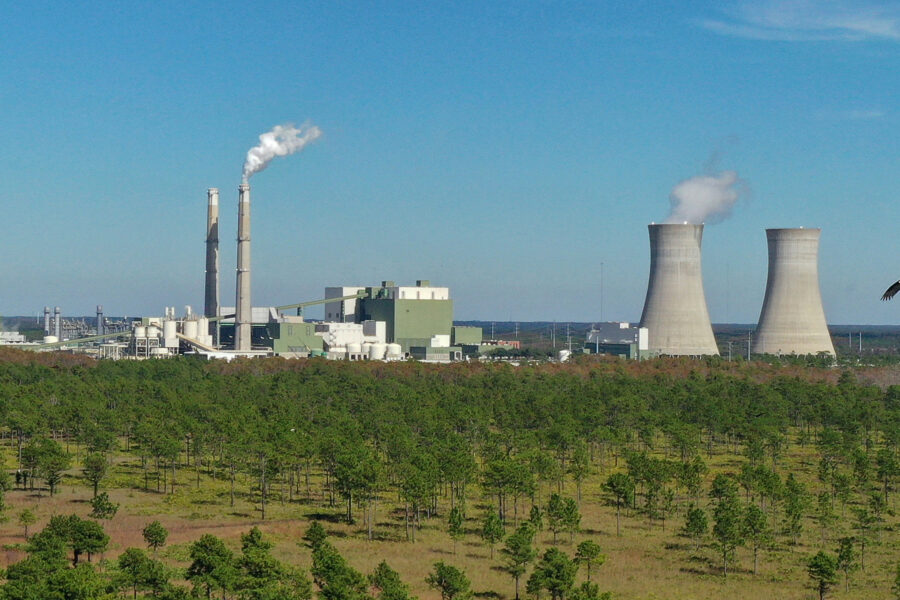
The Clean Air Act’s New Source Review requires power providers that want to modernize or expand their coal plants to also upgrade their old equipment with the best pollution control technology. The goal is to require upgrades rather than allowing aging coal plants, which are far less efficient than new ones, to continue polluting as they please.
California discovered in the 1990s what happens when a government loses the incremental pressure and relies solely on an emissions cap.
Its Regional Clean Air Incentives Market, or RECLAIM, counted on the market and emissions trading to lower pollution levels to a legally mandated cap. Instead, companies bought credits and delayed upgrading their equipment. The emissions reductions didn’t happen in time, and as the deadline approached, the South Coast Air Quality Management District had to step in and order pollution control technologies.
“With any particular sector, to do this right you want to have both declining carbon caps and increasing prices, but you also want to have these kinds of rules that push the industry in the right direction,” says Wes Boyd, founder of MoveOn.org.
Rather than eliminating the use of New Source Review for greenhouse gas emissions, groups including NRDC have suggested raising the threshold for triggering NSR so it only hits large new sources emitting more than 10,000 tons of carbon dioxide-equivalent. That sweeps away one Republican complaint that NSR applied to greenhouse gases would lead to the regulation of donut shops. NRDC—which is part of the business-environment U.S. Climate Action Partnership that produced the foundations of the Waxman-Markey ACES bill—is also publicly urging Congress to preserve the EPA’s ability to set greenhouse gas performance standards for power plants and other emitters covered by the ACES cap.
Before the House vote last month, 43 Congress members wrote to Speaker Nancy Pelosi urging her to “maintain or strengthen the EPA’s existing authority under the Clean Air Act to establish limits for global warming emissions from coal plants,” but the changes were never made.
MoveOn.org sees a broader understanding among senators that the Clean Air Act is important to preserve and protect, Boyd says. One of those senators is Barbara Boxer (D-Calif.), the chairwoman of the Senate Environment and Public Works Committee, who will be writing the Senate’s version of the climate bill.
Looking back at the concessions made to industry during House negotiations, stripping the Clean Air Act of its powers doesn’t appear to have picked up many votes.
The fact is, while coal, utilities and other industries complain about the bill and fight tooth-and-nail for every advantage they can get out of ACES, they need a federal law more than environmental groups do because the alternative is EPA regulation, Boyd says.
Without a federal climate law spelling out limits for greenhouse gas emissions, industries face case-by-case reviews by federal regulators—and the prospect that Congress could decide to set rules at any time. That regulatory and legislative uncertainty has led dozens of power providers to scrap coal plant plans and dampened investment interest in fossil fuels.
With the Obama administration now in power, polluting industries no longer have friendly regulators to give them a pass. EPA Administrator Lisa Jackson is already beefing up the agency’s enforcement division and taking a closer look at older coal-fired power plants.
”If you put yourself in the shoes of the industry, they’re saying we really need legislation because if you leave this to regulators, we’re in trouble,” Boyd says.
The American Gas Association said as much in its own analysis of the bill:
Importantly, the (ACES) bill would eliminate the specter of regulating greenhouse gases under the air toxics or New Source Review provisions of the existing Clean Air Act.
The exemption from New Source Review would be especially welcome for natural gas utilities and their customers. If NSR were to apply, it could trigger the requirement for pre-construction permitting, delays and potentially burdensome offsets.
MoveOn.org is running an ad campaign urging the Senate to save the Clean Air Act, and its members have been holding strategy meetings to find the best ways to spread the message through the grassroots and spur the right action from Congress.
The New York Times editorial board weighed in today, as well, urging the Senate to close two "climate loopholes" in the ACES bill. Of the Clean Air Act, the board writes:
The bill does not, however, impose any performance standards on existing power plants. And it explicitly removes these plants from the reach of the Clean Air Act. This is a mistake.
Protecting the Clean Air Act at this point would be simple – leave it out of the Senate version and make sure the premeptions don’t resurface if the two chambers meet to work out a compromise.
See also:
Clean Air Act Trips Up Sunflower’s Coal Plant Deal in Kansas
EPA Issues Endangerment Finding, Increases Pressure on Congress to Act on Climate
Greenpeace Says ‘No’ to Climate Bill: ACES Is Too Weak
Grading a Climate Bill: 8 Ways ACES Must Be Strengthened
About This Story
Perhaps you noticed: This story, like all the news we publish, is free to read. That’s because Inside Climate News is a 501c3 nonprofit organization. We do not charge a subscription fee, lock our news behind a paywall, or clutter our website with ads. We make our news on climate and the environment freely available to you and anyone who wants it.
That’s not all. We also share our news for free with scores of other media organizations around the country. Many of them can’t afford to do environmental journalism of their own. We’ve built bureaus from coast to coast to report local stories, collaborate with local newsrooms and co-publish articles so that this vital work is shared as widely as possible.
Two of us launched ICN in 2007. Six years later we earned a Pulitzer Prize for National Reporting, and now we run the oldest and largest dedicated climate newsroom in the nation. We tell the story in all its complexity. We hold polluters accountable. We expose environmental injustice. We debunk misinformation. We scrutinize solutions and inspire action.
Donations from readers like you fund every aspect of what we do. If you don’t already, will you support our ongoing work, our reporting on the biggest crisis facing our planet, and help us reach even more readers in more places?
Please take a moment to make a tax-deductible donation. Every one of them makes a difference.
Thank you,