When it comes to U.S. environmental laws, individual states almost always blaze the trail for the nation.
They launched the first auto emissions regulations, building efficiency standards and emissions reporting rules. Now, they’re testing cap-and-trade programs, renewable electricity standards and renewable fuel standards, just to name a few.
So, as U.S. senators prepare to write their version of the federal climate and energy bill, five states are speaking out, urging them to step carefully and ensure that Congress preserves the authority of individual states to set even higher standards and to enforce the rules.
The five want a federal climate bill expedited, no question.
“We believe that the climate bill passed by the House, the American Energy and Security Act (ACES), represents a strong foundation upon which the Senate can build,” the attorneys general of California, Arizona, Connecticut, Delaware and New Jersey write in a letter to senators.
But the bills and proposals offered right now need work if they’re going to succeed.
In addition to preserving state authority, the Senate should remove the House bill’s shackles from the EPA and allow it to regulate CO2 so the nation’s aging power plants aren’t free to pollute the air with impunity, the attorneys general write:
“In the absence of any controls for existing facilities, the bill would allow owners of older, dirtier plants to continue operating (or expand) their plants, free from controls such as improved efficiency or cleaner fuels."
The Senate also needs to get its reduction targets back on track with the science.
Preserving State Authority
When the House passed the ACES bill earlier this year, it included a section preempting state caps on greenhouse gas emissions for the first five years. The rule would halt the Northeast’s Regional Greenhouse Gas Initiative trading and the block plans for a similar program by the Western Climate Initiative.
It also would stop progressive states from ordering stricter emissions caps.
The five attorneys general say preempting tougher state caps is unwarranted. But they are more concerned that the language in the bill could be broadened in ways that effectively prevent other state climate measures. A few state powers are protected in the House bill, such as regulatory authority over renewable energy standards, but not all.
To protect the states’ ability to push for better environmental laws in the future, they’re calling for an umbrella clause that specifically preserves state regulatory authority and a section “recognizing the important role of state programs and stating that these efforts complement and further the purposes of the federal bill.”
“Allowing states to go beyond federal minimum requirements—which is the model of most existing federal environmental statutes—has worked well to improve the nation’s environment over the past four decades and stimulated innovation through creative state experimentation,” the attorneys general write.
They also urge the Senate to preserve state enforcement authority for markets, noting that “the allowance and derivatives markets will be susceptible to fraud at multiple levels—from facility emissions reporting through allowance commodity trading.” They worry that the market oversight proposal by Sens. Diane Feinstein (D-Calif.) and Olympia Snowe (R-Maine) is too weak.
Unshackling the EPA
One area of the House bill that has also raised the ire of some lawmakers and advocacy groups, including MoveOn.org, is how it would limit the EPA’s enforcement authority of power plants when it comes to CO2 emissions.
The House bill would expressly prevent the EPA from regulating greenhouse gas emissions from power plants or ordering those plants to install the best available emissions control technology during upgrades. EPA would not be allowed to write new performance standards for power plants based on climate change effects or use climate change as a reason for adding greenhouse gases to the list of hazardous air pollutants in the Clean Air Act, and its New Source Review could not be applied to future power plants on the basis of its emissions of any greenhouse gas.
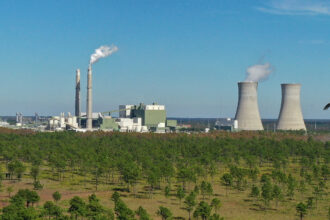
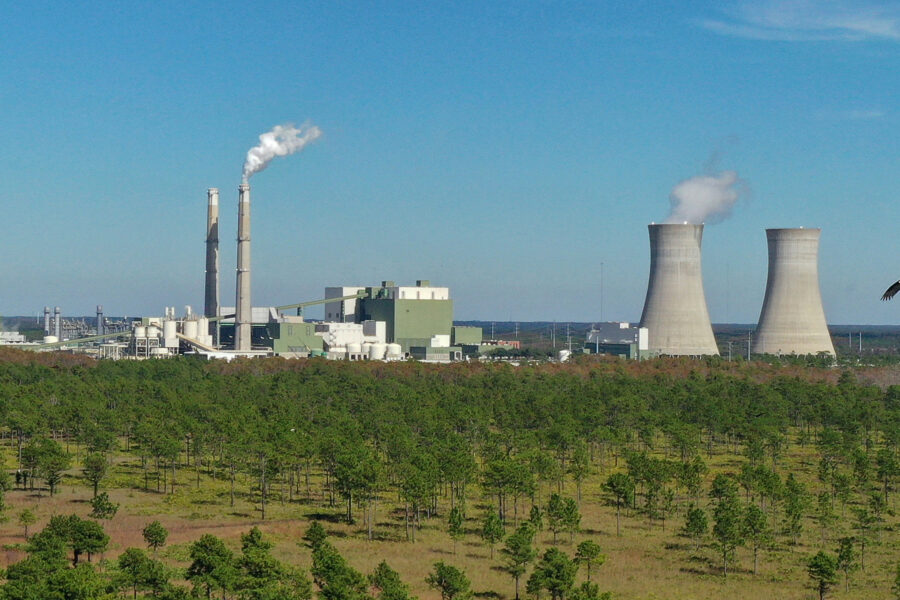
Those limits, plus new rules that would govern new power plants and the large numbers of free emissions allowances, would create perverse incentives for energy companies to expand their older, more polluting plants to avoid stricter emissions controls, the attorneys general argue.
“This is exactly the wrong signal to be sending and will delay the fundamental transition in energy production needed to meet our long-term climate objectives,” they write.
The full letter from the five attorneys general to Majority Leader Harry Reid, Minority Leader Mitch McConnell and members of the Senate Environment and Public Works Committee follows:
Dear Senators:
We are writing to express our strong support for the Senate to expeditiously adopt federal climate legislation.
We believe that the climate bill passed by the House, the American Energy and Security Act (ACES), represents a strong foundation upon which the Senate can build. We strongly support the bill’s establishment of meaningful greenhouse gas (GHG) reduction goals in line with the scientific consensus about climate change. The bill’s reduction targets, however, should be strengthened to bring them in line with the most recent scientific data, in particular to establish reduction targets of 20 percent by 2020 from 2005 levels.
We also support the bill’s comprehensive approach to addressing climate change, with provisions for a declining cap on emissions, renewable electricity standards, building and appliance efficiency standards, mobile source controls, transportation planning, adaptation and others. We believe that passage of a bill with this structure will build upon the efforts of states to address climate change, and by demonstrating the nation’s commitment to achieving carbon reductions, will put the U.S. in a stronger position in negotiations on a new international climate accord in Copenhagen later this year.
We want to highlight a few provisions that are of special interest to the States and to suggest some changes to the House-passed bill that would strengthen the measure’s effectiveness.
1. Preservation of State AuthorityOver the past decade, states and localities have shown great leadership and ingenuity in addressing climate change in advance of the federal government. States have adopted emission targets and caps, automobile emission standards, low carbon and renewable fuel standards, renewable electricity portfolio standards, electricity generation emission performance standards, climate action plans, land use measures, reporting requirements, building and appliance efficiency standards, and labeling mandates. State programs can be an important complement to federal requirements and a safeguard against lax federal implementation. Moreover, allowing states to go beyond federal minimum requirements—which is the model of most existing federal environmental statutes—has worked well to improve the nation’s environment over the past four decades and stimulated innovation through creative state experimentation.
Thus, in our view, Section 861 of the final House bill, which preempts statewide “caps” of greenhouse gas emission for an interim period of 2012-2017, is unwarranted. States should continue to be able to adopt caps that are more stringent than federal requirements in order to ensure that the ambitious targets set by the act, and required to avoid disruptive climate change, are met. To the extent, however, that state caps are preempted for a temporary period, it is critical that the “caps” be narrowly defined, as Section 861 provides, to only include state cap-and-trade programs, and not other state climate-related measures or direct limits on GHGs from individual facilities. States must be allowed to continue to pursue a menu of varied and innovative approaches to reducing GHGs within their jurisdictions.
The House bill provides that allowances issued before 2012 by California, the Regional Greenhouse Gas Initiative (RGGI) or the Western Climate Initiative (WCI) can be exchanged for federal allowances issued under the act. This provision is essential to ensure that there will be a smooth transition from these state and regional cap-and-trade programs to a federal program. We recommend that the bill direct the U.S. EPA to consult with states participating in these cap-and-trade initiatives when promulgating regulations to specify the exchange mechanism and eligibility for exchange of state allowances for federal allowances. Any exchange for federal allowances should be dependent on the retirement of state allowances, as determined by the state that issued the allowances, acknowledging the primacy of the states in implementing these regional programs and further acknowledging that state allowances represent state-issued
authorizations to emit. States participating in RGGI are currently evaluating the exchange provisions in the House bill with market experts, and may have forthcoming suggestions for specific language.The final House bill contains savings clauses preserving state regulatory authority in numerous areas, including state renewable energy standards (Section 610(k)); state feed-in-tariffs (Section 102(o)); state demand management, demand response and regulation of load-serving entities (Section 144(e)); and state regulation of electricity rates (Section 721(d)). These provisions should be retained in the Senate bill. We also suggest two additional provisions to further strengthen state authority. Because the scope of the bill is very far-reaching and touches on or amends numerous federal statutes, we are concerned that there may be some state law provisions affected where there is no specific savings clause. Thus, we think it would be helpful to have an umbrella savings clause that would apply to all the various titles of the bill. Additionally, despite explicit savings clauses in federal law preserving state and local authority, in a number of cases federal courts nonetheless have found that state regulatory programs are preempted, particularly on grounds of “obstacle preemption,” i.e. that state law interferes with the accomplishment of the objectives of federal legislation. We believe that a strong findings section recognizing the important role of state programs and stating that these efforts complement and further the purposes of the federal bill would better protect state authority from obstacle preemption challenges.
2. Strong Federal Enforcement Provisions
The climate bill will create an enormous new CO2 allowance trading market and an even larger derivatives market. From our vantage point as enforcers, and having seen the tremendous potential for damaging market manipulation in the recent housing market meltdown and the California energy crisis of 2000-01, we believe that strict regulation, oversight, and enforcement of these new markets is critical.
We support the numerous provisions in the final House bill that provide strong enforcement authority to federal regulatory agencies. These include the serious penalties for market manipulation and false statement or reports; expansive “cease and desist” authority for federal agencies to enjoin violations or threatened violations; and provisions
authorizing the federal government to seek disgorgement of unjust profits and restitution to entities harmed by violations. Given the size of many of the entities that will be participating in the markets and the high dollar volumes likely to be traded, strong, meaningful sanctions like these are needed to deter potential violations and market
tampering. We also are supportive of the bill’s provisions that will close numerous loopholes in the current Commodities Exchange Act with respect to energy commodities and impose position limits, reporting requirements, clearing through regulated clearinghouses, and other measures to prevent excessive speculation and deter market tampering. Additionally, we support the idea of requiring transaction fees for trading in the financial and derivative markets to recover the costs of supervising and regulating those markets, since without adequate resources, policing the markets is impossible. We recommend that the Senate add fee authority for the cost of audits required for offsets
under the legislation.We understand that S. 1399, introduced by Senators Feinstein and Snowe, may be used as the basis for the market oversight provisions of the Senate bill. We support many provisions of that measure. There are several instances, however, in which S. 1399 is substantially weaker than comparable provisions in the bill adopted by the House. We believe that the stronger House provisions are needed to protect the integrity of the new carbon market.
3. State Enforcement Authority
Because the allowance and derivatives markets will be susceptible to fraud at multiple levels—from facility emissions reporting through allowance commodity trading—federal enforcement must be augmented by state and local enforcement resources. The final House bill expressly preserves state enforcement authorities, providing that it does not preempt any state unfair competition, antitrust, consumer protection, securities, commodities or any other state laws (section 401(e)). This important provision should be included in the Senate bill. We also believe that joint state/federal enforcement activity and cooperation could be further enhanced if the provision of the House bill dealing with sharing of data that is claimed to be “confidential business information,” section 713(b)(1)(N) (ii) (II), were streamlined to facilitate the sharing of information necessary for states and tribes to conduct timely monitoring, oversight and investigation. We have suggested some alternative language to EPA modeled on existing information sharing provisions under the Clean Air Act that we believe would accomplish this streamlining.
4. Oversight and Transparency of Agricultural and Forestry Offset Program
The final version of the House bill creates a separate offset program for agricultural and forestry-related offsets to be administered by the Department of Agriculture (USDA), as opposed to EPA. It is critical that agricultural and forestry offsets be held to the same standards of accountability and transparency as other types of offsets. The House bill fails to accomplish this.
First, the House bill does not require public disclosure of all offset project documentation, including project eligibility applications, monitoring and verification reports for agricultural or forestry offset projects, or disclosure of USDA’s determination of the quantity of GHGs that have been offset by such projects, even though this is required for other types of offsets. In the absence of such disclosure, it is impossible for members of the public, states, and other interested parties to know how credible the offset claims are. The lack of certainty about the integrity of these offsets is also likely to lead them to be valued lower by the market. Second, many key enforcement and compliance
authorities provided by the Clean Air Act are made applicable to the offset program administered by EPA, but not to the agricultural and forestry offset program. These include EPA’s strong information gathering authorities and robust penalty and administrative, civil and criminal enforcement authorities. It also includes the Act’s citizen suit provision, section 304, authorizing suits for violations of any emissions limit or standard. These authorities are needed for the agricultural and forestry offset program as well, to give USDA, which traditionally has not been an enforcement-oriented agency,
the tools needed to adequately police the new offsets market, and to give the public confidence that the market is being effectively overseen. Extending citizen suit authority is of considerable importance to the states, since this is the only tool allowing states to directly enforce the bill’s requirements.Under the terms of the House bill, the majority of emissions reductions achieved through a national cap-and-trade program could come from outside the capped sectors in the form of offsets. Therefore, offset quality becomes paramount in maintaining the environmental integrity of the cap-and-trade program. Without credible assurance that
the offset projects actually exist, would not have happened anyway, continue to exist over time, and that the emission reductions claimed for offset projects can be relied upon, the money flowing into the offset market to support two billion tons of offsets annually could spur widespread fraud and abuse. Rigorous, transparent standards for evaluating project
eligibility and emissions reductions and carbon sequestration, coupled with enforcement, compliance and auditing mechanisms are essential if the cap-and-trade program is to be credible, and must be established for the agricultural and forestry-related offsets to be administered by the USDA.5. Displacement of Clean Air Act Authority
We believe that the House bill sweeps too broadly in eliminating EPA’s authority to apply New Source Review (NSR) provisions for any new or modified facility based on its GHG emissions, and repealing New Source Performance Standards (NSPS) for capped sources (see sections 811 and 834). NSR and NSPS authorities allow EPA to impose
feasible and cost effective controls on facilities, such as requiring coal-fired power plants to adopt the most efficient technologies, which can be important complements to the cap-and-trade provisions of the bill. This is the complementary approach that has proven so successful for the Clean Air Act’s acid rain trading program.Indeed, in the absence of any controls for existing facilities, the bill would allow owners of older, dirtier plants to continue operating (or expand) their plants, free from controls such as improved efficiency or cleaner fuels. Our concern for this occurring is heightened by the fact many of these entities will receive free emission allowances in the early years of the bill. With respect to coal-fired power plants, the House bill as currently structured could create perverse incentives for owners of older plants to expand their capacity in the early years, rather than to build new, more efficient plants—because coal plants built after 2009 will be subject to emissions controls under section 812 of the Act,
but existing plants will not, no matter how substantially they expand or upgrade their operations. This is exactly the wrong signal to be sending and will delay the fundamental transition in energy production needed to meet our long-term climate objectives.We understand the concerns with expanding the NSR program to cover a large number of potential new sources. This can be easily addressed by amending the definition of “major emitting facility” in section 169 of the Clean Air Act to provide that for purposes of greenhouse gas emissions, only facilities that otherwise are subject to the Prevention of Significant Deterioration (PSD) program would require controls for greenhouse gas emissions, or to provide that EPA, in consultation with the states, shall set an appropriate threshold.
6. Standing for Citizen Suits
From our perspective as state enforcers, citizen enforcement has been a critical supplement to agency enforcement and has helped to promote compliance with environmental requirements. In a series of recent decisions, however, the Supreme Court has imposed restrictive standing requirements for citizens seeking to enforce environmental laws. This jurisprudence most likely will make it difficult for citizens to establish standing where the harm from an alleged violation contributes incrementally to a widely shared injury, such as the risk of climate change. Thus, we support language
that was contained in the discussion draft of the House bill to liberalize standing requirements for citizen enforcers bringing enforcement actions under the bill.We appreciate the opportunity to submit comments on the legislation. Please feel free to contact us with any questions.
Sincerely,
EDMUND G. BROWN JR.
Attorney General of CaliforniaTERRY GODDARD
Attorney General of ArizonaRICHARD BLUMENTHAL
Attorney General of ConnecticutJOSEPH R. “BEAU” BIDEN, III
Attorney General DelawareANNE MILGRAM
Attorney General of New Jersey
See also:
300-Plus Groups Write to Senate Calling for Stronger Climate Bill
Letter to Pelosi: 20 Environmental Groups Call for Stronger Climate Bill
Scientists Call on Obama, Congress to Take Stronger Climate Action
EPA Investigating Aging Coal Plants, Like N.H.’s Merrimack
Senate Urged to Protect Clean Air Act from Climate Bill
About This Story
Perhaps you noticed: This story, like all the news we publish, is free to read. That’s because Inside Climate News is a 501c3 nonprofit organization. We do not charge a subscription fee, lock our news behind a paywall, or clutter our website with ads. We make our news on climate and the environment freely available to you and anyone who wants it.
That’s not all. We also share our news for free with scores of other media organizations around the country. Many of them can’t afford to do environmental journalism of their own. We’ve built bureaus from coast to coast to report local stories, collaborate with local newsrooms and co-publish articles so that this vital work is shared as widely as possible.
Two of us launched ICN in 2007. Six years later we earned a Pulitzer Prize for National Reporting, and now we run the oldest and largest dedicated climate newsroom in the nation. We tell the story in all its complexity. We hold polluters accountable. We expose environmental injustice. We debunk misinformation. We scrutinize solutions and inspire action.
Donations from readers like you fund every aspect of what we do. If you don’t already, will you support our ongoing work, our reporting on the biggest crisis facing our planet, and help us reach even more readers in more places?
Please take a moment to make a tax-deductible donation. Every one of them makes a difference.
Thank you,