A new study from the National Research Council holds a warning for lawmakers about the true costs of the nation’s aging power plants and the danger of grandfathering clauses.
The council was asked by Congress to study the external costs of the most common types of energy production and use — costs that aren’t incorporated into the market price of energy or into government policies, such as damages to health, environment and infrastructure.
The results were released on Monday, and they are startling.
“Just the damages from external effects the committee was able to quantify add up to more than $120 billion for the year 2005,” the council writes.
“There is little doubt that this aggregate total substantially underestimates the damages, because it does not include many other kinds of damages that could not be quantified for reasons explained in the report, such as damages related to some pollutants, climate change, ecosystems, infrastructure and security.”
The study looked at costs associated with various types of energy used for transportation, electricity and heat. The largest chunk of that $120 billion, more than half of it, came from the coal-fired production of electricity.
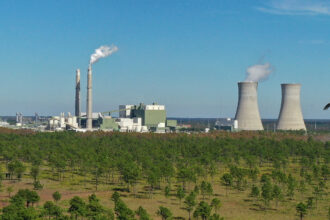
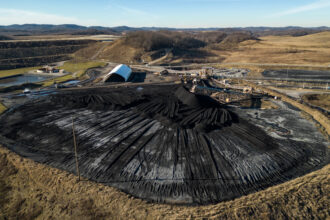
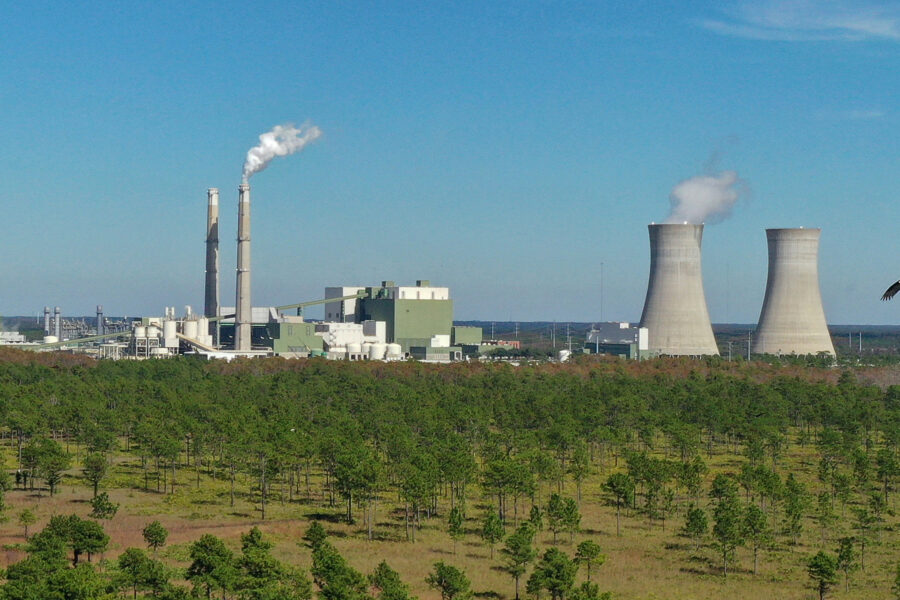
The researchers estimated the external costs related coal-fired electric power – not including damages related to climate change – to be $62 billion for 2005 alone. (They looked at 406 power plants across the continental United States representing 95% of coal power generated.)
That works out to 3.2 cents per kilowatt-hour across all the coal plants, but a more important lesson surfaces when costs are compared plant to plant:
— The top 10% of the worst offenders, those coal plant with the highest calculated damages per plant, accounted for 25% of the total generation, but they were responsible for 43% of the damage.
— The bottom half in the list also accounted for 25% of total generation, but only 12% of the damage.
— The range: $8.7 million annually for the least damaging plant to $575 million for the worst.
Most of the variation is in emissions intensity, or emissions per kWh, rather than tons of pollution produced, the authors write. Those variations “reflected the sulfur content of the coal burned; the adoption or not of control technologies (such as scrubbers) and the vintage of the plant — newer plants were subject to more stringent pollution control requirements.”
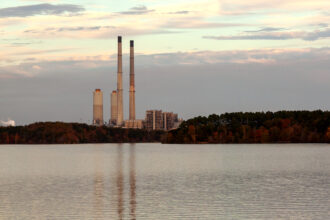
When the Clean Air Act was passed in 1970, existing coal plants were grandfathered in with the expectation that they would soon be replaced. Instead, their owners modified the aging plants repeatedly to keep them running rather than building new plants that would be required to meet Clean Air Act requirements. The act’s New Source Review provision was intended to keep tabs on these modifications, but it was frequently skirted. Today, the average age of the U.S. coal-fired power plant fleet is about 40 years and several have been around since the 1950s.

The National Research Council’s new study on the external costs of energy was ordered under the Energy Policy Act of 2005 and finally funded in 2008.
It takes into account damages such as costs to human health — an estimated 18,000 premature deaths per year — agriculture, forestry, building materials and the visibility of vistas. More than 90% of the monetized damages caused by the pollution from coal-fired power were associated with human health, with sulfur dioxide considered the worst culprit. The map shows where those damages are greatest.
Compared to the $62 billion in damages the study found from the 406 coal plants, a sampling of 498 natural gas power plants found a damage estimate of $740 million in 2005, also excluding costs related to climate change. Here, too, the researchers found a wide difference among plants — 10 percent of the worst offending natural gas plants produced 65 percent of the damages.
The council does see improvements on the horizon. Using the Energy Information Agency’s energy outlook, it expects that by 2030, SO2 emissions from coal-fired power plants will be cut by 64% and NO2 and PM emissions by half, dropping the average damages to 1.7 cents per kWh.
“Our analysis does indicate that regulatory actions can significantly affect energy-related damages," the study’s authors write. "Major initiatives to further reduce other emissions, improve energy efficiency or shift to a cleaner energy-generating mix (e.g. renewable sources, natural gas, and nuclear) could substantially reduce external effects damages.”
The committee was not asked to recommend specific strategies, but its numbers point to a need for strong controls on power plant emissions.
The EPA under Administrator Lisa Jackson has already launched reviews into several aging coal plants to determine whether they are in compliance with the Clean Air Act. In August, the federal agency joined Illinois Attorney General Lisa Madigan in suing Midwest Generation for modifying six aging power plants to extend their lives without installing the best pollution control equipment. Two of those plants are located in Chicago neighborhoods, the sort of location where health costs are the highest.
When it comes to climate change costs, the council notes that coal-fired electricity generation is the largest single source of CO2 emissions. The study doesn’t calculate the related costs, but it cites previous studies estimating monetary damages from coal-fired power plants ranging from 0.1 cents to 10 cents per kWh. It also notes:
"All model results available to the committee indicate that climate-related damages caused by each ton of CO2 emissions will be far worse in 2030 than now; even if the total amount of annual emissions remains steady, the damages caused by each ton would increase 50 percent to 80 percent.”
See also:
Senate Urged to Protect Clean Air Act from Climate Bill
43 New Coal Plants Would Escape Climate Bill CO2 Standards
Clean Energy Climate Bill Gives Coal a Competitive Future
Survival Strategy for an Aging Coal Plant: New Hampshire’s ‘Big Dig’
EPA Investigating Aging Coal Plants, Like N.H.’s Merrimack
Sierra Club Chalks Up 100th Victory in Fight to Stop New Coal-Fired Power Plants
About This Story
Perhaps you noticed: This story, like all the news we publish, is free to read. That’s because Inside Climate News is a 501c3 nonprofit organization. We do not charge a subscription fee, lock our news behind a paywall, or clutter our website with ads. We make our news on climate and the environment freely available to you and anyone who wants it.
That’s not all. We also share our news for free with scores of other media organizations around the country. Many of them can’t afford to do environmental journalism of their own. We’ve built bureaus from coast to coast to report local stories, collaborate with local newsrooms and co-publish articles so that this vital work is shared as widely as possible.
Two of us launched ICN in 2007. Six years later we earned a Pulitzer Prize for National Reporting, and now we run the oldest and largest dedicated climate newsroom in the nation. We tell the story in all its complexity. We hold polluters accountable. We expose environmental injustice. We debunk misinformation. We scrutinize solutions and inspire action.
Donations from readers like you fund every aspect of what we do. If you don’t already, will you support our ongoing work, our reporting on the biggest crisis facing our planet, and help us reach even more readers in more places?
Please take a moment to make a tax-deductible donation. Every one of them makes a difference.
Thank you,