Bio-engineering has given science a new toolbox for slowing climate change: By synthetically altering the DNA in bacteria, bio-engineers may be able to convert microscopic organisms into fuel producers.
If the science reaches its full promise, drivers a few years from now could be filling up with carbon-neutral gasoline, fresh off the bacterial production line.
This technology has the potential to revolutionize the way that we power our lives and to dramatically decrease carbon emissions, but it is still in the early stages of development. That could change with a boost from the U.S. Department of Energy, which has sought to spur growth in low-emissions energy technologies through the recently established Advanced Research Projects Agency-Energy (ARPA-E). The aim is to invest in high-risk, high-rewards innovations that stand to transform the global energy landscape.
"With ARPA-E, we are swinging from the heels and trying to hit home runs, not just base hits. The 37 projects we’re funding span the spectrum—from renewable energy, to energy storage, to industrial and building efficiency, to petroleum-free vehicles and carbon capture," Energy Secretary Steven Chu said.
Even one break-through in any of these areas could be a major step toward solving climate change.
Chu announced the first 37 winners of $151 million in ARPA-E funding late last month. The three largest grants, each about $9 million, went to proposals for improving access to geothermal energy; developing fuel out of seaweed; and advancing the efficiency of wind power. They money is intended to be enough for researchers to demonstrate the viability of their idea, at which point business interests would become the primary source of funding.
Another grant, for $2.2 million, went to a University of Minnesota research team to develop a novel bio-fuel by bio-engineering bacteria. If the team succeeds, “investors will be lining up” said Lawrence P. Wackett, a biochemistry professor who leads the team. In the meantime, the researchers have a great deal of laboratory time ahead of them.
The UMN project is based on developing a symbiotic relationship between two types of bacteria.
“The goal is to build an integrated reactor system that very efficiently turns CO2 into biofuel,” Wackett explained.
A strain of photosynthetic cyanobacteria would take up carbon dioxide, sunlight and water to produce sugar. This sugar would serve as a food source for the second bacterial strain that had been genetically engineered to catalyze hydrocarbons. Hydrocarbons are the combustible component in crude oil. They can be synthesized in bacteria by altering the genetic codes that normally determine fatty acid production.
UMN’s project partner BioCee Inc. has developed a latex, thin-film coating that provides as a stable environment for the bacteria to inhabit and should make for easy transportation of the fuel-producing organisms.
The greatest challenge facing the UMN team is to achieve a successful symbiotic relationship between the two bacteria that are to make up the system, Wackett said. The key may be to look to nature for bacterial strains that are already living together and engineer one of them to produce hydrocarbons.
“Certain bacteria already associate in the environment, so we do not need to reinvent what nature has already done well,” he said.
Like other bio-fuels, the UMN technology would be carbon-neutral because it eliminates the addition of “new” carbon dioxide to the atmosphere. The bacteria would recycle the CO2 present at the Earth’s surface, avoiding the carbon emissions from burning buried oil deposits.
Bacteria’s Advantage Over Other Biofuels
Making fuel from bacteria has an advantage over fermenting sugar from organic material into alcohol, which is the process used to create ethanol. The distillation needed to process ethanol makes it 65% more energy-intensive to produce than hydrocarbon bio-fuels like petroleum and diesel. Compared to ethanol, petroleum fuel also packs 30% more combustible energy per gallon, making it more fuel-efficient to use on the consumer end.
Using photosynthetic bacteria also eliminates the “food vs. fuel” dilemma that arises with many bio-fuels. The California-based startup LS9 has engineered bacteria to produce crude oil that can be refined into gasoline, much the same way that crude oil from the ground is processed. However the scale of the operation is currently limited by the availability of corn kernels, which provide the sugar for the bacteria.
The UMN laboratory intends to use the photosynthetic cyanobacteria to convert sunlight, C02 and minimal water into food for the fuel-producing bacteria. Valuable land resources could then be left to serve nutritional needs, instead of being tied up in making bio-fuel feedstock.
At this point, UMN’s bio-fuel is only a budding technology. Wackett puts it at a 2, on a scale where a 10 is a market-ready technology.
If it comes to fruition, though, it will require little to no changes to the current petroleum-based infrastructure. Now, it will be up to the researchers to achieve the trick of making petroleum from bacteria.
See also:
Subsidies Worth Billions at Stake in Battle Over Biofuel Rules
New Report Complicates Ag’s Assault on Biofuel Rules
Sugarcane: The Miracle Biofuel?
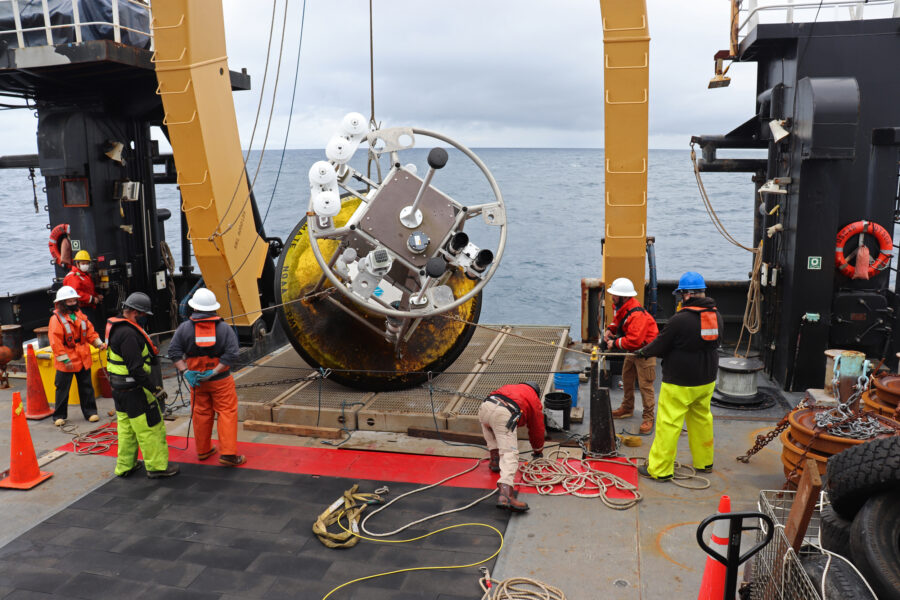
(Photo: Pacific Northwest National Laboratory)
About This Story
Perhaps you noticed: This story, like all the news we publish, is free to read. That’s because Inside Climate News is a 501c3 nonprofit organization. We do not charge a subscription fee, lock our news behind a paywall, or clutter our website with ads. We make our news on climate and the environment freely available to you and anyone who wants it.
That’s not all. We also share our news for free with scores of other media organizations around the country. Many of them can’t afford to do environmental journalism of their own. We’ve built bureaus from coast to coast to report local stories, collaborate with local newsrooms and co-publish articles so that this vital work is shared as widely as possible.
Two of us launched ICN in 2007. Six years later we earned a Pulitzer Prize for National Reporting, and now we run the oldest and largest dedicated climate newsroom in the nation. We tell the story in all its complexity. We hold polluters accountable. We expose environmental injustice. We debunk misinformation. We scrutinize solutions and inspire action.
Donations from readers like you fund every aspect of what we do. If you don’t already, will you support our ongoing work, our reporting on the biggest crisis facing our planet, and help us reach even more readers in more places?
Please take a moment to make a tax-deductible donation. Every one of them makes a difference.
Thank you,