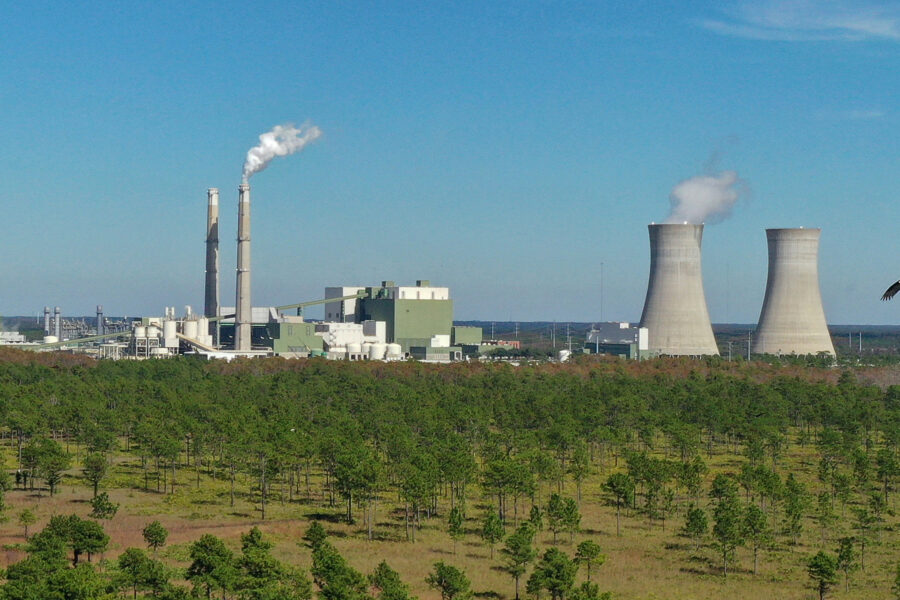
Two of the nation’s biggest power providers, Exelon and Progress Energy, announced plans this week to retire more than a dozen of their aging coal-fired power plants.
While the decisions were based on economics, they ultimately will have an impact on human health.
In North Carolina, Progress Energy, under pressure from the state to upgrade its emissions scrubbing equipment, announced Tuesday that it would close 11 coal-fired units by the end of 2017 and shift to cleaner-burning natural gas. The targeted units represent nearly 30 percent of the company’s statewide coal fleet.
Exelon followed up on Wednesday, announcing its own plans to shut down three of its coal-fired units in Pennsylvania by the end of 2011. In addition, Duke Energy plans to retire several of its aging coal-fired units over the next decade.
“Coal-fueled generation will continue to be vital to our ability to meet customer electricity needs,” Progress Energy Carolinas CEO Lloyd Yates said. “But as environmental regulations continue to change, and as even more significant rule changes appear likely in the near future, the costs of retrofitting and operating these plants will increase dramatically.
“We believe this is the right decision for our customers, our state and our company.”
It’s the right move for health reasons, too, as Physicians for Social Responsibility (PSR) found when it took an in-depth look at coal’s impacts on human health and mortality. In a report released last month, the medical and public health group connected coal and its emissions to a number of serious health issues, including increased risk of heart disease, cancer, asthma and lowered IQ’s.
Local Health Risks
While coal accounts for 50% of the nation’s electricity production, it is responsible for 87% of the total utility-related nitrogen oxide (NO2) pollution, 94% of utility-related sulfur dioxide (SO2) pollution, and 98% of all utility-related mercury pollution, PSR found.
“Cities with high NO2 concentrations had death rates four times higher than those with low NO2 concentrations,” write the authors of the PSR report, Coal’s Assault on Human Health.
Coal is associated with detrimental effects on human health throughout its lifecycle — from mining to transporting, burning and finally disposing of waste products.
At extraction, breathing coal dust can damage miners’ lungs. Mountaintop mining operations can contaminate drinking water with the heavy metals they unearth and push into nearby streams. Dust from blasting and coal trucks then carry those risks to coal field communities.
In the transportation stage, coal trains and trucks released over 600,000 tons of NO2 and 50,000 tons of particulate matter (PM) into the air every year as recently as 2005, largely through diesel exhaust. Then, at the end of the lifecycle, the waste from coal-fired power plants in the form of coal ash becomes a problem. The toxic flood of wet coal ash that spilled into a Tennessee river last December when a TVA impoundment broke was a vivid reminder of coal power’s wastes.

It is the combustion stage, however, that exacts the largest toll on health.
The air contaminants released by burning coal cause a wide range of cardiovascular, respiratory and neurological diseases by triggering inflammation and oxidative stress in various parts of the body, the physicians write.
Oxidation is a natural occurrence, and can be seen in the effects of aging. However exposure to pollutants can increase the body’s “oxygen free radicals” to an unhealthy amount and inflict cellular damage. For example, the PM and NO2 from coal cause excessive inflammation and oxidation to the arteries that feed the brain. This can lead to deadly strokes.
Similarly, exposure to particulate matter and ozone — created when NO2 reacts with sunlight — can result in respiratory inflammation and oxidative stress. This can lead to chronic obstructive pulmonary disease, the fourth leading cause of death in the U.S., and lung cancer, the deadliest cancer in the U.S. for both men and women.
The concentration of particulate matter in the air also increases the probability of hospital admissions for heart disease and heart failure.
In fact four of the top five causes for mortality in the U.S. — heart disease, cancer, stroke and chronic lower respiratory disease — are shown to be induced or exacerbated by the air pollutants from coal, PSR writes. Cumulatively the four claimed half a million American lives in 2006, and the number of diagnosed cases was likely far higher.
Not surprisingly, coal’s effects on children can be dire.
“Increases in the risk of death from respiratory causes, including sudden infant death, were correlated with the concentration of PM and NO2” the PSR researchers write. NO2 and particulate matter in the air also worsen respiratory ailments such as asthma, especially in small children whose pulmonary systems are still developing.
Burning coal also expels mercury into the air. This neurotoxin works through the food chain, winding up in fish at levels high enough to cause developmental delays in human fetuses exposed to the pollutant through their mother’s diet.
“A nationwide study of blood samples in 1999–2000 showed that 15.7% of women of childbearing age have blood mercury levels that would cause them to give birth to children with mercury levels exceeding the EPA’s maximum acceptable dose for mercury” the authors reports.
Health Costs from Coal
The health impacts of coal carry a hefty cost, though it is not incorporated into the going price for coal-powered electricity.
A paper put out this year by University of West Virginia researcher Michael Hendryx and colleagues calculated the value of the premature deaths attributable to coal mining in Appalachia at $42 billion a year. This figure dwarfs the $8 billion in economic benefits brought to the region annually from coal-mining.
According to the study, the number of premature deaths in Appalachia due to coal-mining-related air and water pollution is between 3,975 and 10,923 each year.

In a report released this fall, the National Research Council estimated coal’s external costs to national health at $55.8 billion, not including global warming-related health issues. The health costs amounted to 90% of the total external costs associated with coal, which include harm to infrastructure, agriculture and forestry.
Aging coal plants like those being shut down by Exelon, Progress Energy and Duke, are the worst perpetrators of these health problems. Many power plants that were grandfathered in at the time of the Clean Air Act in 1970 have yet to meet modern requirements for air quality. Today the average age of a coal plant in the U.S. is about 40 years, and many provisions intended to keep watch over the pre-Clean Air Act plants have been skirted.
As Progress Energy pointed out in its announcement this week, shutting down the coal-fired units “will result in significant emission reductions, including carbon dioxide, sulfur dioxide, nitrogen oxides, mercury and other pollutants.”
Global Health Risks
“Because coal-fired power plants account for more than one-third of CO2 emissions in the U.S., coal is a major contributor to the predicted health impacts of global warming,” the PSR study’s authors write.
As greenhouse gas emissions heat up the atmosphere, the health outlook is becoming grim.
Extreme heat exacerbates cardiovascular and respiratory ailments — between 22,000 and 35,000 people died as a direct result of the 2003 heat wave that swept Europe, the study notes. Dwindling resources from droughts and flooding will likely also lead to a rise in human migrations and armed conflicts.
In addition, rising temperatures are increasing the range of insects and rodents that carry infectious diseases such as Malaria, Lyme disease and West Nile virus. For the year 2000, the World Health Organization estimated that global warming was responsible for 166,000 deaths due to malaria, drowning, diarrhea and malnutrition.
An Energy Policy for Better Health
At its best, the Clean Air Act has proven a highly effective tool in reducing health risks.
“Reductions in particulate matter concentration in 51 metropolitan areas are correlated with significant increases in life expectancy, suggesting that air quality improvements mandated by the Clean Air Act have measurably improved the health of the U.S. population,” the PSR study notes.
PSR considers it is a public health imperative for the U.S. to take swift action to cut atmospheric emissions of greenhouse gases to a safer level of 350 ppm from the nearly 390 ppm today.
The authors’ political recommendations include setting strict carbon caps, as well as making full use of the Clean Air Act to empower the EPA to regulate carbon emissions from coal-fired power plants.
“When our nation establishes a health-driven energy policy, one that replaces our dependence on coal with clean, safe alternatives, we will prevent the deterioration of global public health caused by global warming while reaping the rewards in improvements to respiratory, cardiovascular, and neurological health,” the study concludes.
North Carolina Gov. Bev Perdue noted the health and environmental value in Progress Energy’s decision to cut its coal-power use in her state.
“Progress Energy’s announcement is important for North Carolina’s air quality,” Perdue said. “The transition toward cleaner sources of energy is good for the environment and the economy.”
See also:
Survival Strategy for an Aging Coal Plant: New Hampshire’s ‘Big Dig’
EPA Investigating Aging Coal Plants, Like N.H.’s Merrimack
How Congress Threatens to Undermine the Clean Energy Future: Protecting Coal
TVA’s Coal Ash Dumping Plan Sparks Health Concerns
Review Finds 13 North Carolina Coal Ash Ponds Leaking Toxins into Groundwater
EPA Study Finds Dangers in Coal Ash Ponds Nationwide
About This Story
Perhaps you noticed: This story, like all the news we publish, is free to read. That’s because Inside Climate News is a 501c3 nonprofit organization. We do not charge a subscription fee, lock our news behind a paywall, or clutter our website with ads. We make our news on climate and the environment freely available to you and anyone who wants it.
That’s not all. We also share our news for free with scores of other media organizations around the country. Many of them can’t afford to do environmental journalism of their own. We’ve built bureaus from coast to coast to report local stories, collaborate with local newsrooms and co-publish articles so that this vital work is shared as widely as possible.
Two of us launched ICN in 2007. Six years later we earned a Pulitzer Prize for National Reporting, and now we run the oldest and largest dedicated climate newsroom in the nation. We tell the story in all its complexity. We hold polluters accountable. We expose environmental injustice. We debunk misinformation. We scrutinize solutions and inspire action.
Donations from readers like you fund every aspect of what we do. If you don’t already, will you support our ongoing work, our reporting on the biggest crisis facing our planet, and help us reach even more readers in more places?
Please take a moment to make a tax-deductible donation. Every one of them makes a difference.
Thank you,