As small island countries fight for a climate treaty that can ensure their existence, one archipelago has taken a more technical — and more direct — approach.
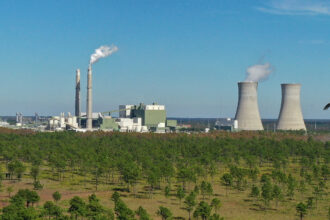
The Federated States of Micronesia filed a request with the Czech Ministry of Environment for a trans-boundary environmental impact assessment of the European country’s largest coal-fired power plant.
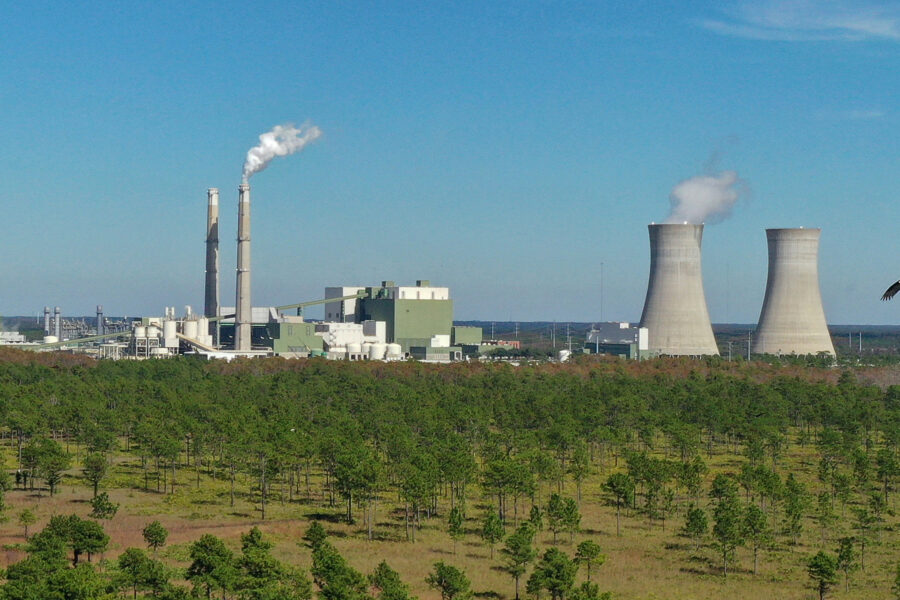
Prunerov isn’t the worst polluter in Europe. But even as the 18th largest single source of carbon dioxide emissions on the continent, its emissions are 40 times the annual emissions of all Micronesia, according to Greenpeace.
A Czech law also makes it an open target for future climate change victims like Micronesia. That’s because the plant is undergoing an environmental impact assessment (EIA) for expansions that would increase its generating capacity, but which critics have said are not in compliance with EU efficiency standards. Under Czech law, this EIA process opens the door for comments from even tiny foreign countries half way around the world who feel directly threatened.
“There is an ongoing EIA process for extending the life of the plant for another 25 years, and, according to the current Czech law, this gives Micronesia the chance to participate,” Jan Rovensky, a climate and energy campaigner with Greenpeace Czech Republic, told SolveClimate.
“I could agree that plants such as [the UK’s] Kingsnorth would be probably even better for such case, but as far as I know, there is currently no such possibility — no EIA process.”
Czech law, however, “grants a trans-boundary EIA for any country and project which could have substantial impacts on the territory on the other state,” Rovenksy says. It might not happen for Micronesia right away, but the possibility exists.
Micronesia, like other small island states, has been on the front lines of climate change. While wealthy countries have pushed up atmospheric levels of greenhouse gases, the consequences — drought, floods, rising sea levels, storms — have been felt most acutely elsewhere.
Rising seas also mean that more saltwater is seeping into soil needed to grow crops and killing staples that cannot survive in such salty earth. Fish and other sea life are also shifting locations in the ocean, whether hotter or colder or with more or less oxygen in the water.
Consensus has emerged that average global temperatures should not increase more than 2 degrees Celsius above pre-industrial times, but some small island states have said that anything more than a 1.5 degree rise will condemn their homelands to a watery grave.
Speaking at the Copenhagen climate summit on Thursday, the prime minister of one of Micronesia’s South Pacific neighbor, Tuvalu, announced that his country would not be able to sign a treaty with a 2 degree Celsius cap because the effects of a 2 degree rise would destroy his country.
Micronesia’s Ambassador to the UN, Masao Nakayam, told ABC News last week that a 1 meter rise in sea levels would devastate the island nation:
"If it gets to a meter or higher, the islands would get uninhabitable,” he said. The federation of 607 islands east of the Philippines is home to about 111,000 people.
A broad coalition of poor but desperate countries has come together at the Copenhagen talks to plead their case, but with the individually powerful rich countries largely more complacent in the face of climate change, the developing world has had mixed success.
Micronesia’s technical approach to influence an industry that emits a large share of the world’s greenhouse gases might be one more survival tactic available to drowning island states.
“Small island states are starting to take matters into their own hands in a bid for survival,” says Rovensky.
Legal tools like the trans-boundary environmental impact assessment request are “important to give communities which are immediately vulnerable to climate change the chance to take legal action to protect themselves against climate polluters wherever they are,” says Jan Pinos, Greenpeace Czech Republic’s campaign director. "By demanding a trans-boundary EIA, the government of Micronesia hopes to determine what impact the increase of emissions from the extended operation of the plant will have on the climate and on small Pacific Island states.”
Greenpeace has demanded Prunerov’s operator, CEZ, decommission the plant by 2016, citing its failure to meet what the organization sees as the still too low EU and Czech minimums of 42 percent net thermal efficiency.
For its part, the Czech Ministry of Environment is willing to listen to Micronesia’s concerns, but it says time and technicalities prevent it from completing the trans-boundary EIA at the moment.
“We will send reply to the FS Micronesia this week stating that unfortunately we cannot process the TEIA, as the standard EIA process is at its very final stage and we are obliged by law to issue the EIA statement early January,” the ministry’s spokesperson, Petra Roubíčková, told SolveClimate.
“But if the Federated States of Micronesia will send their comments to us ASAP during January, we will try to include them in the standard EIA process, which means incorporate and settle their comments. We will be also sending them all EIA documents we have so far for information.”
The Czech law allowing other countries to weigh in on assessments of the environmental impacts of domestic projects was inspired by the Espoo Convention on Environmental Impact Assessment in a Transboundary Context, to which the Czech Republic is a party, says Rovensky. Micronesia, however, is not, which he says means it, unlike parties to the convention, could not challenge a trans-boundary EIA in international court.
Still, Rovensky hopes “endangered states start to use any legal and legitimate tool to save themselves, and we are ready to help them.”
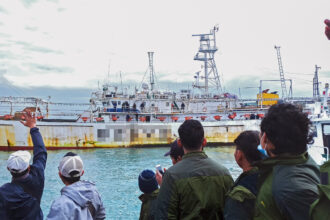
(Photos: Prunerov, Petr Štefek; Micronesia, ctsnow)
About This Story
Perhaps you noticed: This story, like all the news we publish, is free to read. That’s because Inside Climate News is a 501c3 nonprofit organization. We do not charge a subscription fee, lock our news behind a paywall, or clutter our website with ads. We make our news on climate and the environment freely available to you and anyone who wants it.
That’s not all. We also share our news for free with scores of other media organizations around the country. Many of them can’t afford to do environmental journalism of their own. We’ve built bureaus from coast to coast to report local stories, collaborate with local newsrooms and co-publish articles so that this vital work is shared as widely as possible.
Two of us launched ICN in 2007. Six years later we earned a Pulitzer Prize for National Reporting, and now we run the oldest and largest dedicated climate newsroom in the nation. We tell the story in all its complexity. We hold polluters accountable. We expose environmental injustice. We debunk misinformation. We scrutinize solutions and inspire action.
Donations from readers like you fund every aspect of what we do. If you don’t already, will you support our ongoing work, our reporting on the biggest crisis facing our planet, and help us reach even more readers in more places?
Please take a moment to make a tax-deductible donation. Every one of them makes a difference.