Part of It’s Getting Hot in Here: Climate Generation, a month-long series at It’s Getting Hot in Here reflecting on the state of the youth climate movement.
Just a few years ago, the Northwest climate movement in the United States was composed of a dedicated but relatively small group of folks working to inject the energy of the youth voice into the climate debate.
Those early years saw the solidification of the Cascade Climate Network, increased student involvement in passing state and local climate legislation, and the launching of several region-wide initiatives that continue to influence policy decisions in the Northwest today.
As we enter 2010, I believe the Northwest youth climate movement is becoming stronger than ever before. We’ve expanded onto new campuses, helped pass a slew of climate laws in both Washington and Oregon, and are becoming increasingly involved in the national and international climate dialogue.
So how did the Northwest get to this point?
Here are highlights of some of the major successes and achievements of youth climate activists in the Northwest and a look at where some of the current major initiatives may be going. This list is by no means comprehensive — and due to the nature of my own current work in the movement, it’s biased toward projects that focus on confronting the fossil fuel industries directly. Yet I hope it gives a rough idea of the trajectory of this movement so far, and provides a glimpse of where we might be headed next.
Stopping High-Carbon Gas
One of the first issues that which our Northwest movement came up against full force was the proposed construction of several LNG (liquefied natural gas) terminals and pipelines in our region.
Unlike North American natural gas, LNG is a high-carbon fuel imported from areas like Russia, the Middle East, South America, and Indonesia. In a part of the country where new coal plants are not being seriously looked at, LNG projects were and continue to be the largest new fossil fuel projects proposed for the Northwest.
In 2008, events like Cascade PowerShift focused a large section of the Northwest climate movement on stopping LNG. Today, the youth component of this movement has extended to campuses up and down the routes of proposed LNG pipelines, and the LNG industry has so far failed to obtain final approval for a single pipeline or terminal, some of which projects are years behind schedule.
This fight is far from over, and the LNG monster is not dead yet (see a recent post where I’ve tried to outline recent developments in this fight). Yet thanks to the dedicated work of dozens of people, we have a youth movement fully equipped to take on this fight as it progresses. I feel extremely privileged to have played even a small part in this struggle.
Passing State and Local Legislation
From collecting signature for a Washington ballot measure to increase renewable energy use, to testifying in support of an Oregon bill to create green jobs, the youth of the Northwest have lent essential support to passing a series of state-level laws designed to curb carbon emissions and encourage jobs-creating efficiency and renewable energy projects.
Of course the fossil fuel industries continue to challenge our achievements, and our work on state policy is far from over. But it’s seems safe to say that state climate policy in both Washington and Oregon is far more advanced than in 2006; and this is due in no small part to the efforts of youth activists.
Local government represents another arena where youth activists have seen definite results, prompting cities to sign onto the Mayors Climate Protection Agreement and lending support to energy-saving initiatives.
Building Alternative Futures
While some of us in the movement tend to spend our time bashing the fossil fuel industries and keeping their lobbyists from getting too much sleep, other activists are engaged in the equally important work of building up the key solutions to the climate crisis.
Campus groups have successfully pressured their administrations to adopt energy efficiency measures, set up revolving loan funds to pay for sustainability projects, and in a few cases even installed renewable energy infrastructure on-campus.
Meanwhile, youth-initiated projects like the Northwest Institute for Community Energy (NICE) have taken this effort beyond the campus and into the wider community, helping Northwest neighborhoods transition to a low-carbon energy supply system. I myself don’t have the in-depth knowledge of NICE and similar projects to enumerate their accomplishments in full. But as one more intimately engaged in the fossil fuel-bashing side of this fight, I can say that I’m deeply inspired by these efforts to develop viable alternatives to the fossil economy.
Bringing Up the Numbers
At the beginning of 2008, slightly more than 200 young people from across the Northwest converged on the University of Oregon for Cascade PowerShift. In November of 2009, nearly three times this number gathered in the same place for PowerShift West.
One of the most impressive signs of growth in our movement is the fact that we can now turn out many more people to a given action or event than was possible just a few years ago.
Through events like the PowerShift initiative, Focus the Nation, and the 350.org Global Day of Climate Action, Northwest students from Ashland to Seattle have turned out in increasing numbers to ask for true climate leadership. If politics is about the numbers, then we’re definitely headed in the right direction.
Closing in on Big Coal
Building on momentum gained from the fight to keep LNG out of the Northwest, the last year or so has seen the youth movement of the Northwest beginning to zero in on one of our region’s largest current sources of greenhouse emissions: Big Coal.
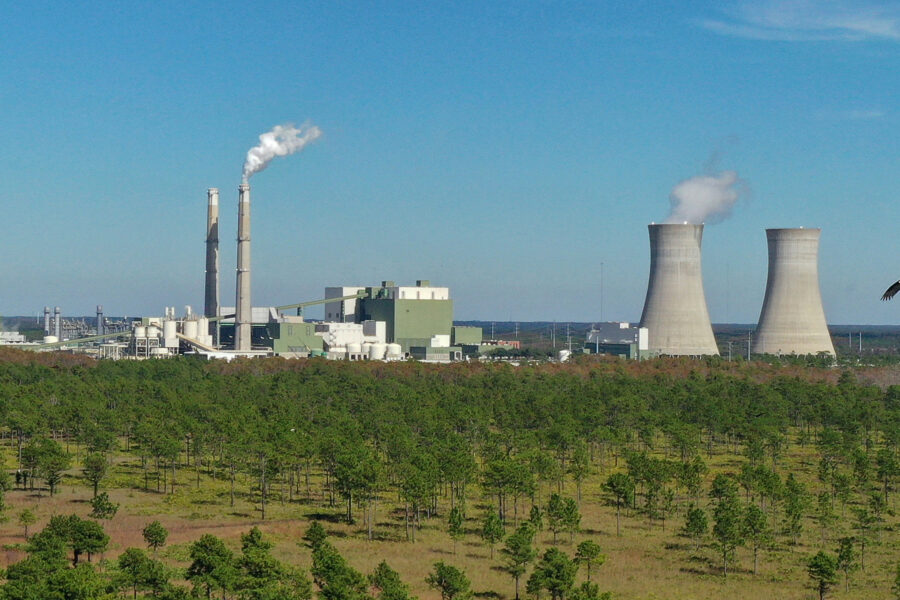
Despite the green reputation of the Northwest, the truth is that our region meets close to half its electricity needs with the dirtiest fossil fuel of them all.
An effort spearheaded by the Sierra Club and with important youth involvement has dedicated itself to making the Northwest the first coal-free region in the United States. It’s hard to describe the excitement I’ve felt being a part of this effort. Two years ago, the environmental movement was almost completely caught up in stopping a flood of new coal plants, with little time leftover for dealing with the fleet of existing plants which are more than capable of shunting us over climate tipping points on their own. Today, there seems a very real possibility that states like Oregon and Washington could begin moving to phase out coal use in the next few years.
As a first step, each state would have to close down it’s one operating coal plant (the Boardman and Centralia plants for Oregon and Washington respectively). After that, we’ll have the job of eliminating coal energy imports from other states. Yet we won’t give up until this dream becomes reality, and Big Coal in the Northwest is on the run.
The Movement Goes National
For years under the Bush administration, the climate movement in the Northwest, like most of the rest of the country, had to content itself with largely state or region-wide victories.
Neither the Obama administration nor the collective Democrat-controlled Congress has shown itself willing to stand up to fossil fuel interests and truly lead on climate issues. Yet by holding elected leaders accountable to their campaign promises, we now have a real leverage point to make the federal government go further.
Due to this, and the critical juncture where international climate negotiations now hover, climate activists in the Northwest have become much more focused on securing national legislation and an international climate treaty. In the last six months, campus groups have staged call-ins to our U.S. senators, met with Senate staff in their district offices, and sent a fabulous delegation of activists to the Copenhagen climate negotiations.
We must continue to increase our visibility on the national scene, and make sure our national representatives are aware of the movement stewing around them. The time has truly come to take an effort that’s long been confined to “small steps,” and dedicate it to finally securing the nation and planet-wide agreements we need.
What Comes Next?
The preceding examples are just a few highlights from a vibrant movement that’s built a foundation now capable of truly great things. Yet in the business of changing the future, a foundation’s only useful if you build on it.
The youth climate movement of the Northwest will continue doing just this in the months to come, as 2010 shapes up to be perhaps the most action-packed year we’ve ever known. We will continue working to pass climate-friendly initiatives at the state and local level, to show the way to a new future on our campuses and in our communities, and to create exciting new campaigns to end LNG proposals once and for all. At the same time, we will grow a regional movement against Big Coal, and take our efforts to the national and international levels of government.
The new year is a time to appreciate our accomplishments so far, but not to rest in complacency. In the months ahead, we will take this movement to new levels in a fight for our generation’s collective future.
(Originally published at Greenpeace Takes Mount Rushmore: Why 11 Climbers Were Willing to Risk Arrest
Operation Pittsburgh: Anatomy of a Climate Action
China Launches 1,000 Youth Ambassadors for the Environment
UNEP Youth Conference: Turn Words into Climate Action Before It’s Too Late
Media Savvy Youth Are Blogging Coal to Death
Young Advocates Call for Framing Shift on Waxman Bill
11,000 Students Flood Washington with Demand for Bold Climate Action
About This Story
Perhaps you noticed: This story, like all the news we publish, is free to read. That’s because Inside Climate News is a 501c3 nonprofit organization. We do not charge a subscription fee, lock our news behind a paywall, or clutter our website with ads. We make our news on climate and the environment freely available to you and anyone who wants it.
That’s not all. We also share our news for free with scores of other media organizations around the country. Many of them can’t afford to do environmental journalism of their own. We’ve built bureaus from coast to coast to report local stories, collaborate with local newsrooms and co-publish articles so that this vital work is shared as widely as possible.
Two of us launched ICN in 2007. Six years later we earned a Pulitzer Prize for National Reporting, and now we run the oldest and largest dedicated climate newsroom in the nation. We tell the story in all its complexity. We hold polluters accountable. We expose environmental injustice. We debunk misinformation. We scrutinize solutions and inspire action.
Donations from readers like you fund every aspect of what we do. If you don’t already, will you support our ongoing work, our reporting on the biggest crisis facing our planet, and help us reach even more readers in more places?
Please take a moment to make a tax-deductible donation. Every one of them makes a difference.
Thank you,