There has been a lot of talk of next-generation reactors in the U.S. “nuclear revival,” but some plans for new nuclear power generation are looking back rather than ahead.
Alongside a multitude of pending applications for new nuclear reactors, there is a move to restart construction at sites where the work began decades ago only to be abandoned before completion.
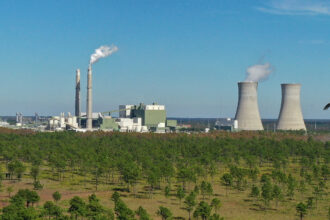
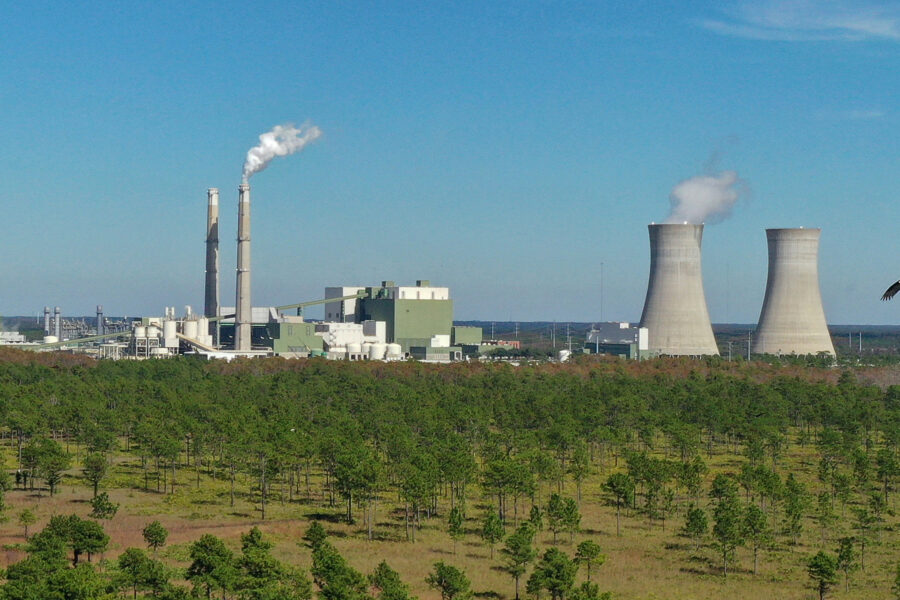
On Monday, the Nuclear Regulatory Commission held a hearing on challenges to the reinstatement of construction permits for one such project. It involves permits granted to the Tennessee Valley Authority to build the Bellefonte nuclear reactors, two reactors that were started near Hollywood, Ala., in 1974 but never finished.
The permits were surrendered in 2006, but reinstated last year by the NRC after a request from the TVA. In January of this year, the commission moved the Bellefonte site to “deferred” status, from “terminated,” taking the TVA one step closer to resuming construction. The TVA would still need to give the NRC 120 days’ notice before any construction begins.
The challenges to the new permitting came from the Southern Alliance on Clean Energy and the Blue Ridge Environmental Defense League (BREDL). They filed nine separate “contentions,” generally arguing that permits initially granted in 1974 should not simply be re-approved without thoroughly reanalyzing the site’s and design’s safety, and health and environmental issues.
Lou Zeller, science director for the BREDL, said his group’s opposition comes not only from the procedural questions raised by the reinstatement of expired permits but from questions about the reactors themselves.
“The construction there was abandoned for a period of time, and it would be unsafe to complete them. As unsafe as it could be,” he said.
Last summer, a cable supporting the containment structure at the Bellefonte snapped, an incident that the BREDL and other opponents point to as evidence that the aging structure should not be completed. “Rust never sleeps,” Zeller said.
Huge Sunk Costs
Construction at the Bellefonte site began the year the permits were granted, 1974. By 1988, one part of the two-unit reactor was 88 percent completed, and the other stood at 58 percent. In spite of the apparently close-to-completion status, construction stopped that year after $6 billion had been spent.
Only after the spike in oil prices earlier this decade and the recent renewed interest in nuclear power did the TVA renew its intention to complete the station.
It might seem strange to abandon a multi-billion dollar investment, but Bellefonte was far from the only nuclear project to end up on the scrap heap. More than 60 proposed projects were scrapped in the 1970s and early 1980s as the energy environment changed and oil became cheaply available. The 1979 Three Mile Island partial meltdown added public fears about nuclear safety to the mix.
Some of those sites, like the Midland Cogeneration Venture in Midland, Mich., were converted to other forms of power generation (natural gas, in Midland’s case) due to overwhelming costs of nuclear construction. Others, such as the Yellow Creek Nuclear Plant in Mississippi, were transformed for other uses; at Yellow Creek, construction continued through part of 1993 to make the site a NASA solid rocket motor construction plant, but that, too, was eventually halted. Many of the failed nuclear reactors were simply abandoned or demolished.
Bellefonte is not the only on-again, off-again, on-again site. Construction began on the Cherokee plant in South Carolina in the 1970s, only to be abandoned the following decade. In 2008, Duke Energy filed an application to build an $11 billion, two-reactor plant on the site. There has been talk, as well, of finally building a canceled second reactor at the Seabrook site in New Hampshire, although no new application has been filed.
1974 Is a Long Time Ago
In the case of the Bellefonte site, and likely others that have sat unused for years, opponents say that assessments done in 1974 are no longer relevant.
“The environmental impacts that were assessed three decades ago — things have changed,” Zeller said.
One contention in the NRC hearing involved the potential of flooding in the area, which could pose a hazard for the riverside site. Zeller also raised questions of water quality around the plant, saying, “It could destroy the balance in the river, and kill fish.”
The petitioners against the TVA permits have called for thorough environmental impact assessments before any new construction begins. That and other contentions were parried at the NRC hearing by TVA attorneys as being inappropriate for a hearing simply on reinstating the Bellefonte permits and moving its status to “deferred.”
James Dougherty, the attorney arguing on behalf of the Southern Alliance for Clean Energy and the BREDL, countered that there never seems to be a good time to bring up those concerns. “Every contention is filed either too late or too soon,” he said.
The TVA contended that many of the issues should be addressed during consideration of an operating license, but some of the issues, such as the flooding risk, bear directly on construction and design of the plant.
The other major question about resuming decades-old construction is in the safety of the materials and equipment already in place.
Terry Johnson, a spokesperson for the TVA, told SolveClimate that many components could be refurbished, others replaced, and others left as is; but all will be properly assessed as part of the ongoing restart process.
Forrest Remick, a professor emeritus of nuclear engineering at Penn State University and a former member of the NRC, said that if construction proceeds, the TVA would have to evaluate whether or not to upgrade various components of the plant, but such upgrades would not necessarily be required by the commission.
“Technology has changed in the intervening years,” he said. “A big question that comes to mind is the control room. Electronics have changed. And I’m sure the Bellafonte units were originally analog, and new plants are going in with digital.”
Price Unknown
Remick also said that if specific NRC regulations have changed in the time since the original permits, the TVA will have to address those changes for the new construction.
Even with these obstacles, though, “I would certainly think that finishing that unit would be much less expensive than starting from scratch,” he said.
Johnson, of the TVA, said the government-owned utility does not yet have a publicly available estimate of the cost of completing the Bellefonte reactors.
Refurbishing and restarting Browns Ferry Unit 1 in Athens, Ala., in 2007 cost the TVA $1.9 billion over five years; the reactor had sat dormant for about 20 years, but unlike the Bellefonte site, it had operated prior to its restart process and did not require as much new construction.
The contention that old nuclear facilities are relatively free of age-related problems also took a hit recently when the Vermont Senate voted to block a license renewal application for the Vermont Yankee plant. Among the issues plaguing that facility was evidence of radioactive leakage from the plant; Vermont Yankee received its operating license in 1972.
With the loan guarantee money starting to flow out of Washington for new nuclear projects, it is hard to deny the idea of a revival in nuclear power. But when some of the revival takes the form of waking up some long-dead construction sites, the list of concerns surrounding the controversial power source only seems to grow longer.
See also:
Where Is Nuclear Power Really Heading?
Nuclear Power’s Cost Competitiveness Remains a Critical Question
Nuclear Energy – White Knight or Dangerous Fantasy?
(Photo: Bellefonte Nuclear Site, TVA)
About This Story
Perhaps you noticed: This story, like all the news we publish, is free to read. That’s because Inside Climate News is a 501c3 nonprofit organization. We do not charge a subscription fee, lock our news behind a paywall, or clutter our website with ads. We make our news on climate and the environment freely available to you and anyone who wants it.
That’s not all. We also share our news for free with scores of other media organizations around the country. Many of them can’t afford to do environmental journalism of their own. We’ve built bureaus from coast to coast to report local stories, collaborate with local newsrooms and co-publish articles so that this vital work is shared as widely as possible.
Two of us launched ICN in 2007. Six years later we earned a Pulitzer Prize for National Reporting, and now we run the oldest and largest dedicated climate newsroom in the nation. We tell the story in all its complexity. We hold polluters accountable. We expose environmental injustice. We debunk misinformation. We scrutinize solutions and inspire action.
Donations from readers like you fund every aspect of what we do. If you don’t already, will you support our ongoing work, our reporting on the biggest crisis facing our planet, and help us reach even more readers in more places?
Please take a moment to make a tax-deductible donation. Every one of them makes a difference.
Thank you,