U.S. and Canadian corporate giants will face a record number of resolutions demanding greater disclosure of climate risks at their annual meetings this spring.
Investors have filed 95 global warming resolutions with 82 firms in every industry — a 40 percent leap over last year’s 68 climate resolutions — according to data from Ceres, a Boston-based coalition of investors and environmentalists.
Mindy Lubber, president of Ceres, said the boost signifies "a very clear knowledge" that climate risk is "not only an environmental or social or natural resource concern, but a major financial risk and opportunity."
Jack Ehnes, Ceres board member and CEO of the California State Teachers Retirement System, the second-biggest U.S. public pension, declared it "a very important day for investors."
The increase in resolutions follows recent guidance from the Securities and Exchange Commissions (SEC).
In January, the SEC voted 3-2 to issue interpretive guidance for publicly traded firms to consider coming carbon laws and related issues when determining what information to disclose in their corporate filings — the idea being that climate policy will alter their financial results. The decision marked the first economy-wide climate risk disclosure requirement in the world.
Lubber said that most of the 95 resolutions filed in 2010 pertain to issues in the SEC guidance, including strategies for cutting carbon dioxide emissions and adapting to climate-related impacts, such as rising sea levels.
The list of companies affected includes corporate, banking and utility giants, such as Wal-Mart, Proctor & Gamble, Bank of America and Massey Energy.
Oil majors, most notably ExxonMobil and ConocoPhillips, have found themselves particularly caught in the cross-hairs of investor groups.
This year, the two oil firms were asked to undertake reviews of risks associated with their investments in carbon-heavy oil sands production in Alberta, Canada. Environmental activists have dubbed the tarry bitumen of the oil sands the dirtiest fuel on Earth. Mining it, analysts say, produces two to six times more greenhouse gases than light oil and leaves behind toxic tailings ponds with potentially high cleanup costs.
"Investors want to know what will the return on investment be if low-carbon fuel standards take hold in the United States," Lubber said.
British firms face similar opposition. Shareholders there are seeking risk disclosure from oil sands leader Shell, as well as BP and the Royal Bank of Scotland.
Fair Pensions, a UK-based campaign group, launched an online tool last week to try to "mass mobilize" around the oil sands resolutions. Citizens can contact their pension providers to lobby support for resolutions, or email directly one of BP and Shell’s largest shareholders. More than 1,200 people have made their voices heard, the group said.
New Target: Coal Ash
Another hot shareholder issue for 2010 is coal ash, even though it does not fall under the new SEC climate guidance.
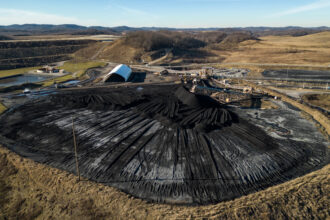
Investors led by Green Century Capital Management filed a resolution against Atlanta-based Southern Company, the nation’s largest electric power generator and second-biggest carbon polluter, targeting the hazards of coal ash disposal.
"We believe that the environmental hazards associated with coal ash pose substantial financial and regulatory risks to the utility sector," said Larisa Ruoff, director of shareholder advocacy for Green Century.
The clearest example of the danger, Ruoff said, occurred in December 2008, when a coal ash pond used by the Tennessee Valley Authority near Kingston, Tenn., ruptured and dumped a billion or so gallons of toxic sludge across the surrounding land and into the Emory River. The costs to the utility to clean it up could exceed $1.2 billion, analysts say, not including fines and lawsuits.
Southern Company operates over 20 plants with active ponds "but does not disclose ash-related financial or regulatory risk to which it’s exposed," Ruoff said.
The utility’s secrecy stands in contrast to Duke Energy, which has reported risks related to coal ash "in at least one SEC filing" and has outlined risk-mitigation strategies it is undertaking and how much they cost, she said. Similarly, Excel Energy has agreed to increase coal ash disclosure. Ohio-based FirstEnergy Corporation committed to stopping coal ash disposal in large ponds, after Green Century filed a similar resolution.
Ruoff said Green Century has held "dynamic conversations" with top executives at Southern and they are "not willing" to "disclose the information on risks associated with coal ash or how the company is addressing those risks."
Those companies also could face federal regulations soon.
Each year, coal-burning plants produce over 130 million tons of ash, a byproduct of burning coal that contains arsenic, mercury, lead and other toxins. Currently, that waste is not subject to federal regulation in the United States. However, the U.S. Environmental Protection Agency is considering regulations, including potentially regulating coal ash as "hazardous material."
That won’t happen without a fight. Coal-burning utilities argue that giving coal ash a "hazardous" stigma would destroy important coal ash recycling programs that allow them to dispose of the waste for positive uses. They sell close to half of the ash they generate for use in concrete, wall board, embankments and other recycling programs, generating up to $10 billion each year, according to figures from the Electric Power Institute. The fear is that a hazardous determination would make builders wary of using it.
In a congressional hearing this week, EPA Administrator Jackson said her agency was still working on a proposed rule for coal ash and she had no timeline for issuing it. The EPA’s focus, she said, is on wet coal ash impoundments that could pose a danger of rupturing or allowing toxins to leach into water. The agency is looking at ways to regulate for those dangers without interrupting most coal ash recycling, she said.
Once coal ash regulations are in place, Luoff said, "it could require the industry to spend billions of dollars to overall current ash storage practices, clearly posing a regulatory risk to the entire sector."
Heading Off Sub-Prime Carbon
When it comes to global warming initiatives, shareholder groups are seeking to expose the hidden risks unique to climate that might impact the bottom line.
"Investors want to know which companies are prepared for climate change and which are not; which face material risk, and who’s doing something about those risks," said Lubber.
While investors "likely have little interest in climate science, they do have a compelling and strong interest in the major business trends that will affect their portfolio companies," Lubber said. "Climate change is such a trend."
Investors do not want a repeat of the subprime mortgage crisis, Lubber added. "It could happen with climate change."
For this reason, 56 leading investors, with assets totaling $2.1 trillion, sent a letter this week to the SEC praising its decision.
"Measures to protect investors by exposing hidden risks and improving transparency are essential to keep the U.S. capital markets competitive," the group wrote.
U.S. power companies, meanwhile, have expressed concern that with a federal climate bill still in limbo, it is difficult to forecast the financial impacts of carbon regulation.
In recent weeks, both houses of Congress have backed off of cap-and-trade legislation and are trying to come up with a comprehensive approach to energy and climate issues.
Companies must not wait to respond, said Sister Barbara Aires of the Interfaith Center on Corporate Responsibility, an association of faith-based institutional investors. "Carbon will be regulated in the United States, regardless of legislative action is year."
See also:
Report Warns Oil Sands Investors of Toxic Wastewater’s Financial Risk
SEC Decision Requiring Disclosure of Climate Risks Could Have Broad Impact
Investor Survey Finds Asset Managers Fail to Weigh Climate Change Risks
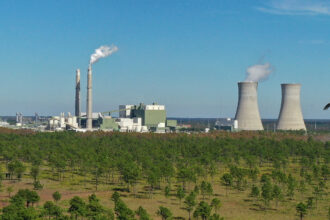
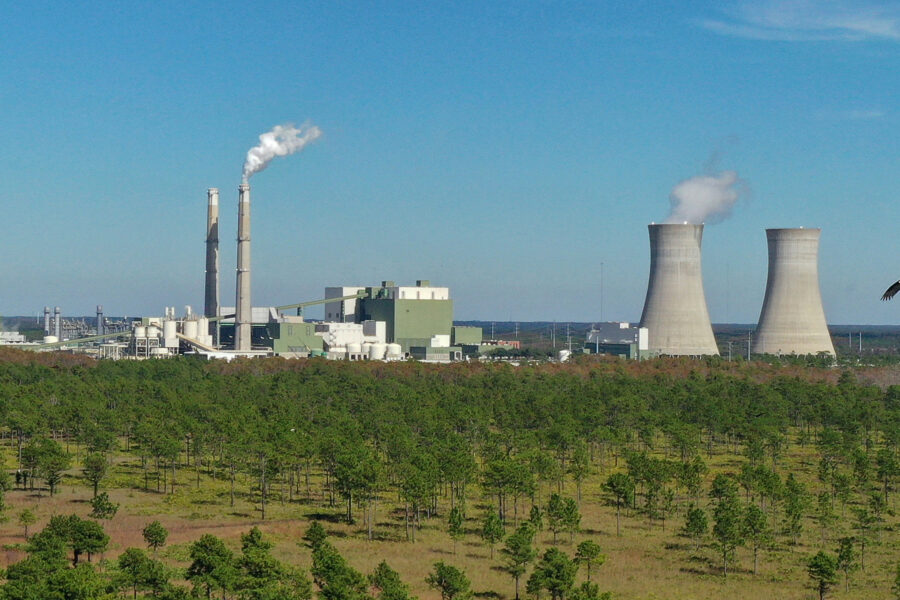
(Photo: Chris Irwin/South Wings)
About This Story
Perhaps you noticed: This story, like all the news we publish, is free to read. That’s because Inside Climate News is a 501c3 nonprofit organization. We do not charge a subscription fee, lock our news behind a paywall, or clutter our website with ads. We make our news on climate and the environment freely available to you and anyone who wants it.
That’s not all. We also share our news for free with scores of other media organizations around the country. Many of them can’t afford to do environmental journalism of their own. We’ve built bureaus from coast to coast to report local stories, collaborate with local newsrooms and co-publish articles so that this vital work is shared as widely as possible.
Two of us launched ICN in 2007. Six years later we earned a Pulitzer Prize for National Reporting, and now we run the oldest and largest dedicated climate newsroom in the nation. We tell the story in all its complexity. We hold polluters accountable. We expose environmental injustice. We debunk misinformation. We scrutinize solutions and inspire action.
Donations from readers like you fund every aspect of what we do. If you don’t already, will you support our ongoing work, our reporting on the biggest crisis facing our planet, and help us reach even more readers in more places?
Please take a moment to make a tax-deductible donation. Every one of them makes a difference.
Thank you,