The U.S. Department Energy (DOE) and utility giant Southern Co. reached an agreement on a long-awaited nuclear loan guarantee, but environmental groups left out of the negotiations have continued to question the secrecy of the process behind the loan.
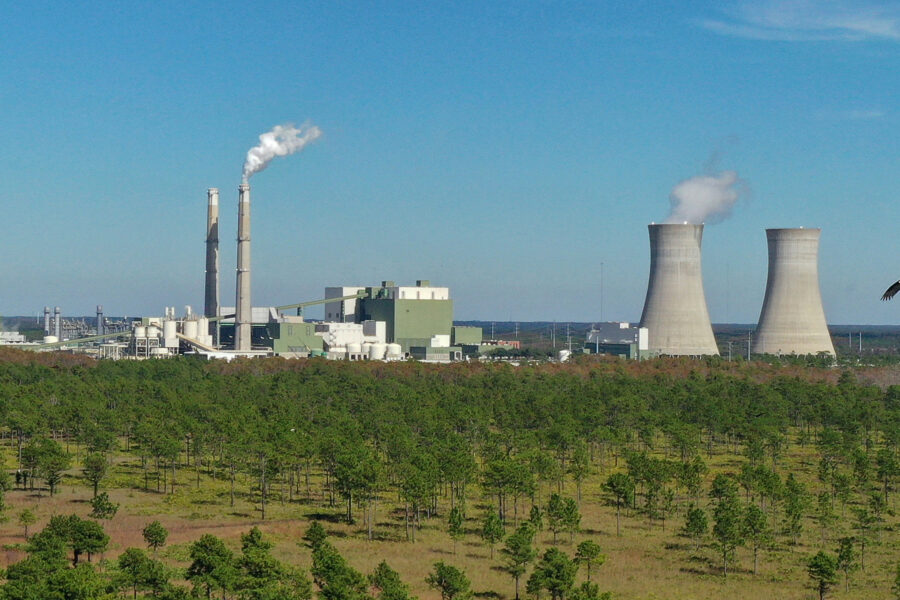
Earlier this month, Southern Co., the second largest utility in the U.S., accepted terms for its part of a $8.3 billion loan guarantee from the DOE to build and operate two new nuclear reactors near Waynesboro, Ga., about 175 miles east of Atlanta. The plants would be the first new U.S. atomic reactors in nearly 30 years. They are expected to set the stage for a tidal wave of support that could propel the industry.
“This is another step forward on the road to nuclear power playing a prominent role in America’s energy future,” said David Ratcliffe, chairman, president and CEO of Southern Co.
But nuclear power opponents have criticized the “closed door” dealings for sending billions of taxpayers dollars to benefit reactors they say are riskier than the nation’s existing fleet.
Tom Clements, southeastern nuclear campaign coordinator for Friends of the Earth, said key conditions for the loan have been shrouded in secrecy, such as the fee utilities would have to pay to secure the government billions. “DOE is protecting that information,” he told SolveClimate. He said utilities and DOE sought a low levy of one percent of the loan, while the Office of the Management and Budget wanted a higher fee.
FOIAs Being Ignored
Clements said he filed a Freedom of Information Act (FOIA) request in November to get that information, along with all records related to DOE’s evaluation of the projects and criteria used for approval. Since then, he said he has “essentially received nothing,” in what he declared a “clear violation” of FOIA regulations.
“It’s clear that DOE is doing everything it can to cloak the loan guarantee program in secrecy and shield both the process and applicants from public scrutiny,” Clements said. “This lack of transparency is very telling and reveals that DOE feels very shaky about the process, and so is preventing public oversight into a program that will put the taxpayer on the hook for billions in risky loans.”
Separately, the Southern Alliance for Clean Energy (SACE), a Knoxville, Tenn.-based environmental group, filed a related FOIA request from DOE in March. That filing would have required a response no later than April 22, the group said. In May, SACE submitted an appeal.
“Thus far the DOE has failed to produce any records responsive to the FOIA request,” SACE said in a statement to the press.
In his first day in office some 18 months ago, President Obama vowed to push for more government transparency as a touchstone of his administration. In line with that, Secretary of Energy Steven Chu declared in a memorandum last June that his agency would work “proactively and promptly” to address FOIA requests. Chu said he would “inform the public on the operations of government” and “take affirmative steps … to post information online.”
“We certainly haven’t seen that out of the Department of Energy,” Sara Barczak, a program director and nuclear specialist with SACE, told SolveClimate.
Default Rate of Concern
A major concern from advocates is the unusually high rate of default on loans for such capital-intensive projects. They fear taxpayers across the nation could get stuck subsidizing nuclear reactors that may not get built in the end. This, they say, could already be the case for consumers in Georgia.
In March 2009, Georgia Gov. Perdue signed the controversial Georgia Nuclear Energy Financing Act, or Senate Bill 31. The law gives Georgia Power the go-ahead to pre-charge its customers for the reactors as they are getting built. In 2011, when the plants are expected to break ground, consumers will pay an additional $1.30 in monthly electric bills to cover the costs, according to estimates. By 2017, the anticipated date of commercial operation for the first plant, that rate hike will reach $9.10. Certain “industrial” customers would be exempt from the increase.
The law does not allow repayment to citizens if the project is cancelled. The utility has stated that the project will result in $300 million in savings to its customers over the life of the plant and will create 3,500 jobs.
In terms of the federal loan guarantee, Southern Co. said that “any guaranteed borrowings would be full recourse to Georgia Power,” the local subsidiary of the utility.
The loan guarantee was first announced in February, amid fanfare from nuclear proponents. Southern Co. had 90 days to accept the deal and was granted an additional 30 days to decide. The 1,100-megawatt reactors would be built alongside two existing reactors at the Vogtle nuclear facility, which was built in the 1980s. The new units are expected to be completed in 2017.
The loan guarantee is not yet written in stone, however. Southern Co. said final approval and release of the money “are subject to receipt of the Combined Operating License from the U.S. Nuclear Regulatory Commission (NRC), completion of final agreements, the receipt of any other required regulatory approvals and satisfaction of other conditions.”
Nuclear Design Yet to Gain Approval
The AP1000 nuclear design by Westinghouse Electric Company has been selected for the Vogtle plant’s expansion. The model has faced a barrage of criticism. Though currently under review, it has yet to be certified by the NRC, overseer of the nation’s 104 nuclear plants, and is not operating anywhere in the world.
Environmental groups have said the reactor design has structural faults that could make it less safe than America’s current nuclear fleet. In particular, they allege the proposed “shield building” structure may not be robust enough to protect the reactor from tornadoes, earthquakes and other forces. A report commissioned by SACE also said the “containment building” — the reactor’s so-called “last line of defense” — would be vulnerable to radiation leaks in the event of an accident.
The design is on its 18th revision. Last October, NRC put the brakes on the review process in response to shield building concerns. In a memo to Westinghouse obtained by SolveClimate and released on June 21, the agency established a new schedule of approval that targets a final decision on the design in September 2011.
Westinghouse has defended the safety of the reactor, saying it is “the safest and most economical nuclear power plant available in the worldwide commercial marketplace.”
Southern Co. has said it expects to get its final operating license by the end of 2011, though opponents are skeptical of that date among potential new hurdles and many unknowns.
“It’s a long, cumbersome process,” Barczak said.
There are three other reactor projects at the top of the DOE short list to get loan guarantees — in South Carolina, Maryland and South Texas. Among those projects, the South Carolina project by utility South Carolina Electric and Gas is the only other site that would use the AP1000 design. Currently, 14 AP1000s are under regulatory review at seven sites across the American Southeast.
See also:
Georgia Judge Rules Against 2 Controversial Nuclear Reactors
Coalition: Design for New Nuclear Reactor Less Safe Than America’s Current Fleet
Obama’s $8 Billion Nuclear Boost Dogged by Safety Concerns
Where Is Nuclear Power Really Heading?
Nuclear Power’s Cost Competitiveness Remains a Critical Question
Nuclear Energy – White Knight or Dangerous Fantasy?
About This Story
Perhaps you noticed: This story, like all the news we publish, is free to read. That’s because Inside Climate News is a 501c3 nonprofit organization. We do not charge a subscription fee, lock our news behind a paywall, or clutter our website with ads. We make our news on climate and the environment freely available to you and anyone who wants it.
That’s not all. We also share our news for free with scores of other media organizations around the country. Many of them can’t afford to do environmental journalism of their own. We’ve built bureaus from coast to coast to report local stories, collaborate with local newsrooms and co-publish articles so that this vital work is shared as widely as possible.
Two of us launched ICN in 2007. Six years later we earned a Pulitzer Prize for National Reporting, and now we run the oldest and largest dedicated climate newsroom in the nation. We tell the story in all its complexity. We hold polluters accountable. We expose environmental injustice. We debunk misinformation. We scrutinize solutions and inspire action.
Donations from readers like you fund every aspect of what we do. If you don’t already, will you support our ongoing work, our reporting on the biggest crisis facing our planet, and help us reach even more readers in more places?
Please take a moment to make a tax-deductible donation. Every one of them makes a difference.
Thank you,