The long-awaited draft air permit for a proposed coal-fired power plant in Kansas was released last Wednesday, starting a race against the clock that will determine whether the plant – if approved – will then also be subject to the EPA’s new rules regulating the emission of greenhouse gases that go into effect January 2nd.
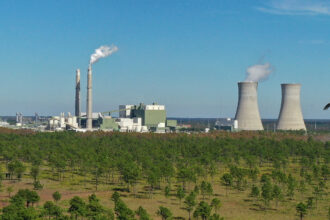
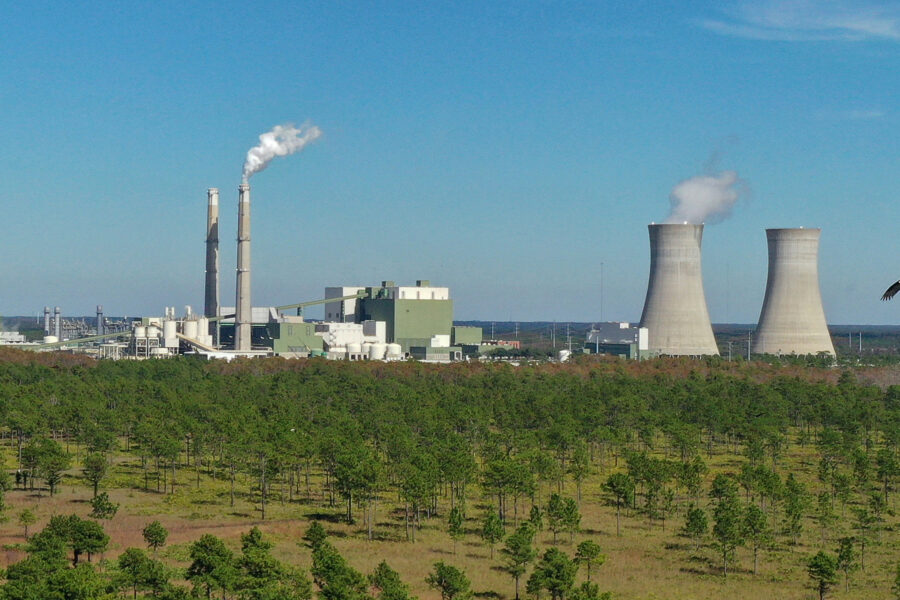
The draft permit was released in response to a new application, submitted to the Kansas Department of Health and Environment (KDHE) last January by Sunflower Electric, which is hoping to build an 895 megawatt extension to their current plant in Holcomb, Kans.
Originally, they had sought permission for a 2,100 MW facility, but their air permit for that plant was denied in 2007 by KDHE. It was the first instance of a regulatory agency denying a permit for coal plant construction on the basis of the dangers of greenhouse gas pollution.
Now that the EPA has declared greenhouse gases a danger to human health and welfare and tailored rules for phasing in regulations starting in 2011, Sunflower Electric will likely face yet another hurdle in obtaining approval to break ground on the troubled, controversial coal plant that has been a focus of repeated national attention.
Four Vetos by Sibelius
The Republican-controlled Kansas legislature tried four times to circumvent the KDHE’s authority to obtain a permit for the plant, but ran into a veto from Democratic Governor Kathleen Sebelius each time. A break for Sunflower came last year when Sebelius was confirmed as the new U.S. Secretary of Health and Human Services and then-Lieutenant Governor Mark Parkinson took over. Parkinson brokered a back-room deal with Sunflower – albeit for the much smaller 895 MW plant – a week after taking office.
That was last May. Since then, the EPA has moved the ball on federal regulations, so that starting in 2011 projects with the potential to emit more than 75,000 tons of greenhouse gases a year, such as the proposed Holcomb plant, would need to include an analysis of how they would use the best available control technology, or BACT, to limit those emissions, among other requirements.
Is Sunflower taking the possibility of those rules into account?
Company spokesperson Cindy Hertle said that would be “pure speculation” because those rules are not yet in place and still the subject of some controversy.
But, she says, “We’ve always followed the rules and will continue to follow the regulations, so we will undergo whatever process they deem necessary.”
A congressional effort led by Sen. Lisa Murkowski (R-AK) had tried to strip the EPA of its authority to regulate greenhouse gases. But that effort failed last month. While other congressional measures to block EPA action might be possible, it seems increasingly likely the new rules will go into effect on schedule on Jan. 2.
A Matter of Timing
Whether the Holcomb plant will be subject to those rules, though, is a matter of timing, but time appears to be on the side of “yes”.
“It really depends on when the final permit is issued,” Mark Smith, head of the EPA’s Air Permitting and Compliance Branch for Kansas and neighboring states, told SolveClimate.
“If this permit is issued before [Jan. 2], then these particular rules would not apply. If their final permit is issued after, then they would… and we would view greenhouse gas requirements as applying to the facility, so the state would need to address those in that permit that is issued.”
It seems likely that the final permit would not be issued until after the Jan 2nd deadline. Rod Bremby, head of the KDHE recounted how the last Sunflower permit took 17 months to approve. The state sets an 18-month deadline for issuing decisions on air quality permits.
“We have no idea how long this will take but we’ll try to be as efficient as we can,” he told SolveClimate, but cautioned that “the interest appears to be higher with this permit as opposed to the last.”
This is why his agency created multiple opportunities for public comment. Those opportunities were announced with the draft air permit: a series of public hearings in Overland Park, Salina and Garden City as well as comments received by email and in writing.
The agency received 774 written and oral comments on the 2007 permit, according to KDHE spokesperson Kristi Pankratz. “We anticipate that number or greater for this comment period,” she said.
The Timeline
The timeline, then, looks like this: The 18 month clock began ticking on the day, June 30, when KDHE deemed the permit application complete. Hearings will take place on Aug. 2, 4 and 5 and the public comment period will end Aug. 15. At that point, the comments will be reviewed and responses prepared. A summary of the responses will undergo an internal review. And, finally, a final determination will be announced.
For their part, the EPA has “been working with the state and Sunflower over the past year and looking at drafts as they’re made available to us. Our role really is as an oversight agency,” said Smith, saying that Kansas is the issuer of the permit and thus the main player.
He said the EPA will provide comments just as citizens will. It will also ensure the state responds to comments and that the requirements of the Clean Air Act and state regulations are upheld.
Coal-fired plants have come under attack as out of date, inefficient and excessively polluting by environmental groups and this pressure – combined with the prospect of stricter clean air regulations – has led many proposed projects to be shelved over the past couple years. Plans for 26 were dropped in the last year alone.
But Hertle said the Holcomb plant would be a “super critical pulverized coal plant,” which means it would “burn at higher temperatures and therefore it will use less coal when in operation. Hence, it will have fewer emissions.”
Power Would Go Out of State
But environmental groups are not so sure of the desirability or benefits of the plant.
“For Sunflower’s minimal power needs, building a near 900 MW coal plant is quite possibly the most risky option for ratepayers and the environment,” said Stephanie Cole of the Kansas Sierra Club.
They have also argued that the majority of the power generated in Holcomb would be pumped across state lines to Colorado, leaving local citizens with all the pollution and little of the benefits.
At least, notes Cole, those citizens will now have the opportunity to voice such concerns.
“Citizen input was not allowed in the agreement Governor Parkinson reached with Sunflower last year, and our hope is that the public will recognize that the permit hearings are an important opportunity to have our concerns with this project considered,” she said.
See Also
Kansas GOP Measure Could Lead to EPA Takeover of Coal Plant Permits
Kansas Coal Plant Back in the Bullseye
Clean Air Act Trips Up Sunflower’s Coal Plant Deal in Kansas
Report: New Kansas Coal Plants Will Lock In Decades of Rising Electricity Prices
About This Story
Perhaps you noticed: This story, like all the news we publish, is free to read. That’s because Inside Climate News is a 501c3 nonprofit organization. We do not charge a subscription fee, lock our news behind a paywall, or clutter our website with ads. We make our news on climate and the environment freely available to you and anyone who wants it.
That’s not all. We also share our news for free with scores of other media organizations around the country. Many of them can’t afford to do environmental journalism of their own. We’ve built bureaus from coast to coast to report local stories, collaborate with local newsrooms and co-publish articles so that this vital work is shared as widely as possible.
Two of us launched ICN in 2007. Six years later we earned a Pulitzer Prize for National Reporting, and now we run the oldest and largest dedicated climate newsroom in the nation. We tell the story in all its complexity. We hold polluters accountable. We expose environmental injustice. We debunk misinformation. We scrutinize solutions and inspire action.
Donations from readers like you fund every aspect of what we do. If you don’t already, will you support our ongoing work, our reporting on the biggest crisis facing our planet, and help us reach even more readers in more places?
Please take a moment to make a tax-deductible donation. Every one of them makes a difference.
Thank you,