It was one of the biggest news stories in the Canadian media last week, and it barely registered in the U.S. press: an unorthodox ad campaign by environmental groups out to punish Alberta for its development of energy from its vast deposits of oil sands.
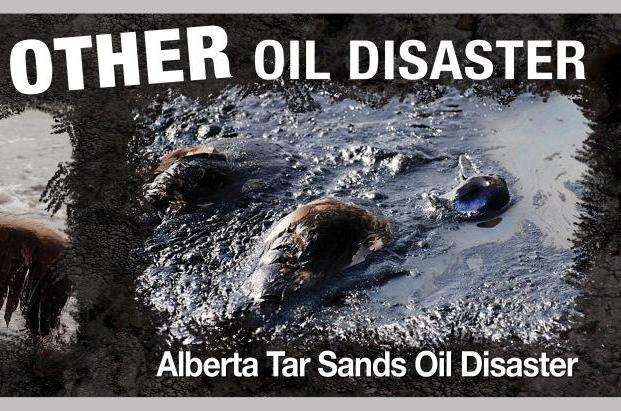
For over a week now, images of dead ducks in oil sands tailings pond have been plastered on billboards in Denver, Portland, Seattle and Minneapolis. Next to them is a picture of an oil-drenched brown pelican at the site of the Deepwater Horizon spill.
"Alberta: The Other Oil Disaster," the billboard reads. "Thinking of visiting Alberta, Canada? Think again," it continues.
The aim is to curb tourism interest in a province that gets five million visitors a year.
Not surprisingly it left Alberta Premier Ed Stelmach (picture) fuming – and the coalition of organizations behind the campaign in the bullseye of Canada’s fury.
The campaign is stuffed with "outrageous claims," Stelmach declared to attendees of the Pacific Northwest Economic Region Summit this week in Calgary, Alberta.
For Michael Marx, executive director of Corporate Ethics International, the San Francisco-based group leading the effort, the attention is much needed – even if it is negative.
"We’re absolutely thrilled," he told SolveClimate. "We broke through in the media in a way that other groups have not been able to do in the last three years."
He thinks the ads even spurred the U.S. ambassador to Canada to make unexpected comments critical of the environmental record of oil sands development.
Speaking at the Pacific Northwest Economic Summit, David Jacobson urged the industry to do more "to reduce the carbon footprint of the oil sands."
"They need to do more to demonstrate how they’re meeting the challenges of providing energy security while meeting their obligations of environmental stewardship," he was quoted as saying in the Calgary Herald.
Weak U.S. Coverage
Still, Jacobson’s surprising critique received nary a mention in the U.S. media.
All in all, there have been around 200 stories about the campaign in both Web-only and mainstream media outlets since July 14.
Most of those were published in Canada, with the exception being the Wall Street Journal and a few American newspaper blogs. That jibes with a new report by Calgary-based think tank Canada West Foundation, which found that in 2009 the oil sands saw about 11 stories a day, or 335 a month. Nearly all came from Canada.
Marx said he expected weaker coverage in the U.S., but said it’s just the opening shot of a multi-year blitz.
Next week, campaigners will copy the "ReThink Alberta" campaign in the UK when digital billboards go up in undisclosed cities with "high visibility."
Even more controversy is expected to come, Marx predicted.
Albertans Fire Back
The oil sands are the largest oil source outside the Middle East.
With production projected to skyrocket some 40 percent by 2020, it is time for the dirty operations to become a visible phenomenon, the campaign says.
But for many in Alberta, the portrayal was false and insulting to the province.
Stripping the sticky bitumen with hot water and chemicals and converting it to crude produces about three times more planet-warming emissions than conventional sources, according to a recent peer-reviewed study published in the journal Environmental Research Letters.
The water is collected in giant tailing ponds. These are leaking over 11 million liters a day of tainted water, finds a report by Environmental Defense Canada.
Not true, says the province.
Stelmach maintained this week that the tailings ponds are not leaching toxins – and that the oil sands are no more carbon intensive than conventional petroleum after transport, refining and other "lifecycle" costs are considered.
Marx called that a "bald-face lie" and "an embarrassment both to the government of Alberta and to the Alberta media."
The oil industry, not surprisingly, remained in step with the premier.
The Canadian Association of Petroleum Producers said in a statement that the "activist" campaign is "not truthful, fair and accurate," and that the "oil sands industry continues to improve environmental performance."
Everyday Canadians, too, were furious. Comments on the campaign’s YouTube video were full of anti-American jabs.
"Americans should look at their own deficiencies before talking about Alberta’s," said one commentator, who said he was logging on from Canada. "Oil sands production is not even a drop in the bucket compared to what American companies pollute into their rivers, oceans and atmosphere."
One commentator suggested that the U.S. government helped with the video to divert attention away from the oil gusher in the Gulf.
"There’s no question that we have touched a nerve with Albertans," Marx said. "We have gotten hundreds of emails and calls from angry Albertans. I must admit it’s a bit more than we anticipated."
Stelmach Commission: Province Damaged
However coincidentally, the campaign got some validation from at least one unlikely source: Stelmach’s own Council for Economic Strategy.
The influential commission of former politicians, business leaders and academics released a discussion draft that shines a not-so-favorable light on the reputational damage of the oil sands.
"Alberta’s reputation with key energy customers has been damaged in recent years, and relationships with communities near oil sands developments (especially First Nations communities) are strained," the report stated.
"Both reputation and relationships must be repaired if Albertans are to continue to benefit economically from the natural resources with which the province has been blessed."
The council is most concerned with its neighbor south of the border.
The U.S. is Canada’s largest oil sands customer, making up around four percent of the nation’s oil product imports. According to projections by research firm Cambridge Energy Research Associates, that could increase to 30 percent by 2030.
Key to that growth are massive new pipelines to deliver the crude.
Indeed, the Corporate Ethics campaign comes as the U.S. State Department considers approval of a 2,000-mile, $7 billion line that would carry 900,000 barrels of bitumen a day from Alberta to refineries in Texas and tankers off the Gulf Coast. The pipeline would double U.S. consumption of the unconventional crude.
Observers say the oil disaster in the Gulf is suddenly causing pause when considering a permit for the project – in part due to due to lax safety protocols being proposed in the design.
Over 50 members of Congress issued a letter to Secretary of State Clinton urging her against hasty approval of the project.
A final decision is expected in the fall.
For now, though, the performance of oil sands stocks suggest that the BP spill could be giving the industry a lift. Bloomberg reported this week that some of the largest producers are drawing the highest premium since 2005.
See also:
Anti-Tourism Oil Disaster Billboards Debut in Four U.S. Cities
50 Members of Congress Warn State Dept Against Rubberstamping 2,000-Mile Oil Sands Pipeline
Permit for Canada-Texas Oil Sands Pipeline under Extra Scrutiny
Dirty Oil Video: Canada’s Tar Sands Explained
Report Warns Oil Sands Investors of Toxic Wastewater’s Financial Risk
About This Story
Perhaps you noticed: This story, like all the news we publish, is free to read. That’s because Inside Climate News is a 501c3 nonprofit organization. We do not charge a subscription fee, lock our news behind a paywall, or clutter our website with ads. We make our news on climate and the environment freely available to you and anyone who wants it.
That’s not all. We also share our news for free with scores of other media organizations around the country. Many of them can’t afford to do environmental journalism of their own. We’ve built bureaus from coast to coast to report local stories, collaborate with local newsrooms and co-publish articles so that this vital work is shared as widely as possible.
Two of us launched ICN in 2007. Six years later we earned a Pulitzer Prize for National Reporting, and now we run the oldest and largest dedicated climate newsroom in the nation. We tell the story in all its complexity. We hold polluters accountable. We expose environmental injustice. We debunk misinformation. We scrutinize solutions and inspire action.
Donations from readers like you fund every aspect of what we do. If you don’t already, will you support our ongoing work, our reporting on the biggest crisis facing our planet, and help us reach even more readers in more places?
Please take a moment to make a tax-deductible donation. Every one of them makes a difference.
Thank you,