The government of Alberta, Canada and oil industry influence groups are investing in a PR campaign to counter the perception that oil sands mining is environmentally disastrous and worsens global warming pollution.
Much of their effort is being spurred by the prospect of cleaner-fuel mandates across the United States, environmental groups say, which would shift incentives to low-carbon fuels.
"I think that the oil industry is concerned," said Susan Casey-Lefkowitz, director of international programs at the Natural Resources Defense Council (NRDC).
And they may well have reason to be troubled, observers note, as California moves forward in implementing the nation’s first low-carbon fuel standard, or LCFS, with other states expected to follow suit.
The policy would require refineries, producers and importers of motor fuels to cut the "carbon intensity" of their fuel pool. Oil derived from tar sands is a dirtier fuel source than conventional oil, although just how much dirtier is a matter of contention.
Adding to the pressure on Alberta, a proposed project to pipe nearly a million gallons of the unconventional crude per day to Texas refineries, called Keystone XL, is facing unprecedented attention and opposition.
It prompted Alberta Premier Ed Stelmach to buy a half-page ad for $58,000 in the Washington Post last month, after an op-ed he submitted in defense of oil sands and the pipeline project was rejected by the paper.
"A good neighbour lends you a cup of sugar. A great neighbour supplies you with 1.4 million barrels of oil per day," the ad said.
The Stelmach ad has been followed by a wider $268,000 campaign launched earlier this month called, "Alberta. Tell it like it is." It is designed to combat the oil sands’ negative image within the province.
The campaign website declares that "emissions from oil sands [is] comparable to other crude oils." A spokesperson for Alberta Premier Ed Stelmach told the local Fort McMurray Today that per-barrel emissions have dropped "substantially," by about 40 percent.
Industry in Lockstep
The ad blitz comes on the heels of a contrarian report released last month by the National Petrochemical and Refiners Association, a Washington, D.C.–based trade group, which said a national LCFS would actually increase global greenhouse gas output by up to 19 million metric tons each year.
Written by Minneapolis-based Barr Engineering Co., the report predicted that the policy would trigger a "crude shuffle" in which Middle Eastern oil would end up replacing Canadian imports to the United States. The displaced oil sands, the report said, would end up being shipped to China in tankers, increasing transport emissions.
Many U.S. observers scoffed at the idea.
Michael Levi, a senior fellow at the Council on Foreign Relations (CFR) and prominent voice on energy issues, called it "a distorted and misleading piece of work," in a recent blog post.
Lower U.S. crude consumption "would completely offset the increased transportation emissions that NPRA identifies," he wrote. "An LCFS would also increase the use of alternative fuels and promote greater efficiency in oil operations, which would also reduce emissions…"
Casey-Lekfowitz suggested the report was an act of desperation.
Industry should be backing a federal LCFS to give refineries consistency across the country, she told SolveClimate News. "Instead, they are doing a last-gasp struggle within a context of a country that’s clearly trying to move towards a clean energy economy."
Simon Dyer, oil sands director at the Pembina Institute, a Canadian environmental organization, said government and industry should focus on its "environmental impact problem" not its "PR problem."
"There are serious gaps in the regulatory framework. There is lots to be done, lots of potential solutions that are not being implemented," he said.
Carbon Footprint Dispute
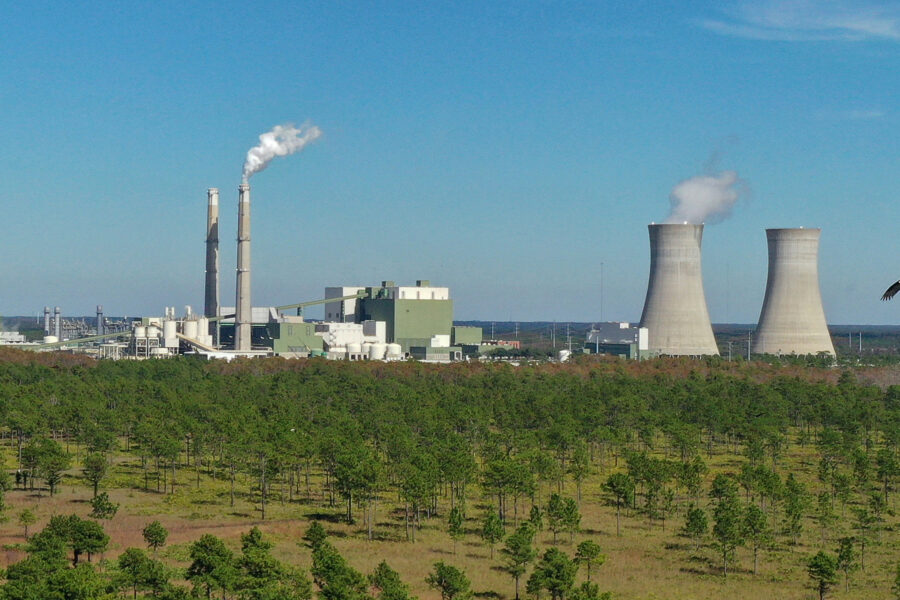
The sticky bitumen buried in Alberta’s Athabasca oil sands must be pumped out of the ground, separated and boiled off in a process that leaves behind lakes of toxic liquid waste and global warming pollution.
Few doubt that the "lifecycle" emissions of oil sands, from production to transportation and fuel use, are higher than conventional crude. But there are vast differences in figures, depending on who you ask.
The industry claims lifecycle costs of mining bitumen are about 15 percent greater than traditional oil. Environmental groups put that figure at 300 percent, for production only, and frequently cite a peer-reviewed study published in the journal Environmental Research Letters as proof.
Sorting this out is a political hot potato in the U.S., but adoption of a federal fuel mandate hinges on it, advocates say.
The U.S. Environmental Protection Agency (EPA), which has the authority to enact a federal LCFS under the Clean Air Act, has quietly occupied a middle ground.
"GHG emissions from Canadian oil sands crude would be approximately 82% greater than the average crude refined in the U.S., on a well-to-tank basis," the agency said.
That figure, more than five times industry estimates, was buried in an 18-page comment letter EPA sent to the State Department, criticizing the thoroughness of the environmental review of the Keystone XL pipeline, which is facing a permitting decision.
The pipeline would bring bitumen from Canada to Texas and increase the nation’s commitment to the high-carbon oil source. Environmental advocates said the 82 percent figure was notable. The NPRA report was released shortly after the EPA letter became public.
Not Prohibition, But Incentive
Under a low-carbon fuel rule, fuels get assigned a carbon intensity value. Providers must ensure that the total mix of fuels they sell into the market has a smaller carbon footprint than the current baseline.
The policy is seen by many as a vital climate and energy solution, since transportation consumes two-thirds of the nation’s oil and produces one-third of its global warming emissions.
A bonus, they say, is that a LCFS does not depend on government picking winners. While ethanol, natural gas and electricity would be favored, high carbon fuels, like oil sands, oil shale and liquid coal, would not necessarily be shut out.
"It’s not a prohibition" but an "incentive to go toward a cleaner mix of fuels," said Danielle Fugere, the west coast regional program director for Friends of Earth (FOE).
In 2009, California became the first state to adopt a LCFS that would cut the carbon content of fuels consumed in the state by at least 10 percent by 2020. So far, around 15 other states have declared their intention to follow suit.
Congress, meanwhile, has made attempts to pass a national rule. The 2009 Lieberman-Warner American Clean Energy and Security Act included an LCFS using California’s proposal as a model. But the measure was dropped three months before the bill passed last June — at the behest of America’s environmental community.
"It got so undermined by big oil and big ag that it wasn’t really meaningful anymore," said Alex Moore, dirty fuels campaigner for FOE.
Pipeline Politics
With a climate bill on the backburner for the foreseeable future, advocates are looking to keep oil sands imports in check by blocking the Keystone XL pipeline.
The pipeline project by TransCanada would carry crude 2,000 miles from Alberta, through the American Midwest and to the Texas coast. It would import up to 900,000 barrels a day and double U.S. consumption of the controversial fuel.
The plan is under review by the U.S. State Department, the agency responsible for permitting trans-boundary pipelines. It came under fire recently after 50 members of Congress issued a letter against its approval, saying the line would do undue environmental harm.
The State Department’s public comment period on its draft environmental impact statement of the pipeline recently closed. Both EPA and the U.S. Department of Energy urged the agency to tread carefully before approving construction.
The comments made a clear case for more analysis, including a full lifecycle emissions assessment before giving the once-certain pipeline a greenlight, Casey-Lefkowitz said. And while measuring mining pollution in Alberta doesn’t necessarily fall under the State Department’s purview, global warming emissions from the oil sands are a U.S. issue, she added.
"[Emissions] don’t respect borders," she said.
(Image: Pembina Institute)
See also:
Oil Sands Ad Campaign Touches Energy Security Raw Nerve
Anti-Tourism Oil Disaster Billboards Debut in Four U.S. Cities
EPA Slams State Department on Proposed Oil Pipeline
Sierra Club Intervenes to Block New Oil Sands Project
50 Members of Congress Warn State Dept Against Rubberstamping 2,000-Mile Oil Sands Pipeline
Permit for Canada-Texas Oil Sands Pipeline under Extra Scrutiny
Shareholders Vote on BP’s Plan to Move into Canadian Oil Sands
Dirty Oil Video: Canada’s Tar Sands Explained
Report Warns Oil Sands Investors of Toxic Wastewater’s Financial Risk
Canadian Fund Warns of Sticky Risks in Tar Sands Investment
About This Story
Perhaps you noticed: This story, like all the news we publish, is free to read. That’s because Inside Climate News is a 501c3 nonprofit organization. We do not charge a subscription fee, lock our news behind a paywall, or clutter our website with ads. We make our news on climate and the environment freely available to you and anyone who wants it.
That’s not all. We also share our news for free with scores of other media organizations around the country. Many of them can’t afford to do environmental journalism of their own. We’ve built bureaus from coast to coast to report local stories, collaborate with local newsrooms and co-publish articles so that this vital work is shared as widely as possible.
Two of us launched ICN in 2007. Six years later we earned a Pulitzer Prize for National Reporting, and now we run the oldest and largest dedicated climate newsroom in the nation. We tell the story in all its complexity. We hold polluters accountable. We expose environmental injustice. We debunk misinformation. We scrutinize solutions and inspire action.
Donations from readers like you fund every aspect of what we do. If you don’t already, will you support our ongoing work, our reporting on the biggest crisis facing our planet, and help us reach even more readers in more places?
Please take a moment to make a tax-deductible donation. Every one of them makes a difference.
Thank you,