Now that the climate bill is in hibernation, it would be easy to assume that the US power sector will resume its tradition of burning high-polluting coal to sell increasing amounts of electricity.
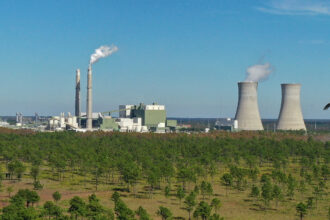
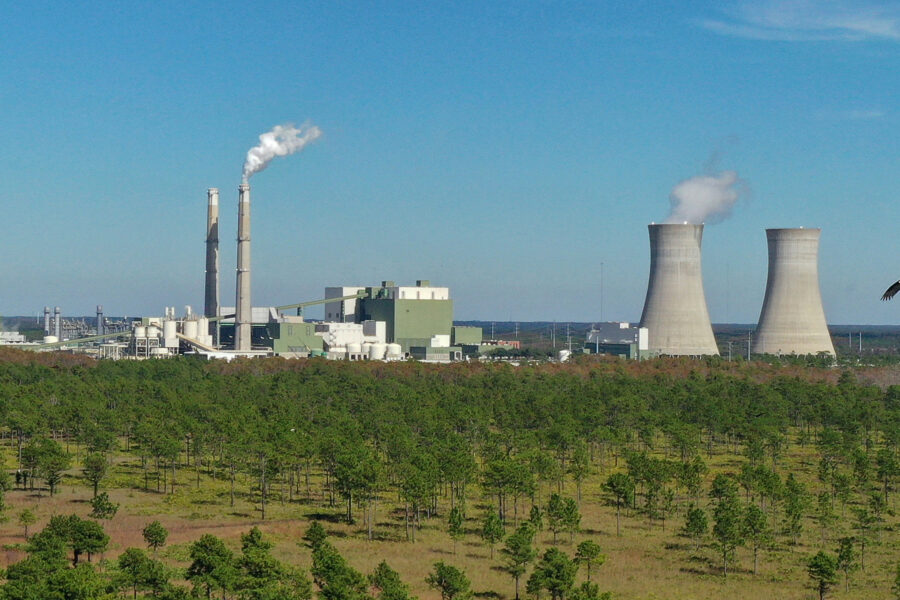
The Washington Post opted for such a conclusion in an 8/23 article, "More coal plants are under construction." The article noted that "dozens" of old-style coal plants – 32, to be exact – have been built since 2008 or are under construction.

But there was an important context missing: The article failed to note that wind power production was the largest source of new electricity in the US last year and that for every new coal plant built in the US in recent years, four proposed coal plants have been cancelled or delayed.
The reality is the US power sector is undergoing a dramatic transformation to decarbonize its energy offerings and sell less, not more, electricity.
Examples of this shift were aplenty during the hot sweaty last days of August:
- Nuclear giant Exelon bought 735 megawatts of wind power in operation and another 230 megawatts under development, making it one of the nation’s largest wind power providers.
- GE Energy broke ground on a new 183-megawatt wind power project in Idaho.
- Hawaii’s utility regulators approved plans to sever the amount of profits the island’s largest utility earns from the amount of electricity it sells, the 12th state to approve decoupling.
- The 468-megawatt Cape Wind project cleared a final judicial hurdle to build the nation’s first offshore wind farm off the coast of Massachusetts.
This shift has little to do with altruism and lots to do with long-term economics.
Even without climate legislation, other market forces are compelling the industry to change. Wind and other forms of renewable energy are becoming more cost-competitive with fossil-fuel based generation and states are setting aggressive renewable energy targets while the federal government provides financial incentives. Energy efficiency is gaining regulatory support as the lowest-cost option for meeting energy demand. Environmental rules for limiting mercury, SO2 and other air pollutants are getting tighter. And with climate legislation stalled, EPA greenhouse gas regulations are looming.
Add these trends together and it’s easy to see why the traditional business model of building large fossil fuel-fired power plants to sell more electricity is becoming outdated.
Among those embracing a cleaner future is Exelon CEO John Rowe, whose company has set a goal to cut its carbon emissions by 15 million tons per year by 2020, which is equivalent to taking nearly three million cars off our roads.
"Whether harmful (CO2) emissions are priced or regulated, our combined capacity of nearly 19,000 megawatts of zero-emission wind, solar, hydro, landfill gas and nuclear power remains a clear competitive advantage that will only become more powerful," Rowe told the New York Times last week.
Power giant Tennessee Valley Authority, whose 15,000-megawatt coal plant fleet is among the nation’s largest, is also lowering its carbon exposure. Last month, TVA announced plans to ramp up energy efficiency and demand response efforts by 1,900 megawatts and idle 1,100 megawatts of coal capacity by 2015.
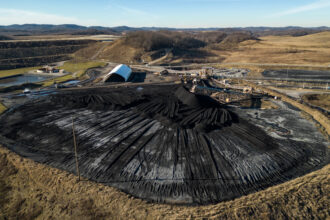
Use of coal is already declining in the U.S., reaching its lowest level in 15 years in 2009. Bernstein Research recently forecast the retirement of about 20 percent of the nation’s coal-fired capacity by 2015.
But whether such forecasts become reality is difficult to know.
Even without climate legislation, coal-based power production is being held somewhat in check by low prices for natural gas, a cleaner fossil fuel that emits roughly half the CO2 as coal when it is burned. But this is a temporary solution and pollution reduction gains could easily be eclipsed if gas prices rise again.
The long-term solution, however, is in the hands of Congress.
About This Story
Perhaps you noticed: This story, like all the news we publish, is free to read. That’s because Inside Climate News is a 501c3 nonprofit organization. We do not charge a subscription fee, lock our news behind a paywall, or clutter our website with ads. We make our news on climate and the environment freely available to you and anyone who wants it.
That’s not all. We also share our news for free with scores of other media organizations around the country. Many of them can’t afford to do environmental journalism of their own. We’ve built bureaus from coast to coast to report local stories, collaborate with local newsrooms and co-publish articles so that this vital work is shared as widely as possible.
Two of us launched ICN in 2007. Six years later we earned a Pulitzer Prize for National Reporting, and now we run the oldest and largest dedicated climate newsroom in the nation. We tell the story in all its complexity. We hold polluters accountable. We expose environmental injustice. We debunk misinformation. We scrutinize solutions and inspire action.
Donations from readers like you fund every aspect of what we do. If you don’t already, will you support our ongoing work, our reporting on the biggest crisis facing our planet, and help us reach even more readers in more places?
Please take a moment to make a tax-deductible donation. Every one of them makes a difference.
Thank you,