Editor’s Note: In this three-part series, SolveClimate News examines the feasibility of closing the Indian Point nuclear facility in Buchanan, N.Y. The plant, now up for relicensing, faces demands for a shutdown by Gov. Andrew Cuomo and many environmental groups. This is part one.
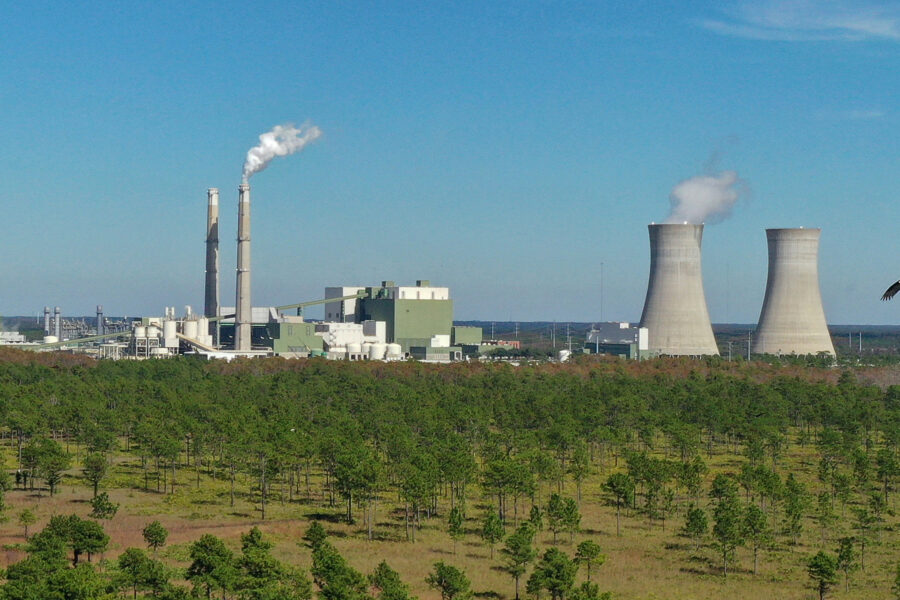
The Indian Point nuclear power complex in Westchester County, New York, supplies up to one-fourth of all the electricity used by New York City, America’s biggest city.
Now — at a time of rapidly increasing scrutiny on the entire nuclear industry — the nearly 40-year-old Indian Point is seeking federal approval to operate its reactors for 20 more years. Their relicensing is far from cast in stone.
A sharp backlash following Japan’s Fukushima disaster, coupled with Gov. Andrew Cuomo’s heightened criticism, is adding momentum to efforts to close the plant. Across the state, the credibility of the facility’s long-standing tagline — “safe, secure, vital” — is in question perhaps like never before.
While opponents have long challenged the plant’s claims of being safe and secure, many are now also wondering how truly vital the reactors are to keeping the Big Apple’s lights on.
Expert opinion on this question is mixed. But data shows that — depending on the time of year — the city of 8.2 million residents may not be as nuclear-dependent as some may think and others may wish.
Ever since the blackout of 1965 trapped thousands of New Yorkers in subways and elevators, the city mandates that it must be able to provide 80 percent of its power with generators located within its 304 square miles. That means the city needn’t rely on outside sources to provide any more than 20 percent of its electricity — although legally it is allowed to do so.
Indian Point, located in Buchanan, N.Y., 24 miles from the city’s northern border in the Bronx, at times provides far less than that.
Periodically, New York City even handles its electrical needs without Indian Point, according to Ken Klapp, a spokesperson for the New York Independent System Operator (NYISO), which oversees the state’s power markets and distribution.
At a minimum, he said, the two nuclear units take turns shutting down for refueling for about one month during the off-peak spring season when energy use is low, removing roughly 1,000 megawatts from the grid.
But what would happen if the nuclear plant suddenly went dark this summer, as air conditioners run around the clock? Are existing plans designed to keep the city’s lights on sufficient?
‘Safety Margin is Eroded’
Within New York City’s five boroughs, single-fuel natural gas plants and dual-fuel plants that mainly use gas and some oil make up 95 percent of the city’s generating capacity, according to NYISO.
Fossil-fuel peaking stations — small-scale generators that can be expensive and dirty to run — kick on during times of peak demand.
Electricity generated from these and other generating systems, including some wind and solar power units, get pooled together on an electrical grid. Lindsay Audin, a certified energy manager and president of Energywiz, Inc., a Croton on Hudson, N.Y.-based consulting firm, said it’s “like a lake fed from many sources” that gets streamed out to customers.
NYISO requires what they call a “reliability standard,” a safety margin that ensures there is always more backup electricity available than New York City typically uses. During times of peak electrical usage, such as the current summer months, however, this safety margin can disappear, making Indian Point’s power supply even more critical.
“The safety margin is eroded,” said James M. Van Nostrand, executive director of the White Plains, N.Y.-based Pace Energy and Climate Center. “From an energy planning perspective, I have a hard time seeing how we would replace [Indian Point’s electricity] in the downstate region.”
Routine Outages, Who Knew?
In most of New York State, however, electrical supply from various generating sources far outstrips demand, according to NYISO calculations. For this reason, planned outages have little effect on consumers. Indian Point requires shutdowns for routine maintenance and refueling, similar to most electrical generating systems.
The shutdowns are like “racecar pit stops,” explained Daniel Carey, a member of the Plumbers and Steamfitters Local 21, which has fitted pipes at Indian Point since 1985. Laborers, carpenters, electricians and boilermakers — close to 700 people in all — race around the plant, he told SolveClimate News, making repairs so that residents relying on the plant’s electricity are unaware when the plant goes offline.
Entergy Corp., the nuclear plant’s owner, plans maintenance outages for its nuclear generators, units 2 and 3, during times when electricity use is low, Jerry Nappi, a spokesperson for Indian Point, told SolveClimate News.
For instance, the 1,080-megawatt unit 3 was shut down on March 17 for routine repairs. Although the unit did not go back online for nearly a month, virtually no ratepayers were aware of it, because it caused no electrical power outages. Similarly, Indian Point 2, with its 1,067 megawatts of electricity, was shut for routine maintenance on May 20 and remained closed for several weeks.
In addition to having uninterrupted electricity during these outages, consumers typically see no change in their electricity bills.
According to federal law, electricity prices are determined at least in part by the lowest-priced power source in the pool, which in this case is almost always Indian Point. That’s because once investors recoup the high cost of building a nuclear plant, the electricity it generates typically costs far less than most other forms of electrical generation.
During planned outages, the Department of Energy requires that electrical sources used to substitute for Indian Point provide power at the same cost ratepayers are normally charged.
60% More Energy Use in Summer
It’s a different story with unplanned outages, such as summer blackouts, during which consumers don’t get price protection. This is one reason why electricity bills rise during periods of high use and occasional power plant outages.
During peak summer periods when air conditioners run constantly, New York City uses approximately 13,000 megawatts of electricity, according to NYISO data. This represents an up to 60 percent increase above the average level of energy use.
Over the past three years, Indian Point has experienced seven unplanned shutdowns. They were attributed to a series of unexplained mechanical failures, including rising water levels in its massive stream generators; a large hot water leak; and activation of a fire-suppression system.
Meanwhile, New York City, hobbled by old and overused transmission lines, has limited access to the abundant amount of electricity that is produced upstate and in Canada, including relatively cheap hydroelectric power generated in Buffalo. This makes Indian Point’s contribution hard to replace during periods of peak demand.
Westchester County, where Indian Point is located, faces a similar if not more severe situation. The county’s nearly one million residents get up to 25 percent of their electricity from Indian Point. But Westchester, unlike New York City, has few internal power-generating alternatives.
“The capability of the existing electric transmission system is simply not sufficient to allow available upstate New York resources to meet Southeast New York needs if certain generating resources, such as the Indian Point units, become unavailable,” Rick Gonzales, senior vice president of NYISO, told SolveClimate News.
What About Energy Efficiency?
Experts agree that energy efficiency and conservation measures could make up for some of the electricity lost if Indian Point suddenly closed. But even Audin, a staunch opponent of the plant, said that efficiency and conservation alone “cannot replace Indian Point’s output.”
Merely installing insulation upgrades, energy-saving florescent light bulbs and similar steps would not be enough to make a significant dent in electricity usage, agreed Van Nostrand of the Pace Climate and Energy Center.
Still, he estimates that energy audits combined with deep home and building retrofits, ductwork and more efficient heating, ventilating and air-conditioning, or HVAC, units could potentially reduce electricity demand by up to 1,000 megawatts, approximately half of the electricity that Indian Point generates.
But this would take money, new regulations and most importantly time, he said, which doesn’t jive with the wishes of many Indian Point opponents, who are calling for an immediate shutdown.
Thousands of Megawatts Short
The 40-year licenses for its two active reactors, units 2 and 3, are scheduled to expire in 2013 and 2015, respectively. To continue operating, they must be renewed.
Residents and politicians frightened anew by Japan’s Fukushima disaster are pushing for the reactors’ closings. In response, the state Senate Standing Committee on Energy and Telecommunications was one of many oversight institutions to call hearings recently to determine the safety and value of Indian Point.
Its specific concern when it met in May was how New York City and Westchester County would fare if Indian Point units are unavailable as a result of a natural disaster in the summer of 2011. Gonzales, NYISO’s senior vice president, testified on May 12 before the committee.
In his testimony, he considered state energy efficiency programs. He took into account declining electrical needs caused by the recession. And he included over 1,000 megawatts of new power plants expected to go online in the New York City area, including 500 megawatts from the natural gas-fired Bayonne Energy Center and 576 megawatts from Astoria Energy II, another gas plant.
With all this considered, he told the State Senate: If a natural disaster destroys Indian Point’s ability to generate its standard 2,000-plus megawatts of electricity this summer, New York City and counties in the lower Hudson Valley could fall between 1,385 and 2,042 megawatts short at peak times, depending on how hot the summer proves to be.
This raised the question of whether local-area replacement resources could be available in the short term — as early as this summer — if Indian Point were to close.
“Between now and 2013,” Gonzales responded, “there are very limited options.”
Without Indian Point’s power this summer, New York City, still recovering from the financial crisis that began on Wall Street, could face rolling blackouts.
But with long-term planning, political will, investments and cutbacks in energy usage, said Audin, the certified energy manager, substitutions could be found. The glitch, of course, he added, is that “nothing is easy, and nothing is cheap.”
Tomorrow: Part 2, What are the options and costs for permanently replacing Indian Point’s electricity supply, and on what timetable?
About This Story
Perhaps you noticed: This story, like all the news we publish, is free to read. That’s because Inside Climate News is a 501c3 nonprofit organization. We do not charge a subscription fee, lock our news behind a paywall, or clutter our website with ads. We make our news on climate and the environment freely available to you and anyone who wants it.
That’s not all. We also share our news for free with scores of other media organizations around the country. Many of them can’t afford to do environmental journalism of their own. We’ve built bureaus from coast to coast to report local stories, collaborate with local newsrooms and co-publish articles so that this vital work is shared as widely as possible.
Two of us launched ICN in 2007. Six years later we earned a Pulitzer Prize for National Reporting, and now we run the oldest and largest dedicated climate newsroom in the nation. We tell the story in all its complexity. We hold polluters accountable. We expose environmental injustice. We debunk misinformation. We scrutinize solutions and inspire action.
Donations from readers like you fund every aspect of what we do. If you don’t already, will you support our ongoing work, our reporting on the biggest crisis facing our planet, and help us reach even more readers in more places?
Please take a moment to make a tax-deductible donation. Every one of them makes a difference.
Thank you,