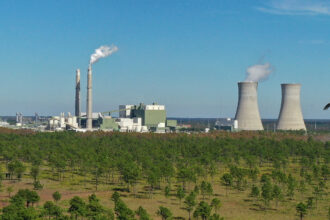
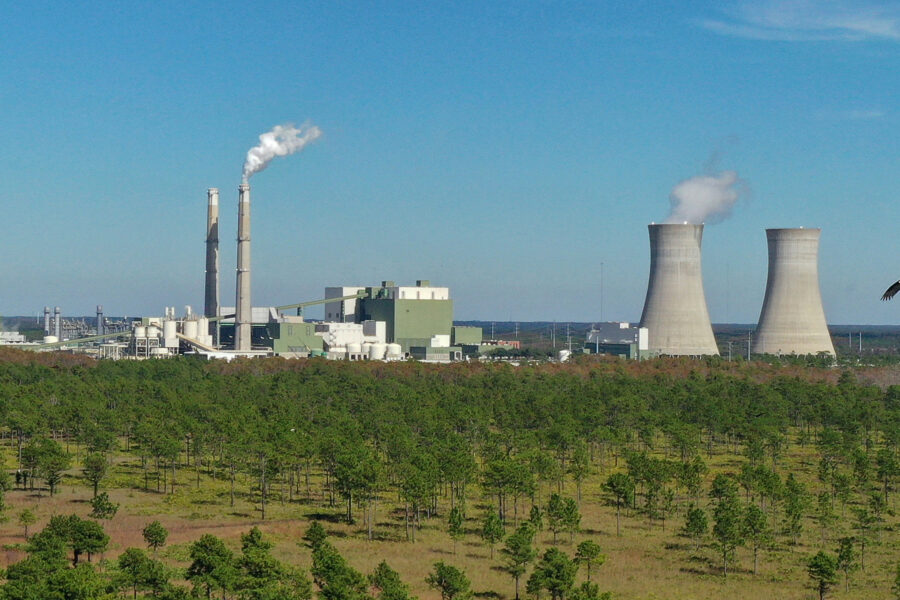
What do you do with an aging coal-fired power plant that’s about to be woefully out of step with environmental laws?
If you’re New Hampshire’s largest utility, you throw hundreds of millions of dollars at it, raise your customers’ rates, and make sure the legislature does nothing about it.
Some of the New Hampshire’s best-known businesses are up in arms right now over the skyrocketing costs of upgrading PSNH’s 41-year-old Merrimack Station power plant. They aren’t calling for the plant to be shut down, though that may turn out to be the only cost-effective option.
What the business leaders want is a legislative review of the costs, which have almost doubled in two years, to determine if the project to reduce mercury emissions from the coal plant is in the ratepayers best interest. They’re in a race against time to make that happen.
On Monday, the state’s Department of Environmental Services is expected to issue a permit PSNH has been waiting for so it can move on contracts and construction. The permit will likely be appealed, but approval is all PSNH needs to legally get the cement trucks rolling.
Opponents have other routes they can still take to fight the project, both in the courts and in the Capitol. On March 13, the New Hampshire Senate Energy, Environment and Economic Development Committee will hold a hearing on a bill that would order the project review business leaders are calling for. Even if PSNH starts work on the project, the legislature could decide to revoke the utility’s ability to recover its construction costs from ratepayers.
The Unintended Blank Check
The Merrimack Station saga started two years ago when New Hampshire lawmakers ordered PSNH to install scrubbers that could capture, at minimum, 80 percent of the mercury emitted from the power plant in Bow, N.H. The businesses were on board – no one wanted more mercury getting into the state’s fish and endangering human fetuses.
At the time, PSNH estimated that the project would cost $250 million.
Now, the utility says it needs at least $457 million.
Jaws dropped all across New Hampshire when news of that 83 percent cost increase came out in an SEC filing last August.
PSNH is a regulated public utility. By law, it can charge its ratepayers to get a 9.67 percent rate of return on its investments. Adding the scrubbers at a cost of $457 million means PSNH will be getting an extra $20 million to $25 million a year – for equipment that likely won’t keep the plant in compliance with clean air regulations for very long.
A group of business leaders, including Stonyfield Farms CEO Gary Hirshberg, inventor Dean Kamen and Timberland President Jeffrey Swartz, want the state to take a second look at the scrubber project and determine if it is still in the public interest, in light of its increased costs and recognition of the urgent need to address climate change. The upgrades won’t do anything to reduce carbon emissions while the coal plant pumps away for the next 20 years.
Their request seems reasonable, but lawmakers have been slow to act on it.
That may be guilt. The state legislature is partly responsible for what some people are privately calling New Hampshire’s Big Dig. The poorly staffed legislature relied on PSNH’s expertise when it wrote the 2006 legislation requiring PSNH to install the wet flue gas desulfurization system at Merrimack. It also failed to cap PSNH’s spending, effectively giving the utility a blank check from the ratepayers.
Challenging the 800-Pound Gorilla
PSNH is a powerful force in New Hampshire business and politics, and it is adamantly against any effort to review the project now.
Challenging PSNH can feel risky for businesses that rely on the utility for their operations, as Hirshberg explained:
“One of the things that has really, really shocked me is the muscle that PSNH has in this state. Many very, very smart and decent and knowledgeable business people have been afraid to speak up here, and when I ask why, … their off-record response is that PSNH has some influence over their destiny or their well-being.”
The utility has been arguing the Merrimack project’s economic case from three perspectives: construction jobs, money already spent, and the idea that any delay at this point will cost ratepayers even more money because many of the contracts are already set.
PSNH President Gary Long also pitches the plant’s continued operation as a necessary energy source during the shift away from fossil fuels and toward renewable energy:
“Cutting emissions at PSNH’s largest power plant is critical because we will need it to serve as a ‘bridge’ over the next 10 to 20 years while alternative energy sources are developed and built on a much larger scale,” Long wrote in the Nashua Telegraph on Feb. 22. “Many businesses, utilities and other organizations are working to advance renewable projects in New Hampshire, but the challenges are great, and the transition will not occur overnight.”
Long added that the Merrimack project is halfway done, though it’s unclear how that could legally be possible when the permits necessary to authorize contracts and construction haven’t been issued. Last week, the Conservation Law Foundation filed a notice of intent to sue the utility for allegedly starting modifications without the permits.
Hirshberg’s Commercial Ratepayers Group also has a legal case pending. It petitioned the Public Utility Commission last fall to reconsider the Merrimack project in light of the costs and other changes since 2006, but the PUC determined that only the legislature had the power to review the decision. The state Supreme Court has agreed to hear an appeal.
The PUC’s refusal to act on the case suggests that if the legislature wanted to regulate the utility and protect ratepayers’ interests in 2006, then it – and only it – must do so now that things don’t look quite so copasetic, says Ken Colburn of Symbiotic Strategies LLC, which has been working with the Commercical Ratepayers Group.
Meanwhile, the Senate bill calling for a project review is headed for a hearing.
If state officials revisit the plan and decide it is not in the public interest in light of cost and regulatory developments, the public interest determination could be withdrawn or modified. PSNH needs that determination to recover its costs from the ratepayers.
If the legislature fails to act, Hirshberg said he has started raising money to hire a company to do the review for the ratepayers themselves. As he points out, though, “that should not be the citizen’s job.”
“The utility is pulling out every conceivable stop to get this thing in and done before the legislature wakes up and realizes it’s no longer 2006 and that an awful lot has changed since then. All we’re asking for is what government should be doing – were asking for a simple accounting in today’s economy with the knowledge that we have today about climate change and the regulatory environment. We want to make sure that this is a good investment of our money.”
What Has Changed: Everything
Back in 2006, when lawmakers passed the legislation requiring PSNH to install the scrubber at its 480 MW Merrimack Station coal plant, the scrubber was the best option.
It’s a different world now.
Since that vote, the Bush EPA notified PSNH in 2007 that its Merrimack plant would be out of compliance with the Clean Air Act starting in 2010 and continuing at least until the scrubber is in place, planned for 2012 at the earliest.
Then, the Northeast Regional Greenhouse Gas Initiative came online and capped CO2 emissions from the power sector in New Hampshire and nine other states, with a 10 percent reduction target for 2018. The scrubbers do nothing to reduce the 3.7 million tons of CO2 that Merrimack Station emits – 47 percent of all CO2 emission from stationary sources in the New Hampshire.
Now, the Obama administration has arrived, and it is clearly dedicated to moving the nation toward clean energy. The president’s budget released last week counts on revenue from putting a price on carbon by 2012. Dozens of plans for new coal-fired power plants in other states have already been dropped with the knowledge that tougher carbon emissions rules are coming down the pike.
The new administration is also working on tougher mercury standards, including joining 140 nations in writing a legally binding mercury emission rules by 2013. White House Council on Environmental Quality chief Nancy Sutley issued a statement about the international agreement in late February saying “the United States will play a leading role.” That means Merrimack’s 80 percent mercury reduction won’t cut it in the near future.
At Hirshberg’s request, Symbiotic Strategies LLC developed a preliminary assessment of the future costs PSNH can expect to face to comply with increased greenhouse gas, mercury and other requirements. It came up with an additional cost of between $864 million and $2.5 billion.
The impact on ratepayers would be three to six times higher than PSNH’s estimated increase of one-third of a cent per kWh for the scrubber project, according to the analysis.
PSNH’s response, in a recent newsletter:
Speculation on future Federal environmental costs for CO2 is just that – speculation. … Now is not the time to cause economic damage to New Hampshire businesses and families.
The utility justifies the increase based on the quickly rising cost of construction materials. It argue that if Merrimack Station closes, the utility will have to buy power from the New England energy market. PSNH says the cost will be higher, though the current listed rates for the major utilities don’t bear that out. National Grid’s and Unitil’s commercial services rates are both lower than PSNH’s $.0992 per kWh.
Symbiotic Strategies’ review also suggested that the power from Merrimack isn’t necessary, particularly if New Hampshire takes up President Obama’s call to increase energy efficiency. When it comes to jobs, Hirshberg notes, New Hampshire spends around $150 million importing coal for the plant – money that could be invested in local jobs that increase energy efficiency instead of being spent on coal from other states and countries. Much of PSNH’s coal actually comes from Venezuela.
Hirshberg and other businesses leaders in the Commercial Ratepayers Group met with Long about their concerns and request for a review of the costs, but they found little common ground. As Hirshberg explained:
“The bottom line was he was closed for business on this one. This was essentially going to be stopped over his dead body. The message, as several of my colleagues heard it, was zero doubt in his mind and no way was he going to support questioning it.”
Under state rules for regulated utilities, the more PSNH spends, the more it earns, even when its spending decisions may not be in the long-term financial best interest of the state.
With a monopoly covering about three-quarters of the population and the ability to recover stranded costs through its ratepayers, PSNH has no incentives other than the state’s Renewable Portfolio Standards to buy power elsewhere, said attorney Jonathan Peress, who represents merchant power producers.
Hirshberg feels a sense of deja vu with PSNH’s promises and the rising costs. The state’s Seabrook nuclear power station was billed as offering power ‘too cheap to meter,’ but it became one of the great economic boondoggles in New Hampshire history with cost overruns and delays. The project bankrupted PSNH and imposed incredible costs on ratepayers.
“Nobody likes to use that analogy, but from our analysis, there is no reason to think that this isn’t the same, that we aren’t once more about to ‘buy the last Edsel.'”
About This Story
Perhaps you noticed: This story, like all the news we publish, is free to read. That’s because Inside Climate News is a 501c3 nonprofit organization. We do not charge a subscription fee, lock our news behind a paywall, or clutter our website with ads. We make our news on climate and the environment freely available to you and anyone who wants it.
That’s not all. We also share our news for free with scores of other media organizations around the country. Many of them can’t afford to do environmental journalism of their own. We’ve built bureaus from coast to coast to report local stories, collaborate with local newsrooms and co-publish articles so that this vital work is shared as widely as possible.
Two of us launched ICN in 2007. Six years later we earned a Pulitzer Prize for National Reporting, and now we run the oldest and largest dedicated climate newsroom in the nation. We tell the story in all its complexity. We hold polluters accountable. We expose environmental injustice. We debunk misinformation. We scrutinize solutions and inspire action.
Donations from readers like you fund every aspect of what we do. If you don’t already, will you support our ongoing work, our reporting on the biggest crisis facing our planet, and help us reach even more readers in more places?
Please take a moment to make a tax-deductible donation. Every one of them makes a difference.
Thank you,