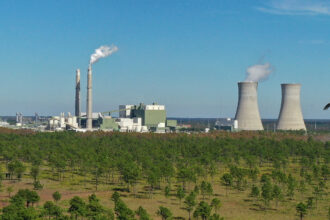
The Nova Scotia government is proposing a cap on emissions for its electricity sector that would take effect on January 10, 2010.
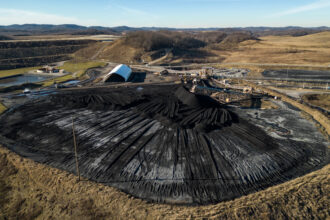
The proposal represents important progress for the Canadian province, which relies on coal, the dirtiest fuel, for 75 percent of its electric power.
It was almost two years ago that Nova Scotia committed to reducing its greenhouse gas emissions to at least 10 percent below 1990 levels by 2020.
But its consequent climate action plan fell short on details where most are needed — in the electricity sector. And critics panned it.
The new cap will now "ensure" the reduction target is met, the government assures in a press release.
Nova Scotia’s electricity sector by itself represents 50 percent of all of the province’s greenhouse gas emissions. And by "sector," we mean Nova Scotia Power Inc. (NPSI). The single utility provides 95 percent of the province’s electricity, nearly all of that from fossil fuels.
Reining in greenhouse gases in Nova Scotia requires regulating NPSI. And that’s exactly what the government is urging.
Find all the details in its 13-page discussion paper, An Approach to Regulating Electricity Sector Greenhouse Gas and Air Pollutant Emissions in Nova Scotia. In sum, the new regulatory framework would
require Nova Scotia Power Inc. to cap greenhouse-gas and air-pollutant emissions at 9.7 million tonnes in 2010, at 8.8 million tonnes in 2015, and 7.5 million tonnes in 2020. That is a total reduction of 2.5 million tonnes, down from about 10 million tonnes produced by NSPI in 2007.
The caps, as you can see, would be "increasingly stringent." Failure to comply could result in financial penalties of up to $500,000 per day.
The proposal is now open for public comment.
Before moving on, it must be said that NSPI, or rather its owner, Emera Inc., is the poster child for fossil fuel pollution.
Coal- and oil-fired plants account for a massive 83.5 percent of Emera’s current power production, with no sign of a change of course soon.
In a November 2008 ranking of the company, Innovest Strategic Value Advisors wrote that Emera ranks "below average" on environmental performance when compared to other companies in the sector. In a carbon-regulated global economy, that spells risk to investors. Via Innovest:
[Emera] has not developed proactive strategies to mitigate future carbon risks and create opportunities associated with improved carbon performance.
[Its] emissions rate is above average and despite recent commitments to purchase more wind power, the focus of the firm is on producing cheap power for ratepayers.
Knowing that, it’s not surprising to learn there are skeptics of NSPI, and of the seriousness of the government’s capacity to cap the utility’s emissions in the near term.
They say NSPI had far too much influence in establishing the cap. As a result, they claim, the caps have been set to the utility’s ability, not to the mitigation needs of the province.
On top of that, the Nova Scotia government isn’t exactly promising a fast and sure track to fossil fuel independence. It has been clear in its calls for a measured and
"phased approach to transform the province’s electricity system … between now and 2020."
"There will also be a gradual transformation to cleaner energy sources.”
But we see notable progress.
A Conservative government in Canada has signaled acceptance of its greenhouse gas problem. It has set targets to restrict emissions. And now it’s beginning to put forward ways to reach those targets.
In February 2007, Nova Scotia’s Renewable Energy Standard took effect, requiring 20 percent of the province’s electricity to come from renewables by 2013. It also recently announced that it will join the Western Climate Initiative as an observer.
The proposed emission caps represent the most significant action to date toward a system of controlling emissions from Nova Scotia industry. And NSPI will be affected.
Yes, the caps initially may not be as stringent as needed, and credibility of the process may still be hard to gauge, but Nova Scotia beats what Canada’s federal government is doing in this vital policy area — which is, sadly, absolutely nothing.
About This Story
Perhaps you noticed: This story, like all the news we publish, is free to read. That’s because Inside Climate News is a 501c3 nonprofit organization. We do not charge a subscription fee, lock our news behind a paywall, or clutter our website with ads. We make our news on climate and the environment freely available to you and anyone who wants it.
That’s not all. We also share our news for free with scores of other media organizations around the country. Many of them can’t afford to do environmental journalism of their own. We’ve built bureaus from coast to coast to report local stories, collaborate with local newsrooms and co-publish articles so that this vital work is shared as widely as possible.
Two of us launched ICN in 2007. Six years later we earned a Pulitzer Prize for National Reporting, and now we run the oldest and largest dedicated climate newsroom in the nation. We tell the story in all its complexity. We hold polluters accountable. We expose environmental injustice. We debunk misinformation. We scrutinize solutions and inspire action.
Donations from readers like you fund every aspect of what we do. If you don’t already, will you support our ongoing work, our reporting on the biggest crisis facing our planet, and help us reach even more readers in more places?
Please take a moment to make a tax-deductible donation. Every one of them makes a difference.
Thank you,