The International Energy Agency states in its 2008 World Energy Outlook that global energy demand will likely increase 45% by 2030. Developing countries led by China and India will account for 97% of the related rise in carbon dioxide emissions, and by 2030, they will supply 67% of the energy-related CO2 that enters the atmosphere.
Using 450 atmospheric parts per million (ppm) of CO2 as the ceiling for effective climate change mitigation, the Energy Outlook concludes:
[Developed] countries alone cannot put the world onto a 450-ppm trajectory, even if they were to reduce their emissions to zero.
In post-Kyoto negotiations, developed and developing countries have generally split on what the world should do about this fact. While there is a consensus that the CO2 footprint of economic growth must be greatly reduced, the sides differ on how the costs of this makeover should be divided.
Both Japan and Canada, for instance, in proposals for the December UN climate treaty negotiations in Copenhagen, ask the more advanced developing countries to accept 2020 CO2 reduction targets — and so some of the economic burden.

China, calling developed nations the historic cause of climate change, instead asked them to bear nearly all of the near term costs of mitigation, by reducing their CO2 40% below 1990 levels by 2020. Todd Stern, the lead U.S. negotiator, calls this target politically impossible, domestically (as it would quickly raise energy prices steeply) and so a “prescription for stalemate.”
Yet, echoing China, India’s negotiating position is that:
Developing countries may, on a voluntary basis, propose mitigation actions … provided full costs are met by developed countries.
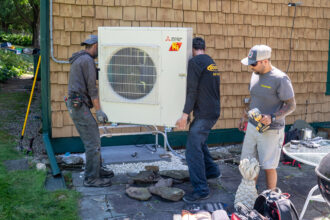
In the face of this conflict, it helps to remember that the practical means of mitigation have largely been worked out in the decade Kyoto has been in force. A low carbon energy platform, suited to developed countries and more advanced developing countries, is beginning to deploy:
• Demand-side efficiencies gained through weatherization and lighting improvements and then by giving consumers behind the meter controls.
• Supply-side efficiencies wrung from power grids by adding real time controls and modernized transmission and distribution systems.
• Transportation efficiencies gained by switching out petroleum for electrical power, biofuels, and digital controls.
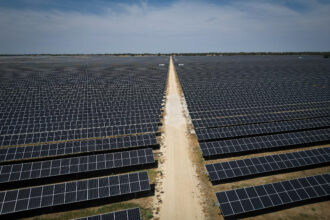
• Power grids switching out their primary feedstocks of carbon-heavy coal for renewable portfolios as well as (perhaps, later) nuclear energy and decarbonized coal.
With this mitigation platform in view, the issue becomes how to fund what is largely technology capacity building and deployment in developing countries.
Accepting, as has been done since Kyoto, that developed nations will for a long time bear the brunt of mitigation costs (regardless of when and to what degree developing nations come to accept climate change responsibilities), two funding models have emerged.
In one model, the taxpayers of developed nations (to be blunt) provide the capital. In the other, private funds raised in emissions markets supplement this public sector funding. It seems useful to ask which of these models can, decade after decade, best succeed.
A $100-200 Billion Transfer of Wealth
A 2009 Institute for Public Policy Research (IPPR) study, “Fairness in Global Climate Change Finance,” calls the various estimates of incremental mitigation costs in developing countries that it has surveyed unsatisfactory, due to the many unknown variables. It finds, though:
a convergence in the most recent estimates at $100B-$200B [per annum] for developing world costs. … It is perhaps [also] significant that developing countries in the UN negotiations have called for $200B-$400B [adding in estimates for adaptation aid] per annum.
To put these estimates in context: in 2007, U.S. foreign aid spending for development, humanitarian and emergency food aid totaled $12.7billion. President Obama, while pledging to double foreign aid from 2009 levels by 2012, only requested a 10% increase in his 2010 budget.
Early Models for Publicly Financed Mitigation
Two mechanisms, one supplementing the other, are being used to help developing nations begin to use carbon mitigation strategies — the technologies introduced above, as well as a set of forestry and agricultural practices, which are the main tools so far.
The first has governments, development banks, and NGOs building investment funds. The second seeks to supplement this essentially public financing with a commodities emissions market (and related offset program) that additionally brings in private capital. Both are in their early days and controversial.
The Global Environment Facility, launched by the World Bank in 1991, with 178 partners, typifies the public sector approach. To date it has provided $8 billion in grants and leveraged $32 billion in co-financing for 2,200 mitigation projects in 165 countries. The methods that it and other public sector entities employ include policy-based loans and grants, loan guarantees, debt financing, risk sharing mechanisms and equity investments.
Yet, balanced against need, investment sums like $8 billion over eighteen years are not nearly enough. In the most significant response to this shortfall, donors led by the World Bank launched Climate Investment Funds (CIF) in 2008, with a grant of $6.1 billion. This first CIF funding round was intended as an interim measure to scale up assistance to developing countries and strengthen the knowledge base in the development community, giving evidence that the financing answers are at most starting to emerge.
Engaging Private Finance Through Emissions Markets
Kyoto introduced a market mechanism to help reduce emissions in both developed and developing countries. The European Union, a Kyoto proponent, launched its Emissions Trading System (ETS) in 2005, fusing an emissions cap and market with a mechanism for flowing emissions abatement funds to developing countries.
The ETS in theory — its first iteration being like a hugely buggy beta software release — sets caps for member nations, tightens them regularly and distributes “allowances” (for free or via auctions) to big emitters like power plants. An emitter that is above its cap can use allowances it owns or buys to offset penalties; if under its cap, an emitter can sell or save its allowances. As with any market, third party investors can bring private capital into the system.
Today, in addition to ETS, there is one regional U.S. carbon market, two being planned, and discussions toward a U.S. federal market. Markets are also being planned or tested in Japan, Australia, New Zealand and Canada.
Technology transfer is achieved via “offsets.” An emitter above its cap can (in addition to buying allowances) get carbon credits by funding otherwise unfunded domestic or international mitigation projects. Credits offset emitter fines. So offsets do three things, at least in theory. They let developed nation emitters who sit above their caps pay fines in least cost ways. They fund mitigation in low income domestic areas and in developing nations. And they bring private investors to the system.
Since 2005, 1,350 ETS offset projects have been approved; 3,000 more are in the pipeline. They accrued $9.5 billion in investments. More pertinently, as these are the tiny numbers of a beta project, offsets (focusing now on the developing world), like emissions markets in general, have prominent critics and also supporters.
Writes Patrick McCully, Executive Director of International Rivers:
The world’s biggest carbon offset market, the Kyoto Protocol’s Clean Development Mechanism [CDM], is a global shell game that is increasing emissions behind the guise of promoting sustainable development.
Writes Joe Romm of The Center For American Progress and ClimateProgress.org:
[Offsets] deserve to be called rip-offsets because it is far from clear how many of them represent real reductions.
Both critics cite a 2008 paper on international carbon offsets by Stanford’s David Victor and Michael Wara. Phase 1 of CDM is corrupt and inefficient, the authors say. It is stifled by bureaucracy, easily gamed by participants, and an easy target for speculators. These and other faults lead them to conclude:
between a third and two thirds of emission offsets under the [CDM] … do not represent actual emission cuts
any offset market of sufficient scale … will involve substantial issuance of credits that do not represent real emissions reductions
The first-mover EU ETS, though, remains committed to offsets. By 2020, it says, it will generate €40 billion per annum each for EU and international mitigation projects. Its 2009 paper addressing the Copenhagen discussions simply states:
the CDM should be reformed
A March 2009 paper by the International Emissions Trading Association (IETA), also addressing Copenhagen, is more elaborative:
IETA strongly supports the continued operation, reform and expansion of the Kyoto Protocol’s flexible [emissions trading] mechanisms … which have been key to jump-starting emission reduction activities in the private sector globally as well as facilitating the flow of technology and know-how to, between, and within developing countries.
Here, then, are questions to ask when reviewing emissions markets and offsets as mitigation tools: What is the plan for raising per annum contributions of $200 billion-plus for technology transfer? Can the Phase 1 “beta” offset mechanisms be effectively reformed? Can emissions markets attract enough timely private sector capital to even make a difference?
About This Story
Perhaps you noticed: This story, like all the news we publish, is free to read. That’s because Inside Climate News is a 501c3 nonprofit organization. We do not charge a subscription fee, lock our news behind a paywall, or clutter our website with ads. We make our news on climate and the environment freely available to you and anyone who wants it.
That’s not all. We also share our news for free with scores of other media organizations around the country. Many of them can’t afford to do environmental journalism of their own. We’ve built bureaus from coast to coast to report local stories, collaborate with local newsrooms and co-publish articles so that this vital work is shared as widely as possible.
Two of us launched ICN in 2007. Six years later we earned a Pulitzer Prize for National Reporting, and now we run the oldest and largest dedicated climate newsroom in the nation. We tell the story in all its complexity. We hold polluters accountable. We expose environmental injustice. We debunk misinformation. We scrutinize solutions and inspire action.
Donations from readers like you fund every aspect of what we do. If you don’t already, will you support our ongoing work, our reporting on the biggest crisis facing our planet, and help us reach even more readers in more places?
Please take a moment to make a tax-deductible donation. Every one of them makes a difference.
Thank you,