The Senate launched a week of climate hearings today, starting with a line-up of Cabinet secretaries and questions from the Environment and Public Works Committee that kept returning to the issue of nuclear energy.
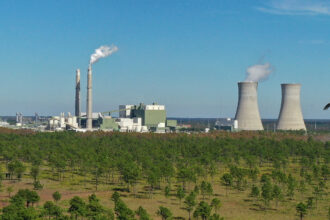
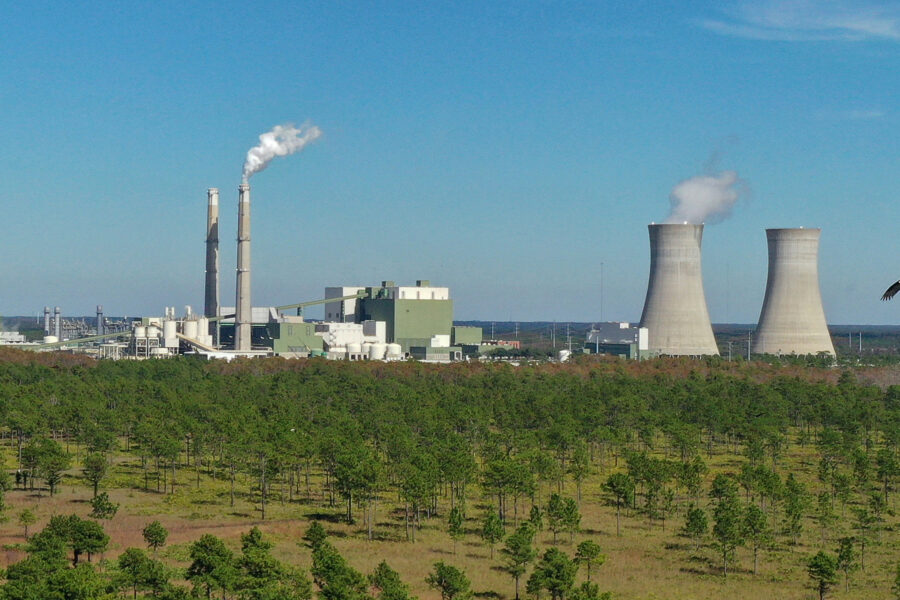
Sens. Tom Carper (D-Del.) and Lamar Alexander (R-Tenn.) both asked Energy Secretary Steven Chu to find ways to increase nuclear power’s use. It might not be cheap, but it creates jobs and produces carbon-free energy, Carper said.
Chu is an outspoken supporter of nuclear energy and has said repeatedly that nuclear must be part of a national climate solution.
“Quite frankly, we want to recapture the lead in utility nuclear power,” he told Alexander, who is calling for 100 new nuclear plants.
The Sierra Club called the committee’s focus on nuclear energy troubling, saying it
“ignores the cleaner, cheaper, safer, and faster emissions reductions that could be achieved through energy efficiency and clean energy. And as Senator Bernie Sanders (I-Vt.) suggested, no state in the union has yet said it would accept the more than 75,000 tons of highly toxic nuclear waste from our existing fleet of reactors. What’s more, reports indicate that 100 new reactors could cost as much as $4 trillion.”
The interest in nuclear from Carper and Alexander, as well as potential swing votes such as Sen. John McCain (R-Ariz.), who called for climate action and a big push into nuclear during his presidential campaign, could boost support for nuclear energy into the Senate’s version of climate legislation. Alexander suggested nuclear be rebranded as a renewable energy that counts toward any federal renewable electricity standard in the future.
Right now, the committee does not have a proposal for an RES, or an even a draft of a climate bill.
Chairwoman Barbara Boxer (D-Calif.) has indicated that she’ll follow the lead of the House American Clean Energy and Security (ACES) bill, but that it won’t be an exact replica. The Senate Energy and Natural Resources Committee has submitted one energy bill that would create an RES of 15 percent by 2021 while opening the door to more off-shore drilling and use of the tar sands.
A Role for Agriculture
Agriculture Secretary Tom Vilsack, who joined Chu at the hearing, spoke to another issue that likely will come into play as the Senate hammers out its legislation: the impact of climate legislation on farmers. Just as in the House, several farm-state Democrats in the Senate are on the fence about climate legislation. To support it, their farm constituents would have to be protected.
During the hearing, Vilsack advocated for an offset market that could pay farmers and landowners for using their land in ways that help absorb CO2 rather than release it.
“This issue is too important for agriculture and forestry to sit on the sidelines,” the former Iowa governor said.
Farm-state Congress members have fought cap-and-trade on the grounds that it would increase fuel and fertilizer costs. Offset programs could help cover some of that cost while rewarding farms for installing renewable energy, preserving forests and other CO2-absorbing ground cover, and using low-carbon farming and ranching practices.
Missouri Sen. Kit Bond brought up farming in his summary of GOP complaints, all carried over from the House: Cap-and-trade would be an energy tax that would punish the Midwest and southern states that rely on coal energy, help India and China, and create a bureaucratic nightmare, he said.
What About the Early Adopters?
On the issue of coal-reliant states, Rhode Island’s Sen. Sheldon Whitehouse (D-R.I.) raised a rebuttal that has been curiously absent: How might a climate bill help the states that were early adopters of renewable energy?
“We absorbed considerable expense in my state going off of coal,” Whitehouse said. “My concern is that we think of a way to be fair.”
Even though Rhode Island’s cities accepted the higher energy costs and switched largely to natural gas, residents have still had to suffer from coal stack pollution blowing in from the Midwest, and those costs show up in the health care system, Whitehouse said. Yet states that have continued pumping out pollution so they could keep their energy cheap now want concessions. The bill needs to make sure the benefit isn’t so lopsided in favor of those who continue to pollute, he said.
On the International Stage
Tomorrow, the Senate’s focus shifts to the Finance and Foreign Relations Committees, which plan to take closer looks at the questions of trade and foreign competition when it comes to climate legislation.
President Obama, meanwhile, will be meeting with leaders at the G8 summit in Italy and the 17-member Major Economies Forum, where representatives of the world’s largest polluting counties will be discussing how to respond to climate change. He’s likely to hear an earful about the weakness of the House climate bill and the responsibility of developed nations.
The Face of Green Jobs
Back on Capitol Hill, John Fetterman, the tattooed mayor of Braddock, Pa., put a face to the plight of cities that are struggling to create jobs in a desperate economy and are hopeful that green industries will be the answer (see video below).
Braddock was once a steel town of 20,000 residents and home to the Andrew Carnegie’s first big mill, just outside Pittsburgh. As the steel industry suffered and the mills closed, the town withered to about 3,000 residents and rows of abandoned homes and empty stores.
“The path we are on has failed,” Fetterman told the Environment and Public Works Committee. “For decades, we’ve seen real change blocked by those who benefit from the status quo.”
If there’s any silver lining to the economic crisis, it’s that it’s forcing change from the government now, he said. Fetterman, who was joined by a group of students from a jobs program in his home town, ticked off a list of labor unions that support the climate legislation and are looking for an emissions cap to spur investments in clean energy jobs.
Right next to Braddock’s border is an abandoned steel mill with about 150 acres that the town is repurposing as a green enterprise zone, and Fetterman is counting on federal support.
“If not this, then what?" he asked. "We’re a community that didn’t get the bailout dollars. We’re not looking for a handout, we’re looking for a hand up.”
See also:
Duke Considering First New Nuclear Plant in 30 Years
Nuclear: Skyrocketing Costs, Fruitless Subsidies
Oil Industry Applauds Senate’s ‘Clean Energy’ Bill
About This Story
Perhaps you noticed: This story, like all the news we publish, is free to read. That’s because Inside Climate News is a 501c3 nonprofit organization. We do not charge a subscription fee, lock our news behind a paywall, or clutter our website with ads. We make our news on climate and the environment freely available to you and anyone who wants it.
That’s not all. We also share our news for free with scores of other media organizations around the country. Many of them can’t afford to do environmental journalism of their own. We’ve built bureaus from coast to coast to report local stories, collaborate with local newsrooms and co-publish articles so that this vital work is shared as widely as possible.
Two of us launched ICN in 2007. Six years later we earned a Pulitzer Prize for National Reporting, and now we run the oldest and largest dedicated climate newsroom in the nation. We tell the story in all its complexity. We hold polluters accountable. We expose environmental injustice. We debunk misinformation. We scrutinize solutions and inspire action.
Donations from readers like you fund every aspect of what we do. If you don’t already, will you support our ongoing work, our reporting on the biggest crisis facing our planet, and help us reach even more readers in more places?
Please take a moment to make a tax-deductible donation. Every one of them makes a difference.
Thank you,