In Part 1, I described four tests that I believe will determine whether a climate bill approved by Congress this year should be judged a success. The bottom line is that the Senate must adopt legislation that is considerably stronger than the Waxman-Markey bill approved by the House.
Here are eight key ways the climate bill that eventually reaches the president’s desk should be stronger than the one that came from the House.
I will not try to analyze Waxman-Markey’s pluses and minuses in detail. Others already have done that very well, including David Hawkins of the Natural Resources Defense Council in a 40-page critique that he delivered to the Senate on July 2, and the Citizen’s Guide to Climate Policy by Lois Parshley and Ben Wessel. The Guide explains the House’s American Clean Energy and Security (ACES) bill about as clearly as one can; its recommendations for a final climate bill come much closer to meeting the four tests.
Require Deeper, Faster Cuts in Greenhouse Gas Emissions
The United States’ goal should be at least as strong as the European Union’s – a 20 percent reduction by 2020. Twenty-five percent would be better. That’s compared to 1990, not 2005.
Institute a More Aggressive Renewable Electricity Standard
The standard should be at least 25 percent renewable power by 2025, large enough to encourage sustained and robust capital investment in solar, wind and other genuinely clean energy technologies.
Members of Congress who consider 25×25 to be unachievable should take a lesson from states like Colorado and Texas, which established their own renewable energy standards and quickly found they were met much faster than anticipated. Once it saw how rapidly wind and solar power took hold in its economy, Colorado doubled its standard.
Consider Full Life-Cycle Costs of all Energy Choices
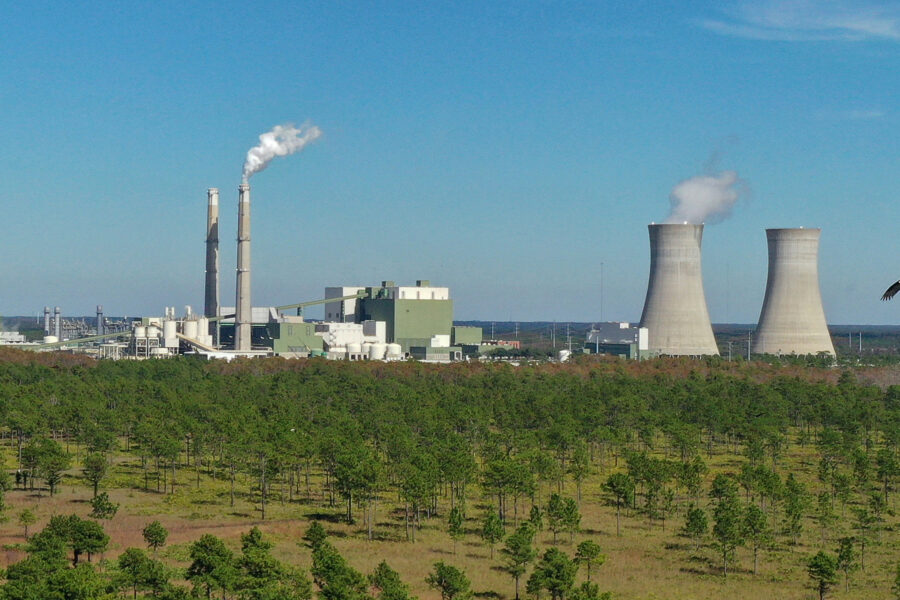
A critical issue being debated both on the Hill and in the White House is how to define “clean”, or more specifically whether nuclear generation and one of the most mythical of fuels, clean coal, should be considered low-carbon technologies.
Climate legislation—and policy makers in general—must consider impacts of our energy choices on the basis of full life-cycle performance in regard to carbon emissions, as well as water consumption, public health, ecosystems and ecosystem services, environmental burdens we will leave our children, economic stability and national security. By that standard, neither nuclear power nor that most mythical of energy technologies—“clean coal”—is clean.
Retain EPA’s Authority to Regulate Greenhouse Gases
As Hawkins points out, it makes sense to suspend EPA’s authority to regulate emissions from some sources that the Clean Air Act is not well suited to deal with. But most of EPA’s regulatory authority should remain intact so we fight emissions with more than one weapon.
It is perverse public policy to tell the nation’s principal environmental watchdog it can’t do anything about pollutants that have been officially declared a threat to public health and welfare. At minimum, EPA’s authority over big carbon polluters should be preserved as a fail-safe tool in case the cap-and-trade system approved by Congress doesn’t work as well or quickly as expected.
Empower States, Cities and Corporations to Innovate
We should cap carbon emissions, not innovation and leadership. It would be possible but wrong to establish a cap-and-trade system that allows other polluters to emit more greenhouse gases if companies, states or cities emit less. Nor should Congress make it generally illegal for states to exceed federal standards for efficiency, renewables and carbon-cutting.
Congress should ensure that cities and companies have the authority and resources to find new ways to reduce emissions below what the law requires.
Move Emissions Trading Upstream
Carbon pricing would be far simpler and more transparent if emission allowances were all traded upstream – in other words, at well heads, mine mouths, ports and refineries where oil, gas and coal enter the economy.
The Waxman-Markey architecture brings thousands of “big emitters” such as power plants and industries into the trading system, opening the floodgates of complexity. Alternatively, auctioning emission allowances upstream would involve fewer than 3,000 entities. This approach has been endorsed, among others, by the Presidential Climate Action Project, economists Robert Repetto and Herman Daley, and the editors of Scientific-American.
Daley argues that upstream caps would be more effective as well as more transparent:
The quota (caps) usually should be applied at the input end (upstream) because depletion is more spatially concentrated than pollution and hence easier to monitor.
In their July issue, the editors of Scientific American wrote:
Here’s how it might work: Next year and in each year thereafter, Congress would set an overall cap on fossil fuels extracted by upstream energy producers, which David A. Weisbach of the University of Chicago Law School identifies as “fewer than 3,000 entities”—petroleum refiners, coal mines and domestic natural gas processors—“plus imports at a few locations.”
The cap would be divided into allowances that would be offered at auction, though a floor price would be set to ensure that the price signal is sent. Only the 3,000 energy producers would be eligible to purchase them. To keep the legislation simple and pork-free, the proceeds would go directly to U.S. citizens—not to research programs in alternative energy, “concept car” demonstrations, and the like.
To adjust emissions caps in the future, the allowances would expire periodically, perhaps as often as once a year. That would help the system to respond to changes in projections of total atmospheric CO2 and to offer all parties a chance to learn from the program. It would also limit some—though by no means all—of the possibilities for creating derivative securities based on the emissions allowances.
I disagree on part of this formula: In the first few years, not all of the auction revenues should go back to taxpayers. Some must be invested in an Apollo program of research in new clean energy technologies (see the new proposal by the Center for American Progress for an international technology push). In fact, the allocation of funds for clean energy R&D is far too small in the Waxman-Markey bill. Thirty-four Nobel laureates made this point in a letter July 16 to President Obama:
You have repeatedly and appropriately called for a Clean Energy Technology Fund of $150 billion over 10 years that could be funded from receipts collected from a greenhouse gas cap and trade program. The stable support this fund would provide is essential to pay for the research and development needed if the U.S., as well as the developing world, are to achieve their goals in reducing greenhouse gases at an affordable cost.
This stable R&D spending is not a luxury. It is in fact necessary because rapid scientific and technical progress is crucial to achieving these goals, and to making the cost affordable. … The legislation provides no stable, specific funding for sustained research.
We also need a Manhattan project to help the hardest hit parts of the nation adapt to climate change and climate policy. But the upstream architecture would be more likely to meet Sen. Barbara Boxer’s test: simple, transparent, no safety valves, off ramps, giveaways or complicated allowance allocations.
Reveal Hidden Carbon Emissions and Their Causes
Congress should establish specific and ambitious greenhouse gas reduction goals for the federal government and for projects that receive federal funding. As the world’s largest single energy consumer, the federal government has the potential to shape a clean energy marketplace through its purchasing power and policies.
In addition, Congress should require climate impact statements on all bills likely to affect emissions, positively or negatively, directly or indirectly.
It also should direct the Congressional Budget Office to oversee a thorough inventory of all federal subsidies that result directly or indirectly in more greenhouse gas emissions, from home mortgage interest deductions to highway funds, to subsidies for the fossil energy sector.
And it should require that the Energy Information Administration report annually on carbon emissions attributed to U.S.-owned industrial operations overseas and to our consumption of goods manufactured in and transported from other countries.
Require Periodic Reviews of Carbon Pricing Performance
National and international climate policy are being established in a time of rapid change. Science, technology, politics, international relationships and the climate itself all are changing, often in unpredictable ways. A U.S. climate regime should have the flexibility for periodic review and adjustments to make sure it is working optimally.
Congress should give the Administration authority to tweak the regime within limits rather than having to go back to the Hill, which is not known for being facile.
These issues should be prominent in the Senate debate on climate action this year.
See also:
Grading a Climate Bill: 4 Key Tests
How to Deal with the Climate Bill: Take the Table Scraps or Fight for More?
Clean Energy Climate Bill Gives Coal a Competitive Future
White House, Job Creation Keys to a Stronger Renewable Energy Standard
Climate Bill Wins Enough Votes to Pass, But at What Cost?
(Official White House photo by Pete Souza)
About This Story
Perhaps you noticed: This story, like all the news we publish, is free to read. That’s because Inside Climate News is a 501c3 nonprofit organization. We do not charge a subscription fee, lock our news behind a paywall, or clutter our website with ads. We make our news on climate and the environment freely available to you and anyone who wants it.
That’s not all. We also share our news for free with scores of other media organizations around the country. Many of them can’t afford to do environmental journalism of their own. We’ve built bureaus from coast to coast to report local stories, collaborate with local newsrooms and co-publish articles so that this vital work is shared as widely as possible.
Two of us launched ICN in 2007. Six years later we earned a Pulitzer Prize for National Reporting, and now we run the oldest and largest dedicated climate newsroom in the nation. We tell the story in all its complexity. We hold polluters accountable. We expose environmental injustice. We debunk misinformation. We scrutinize solutions and inspire action.
Donations from readers like you fund every aspect of what we do. If you don’t already, will you support our ongoing work, our reporting on the biggest crisis facing our planet, and help us reach even more readers in more places?
Please take a moment to make a tax-deductible donation. Every one of them makes a difference.
Thank you,