By Cao Haili, ChinaDialog
China’s policymakers are beginning to accept the use of market mechanisms to achieve goals on addressing climate change and reducing energy use.
There are currently three major exchanges in China that trade environmental and energy assets, in Beijing, Tianjin and Shanghai. All were set up with support from local governments, and all began operations in the past year.
Unlike the exchanges in Beijing and Shanghai, the Tianjin Climate Exchange is a joint enterprise. Its shareholders include: CNPC Assets Management, a subsidiary of China National Petroleum Corporation; Tianjin Property Rights Exchange; and the Chicago Climate Stock Exchange. The Tianjin exchange decided early on to adopt the “cap-and-trade” model used by the Chicago exchange — an emissions trading model where members adopt a voluntary, yet legally binding commitment to meet greenhouse-gas reduction targets.
Before entering the Chinese market, the Chicago exchange had already branched out into Europe, Australia and Canada. Its founders were confident that they could replicate Chicago’s model in China.
“We feel China’s circumstances are similar to those of the United States, in terms of introducing a voluntary emission reduction method,” said Dai Xiansheng, chairman of the Tianjin exchange. “Just because China hasn’t adopted emissions caps doesn’t mean we are not reducing emissions. If U.S. companies reduce their emissions, then Chinese firms face pressure to do the same.”
The Tianjin exchange launched a voluntary emissions trading program for businesses in early September. The program aims to measure, report and verify carbon dioxide emitted by businesses: Companies sign legally-binding agreements to reduce their emissions growth (though not their absolute emissions). Twenty Chinese firms were selected for the first stage.
But according to the people behind the Beijing Environmental Assets Exchange (BEAE), China still has a long way to go before it can really embrace the cap-and-trade model.
Mei Dewen, general manager at BEAE, uses an analogy to refer to China’s climate policy environment:
“Cap-and-trade is a Ferrari; but China is still a country track, and it needs a tractor.”
Mei believes that “gradual reform” is the best way to develop an emissions trading market. Therefore, BEAE opted to start with voluntary emissions reduction (VER) trading: These voluntary emission reductions, said BEAE chairman Xiong Yan, occur when nations or businesses — which are not legally obliged to cut emissions — do so for reasons of corporate social responsibility, or for the sake of long-term social development.
BEAE announced their first domestic VER trade on August 5: Tianping Automobile Insurance purchased 8,026 tons of emissions reductions from the Beijing Green Travel Initiative for 277,000 yuan (US$40,567). This purchase was used to offset the emissions incurred in its company operations, from its establishment in 2004 to the end of 2008.
But when I spoke to Xiong this October, he admitted that the trade was a one-off. Currently, they are attempting to formulate their own carbon VER standards. For the time being, they are working on projects in the agricultural sector, rather than industry.
Lin Jian, general manager at Shanghai Environment and Energy Exchange (SEEE), agrees with the people at BEAE. They recently added VER trading, mostly for emissions-reduction projects already approved by the National Development and Reform Commission.
Lin said that the model of the Chicago exchange is not entirely suited to China: While the U.S. federal government has not committed to emissions reductions, many state governments have set binding emissions reduction targets. China’s legal system is very different.
Jeff Huang, global vice president of the Chicago Climate Exchange and assistant chairman of the Tianjin exchange, is more optimistic.
He admitted that China cannot adopt the U.S. model wholesale. However, Huang argued that China already has a cap: the binding targets on energy-saving and emissions-reduction in the 11th Five Year Plan, to reduce energy intensity by 20% by 2010 on 2005 levels. The concept of carbon intensity was not used at first, but late last year, the government announced that by 2020, China will cut its carbon intensity by 40% to 45%. Huang said that although many regard this target as too conservative, he believes the importance is that there is a number: It shows that China has made a large step in the right direction — towards an emissions trading policy.
Since its launch in September, however, no real progress has been made on the Tianjin Exchange’s business cap-and-trade scheme. The exchange hit major problems at the first stage: gathering data on the historical emissions of businesses. And the Tianjin exchange now appears to be starting a VER scheme. On November 17, Shanghai Jifeng Packaging announced they had entrusted the exchange to register 6266 voluntary carbon units, offsetting emissions from the company’s operations from January 2008 to June 30, 2009. As part of this exchange, Jifeng made payments to Xiamen HSE Environmental Engineering.
According to Lin Jian, although the Chinese government has announced emissions reduction targets, “there have been no fundamental changes to the trading environment.”
Chen Hongbo, an assistant researcher at the Chinese Academy of Social Sciences’ Urban Development and Environment Research Centre, said that any kind of market — carbon or otherwise — needs the right conditions in order to develop.
In China, the infrastructure for many markets is lacking. For example, there are issues with the legal ownership of traded emissions and a lack of third-party certification. Nor is the actual market demand known. Chen believes that the future carbon market must be a compulsory one: Only when the government sets absolute caps on emissions will there be the demand.
But Xiong Yan takes a different view: Whatever route is taken, he said, sooner or later China will implement cap-and-trade.
See also:
Shanghai to Pilot China’s First Municipal Emissions Exchange
ICET Piloting Voluntary Climate Registry in Southern China
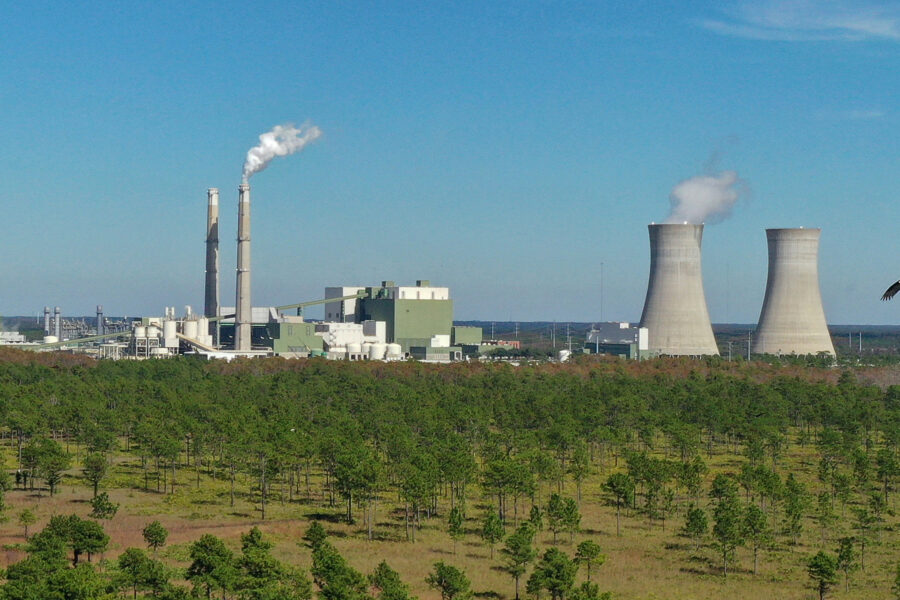
(Photo: Tianjin, jaeming/CC BY 2.0)
Cao Haili, formerly senior reporter at Caijing magazine, is a reporter for chinadialogue. Originally published at chinadialogue.
About This Story
Perhaps you noticed: This story, like all the news we publish, is free to read. That’s because Inside Climate News is a 501c3 nonprofit organization. We do not charge a subscription fee, lock our news behind a paywall, or clutter our website with ads. We make our news on climate and the environment freely available to you and anyone who wants it.
That’s not all. We also share our news for free with scores of other media organizations around the country. Many of them can’t afford to do environmental journalism of their own. We’ve built bureaus from coast to coast to report local stories, collaborate with local newsrooms and co-publish articles so that this vital work is shared as widely as possible.
Two of us launched ICN in 2007. Six years later we earned a Pulitzer Prize for National Reporting, and now we run the oldest and largest dedicated climate newsroom in the nation. We tell the story in all its complexity. We hold polluters accountable. We expose environmental injustice. We debunk misinformation. We scrutinize solutions and inspire action.
Donations from readers like you fund every aspect of what we do. If you don’t already, will you support our ongoing work, our reporting on the biggest crisis facing our planet, and help us reach even more readers in more places?
Please take a moment to make a tax-deductible donation. Every one of them makes a difference.
Thank you,