As the U.S. Environmental Protection Agency emerges from a dark eight years under the Bush administration, it is consciously and relatively successfully trying to base its decisions on science. That is why its decision last week to not object to a permit for a mountaintop mine in West Virginia seems so odd now.
A comprehensive study in Friday’s issue of the journal Science points to a striking lack of attention to the science in the agency’s handling of mountaintop mining practices in Appalachia.
The study, by 12 hydrologists, ecologists and engineers, concludes that “mining permits are being issued despite the preponderance of scientific evidence that impacts are pervasive and irreversible and that mitigation cannot compensate for losses.”
The EPA has been trying to strike a compromise when it comes to regulating mountaintop mining, but the scientists say their findings clearly show there is no middle ground that does not permanently damage the health of the region’s environment and communities.
“The scientific evidence of the severe environmental and human impacts from mountaintop mining is strong and irrefutable,” says lead author Margaret Palmer. “Its impacts are pervasive and long lasting and there is no evidence that any mitigation practices successfully reverse the damage it causes.”
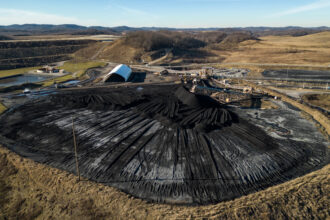
During mountaintop mining, coal mining companies strip away native forests then blast the bare mountaintops, cutting through hundreds of feet of rock to reach buried coal seams.
The dynamited rock, soil and unearthed heavy metals, collectively called “spoil” or “overburden,” is dumped into adjacent valleys, often burying streams that wildlife and area residents depend on. Toxins and dust from those mined sites have been blamed for health problems including birth defects and chronic heart and lung diseases. In fact, a recent study by Physicians for Social Responsibility found coal was damaging human health throughout its lifecycle.
While mining companies argue that they take measures to mitigate damage to the mountain ecosystems, the scientists found that the water filtered through these filled-in valleys contains sulfates that can be toxic to wildlife, bio-accumulate in larger species and be carried great distances by the streams.
The scientists says efforts by mining companies to restore these mined mountaintops are doomed to failure. No “restored” streams have recovered their former biodiversity, they say.
“Notwithstanding recent attempts to improve reclamation, the immense scale of mountaintop mining makes it unrealistic to think that true restoration or mitigation is possible with current techniques,” says co-author Keith Eshleman.
Hobet 45
EPA Administrator Lisa Jackson has repeatedly said that her agency will base its decisions on “the best available science,” but the EPA’s decision last week to support the U.S. Army Corps of Engineers issuing a Clean Water Act permit for the Hobet 45 mine flies in the face of the latest science.
The mine’s operator, Patriot Coal, agreed to cut the impact its operations would have on streams by half — from burying six miles of stream to burying three. The EPA says this meets Clean Water Act requirements. The Science study, published two days later but already being discussed, calls that into question.
“If the Obama administration is serious about science driving policy, then this report should be the nail in the coffin that prompts the administration to issue new Clean Water Act regulations that prohibit the dumping of mining waste into streams,” said the Sierra Club’s environmental quality program director, Ed Hopkins.
Regulating Mountaintop Mining
Coal releases more carbon dioxide emissions per unit of energy produced than any other fossil fuel, but it also provides more than half the United States’ electricity supply. Mountaintop mining, a practice that has grown throughout the past 30 years, now supplies about 10 percent of U.S. coal.
The EPA has a long history with trying to come to terms with the impacts of that destructive practice, starting with the Clean Water Act and continuing with the 1983 stream buffer zone rule stating that no land within 100 feet a stream shall be disturbed by surface mining activities without regulatory approval.
The Bush administration began undoing that work, first in 2002 by changing the definition of “fill material” allowed in streams under the Clean Water Act to include mining waste and then in late 2008 when it repealed the stream buffer zone rule.
The Obama administration has been working to restore the original rule, but it has yet to complete the effort. At the same time, the EPA has taken a more active role in mountaintop mining oversight.
In March, the EPA announced that it would take a closer look at about 150 pending mountaintop mining permits — permits normally cleared by the Army Corps of Engineers, but over which the EPA has an oversight role. Jackson dashed the hopes of mountaintop mining critics when the EPA approved 42 of the first 48 of those permits, but then the administration put a hold on 79 other pending permits in September, citing concerns over the environmental harm caused by this mining and saying additional scientific scrutiny was needed. The Hobet 45 mine had been included on that list.
Also in September, the EPA asked the Corps to suspend, revoke or modify the permit covering the Spruce No. 1 mine, one of the largest mountaintop projects in West Virginia.
The action eventually taken on this mine may determine whether the Obama EPA ultimately sticks with the economically expedient decision-making of the Bush version when it comes to mountaintop mining or bases its actions on the best science available.
The Hobet 45 announcement was coupled with an announcement that the EPA and the operator of Spruce No. 1 were granted an extension of a court-imposed deadline to discuss whether a revised mining plan that complies with the Clean Water Act is possible.
See also:
Appalachia’s Best Hope for Ending Mountaintop Mining
Appalachia Says ‘Not Good Enough’ to Obama Mountaintop Mining Plan
Mountaintop Mining, Up Close and Personal
EPA Takes First Step Toward Rare Veto of Mountaintop Mining Permit
Controversial Mining Office Nominee Cleared for Senate Vote
Religion’s View from Appalachia: Only God Should Move Mountains
(Photo: Vivian Stockman/OHVEC)
About This Story
Perhaps you noticed: This story, like all the news we publish, is free to read. That’s because Inside Climate News is a 501c3 nonprofit organization. We do not charge a subscription fee, lock our news behind a paywall, or clutter our website with ads. We make our news on climate and the environment freely available to you and anyone who wants it.
That’s not all. We also share our news for free with scores of other media organizations around the country. Many of them can’t afford to do environmental journalism of their own. We’ve built bureaus from coast to coast to report local stories, collaborate with local newsrooms and co-publish articles so that this vital work is shared as widely as possible.
Two of us launched ICN in 2007. Six years later we earned a Pulitzer Prize for National Reporting, and now we run the oldest and largest dedicated climate newsroom in the nation. We tell the story in all its complexity. We hold polluters accountable. We expose environmental injustice. We debunk misinformation. We scrutinize solutions and inspire action.
Donations from readers like you fund every aspect of what we do. If you don’t already, will you support our ongoing work, our reporting on the biggest crisis facing our planet, and help us reach even more readers in more places?
Please take a moment to make a tax-deductible donation. Every one of them makes a difference.
Thank you,