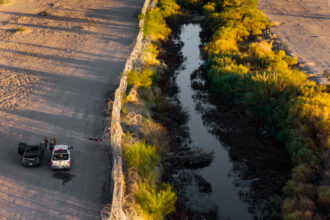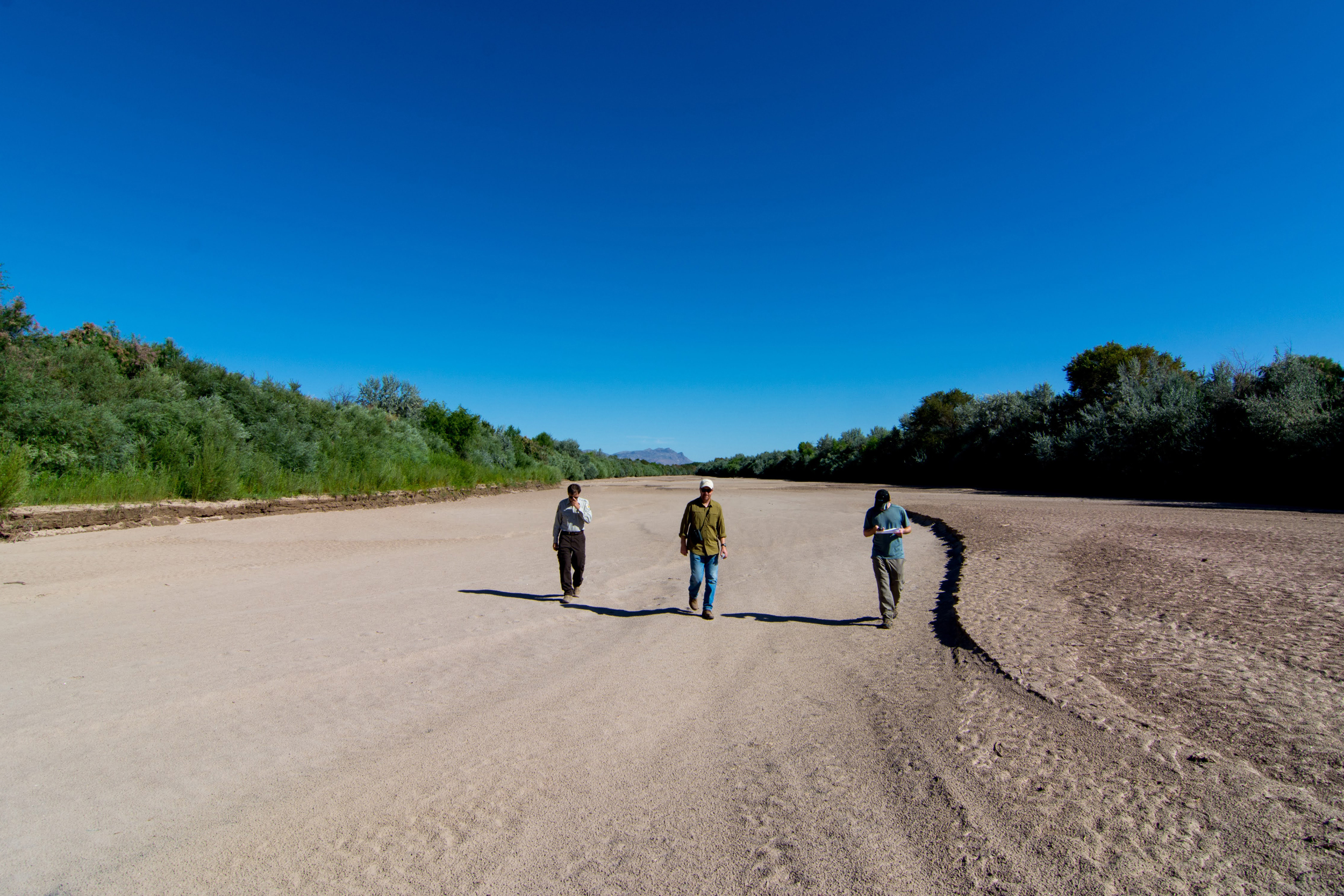


ALBUQUERQUE, N.M.—On a late July morning, a snapping turtle, about 18 inches in length, sat solemnly in a dry riverbed where the Rio Grande normally flows here. The aquatic reptile was one of few signs of life on a river that’s usually buzzing with various species of fish, ducks, insects and other animals.
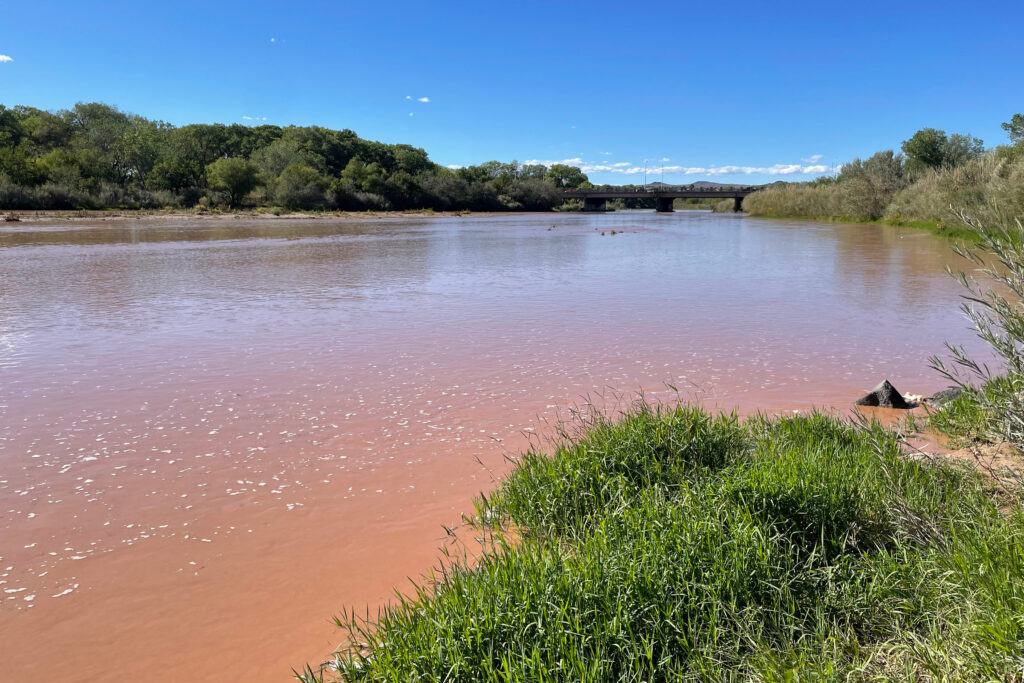
Fast forward to one crisp day in mid-October, and muddy-hued water, typical for this stretch of the Rio Grande, once again flowed downstream past Albuquerque’s Old Town area. Ducks swam near a sandbar, and things seemed more or less back to normal after several weeks of replenishing rains in the region. But with the river repeatedly running dry in recent years after decades in which it rarely did, it’s clear that the megadrought plaguing the Southwest will present new challenges to the river and the life that depends on it.
This summer, Albuquerque’s stretch of the Rio Grande went dry for about 45 days over six unique drying events from mid-July to mid-September—more than any year in recent history—and other northern reaches of the river experienced similar conditions. Albuquerque’s section of the Rio experienced intermittent temporary flows throughout this period due to rain, but they were short-lived.
Though many of the area’s plants and animals come equipped with special adaptations that help them deal with dry spells, experts say that this kind of extended desiccation of the river can have major impacts on their behavior and survival. Still, they’re not sure about the long-term implications.
“This is Unprecedented”
In July 2022, a 5-mile stretch of Albuquerque’s Rio Grande ran dry for the first time in 40 years, according to NASA’s Earth Observatory. About 20 miles south of Albuquerque, 12 miles of the river near Los Lunas also went dry.
This year, Albuquerque’s stretch of river ran dry on July 13, and by mid-August, about 11 miles of river were empty of water throughout the city. Other areas of the Middle Rio Grande system, a 120-mile section of river that stretches from Cochiti Dam to Elephant Butte Dam, also suffered significant drying in 2025. This included about 40 miles in the San Acacia reach near Socorro and 18 miles in the Isleta reach near Belen, KUNM reported.
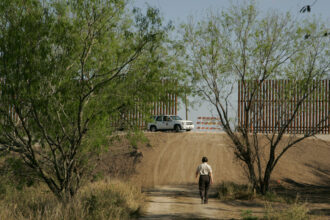
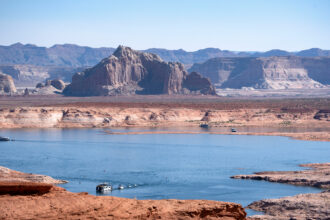
According to NASA, drying events are not uncommon along the 1,885-mile-long Rio Grande, which flows from Colorado’s San Juan Mountains to the Gulf of Mexico—hundreds of miles of the lower river often dry out. In fact, American Rivers named the lower Rio Grande—the stretch between Del Rio, Texas and the Gulf—as the fifth-most endangered river in the country in 2025. However, NASA states that drying events are now happening earlier and farther north as the Southwest grapples with its worst megadrought in 1,200 years, driven largely by weak snowpack, lack of rain and high water demand. In 2025, New Mexico’s water shortage deepened as the flow it is required to deliver to Texas under the Rio Grande Compact limited its ability to store river water passing through the state in reservoirs.
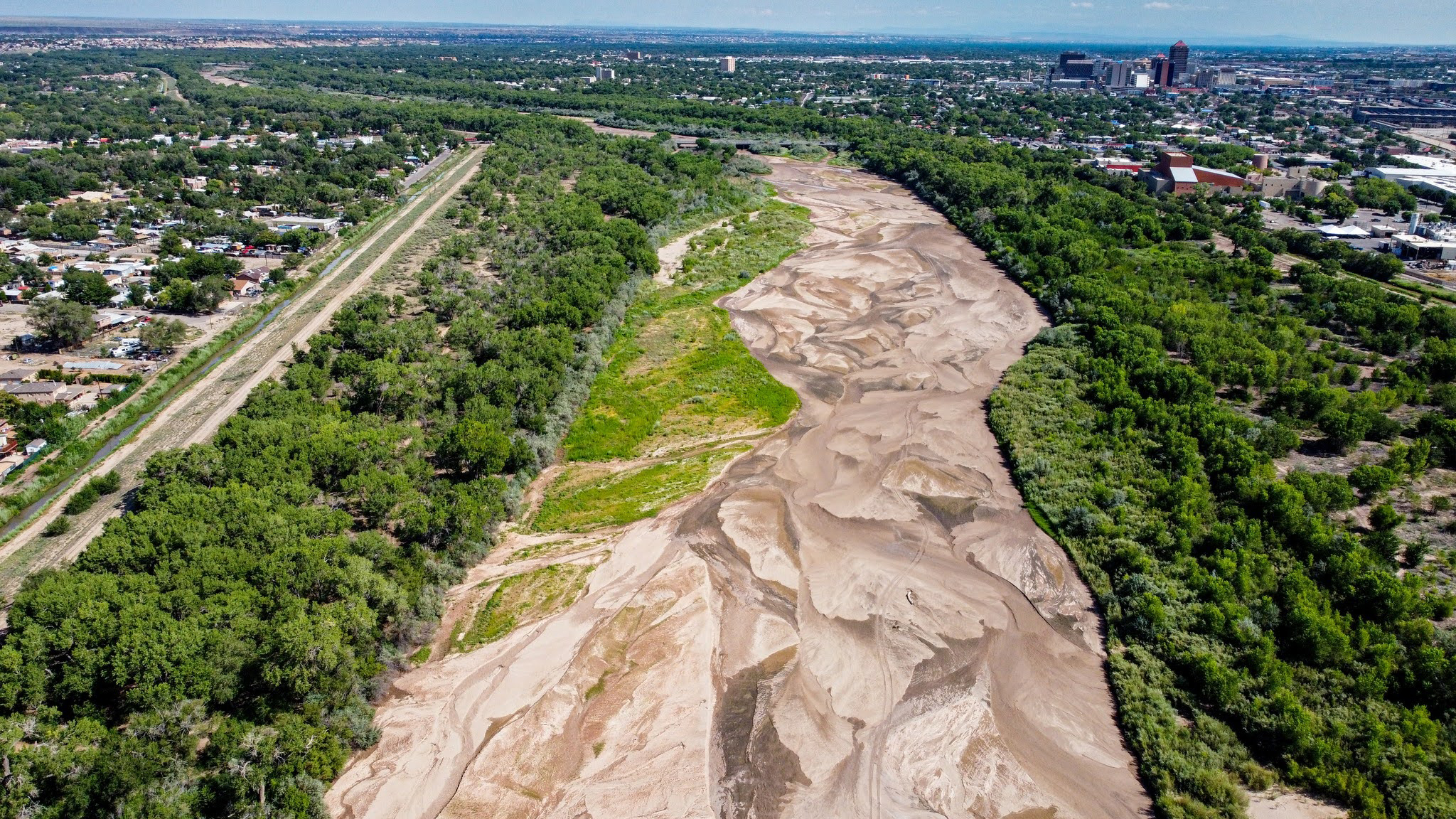
Historically, Albuquerque’s reach of the river did occasionally dry throughout the mid- to late-20th century, with the last event prior to 2022 occurring in 1983. Still, the dry-outs in the latter half of the last century were brief, and it was a “very different river,” according to Paul Tashjian, director of freshwater conservation for Audubon Southwest. On its website, Audubon explains that Albuquerque’s rare days of drying in the 1950s, ‘60s and ‘70s preceded the import of water from the Colorado River, an initiative dubbed the San Juan-Chama Project.
“This drying that we saw this year is unprecedented,” Tashjian said. “[This year] is just like a new regime or a new climatic reality that we’ve been talking about for a long time, but this is the first year that we really saw it in this sort of extreme.”
“A Lot of Them End Up Dying”
Of particular concern among the animals impacted by the drying of the river in New Mexico is the Rio Grande silvery minnow, one of the most endangered fish in North America, according to the U.S. Fish and Wildlife Service (USFWS). The minnow is only found in a few stretches of the Rio Grande, where less than 5 percent of its natural habitat remains.
The urgency to conserve the species has spawned a joint effort between the USFWS, the Bureau of Reclamation, the University of New Mexico (UNM) and the Albuquerque Biological Park (ABQ BioPark), which manages a zoo, botanic garden, aquarium and fishing beach. The partnership includes an annual egg collection in the spring, the rearing of the fry after they hatch and the release of the fish in the fall, but that program has faced challenges. Among those are low river flows, which have been found to severely impact the ability of juveniles to survive into adulthood.
Some fish manage to maneuver to another part of the river when the section they typically live in runs dry. USFWS also operates a salvage program where it moves fish from areas that are drying to more perennial waters. Still, “a lot of them end up dying,” said Becky Bixby, director of the Water Resources Program at UNM. “Those salvage efforts have been reasonably successful, but every year it’s been drying a little bit farther north and a little bit longer period of time.”
The aquatic invertebrates and algae Bixby studies as part of her research are also as good as dead in a dry river, though she says it only takes a few weeks for algae, which are the base of the river’s food web and feed animals like fish and insects, to regenerate once water returns to the river.
An Entire Ecosystem Threatened
Animals throughout the entire Bosque ecosystem—a cottonwood forest that flanks either side of the river—are impacted by the dry-out, according to Nick Pederson, Albuquerque’s Urban Biology division manager. This rises from the insects at the bottom of the food chain up through frogs and birds to small mammals like rodents, raccoons, beavers, skunks and porcupines, and larger predators like coyotes, bobcats and raptors.
“It’s essentially anything when you’re talking about that Bosque ecosystem,” Pederson said. “When you lose something like the surface water on the Rio Grande, that is going to have an impact on a lot of different species.”
Some birds simply migrate to other spots on the river, according to Tucker Davidson, senior associate of water conservation with Audubon Southwest. Likewise, coyotes and other large predators might meander upstream, Pederson said, but smaller mammals find it harder to migrate long distances and might end up relying on other closer water sources such as Tingley Beach, an ABQ BioPark-managed facility near the river that has several permanent fishing ponds.
As this stretch of the Rio Grande continues to see drier conditions, Pederson predicts a drop in insect populations that are reliant on the river ecosystem. In seasons of low water flow, for instance, his team has observed significant decreases in the number of floodwater mosquitoes, a group comprising numerous species that lay eggs on moist soil above the waterline. He says such population declines are likely occurring among other insects that rely on the system, and this could eventually impact nesting success for some bird species, as chicks rely on bugs for protein and nutrients.
“You saw this late summer dry-out [this year],” Pederson explained. “That’s mostly post-breeding, but you had a lot of juvenile birds on the landscape. If insects are harder to come by when they’re trying to survive their first year, that’s likely going to have a negative impact on those numbers.”
Plant life also took a hit due to dry conditions this year, according to Tashjian, who surveyed various sections of the Middle Rio Grande over the summer. He said his team saw “immediate stress” to riparian trees, particularly cottonwoods and coyote willows.
The local nonprofit Tree New Mexico, which plants trees and educates the public about tree planting and care, also noted this impact.
“Water has returned to the Rio Grande, but the damage remains,” the group stated in an August Facebook post after rains had started to refill parts of the river. The organization explained that cottonwoods were turning yellow and losing their leaves early, while coyote willows were turning brown. “Some of these trees will not recover. Both species are core to the Bosque’s ecosystem, supporting countless wild creatures.”
This story is funded by readers like you.
Our nonprofit newsroom provides award-winning climate coverage free of charge and advertising. We rely on donations from readers like you to keep going. Please donate now to support our work.
Donate NowThe drying of the river also affected humans in various ways, from local farmers who use its water for irrigation, to residents who visit the river and the nearby Paseo del Bosque Trail for canoeing, fishing, hiking, cycling and other recreational activities.
Tashjian, who frequently rides his bike in the Bosque, said the area “just felt dead” over the summer.
“The Rio Grande is a ribbon of water in an otherwise desert landscape,” he said. “I can’t reiterate enough how important that little strip of water is. And so when that goes dry, I mean everything does suffer.”
Reasons for Optimism
The experts all expressed hope for the future of the Rio Grande, noting that a number of agencies, nonprofits and water advocates are working together to help find solutions that will keep the river running. For instance, Audubon Southwest leases spare water from the nearby towns of Belen, Bernalillo and Los Lunas. The organization then leases that water to management agencies, which release it into vulnerable stretches of the river to help minimize drying.
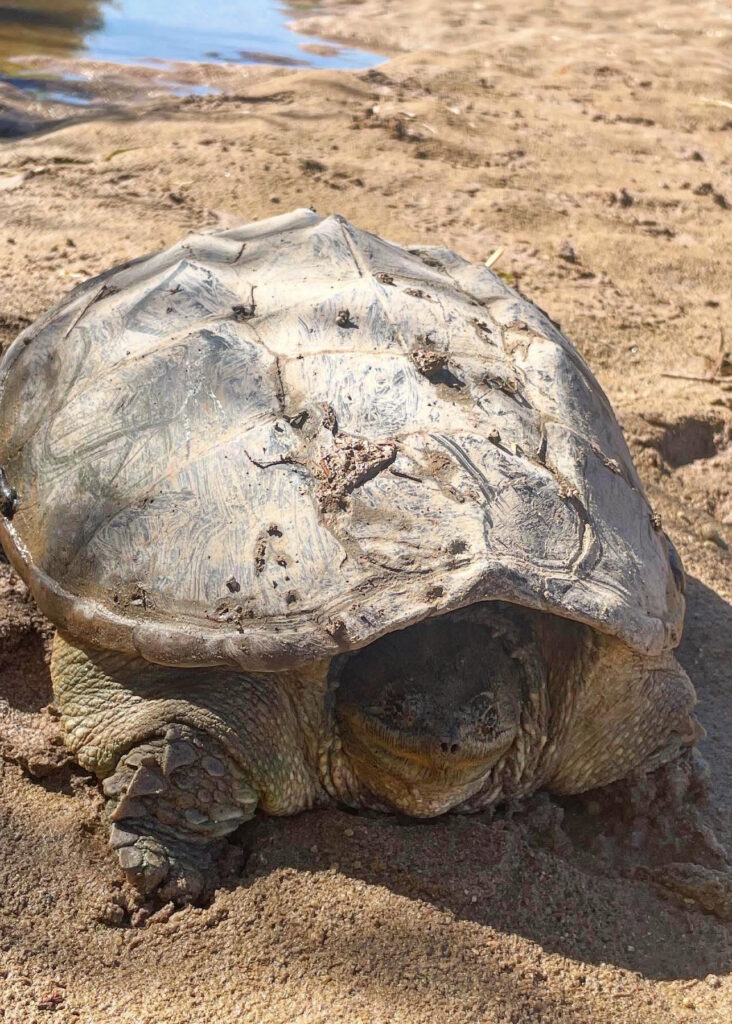
Many of the region’s organisms also come with adaptations that help them survive drier conditions, although weeks without a flowing river isn’t ideal for most. Take that snapping turtle that sat alone in the Albuquerque riverbed in July. These primeval-looking reptiles are primarily aquatic, spending most of their lives in rivers, lakes and ponds. But Leland Pierce, an amphibian and reptile specialist with the New Mexico Department of Game and Fish, calls them “very adaptable.”
“Obviously, it would be best that the river had water year-round, but they make extensive use of drainages that are slow moving, as well as ponds,” including those at the Rio Grande Nature Center in Albuquerque and natural pools that can be found within an Albuquerque-managed marsh wetland system called San Antonio Oxbow Bluffs, he said via email. “I want to keep an eye out for them, but they are very good at finding somewhere else to stay if their current water body dries up.”
Meanwhile, Bixby and her students are investigating whether acequias—traditional, communal irrigation ditches or canal systems that are common along the river—serve as refuges for animals like silvery minnows when the river is parched.
“I’m optimistic,” Bixby said of the Rio Grande’s future, adding that water managers need to think about how to adapt to a new climate future. “I think the question is, how do we manage the system for less water?…What do we do to make the system more resilient?”
About This Story
Perhaps you noticed: This story, like all the news we publish, is free to read. That’s because Inside Climate News is a 501c3 nonprofit organization. We do not charge a subscription fee, lock our news behind a paywall, or clutter our website with ads. We make our news on climate and the environment freely available to you and anyone who wants it.
That’s not all. We also share our news for free with scores of other media organizations around the country. Many of them can’t afford to do environmental journalism of their own. We’ve built bureaus from coast to coast to report local stories, collaborate with local newsrooms and co-publish articles so that this vital work is shared as widely as possible.
Two of us launched ICN in 2007. Six years later we earned a Pulitzer Prize for National Reporting, and now we run the oldest and largest dedicated climate newsroom in the nation. We tell the story in all its complexity. We hold polluters accountable. We expose environmental injustice. We debunk misinformation. We scrutinize solutions and inspire action.
Donations from readers like you fund every aspect of what we do. If you don’t already, will you support our ongoing work, our reporting on the biggest crisis facing our planet, and help us reach even more readers in more places?
Please take a moment to make a tax-deductible donation. Every one of them makes a difference.
Thank you,