

As global warming accelerates, about 480 million people in North Africa and the Arabian Peninsula face intensifying and in some places unsurvivable heat, as well as drought, famine and the risk of mass displacement, the World Meteorological Organization warned Thursday.
The 22 Arab region countries covered in the WMO’s new State of the Climate report produce about a quarter of the world’s oil, yet directly account for only 5 to 7 percent of global greenhouse gas emissions from their own territories. The climate paradox positions the region as both a linchpin of the global fossil-fuel economy and one of the most vulnerable geographic areas.
WMO Secretary-General Celeste Saulo said extreme heat is pushing communities in the region to their physical limits. Droughts show no sign of letting up in one of the world’s most water-stressed regions, but at the same time, parts of it have been devastated by record rains and flooding, she added.
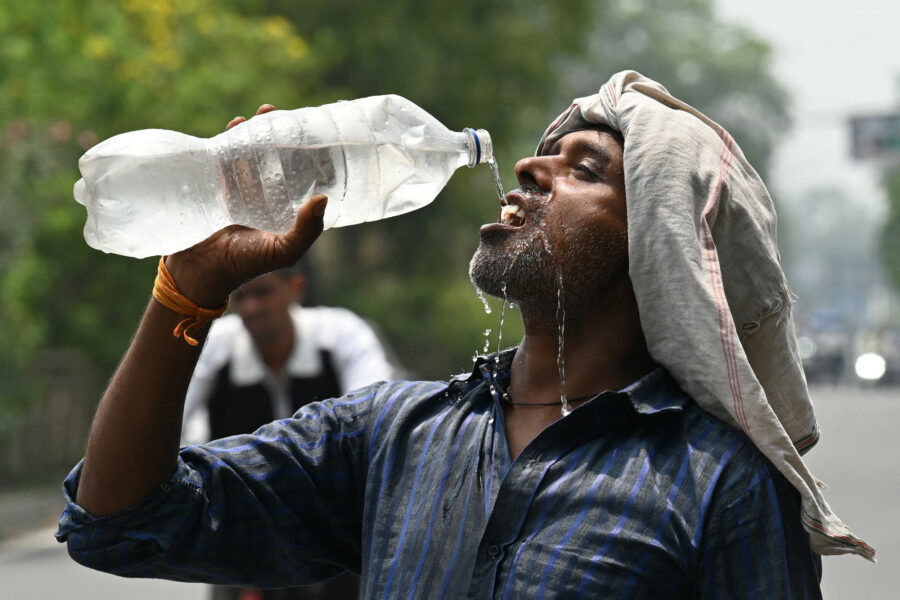
“Human health, ecosystems and economies can’t cope with extended spells of more than 50 degrees Celsius. It is simply too hot to handle,” she said.
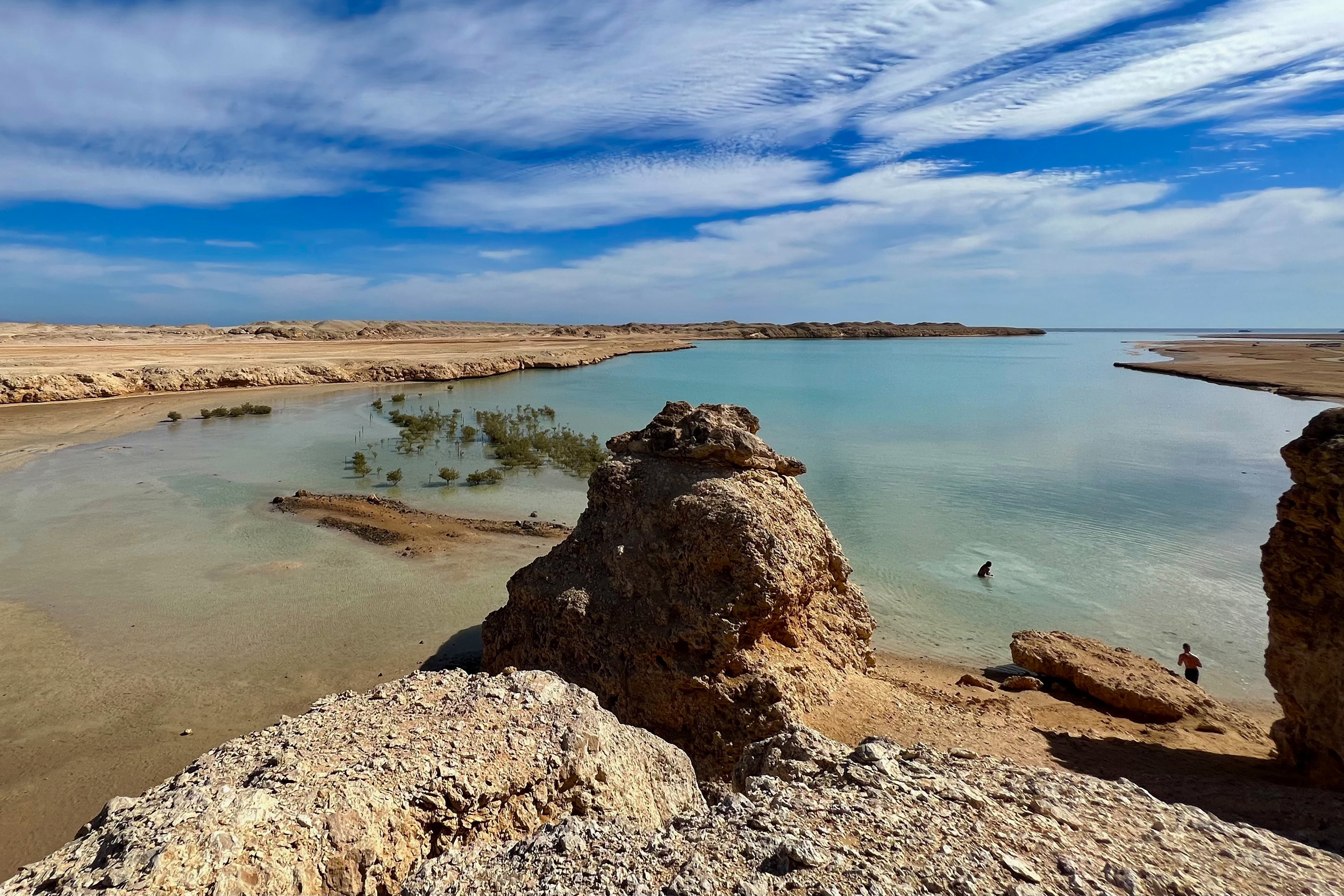
The region in the report stretches from the Atlantic coast of West Africa to the mountains of the Levant and the deserts of the Arabian Peninsula. It spans more than 5 million square miles, roughly the area of the continental United States west of the Mississippi River. Most people live near river valleys or in coastal cities dependent on fragile water supplies, making the entire region acutely sensitive to even small shifts in temperature and rainfall.
Egypt’s Nile Delta, one of the world’s lowest-lying and most densely populated coastal plains, is particularly vulnerable. The delta is sinking and regional sea levels are rising rapidly, putting about 40 million residents and more than half of the country’s agricultural output at risk.
The most recent Intergovernmental Panel on Climate Change report warns that large parts of the Nile Delta will face chronic flooding, salinized soils, and permanent inundation under nearly every future warming scenario. Some projections indicate that a third of the area’s farmland will be underwater by 2050. Because the delta is so low and flat, even modest sea-level rise will push saltwater far inland.
The new WMO report shows that the foundations of daily life across the Arab region, including farms, reservoirs and aquifers that feed and sustain millions, are being pushed to the brink by human-caused warming.
Across northwestern Africa’s sun-blasted rim, the Maghreb, six years of drought have slashed wheat yields, forcing countries such as Morocco, Algeria and Tunisia to import more grain, even as global prices rise.
In parts of Morocco, reservoirs have fallen to record low levels. The government has enacted water restrictions in major cities, including limits on household use, and curtailed irrigation for farmers. Water systems in Lebanon have already crumbled under alternating floods and droughts, and in Iraq and Syria, small farmers are abandoning their land as rivers shrink and seasonal rains become unreliable.
The WMO report ranked 2024 as the hottest year ever measured in the Arab world. Summer heatwaves spread and persisted across Syria, Iraq, Jordan and Egypt. Parts of Iraq recorded six to 12 days with highs above 50 degrees Celsius (122 degrees Fahrenheit), conditions that are life-threatening even for healthy adults. Across the region, the report noted an increase in the number of heat-wave days in recent decades while humidity has declined. The dangerous combination speeds soil drying and crop damage.
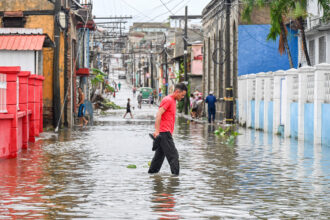
By contrast, other parts of the region—the United Arab Emirates, Oman and southern Saudi Arabia—were swamped by destructive record rains and flooding during 2024. The extremes will test the limits of adaptation, said Rola Dashti, executive secretary of the Economic and Social Commission for Western Asia, who often works with the WMO to analyze climate impacts.
Climate extremes in 2024 killed at least 300 people in the region. The impacts are hitting countries already struggling with internal conflicts, and where the damage is under-insured and under-reported. In Sudan alone, flooding damaged more than 40 percent of the country’s farmland.
But with 15 of the world’s most arid countries in the region, water scarcity is the top issue. Governments are investing in desalination, wastewater recycling and other measures to bolster water security,
but the adaptation gap between risks and readiness is still widening.
The worst is ahead, Dashti said in a WMO statement, with climate models showing a “potential rise in average temperatures of up to 5 degrees Celsius (9 degrees Fahrenheit) by the end of the century under high-emission scenarios.” The new report is important, she said, because it “empowers the region to prepare for tomorrow’s climate realities.”
About This Story
Perhaps you noticed: This story, like all the news we publish, is free to read. That’s because Inside Climate News is a 501c3 nonprofit organization. We do not charge a subscription fee, lock our news behind a paywall, or clutter our website with ads. We make our news on climate and the environment freely available to you and anyone who wants it.
That’s not all. We also share our news for free with scores of other media organizations around the country. Many of them can’t afford to do environmental journalism of their own. We’ve built bureaus from coast to coast to report local stories, collaborate with local newsrooms and co-publish articles so that this vital work is shared as widely as possible.
Two of us launched ICN in 2007. Six years later we earned a Pulitzer Prize for National Reporting, and now we run the oldest and largest dedicated climate newsroom in the nation. We tell the story in all its complexity. We hold polluters accountable. We expose environmental injustice. We debunk misinformation. We scrutinize solutions and inspire action.
Donations from readers like you fund every aspect of what we do. If you don’t already, will you support our ongoing work, our reporting on the biggest crisis facing our planet, and help us reach even more readers in more places?
Please take a moment to make a tax-deductible donation. Every one of them makes a difference.
Thank you,

Bob Berwyn
Reporter, Austria
Bob Berwyn is an Austria-based reporter who has covered climate science and international climate policy for more than a decade. Previously, he reported on the environment, endangered species and public lands for several Colorado newspapers, and also worked as editor and assistant editor at community newspapers in the Colorado Rockies.