

As demand for critical minerals surges around the world, countries are debating whether to mine the untapped deep-sea reserves of cobalt, copper and manganese, miles below the surface. But a growing body of research shows that these activities could have profound consequences for ocean ecosystems, and the industries and communities that rely on them.
A new, open-access tracker launched on Thursday aims to give the public a digital window into how these exploratory mining activities are playing out in real time.
This could help ocean users—from fishers to scientists—determine where mining operations overlap with other activities at sea and how they may be affected, said Douglas McCauley, director of the Benioff Ocean Science Laboratory at the University of California, Santa Barbara. The lab created the tool in partnership with Global Fishing Watch, a nonprofit working to increase transparency across the ocean.
“We are at a pretty important crossroads,” McCauley said.
“Conversations are really heating up about whether [countries will] mine in the oceans,” he added. “Because those decisions are coming to a head, this is the time that you want everybody to know exactly the ‘who, what, where, when’ of seabed mining.”
Uncovering the Mysteries of the Deep
Though countries have explored the prospect of deep-sea mining for decades, interest has peaked in recent years as governments search for reserves of critical minerals essential for a range of technologies, including laptops, phones, military hardware and batteries that help power electric vehicles.
Large-scale commercial operations have not yet occurred anywhere in the world as countries grapple with how to reach this trove of minerals—and whether they even should.
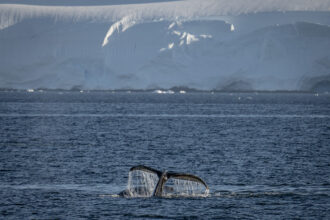
Most seabed mining will require machines to collect rock-like deposits known as polymetallic nodules that line parts of the seafloor. But among these mineral hotspots, scientists have discovered a wealth of biodiversity, from gelatinous sea cucumbers to bioluminescent lanternsharks. Many researchers and environmentalists fear the potentially adverse impacts mining could have on aquatic species, both in the deep sea and higher in the water column.
Along with killing animals that live on and around the nodules, mining operations can trigger plumes of sediment that can smother deep-sea animals, research shows. A study published in November found that this sediment is similar in size to the preferred diet of organisms such as zooplankton and could harm these species if it is consumed. Losing these organisms can threaten animals further up the food chain, the authors suggest.
However, Travis Washburn, who studies the deep sea, stressed that much of the research emerging around deep-sea mining impacts is largely theoretical due to the fact that large-scale commercial operations have not yet occurred and how little we know about the deep sea, which can be incredibly difficult to access.
“We don’t know insanely basic questions like, how many species there are, how connected it is [and] how they change over time,” said Washburn, an assistant professor of environmental science at Texas A&M University-Corpus Christi. “Without these answers, we can’t understand impacts.”
Scientists have gained some hands-on insights following a large deep-sea mining test that was completed in the eastern Pacific Ocean in 2022, which recovered over 3,000 tons of polymetallic nodules. A study published Friday found that while the number of animals stayed relatively stable, the number and abundance of species in the sediment declined by almost 40 percent in the mined area. Environmental impact research after a separate simulation trial performed decades ago had similar findings, with many species not returning to the area more than 25 years later, according to 2019 research.
“I personally think that there are more risks than there are benefits that come from seabed mining,” McCauley said. “I think that there’s a lot of much more constructive alternatives to get the materials that the U.S. is seeking for security purposes, for geopolitical stability, for … electrification.”
Either way, exploratory efforts are charging forward. The International Seabed Authority—the United Nations-mandated body that governs mineral-related activities on the high seas—has granted exploration licenses to companies across more than 1.5 million square kilometers of the Pacific, Atlantic and Indian oceans.
With this in mind, McCauley and partners at Global Fishing Watch built the new tracking tool to ensure that people know what’s going on in “our ocean backyard,” he said. The system compiles data from vessels’ automatic identification systems, which broadcast their identity, location, speed and course.
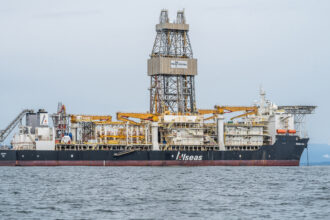
The tool is currently tracking more than 40 vessels known to be linked with deep-sea mineral-related activities, and shows where their tracks intersect with seabed mining exploration areas and timeframes. This may reveal prospective commercial areas that companies are considering for operations, McCauley said.
This story is funded by readers like you.
Our nonprofit newsroom provides award-winning climate coverage free of charge and advertising. We rely on donations from readers like you to keep going. Please donate now to support our work.
Donate NowThe map also shows likely fishing efforts across the globe, so users can see the overlap between industries. For example, the map reveals several fishers from the long-line industry currently operating out of Honolulu who are fishing right on top of mining claim areas. Many mining exploration areas also intersect with ocean areas important to Indigenous groups in small island nations across the Pacific.
“Transparency is essential to understanding how human activity is expanding into the deep ocean and what impacts it will have on the marine environment. We need to make it the norm when it comes to ocean governance,” Paul Woods, the chief innovation officer at Global Fishing Watch, said in a statement.
Washburn, who was not involved in the effort, said the tool seems useful. He agreed that increasing transparency is important, especially in the deep-sea mining space, where “there’s a lot of issues with proprietary data.”
But he added that the tool does seem to draw assumptions about “vessels that are doing extraction because they’re in the particular place and their particular owner.”
“I wouldn’t want to use that to jump to conclusions that there’s a lot of mining or excavation” based on this tool alone, Washburn said.
A Deep-Sea Debate
Environmental groups, members of the fishing industry and communities in small-island nations have coordinated large-scale protests against deep-sea mining in recent years. More than 900 leading scientists and marine policy experts from more than 70 countries have signed a statement calling for a pause on seabed mining until more research can be done. More than 30 countries, including Canada and the United Kingdom, are also calling for a moratorium or ban on the practice.
On Wednesday, Norway announced it will not issue licenses for deep-sea mining during the current legislative term, which goes until 2029. This marks a sharp pivot from the country’s initial plan to open to mining in more than 100,000 square miles of its territorial waters and an extended continental shelf it claims.
Other countries are seemingly charging forward with plans, including the United States. On April 24, President Donald Trump signed an executive order promoting seabed mining in U.S. and international waters, stressing that the country must “take immediate action to accelerate the responsible development of seabed mineral resources” to support supply chains for defense, infrastructure and energy sectors.
Though the U.S. is not a voting member of the International Seabed Authority, critics argued that this order would breach the current international law that governs the high seas.
With interest growing in deep-sea mining, McCauley believes that “data equals power.” He hopes the new tool can help users “feel more empowered to actually go and share a perspective about if and what they want to see for the future of seabed mining in the spaces that they care about in the U.S. ocean and beyond.”
About This Story
Perhaps you noticed: This story, like all the news we publish, is free to read. That’s because Inside Climate News is a 501c3 nonprofit organization. We do not charge a subscription fee, lock our news behind a paywall, or clutter our website with ads. We make our news on climate and the environment freely available to you and anyone who wants it.
That’s not all. We also share our news for free with scores of other media organizations around the country. Many of them can’t afford to do environmental journalism of their own. We’ve built bureaus from coast to coast to report local stories, collaborate with local newsrooms and co-publish articles so that this vital work is shared as widely as possible.
Two of us launched ICN in 2007. Six years later we earned a Pulitzer Prize for National Reporting, and now we run the oldest and largest dedicated climate newsroom in the nation. We tell the story in all its complexity. We hold polluters accountable. We expose environmental injustice. We debunk misinformation. We scrutinize solutions and inspire action.
Donations from readers like you fund every aspect of what we do. If you don’t already, will you support our ongoing work, our reporting on the biggest crisis facing our planet, and help us reach even more readers in more places?
Please take a moment to make a tax-deductible donation. Every one of them makes a difference.
Thank you,

Kiley Price
Reporter
Kiley Price is a reporter at Inside Climate News, with a particular interest in wildlife, ocean health, food systems and climate change. She writes ICN’s “Today’s Climate” newsletter, which covers the most pressing environmental news each week.
She earned her master’s degree in science journalism at New York University, and her bachelor’s degree in biology at Wake Forest University. Her work has appeared in National Geographic, Time, Scientific American and more. She is a former Pulitzer Reporting Fellow, during which she spent a month in Thailand covering the intersection between Buddhism and the country’s environmental movement.