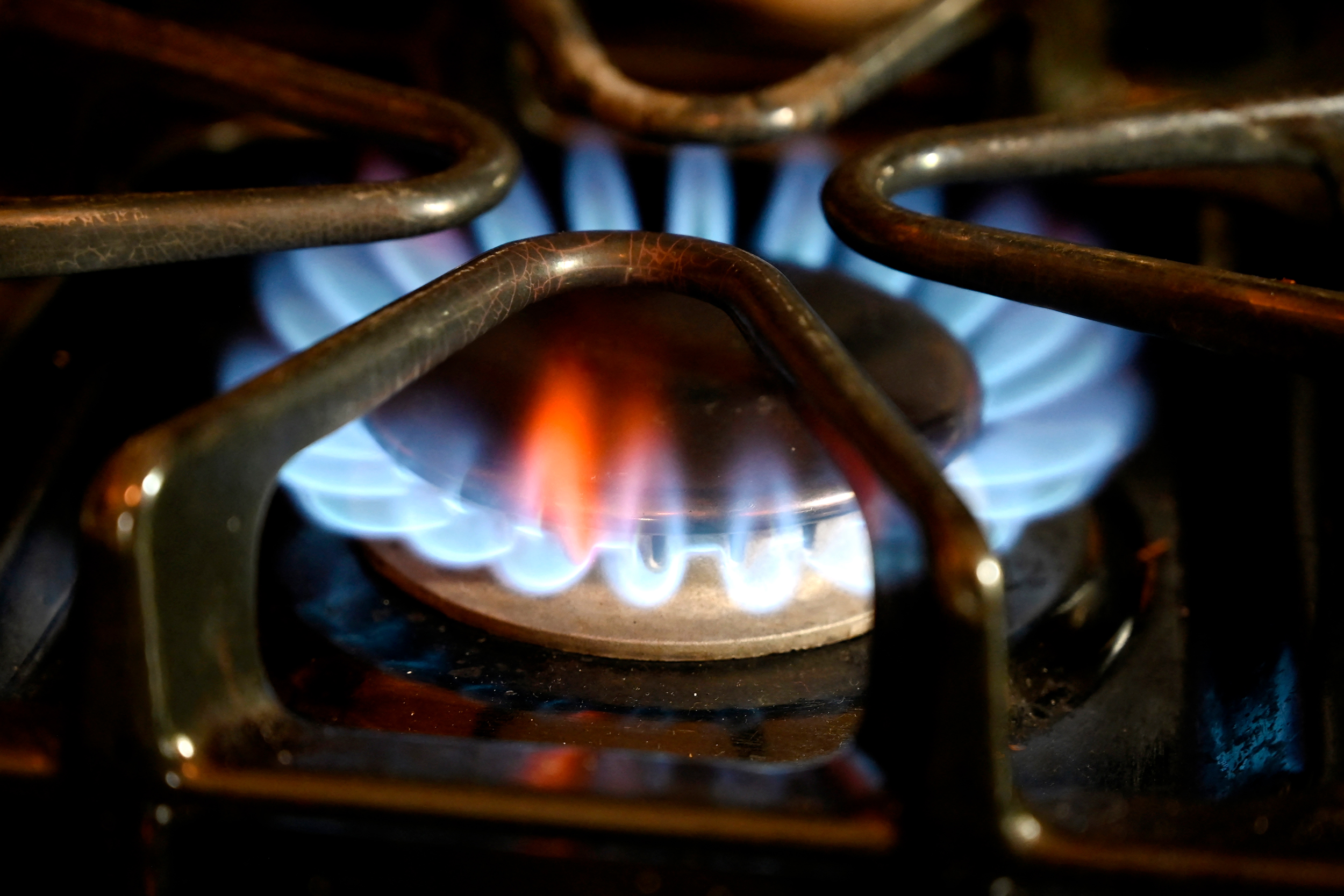


Pollution from gas stoves accounts for more than half of some Americans’ total exposure to nitrogen dioxide (NO2), a toxic substance linked to asthma, a study in the academic journal PNAS Nexus concludes. The findings, published this month, provide the first nationwide, community-level estimates of residential NO2 exposure.
The study assessed both outdoor air pollution and indoor emissions and determined that stoves were the primary source of indoor nitrogen dioxide pollution. Unlike gas furnaces or water heaters, stovetops lack direct ventilation. The devices typically rely on a hood above the stove, which does not capture all emissions, is not always used and, in some cases, recirculates air back into the living space.
“This tiny appliance punches way above its weight when compared with bigger emitters like road traffic and power plants,” said Yannai Kashtan, the study’s lead author and an air quality scientist at PSE Healthy Energy, a scientific research institute focusing on energy policy. He conducted the bulk of the study’s work during his time as a Stanford University graduate student.
Nitrogen dioxide is one of six “criteria air pollutants,” regulated by the Environmental Protection Agency under the Clean Air Act; the reddish-brown gas is emitted by burning fuel. NO2 can irritate airways and aggravate respiratory diseases, particularly asthma, and can contribute to the formation of ground-level ozone or smog, according to the EPA.
For Americans who cook with gas or propane, stoves account for roughly one-quarter of the average person’s NO2 exposure. For those who use their stoves more often and for extended periods, indoor exposure can account for more than half of their total nitrogen dioxide exposure.
Kashtan and colleagues estimated the average NO2 exposure for each U.S. zip code. Their assessment included measurements they made of indoor NO2 emissions and concentrations in more than 15 cities. They then paired this information with outdoor nitrogen dioxide concentrations collected from sites across the country. The researchers also assessed housing stock data for 133 million apartments and homes, along with statistical samples of occupant behavior, including how often people used their stoves and opened their windows while cooking.
The group found that the total contribution of NO2 from stoves was highest in cities where people generally live in smaller spaces and where there is less room for NO2 to disperse.
Kashtan and colleagues estimate that the average total residential long-term NO2 exposure across the U.S. is 24 percent lower for people with electric stoves, which do not emit NO2.
The average American’s exposure to NO2 exceeds the World Health Organization’s recommended levels. However, approximately 22 million Americans would fall below the WHO-recommended limit if they stopped cooking with gas or cut back their use of it, Kashtan said.
Gas industry officials dismissed the findings. American Gas Association spokesperson Emily Ellis said the study “does not use any new data and also doesn’t produce any new epidemiological evidence linking gas stoves to asthma or other health outcomes.”
Kashtan emphasized that the study is the first to estimate the specific proportion of total NO2 exposure attributable solely to gas stoves, rather than to all sources of NO2 combined.
A 2023 report by the Climate Investigations Center, an environmental watchdog organization, and an investigation by National Public Radio found that the gas industry was aware of adverse health impacts from gas stoves as early as 1970. By 1972, the American Gas Association funded research that found no link between gas stoves and respiratory illness, the organization and news outlet noted.
The American Gas Association pushed back against what it described as “unsubstantiated claims about the health impacts of natural gas appliances” in a detailed response to NPR’s reporting.
“The available body of scientific research, including high-quality research and consensus health reviews conducted independently of industry, does not provide sufficient or consistent evidence demonstrating chronic health hazards from natural gas ranges,” Ellis said in a written statement provided to Inside Climate News. The AGA issued the same statement to NPR prior to publication of their 2023 report.
This story is funded by readers like you.
Our nonprofit newsroom provides award-winning climate coverage free of charge and advertising. We rely on donations from readers like you to keep going. Please donate now to support our work.
Donate NowEllis pointed to a 2024 study on stoves published in The Lancet Respiratory Medicine. That study, funded by the World Health Organization, “found no significant association between natural gas and asthma, wheeze, cough or breathlessness, and a lower risk of bronchitis when compared to electricity,” Ellis said in a written statement.
However, the same study also noted that “compared with electricity, use of gas significantly increased risk of pneumonia and chronic obstructive pulmonary disease.”
The American Medical Association warns that cooking with a gas stove increases the risk of childhood asthma and the American Public Health Association states that nitrogen dioxide emissions from gas stoves are a “public health concern.”
A study published earlier this year by Kashtan and others suggests high gas stove usage without proper ventilation increases the risk of cancer due to emissions of benzene, a known carcinogen.
The American Gas Association states on its website that residential gas cooking appliances represent a “minor source” of NO2. “The principal source of indoor NO2 is polluted outdoor air that migrates indoors from vehicles and other sources,” the website states.
Kashten said he is confident in the research team’s ability to separate nitrogen dioxide from indoor and outdoor sources in their study and reiterated that for those who rely heavily on gas stoves for cooking, more than half of their nitrogen dioxide exposure comes from their stove.
Nathan Phillips, a professor in the Department of Earth & Environment at Boston University who was not involved in the study, said its findings were not surprising given the established connection between gas stove emissions and respiratory health.
“But the scale of the finding significantly helps end any remaining doubts about the broad health benefits of transitioning off gas – and other combustion sources that contribute to air pollution, indoor and out,” Phillips said.
Dylan Plummer, the Sierra Club’s acting deputy director for building electrification, agreed.
“Years from now, we will look back at the common practice of burning fossil fuels in our homes with horror,” Plummer said. “Regulators at the local, state and federal level must take action to adopt consumer protections in order to mitigate the risks posed by gas appliances.”
Some states have tried to address the problem.
Regulators in California are considering new guidelines for indoor air quality that would significantly lower the limits for nitrogen dioxide concentrations. Lawmakers in the state passed a bill in 2024 that would have required appliance manufacturers to place public health warning labels on new gas stoves. However, Gov. Gavin Newsom vetoed the bill.
In Colorado, Gov. Jared Polis signed a similar labeling requirement law for gas stoves in June. The Association of Home Appliance Manufacturers has filed a lawsuit challenging the law.
About This Story
Perhaps you noticed: This story, like all the news we publish, is free to read. That’s because Inside Climate News is a 501c3 nonprofit organization. We do not charge a subscription fee, lock our news behind a paywall, or clutter our website with ads. We make our news on climate and the environment freely available to you and anyone who wants it.
That’s not all. We also share our news for free with scores of other media organizations around the country. Many of them can’t afford to do environmental journalism of their own. We’ve built bureaus from coast to coast to report local stories, collaborate with local newsrooms and co-publish articles so that this vital work is shared as widely as possible.
Two of us launched ICN in 2007. Six years later we earned a Pulitzer Prize for National Reporting, and now we run the oldest and largest dedicated climate newsroom in the nation. We tell the story in all its complexity. We hold polluters accountable. We expose environmental injustice. We debunk misinformation. We scrutinize solutions and inspire action.
Donations from readers like you fund every aspect of what we do. If you don’t already, will you support our ongoing work, our reporting on the biggest crisis facing our planet, and help us reach even more readers in more places?
Please take a moment to make a tax-deductible donation. Every one of them makes a difference.
Thank you,

Phil McKenna
Reporter, Boston
Phil McKenna is a Boston-based reporter for Inside Climate News. Before joining ICN in 2016, he was a freelance writer covering energy and the environment for publications including The New York Times, Smithsonian, Audubon and WIRED. Uprising, a story he wrote about gas leaks under U.S. cities, won the AAAS Kavli Science Journalism Award and the 2014 NASW Science in Society Award. Phil has a master’s degree in science writing from the Massachusetts Institute of Technology and was an Environmental Journalism Fellow at Middlebury College.