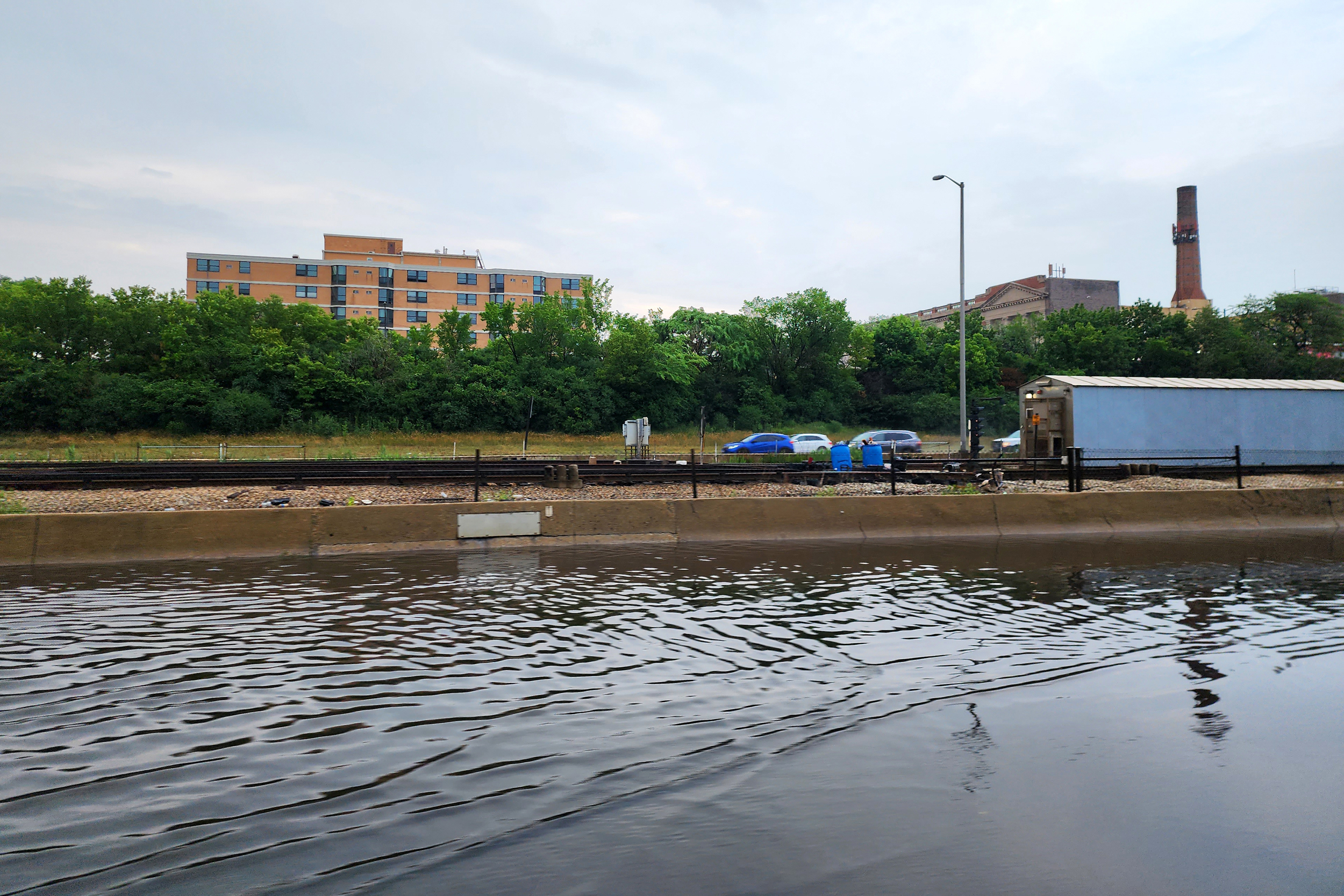


CHICAGO—Two-and-a-half years after Dorothy Rosenthal’s home on the West Side flooded, she is still dealing with financial pain.
She received $8,000 from the Federal Emergency Management Agency, but repairs have cost her $10,000, and her basement still has dry mold from the four feet of water that gushed into it in July 2023. Rosenthal is one of many West Side residents reeling from the flood’s effects and waiting for additional assistance from the government.
Mayor Brandon Johnson’s administration has assured them that more help is on the way. The mayor and Chicago City Council are wrangling over a contentious fiscal year 2026 budget this month and are running up against the Dec. 31 deadline to pass the measure. During a Dec. 10 press conference, Johnson pointed out that once the budget passes, it will unlock millions of dollars in assistance for residents who experienced flood damage.
After the city submitted a disaster recovery plan to the U.S. Department of Housing and Urban Development in July, the federal government awarded the city $426 million through HUD’s Community Development Block Grant Disaster Recovery program. Most of that money will support infrastructure improvements like flood mitigation and green alleys designed to prevent severe flooding in the future, with about $15 million allocated for direct reimbursements to residents for flood repair expenses. The city must implement those projects over the next six years.
“There are dollars that are available to go directly towards helping these families recover their home,” said Johnson, a West Side resident himself. “So it’s ‘both and.’ It’s mitigation of harm, because there is some specificity around the usage of the grant, but we have provided a carve out so that we can get dollars directly to people that’s in this budget.”
The city’s plan for distributing that money doesn’t satisfy some West Side residents, though.
Princess Shaw, with the West Side nonprofit Light Up Lawndale, has helped her neighbors navigate the flood assistance process. Shaw is frustrated that most of the federal funding is going toward infrastructure rather than directly to residents.
“We still need help,” she said. “What we’re seeing right now, we need anywhere between like $50 million to $100 million in order to not even make these people whole, but get them somewhat partially back whole.”
At the same time, West Side residents are seeing their property taxes skyrocket this year. The tax hikes stem from an increased interest in real estate on the West Side and a drop in the value of commercial properties in Chicago’s Loop. When the value of downtown offices and retail spaces decreased in Cook County, the tax rates for residential properties had to rise to make up the difference.
Among the neighborhoods with the largest property-tax increases are those that experienced flooding in 2023. The median homeowner’s bill in West Garfield Park and North Lawndale more than doubled, the Chicago Tribune reported.
Cook County Assessor Fritz Kaegi explained to residents that, by law, his office assesses properties based on the market and property sales, spokesperson Christian Belanger said in an email to Inside Climate News. Homeowners who experienced flooding can file an appeal or a certificate of error to the assessor’s office for past flood damage, but they must submit evidence of the damage and the dates that they did not occupy their home due to flooding, Belanger said. He also noted that the office considers flood risk in its residential assessment model.
If the assessor determines that the damage warrants a reduction in a resident’s property value, then the resident would receive a reduced assessment or an adjusted tax bill, Belanger said.
Rosenthal, who is balancing higher property taxes with flood repairs, is frustrated by the situation.
“My building is falling in, and you’re telling me I have to pay 133 percent more,” she said. “My mortgage note was $725 a month. My mortgage now is almost $1,200 a month. That’s a $500 increase, and I have not fully recovered from the flooding.”
About This Story
Perhaps you noticed: This story, like all the news we publish, is free to read. That’s because Inside Climate News is a 501c3 nonprofit organization. We do not charge a subscription fee, lock our news behind a paywall, or clutter our website with ads. We make our news on climate and the environment freely available to you and anyone who wants it.
That’s not all. We also share our news for free with scores of other media organizations around the country. Many of them can’t afford to do environmental journalism of their own. We’ve built bureaus from coast to coast to report local stories, collaborate with local newsrooms and co-publish articles so that this vital work is shared as widely as possible.
Two of us launched ICN in 2007. Six years later we earned a Pulitzer Prize for National Reporting, and now we run the oldest and largest dedicated climate newsroom in the nation. We tell the story in all its complexity. We hold polluters accountable. We expose environmental injustice. We debunk misinformation. We scrutinize solutions and inspire action.
Donations from readers like you fund every aspect of what we do. If you don’t already, will you support our ongoing work, our reporting on the biggest crisis facing our planet, and help us reach even more readers in more places?
Please take a moment to make a tax-deductible donation. Every one of them makes a difference.
Thank you,