

New York City is expected to experience increasing rainfall over the next few decades, especially during cloudbursts—short, intense rainfall events.
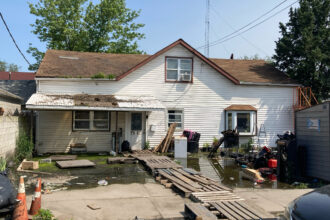
When rain falls, light showers can usually be handled by the complex network of sewer pipes that run beneath the city. But during heavy downpours, water can accumulate, posing a danger to the residents and their homes, especially if they live in basement apartments.
Around 30 years ago, on Staten Island, the city tried something new to address flooding—bluebelts. Often connected to a network of storm sewers, these drainage systems—usually wetlands and ponds—slow floodwaters, act as barriers during storms and sequester pollutants, directly reducing flood risk and helping protect homes by controlling water flow.
Most of the nearly 100 bluebelts in New York City are located on Staten Island. The city plans to build more bluebelts, but space constraints in other boroughs have slowed progress. But earlier this month, Mayor Adams announced that the city will invest $68 million to build a bluebelt in Brooklyn’s Prospect Park—the borough’s first.
In Staten Island, the city started building them decades ago, when space was less of an issue. In the late 1990s, development on the island, especially on the South Shore, accelerated. Sewer systems did not extend across the entire island, and many homes still used septic tanks.
Staten Island needed sanitary sewers—a network of pipes connecting people’s homes to a sewage treatment plant—and storm sewers, which handle rainfall runoff. In about 60 percent of the city, stormwater and sewage run through the same pipes to wastewater treatment plants.
When the sewer system is overwhelmed during extreme rainfall events, both sewage and stormwater are discharged into the Hudson River and its estuaries through combined sewer overflows.
“We wanted to figure out how to work with water and not against it,” said Sangamithra Iyer, the chief of bluebelts and urban stormwater planning at the city Department of Environmental Protection.
Rob Brauman, deputy chief of bluebelt operations and maintenance at the city Department of Environmental Protection, and David Peterson, the deputy director of Staten Island construction at the city Department of Design and Construction, began working on bluebelts in the 1990s.
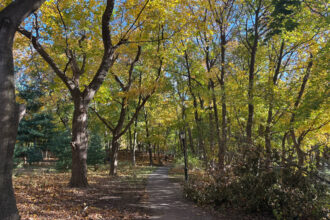
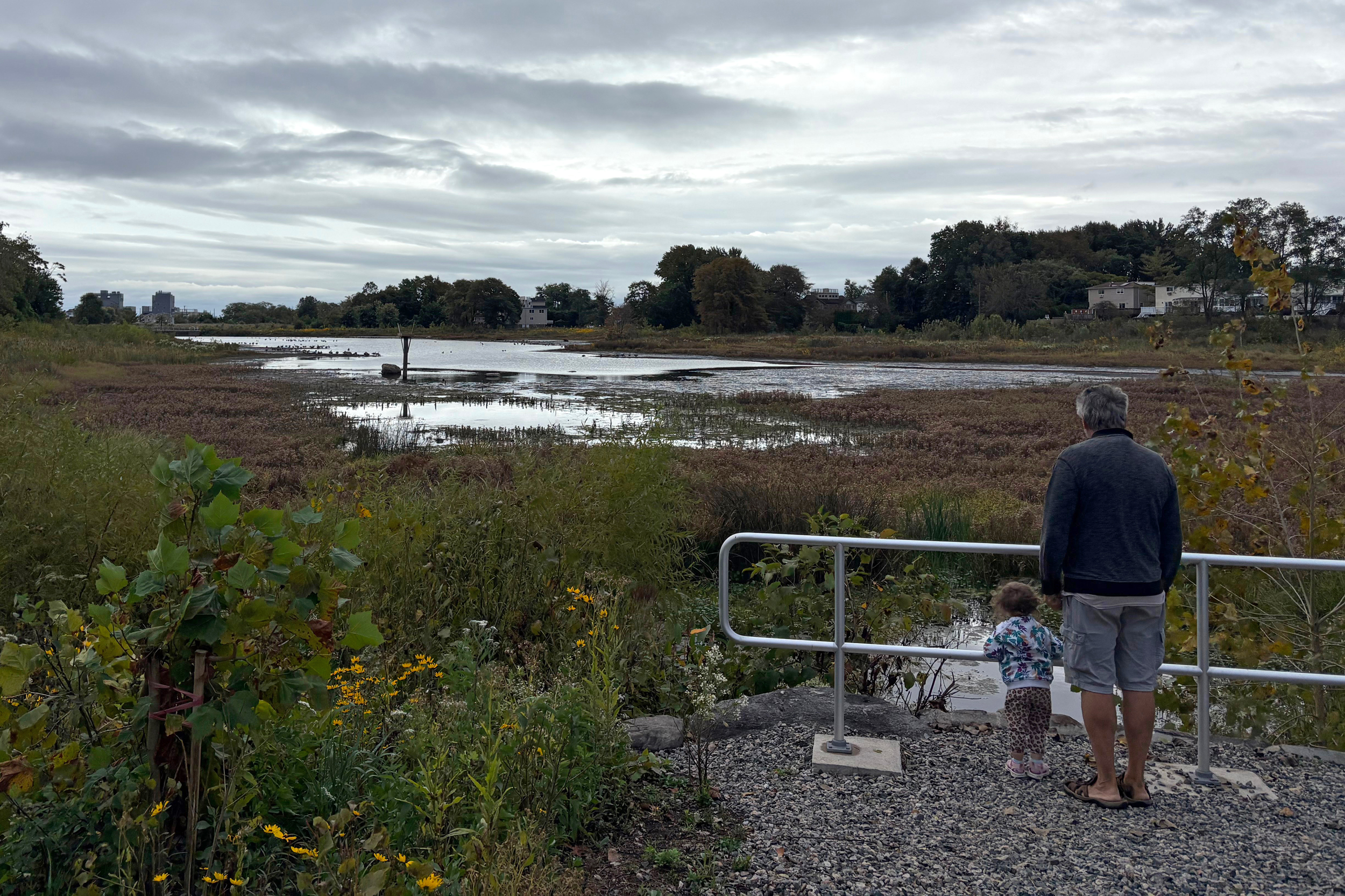
“Everything you see here was created,” said Brauman, as he looked at a portion of the New Creek bluebelt in Staten Island on an overcast morning. Ducks move leisurely along the stream in the middle of the constructed wetland, unbothered by the rain.
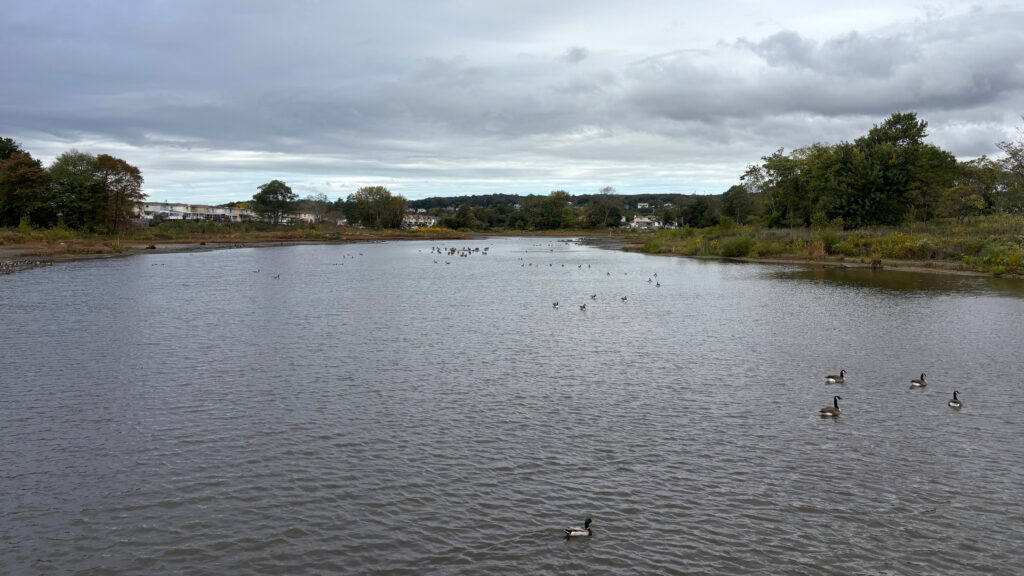
Before it became a bluebelt, the entire area was covered in phragmites—an invasive tall grass—and construction debris, Brauman said. Now, it’s full of native plants and wildlife. And when it rains, all that water flows to the wetland and eventually into the harbor, not into people’s homes.
For Staten Island, bluebelts offered a solution—not just for residents, but also for the local critters. Ducks can often be seen floating across these wetlands, and American eels have been observed in bluebelts in the southwest of the island.
In many Staten Island bluebelts, when it rains, water flows across streets and sidewalks and into storm grates, through storm sewer pipes and then conveys the water to a nearby wetland, or bluebelt.
The water discharges into a pool where sediment and other substances can sink to the bottom before it flows into the wetland. Another pool is located where the water re-enters the storm sewer system. Once the water enters the wetland, native plants help filter pollutants, including lawn fertilizer.
The water eventually re-enters the storm sewer network after passing through a trash grate, which captures much of the remaining debris. When the water is released into the Hudson River or the ocean, it’s cleaner.
The flow of water across the bluebelt also slows it down—most are designed to release water slowly over time, especially during a storm—preventing the sewers from overflowing and flooding the streets. They can also be adjusted depending on the severity of the storm.
In other cases, bluebelts can also enhance already existing ponds and streams to hold more water during storms.
According to Peterson, the cost of bluebelts—which can exceed $100 million—is worth it because it helps residents avoid costly insurance claims and flood damage repairs.
Initially, bluebelts were developed without climate change in mind, said Brauman. But now amid rising flood risks, they can accommodate the flow of water from more severe storms.
In 2012, a massive storm surge from Hurricane Sandy hit the East and South shores of Staten Island hard. According to the city, around 16 percent of the island’s residents were affected because they lived in the areas where the Federal Emergency Management Agency found that floodwaters had broken through.
The construction process can take years—future bluebelts often sit in areas with contaminated soil and construction debris. The soil must be removed and replaced to rebuild a healthy wetland, Peterson said.
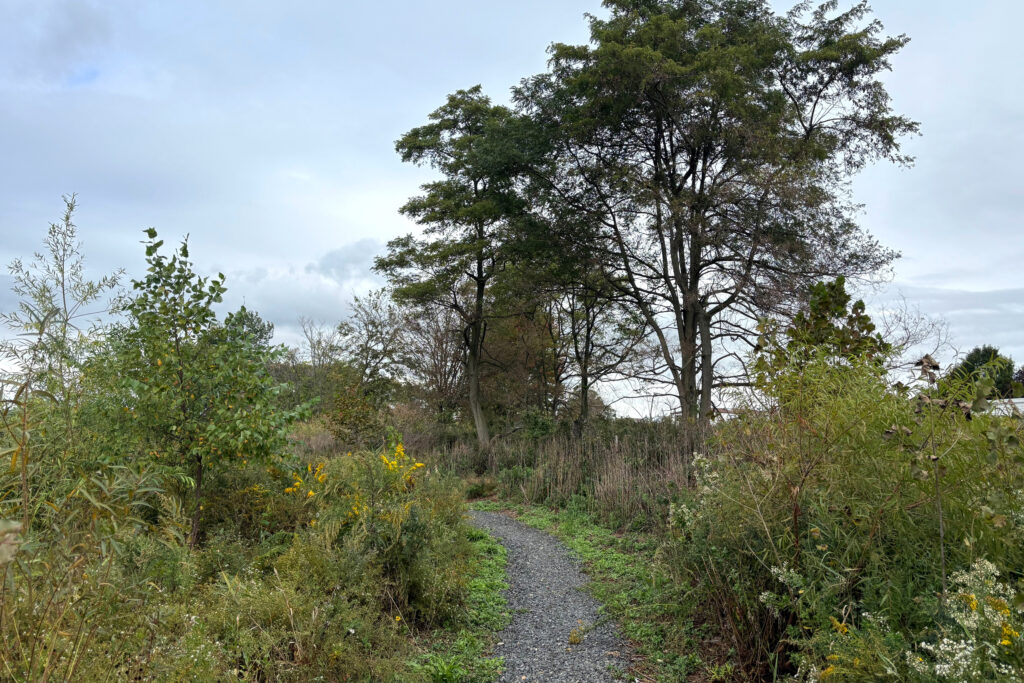
According to materials provided by the Department of Environmental Protection, the city removed over 100,000 cubic yards of debris and tamed 12 acres of invasive weeds to build New Creek in Staten Island.
New Creek also had an active stream running through it, forcing Peterson and his team to divert the channel while they restored the soil beneath it.
In recent years, the city has sought to build bluebelts in flood-prone areas of Queens, but has encountered obstacles.
Many areas of Queens have combined sewer systems, making it difficult to separate stormwater from sewage. According to Rohit Aggarwala, the commissioner of the New York City Department of Environmental Protection, this often means that the city must build new storm sewers to direct water to the bluebelt, which can be costly.
“We want to hold [water] and release it slowly so we prevent flooding downstream,” said Brauman, “and we want to give the plants time to clean the water.”
The city’s sewers were not designed for the amount of water that now falls on the city during intense storms. As Inside Climate News previously reported, some of the city’s plans, like sewer infrastructure projects, have been delayed.
According to Aggarwala, bluebelts and green infrastructure, which include natural solutions such as rain gardens, storm sewers and detention tanks that hold water during rainstorms, should be considered joint solutions to flooding across the city.
Sometimes, Aggarwala said, there is no entirely natural way to combat flooding in an area, and infrastructure is needed. For example, in a Brooklyn neighborhood affected by chronic flooding, his department plans to expand the sewer system’s capacity by upgrading the infrastructure because there is no space for bluebelts.
But sometimes, a multi-pronged approach is possible. In a neighborhood nicknamed the Hole which straddles the borders of Brooklyn and Queens, streets and homes sit multiple feet below the surrounding area, leading to chronic flooding. The city has recently announced a plan to help, which included the construction of storm sewers, raising some streets and building bluebelts.
“We’ve also been looking at a mix—bringing all sorts of green and gray infrastructure solutions to the single problem of flooding in a neighborhood,” said Aggarwala.
About This Story
Perhaps you noticed: This story, like all the news we publish, is free to read. That’s because Inside Climate News is a 501c3 nonprofit organization. We do not charge a subscription fee, lock our news behind a paywall, or clutter our website with ads. We make our news on climate and the environment freely available to you and anyone who wants it.
That’s not all. We also share our news for free with scores of other media organizations around the country. Many of them can’t afford to do environmental journalism of their own. We’ve built bureaus from coast to coast to report local stories, collaborate with local newsrooms and co-publish articles so that this vital work is shared as widely as possible.
Two of us launched ICN in 2007. Six years later we earned a Pulitzer Prize for National Reporting, and now we run the oldest and largest dedicated climate newsroom in the nation. We tell the story in all its complexity. We hold polluters accountable. We expose environmental injustice. We debunk misinformation. We scrutinize solutions and inspire action.
Donations from readers like you fund every aspect of what we do. If you don’t already, will you support our ongoing work, our reporting on the biggest crisis facing our planet, and help us reach even more readers in more places?
Please take a moment to make a tax-deductible donation. Every one of them makes a difference.
Thank you,

Lauren Dalban
Reporter, New York City
Lauren Dalban is a New York City-based reporter with a background in local journalism. A former ICN fellow, she now covers environmental issues in all five boroughs. Originally from London, she earned a B.A. in History and English from the University of Virginia, and an M.S. from Columbia Graduate School of Journalism.