

On a June day in 2022, gunmen shot Virgilio Trujillo Arana in the head three times in the capital city of Venezuela’s Amazonas state.
An Indigenous Uwottüja leader, Trujillo Arana had spent years defending the Amazon rainforest from destructive illegal mining. That work grew increasingly dangerous as illicit extraction boomed in Venezuela, with criminal groups targeting anyone perceived as an obstacle to profit. His killing was the 32nd documented murder of an Indigenous or environmental defender in Venezuela over an eight-year period ending in 2022.
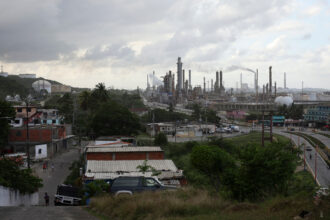
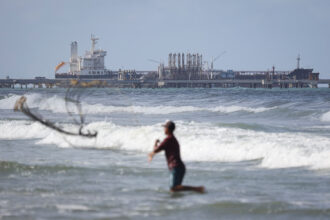
The United States’ Jan. 3 attack on Caracas has shifted focus to Venezuela’s vast oil reserves, and who will control and benefit from the crude. Left out of these discussions are the ongoing environmental and human rights crises that have metastasized under Nicolás Maduro—and who will stop them.
Tens of thousands of oil spills have contaminated waterways and drinking water, degraded ecosystems and displaced communities. Human rights organizations, United Nations experts and investigative journalists, meanwhile, have documented horrific abuses linked to illegal mining, a key source of income for the Maduro regime and criminal organizations, including the National Liberation Army (ELN) from Colombia.
Analysts and researchers say those organizations and government officials have worked together to control and profit from mining operations, often through violence, impunity and intimidation.
“Venezuela is a country that, for 27 years, has systematically destroyed the rule of law and abused human and environmental rights,” said Cristina Vollmer de Burelli, a Venezuelan and founder of SOS Orinoco, an advocacy group focused on protecting the Venezuelan Amazon rainforest.
The Venezuelan mission to the United Nations did not respond to requests for comment.
Unlike some other governments in Latin America, Venezuela’s is not merely tolerating or failing to stop illicit economies linked to environmental destruction, “it’s actively directing and controlling them,” Vollmer de Burelli said.
Mining there serves as a money maker and conduit for laundering drug profits, she said—and those who stand in the way, like Virgilio Trujillo Arana, pay with their lives.
The Orinoco Mining Arc
While oil revenue has long filled government coffers in Caracas, that income began declining around 2014. Maduro looked to mining, declaring a massive swath of territory south of the Orinoco River the “Orinoco Mining Arc” in hopes of attracting foreign investment. But international companies were deterred by the presence of transnational criminal groups in the region.
According to Vollmer de Burelli, the Maduro administration then turned to its own military in 2018 to “clean up” the lawless mining arc. But the generals refused to intervene for fear of a bloody internal conflict. The government then outsourced the job to the ELN.
“The ELN came in, killed a bunch of people, took control of the mines, but never relinquished control of the mines,” Vollmer de Burelli said. “That’s the situation on the ground right now.”
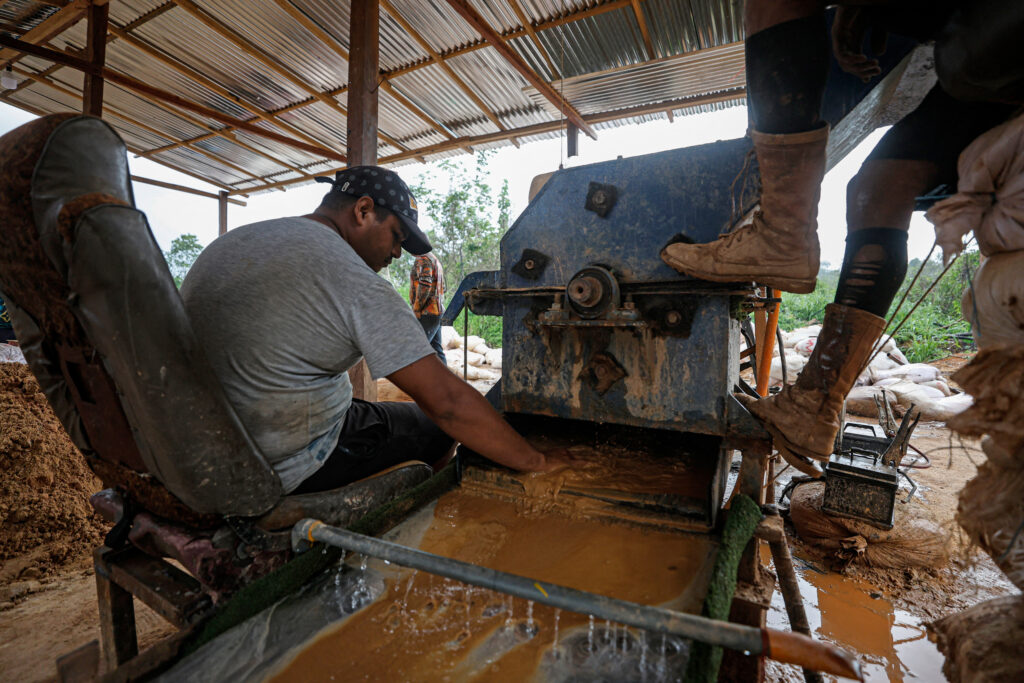
Multiple U.N. and other reports have documented how the Maduro regime has actively managed and profited from the multi-billion-dollar illegal mining industry, which extracts mainly gold, but also bauxite, diamonds and other materials, fueling environmental destruction.
To extract gold, for example, high-pressure pumps and heavy machinery blast and excavate riverbeds. The material is then mixed with toxic mercury to extract gold. The mercury is discharged into the atmosphere, forest and rivers, fouling entire ecosystems.
Indigenous peoples and other locals have paid the price.
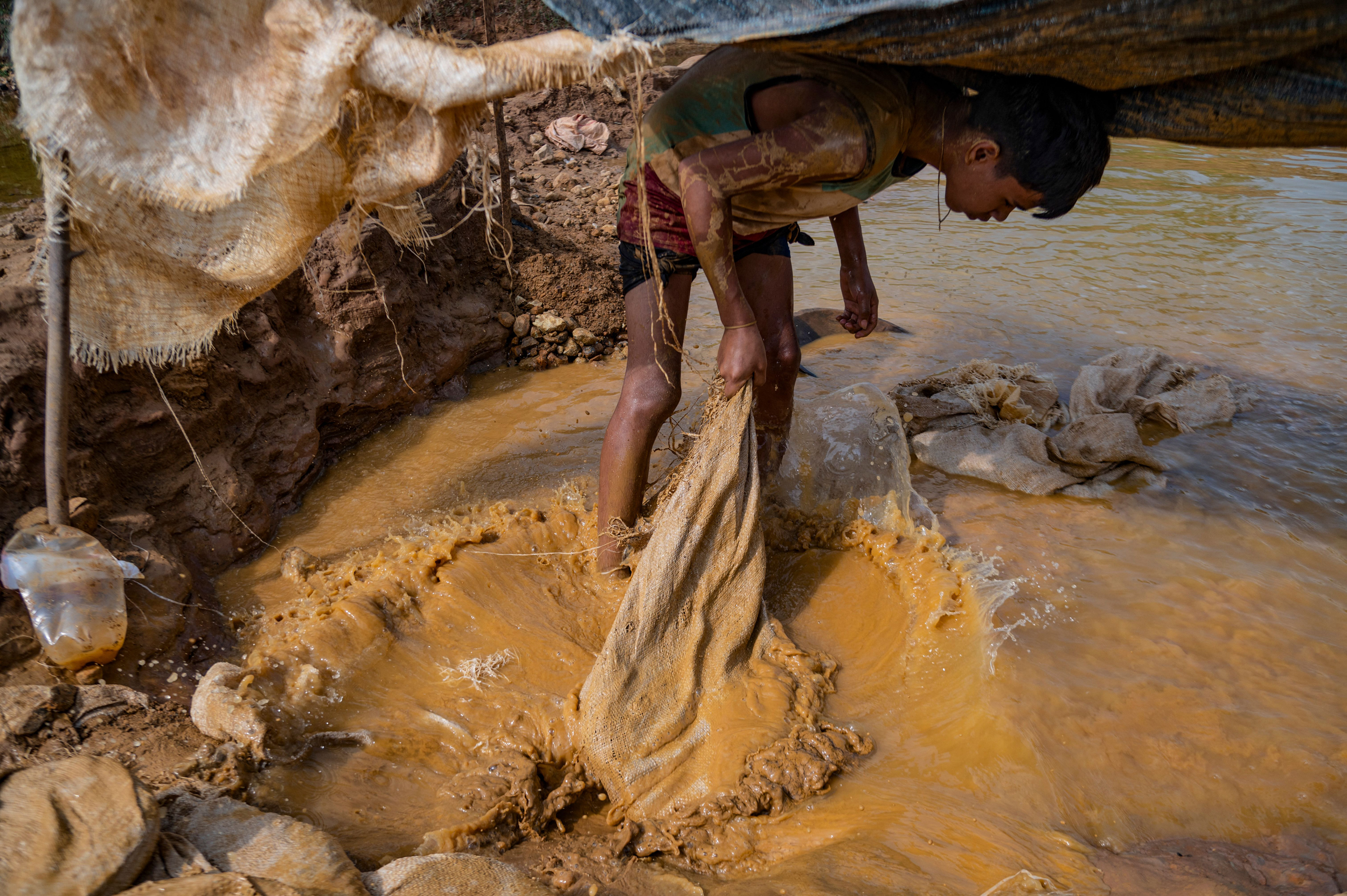
Studies have found that up to 90 percent of Indigenous women in the Orinoco Mining Arc have dangerously high levels of mercury, which is linked to neurological and other health issues. Forced prostitution and sexual slavery have surged around mining camps. Children as young as 10 work in mines without protective equipment. Vast stretches of tropical forest have been reduced to wastelands, driving malaria cases up more than 500 percent in some mining municipalities. And people who resist the onslaught of extractivism have had hands, feet and entire limbs cut off with machetes—or worse.
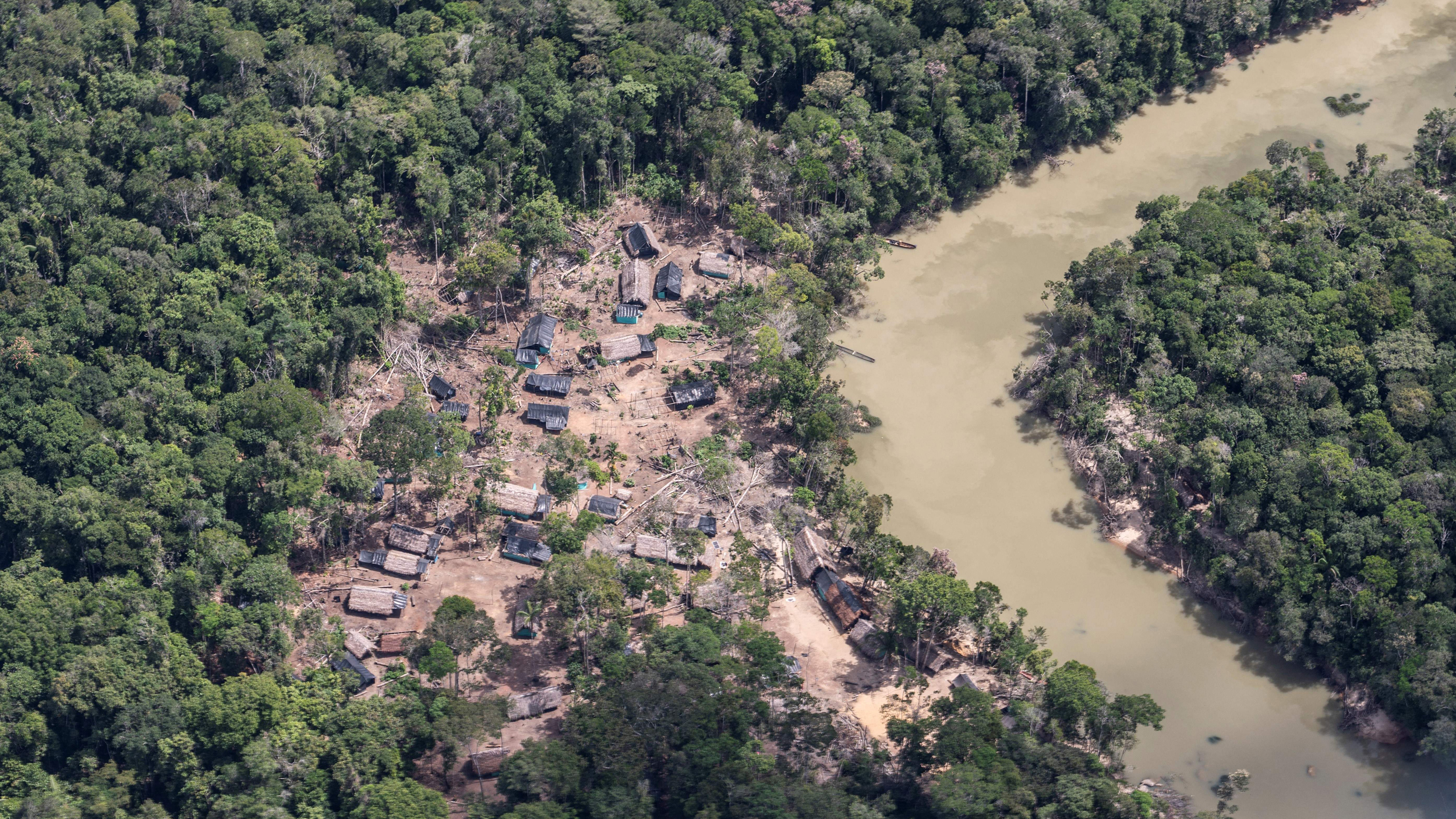
Indigenous territories have been steadily overrun. Forests are stripped bare and rivers are choked with sediment and toxic substances, eroding traditional cultures and economies. Protected areas have not been spared.
In the state of Amazonas, where all mining is prohibited by law, there are vast national parks and lands sacred to Indigenous peoples. Yapacana National Park is one such place, known for its table-top mountain, or tepuy, that harbors unique lifeforms that have evolved in ecological isolation for millions of years.
In 2019, locals reported that miners had bored into the summit of the tepuy in search of gold. Later, SOS Orinoco confirmed the damage, using high-resolution Maxar satellite imagery.
“It became their private fiefdom,” Vollmer de Burelli said. “No matter what environmental damage you think you’ve seen, nothing compares to seeing open-pit mines carved into the top of a tepuy.”
Venezuelan officials blocked legal and human rights experts with a U.N. fact-finding mission from the country. Nonetheless, those experts published a 2022 report examining the human rights situation in the Orinoco Mining Arc and other areas, drawing on field visits to border areas, documentary evidence, interviews with victims and witnesses, trade data and other sources.
The report documented nearly 2,000 alleged victims of human rights violations and crimes committed between 2014 and 2022, including more than 800 possible violent deaths. About one-quarter of those killings were allegedly carried out by government agents.
One mine worker told U.N. experts he witnessed members of a criminal group accuse a boy named Manuel of failing to pay for permission to work at a mine.
“They told him, ‘If you don’t put your hand on the log, I’m going to put a 9 millimeter [pistol] to your head.’ Manuel put his hand on the log and they cut it off. I saw this happen every two or three weeks. In one month, it could happen twice. At each meeting, I saw the fingers or hands of two or three people being cut off.”
In another case documented by the mission, members of a criminal group accused a 19-year-old boy of stealing gold, then mutilated his hands, eyes and part of his tongue.
Sexual violence was also widespread, the report found.
“If a malandro [gang member] liked a woman, he would go and get her and she couldn’t refuse,” a miner told the U.N. experts. “The malandros would come looking for the girls, and the mothers would beg to sleep with them instead, to protect their daughters.”
“The Jungle Has Its Rules”
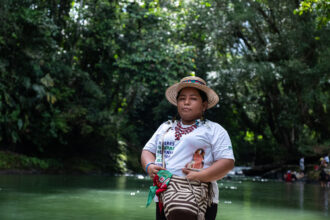
Two weeks ago, Pemón Indigenous leader Lisa Henrito visited a shop in an Orinoco Mining Arc town.
“I asked for a soda and a sweet biscuit and my friend asked for soda,” she said. Then her friend paid the store attendant in gold.
“They have scales,” she explained. “How do you live in a place where the money is gold,” she added, and resist becoming a miner?
This story is funded by readers like you.
Our nonprofit newsroom provides award-winning climate coverage free of charge and advertising. We rely on donations from readers like you to keep going. Please donate now to support our work.
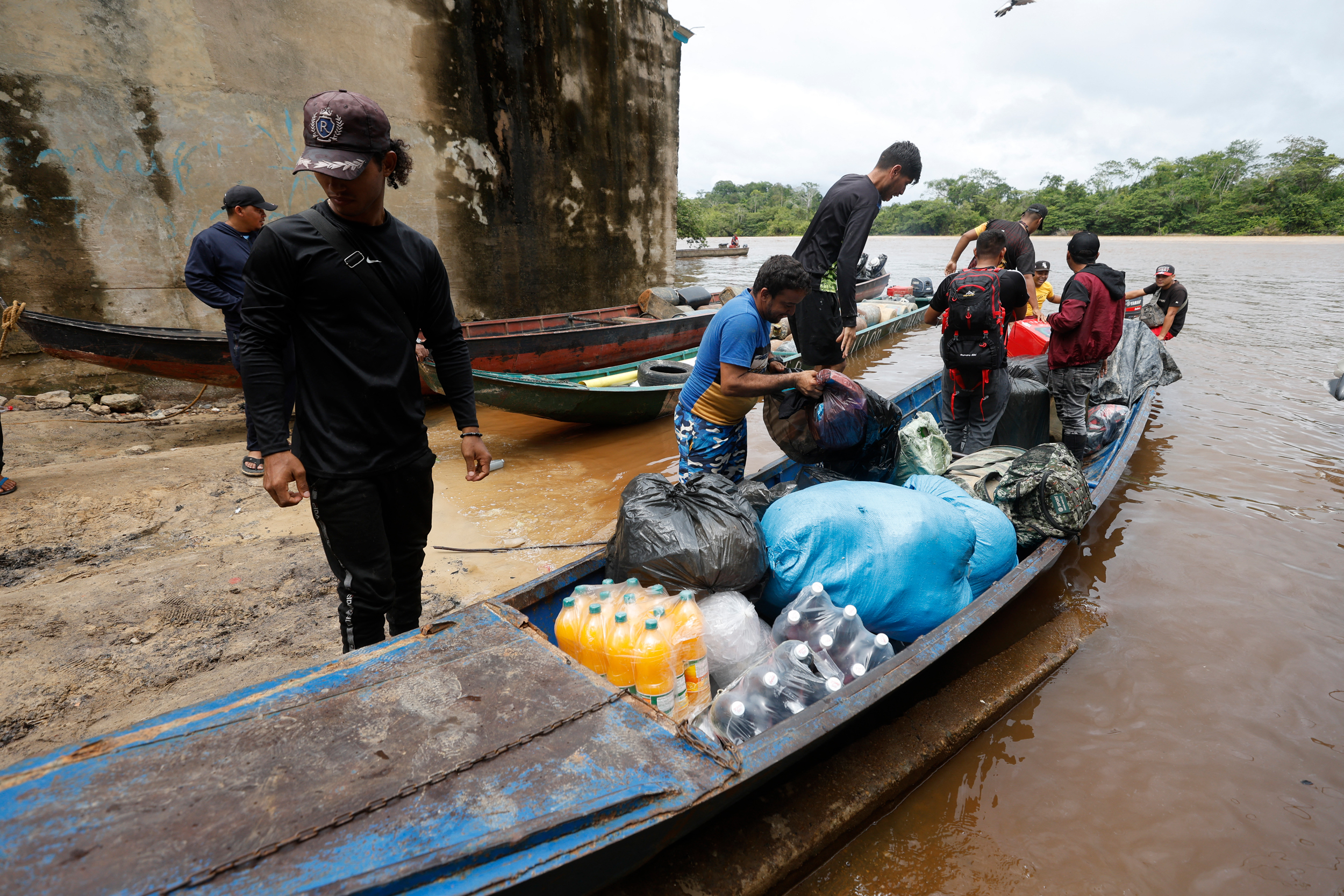
Donate NowThe pressures on Indigenous peoples in the region have forced many to flee to neighboring countries. Those who remain and oppose illegal mining risk being killed. Others who stay are forced to engage in illicit activities directly or indirectly, such as selling gasoline or mining tools.
“Lots of people have died from stress because they cannot accept the fact that they have to leave their communities where they are born, where they have farms and where they grow their children,” she said. “It’s a tragedy for Indigenous peoples because we are so tied to our lands.”
People who move to cities in hopes the government will help integrate them into urban life end up as beggars on the street and under bridges, Henrito said.
“When a government fails to protect its citizens, it fails as a government.”
— Lisa Henrito, Pemón Indigenous leader
She sees the U.S. attack on Venezuela as disconnected from the realities of Indigenous peoples who have long lived autonomously and survived for thousands of years by adhering to principles centered on the right to life and to territory.
“People around the world are debating whether these actions were right or wrong,” she said, referring to the Jan. 3 attack. “Indigenous nations experience similar challenges when outsiders impose themselves on us and take our lands.”
Her vision for the future is one where impartial and independent justice and institutions are restored in Venezuela. “When a government fails to protect its citizens, it fails as a government,” she said.
“Every government must have rules and respect those rules,” she added. “We as Indigenous peoples live in the jungle, and the jungle has its rules and we live by those rules. We ask that other governments do the same.”
Not in the U.S. Interest
As abuses linked to illegal mining have intensified, international cooperation has played a critical role in documenting crimes, pressuring authorities and combating criminal networks operating across borders in the forest.
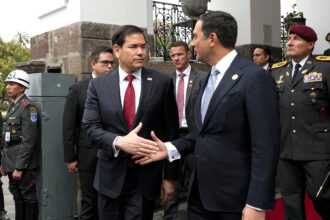
Yet the Trump administration has gutted the U.S. Agency for International Development, which worked to curb illegal mining and support affected communities. Last February, Trump again withdrew the United States from the U.N. Human Rights Council, the body that authorized the fact-finding mission to Venezuela.
And on Wednesday, Trump announced the United States’ withdrawal from more than 60 other international organizations and treaties, many of them focused on human rights, environmental protection and the promotion of democracy and rule of law.
The U.S. Department of State did not respond to requests for comment. Previously, the Trump administration said those organizations and agreements are no longer in the U.S. interest. Asked about the situation and whether the Trump administration planned to combat illegal mining in Venezuela, White House spokesperson Taylor Rogers pointed to the arrest of Maduro and said Trump “brokered a historic energy deal to further strengthen America’s national security in the Western Hemisphere and help restore Venezuela as a responsible, prosperous ally of the United States.”
Desirée Cormier Smith, the former special representative for racial equity and justice with the State Department, warned that those moves could deepen human rights and environmental abuses in Venezuela and around the world.
“I’m deeply concerned about what that means for the most vulnerable and marginalized,” she said.
In places like Venezuela, where the government becomes a primary violator of human rights, international oversight bodies provide a critical safety net for marginalized groups by offering one of the only remaining mechanisms for documenting abuses. In cases around the world, as in Darfur and Myanmar, that documentation has later helped hold offenders accountable.
Trump’s focus on rapidly extracting Venezuelan resources, Cormier Smith said, could put pressure on companies to move quickly—and potentially ignore Indigenous peoples’ right to be consulted about projects that impact them, compounding the torrent of pressures they already face.
One of the U.N. organizations Trump said this week he would withdraw from, the Economic and Social Council, hosts the U.N. Permanent Forum on Indigenous Issues, which serves as a key platform for Indigenous people to raise concerns about human rights, land rights and development projects.
Cormier Smith said it’s possible the United States will no longer recognize or respect decisions and agreements made by those institutions, including the U.N. Declaration on the Rights of Indigenous Peoples, a bedrock treaty.
Pulling out of such institutions and agreements also means, going forward, the United States will not face international oversight from those organizations for its own actions.
“I don’t think that’s a coincidence,” Cormier Smith said.
Last year, the Trump administration gutted mentions of the word “Indigenous” in its annual human rights reports, signaling the U.S. government no longer would prioritize pressuring other governments on their violations of Indigenous peoples’ rights.
China, Russia and other authoritarian governments have long sought to limit international oversight over their domestic acts, such as China’s treatment of Uyghurs. China, in particular, has pushed to reshape international institutions in its vision, one where development, and not democracy, is prioritized.
“This is China’s dream: for the U.S. to be withdrawing from so many U.N. entities and international organizations,” Cormier Smith said. “It is a gift to them on a silver platter.”
She and other former government officials and analysts say the U.S. withdrawals and its attack on Venezuela reflect a broader shift in American foreign policy under Trump—one that moves away from promoting democracy and human rights, and toward a narrower, transactional approach centered on the extraction of resources.
Trump spoke with U.S. oil companies before the Jan. 3 attack and has since said the U.S. would run Venezuela.
“We’re going to be taking out a tremendous amount of wealth out of the ground,” he said.
Since Maduro’s removal, his vice president, Delcy Rodríguez, has taken over as the country’s leader. Rodríguez, a long‑time Maduro loyalist, has been sanctioned by multiple countries and is closely aligned with officials accused of corruption and human rights abuses.
SOS Orinoco said on Wednesday in a statement that Rodríguez helped turn southern Venezuela “into a violent, state-sponsored extraction machine.”
“The replacement of Maduro with Delcy Rodríguez is a bad omen for the environment in
Venezuela,” the organization said. “We fear that the current ecocide will continue and worsen under a new Regime.”
About This Story
Perhaps you noticed: This story, like all the news we publish, is free to read. That’s because Inside Climate News is a 501c3 nonprofit organization. We do not charge a subscription fee, lock our news behind a paywall, or clutter our website with ads. We make our news on climate and the environment freely available to you and anyone who wants it.
That’s not all. We also share our news for free with scores of other media organizations around the country. Many of them can’t afford to do environmental journalism of their own. We’ve built bureaus from coast to coast to report local stories, collaborate with local newsrooms and co-publish articles so that this vital work is shared as widely as possible.
Two of us launched ICN in 2007. Six years later we earned a Pulitzer Prize for National Reporting, and now we run the oldest and largest dedicated climate newsroom in the nation. We tell the story in all its complexity. We hold polluters accountable. We expose environmental injustice. We debunk misinformation. We scrutinize solutions and inspire action.
Donations from readers like you fund every aspect of what we do. If you don’t already, will you support our ongoing work, our reporting on the biggest crisis facing our planet, and help us reach even more readers in more places?
Please take a moment to make a tax-deductible donation. Every one of them makes a difference.
Thank you,