

PEARCE, Ariz.—Nearly two years ago, Arizona Attorney General Kris Mayes held a town hall in this desert community, which is widely regarded as the epicenter of the state’s groundwater crisis.
She heard countless stories from residents about how their water wells had run dry, the damage to their homes as land subsided from groundwater pumping and their fears that the situation would only get worse. Every day since, she said, she’s woken up thinking of those people.
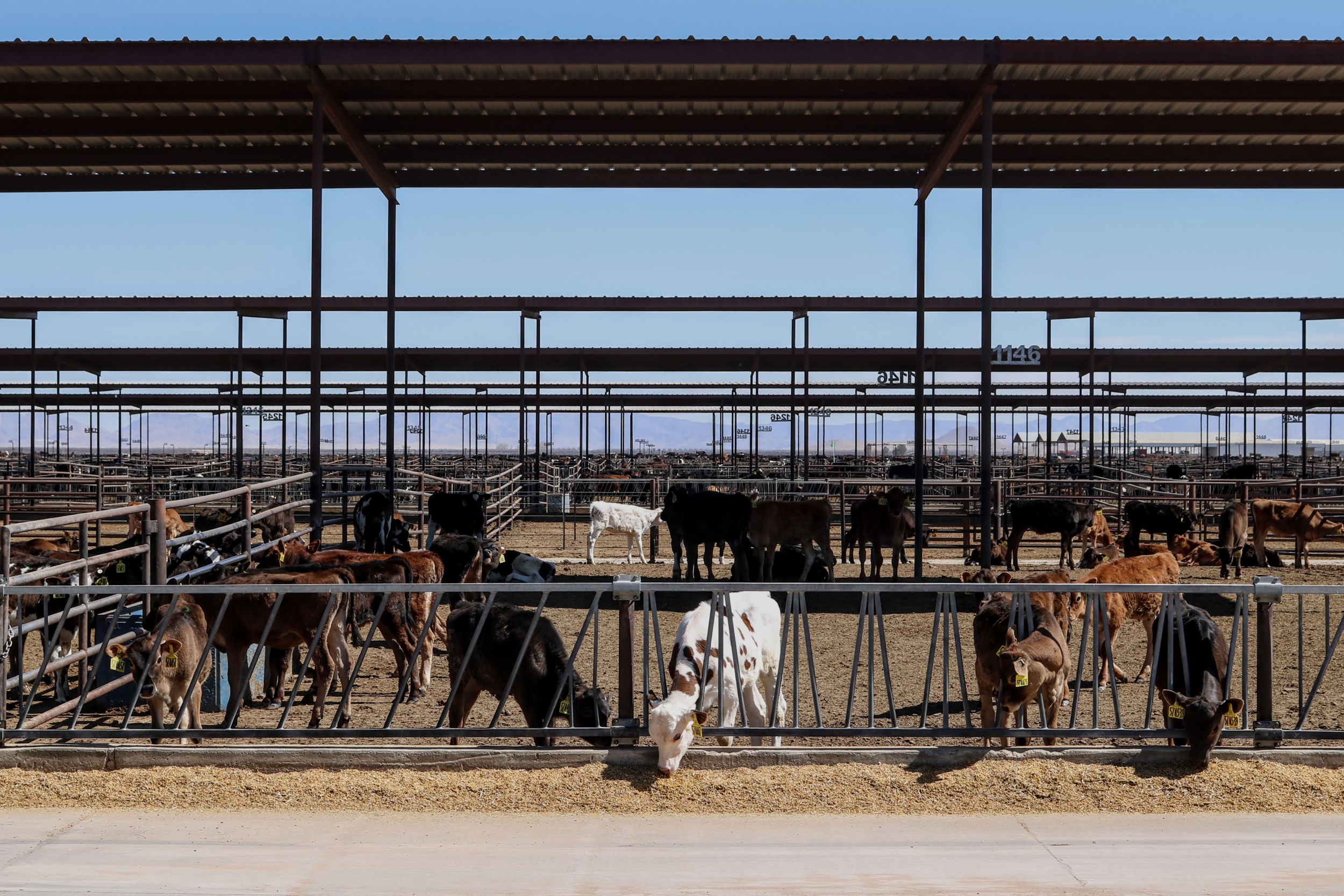
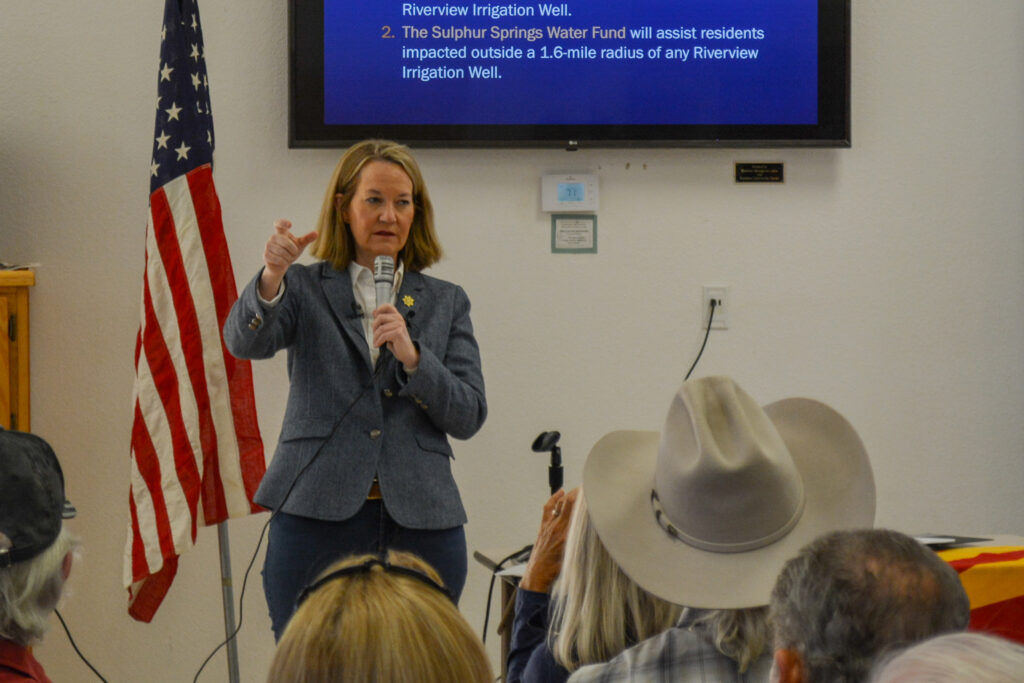
Thursday she returned with major news: Her office has entered an agreement with Riverview LLP, a Minnesota-based dairy company that moved into the area over the last decade and quickly became a major driver of the Willcox groundwater basin’s decline. Under the agreement, the company is agreeing to reduce its groundwater usage by fallowing 2,000 acres of land and maintaining best practices to conserve water. The company also agreed to deliver $11 million to residents affected by the company’s overpumping that will pay to redrill wells, haul water and ensure the community has access to the critical resource.
“There is much more to be done, but I do think that this is the first-of-its-kind agreement, not just in this state, but anywhere in the country, where a major ag user has agreed to fund a fund like this and has agreed to fallow this much acreage,” Mayes told the crowd. “I don’t think there’s anything more important than standing up for rural Arizona, and I will promise you, I will continue to do that.”
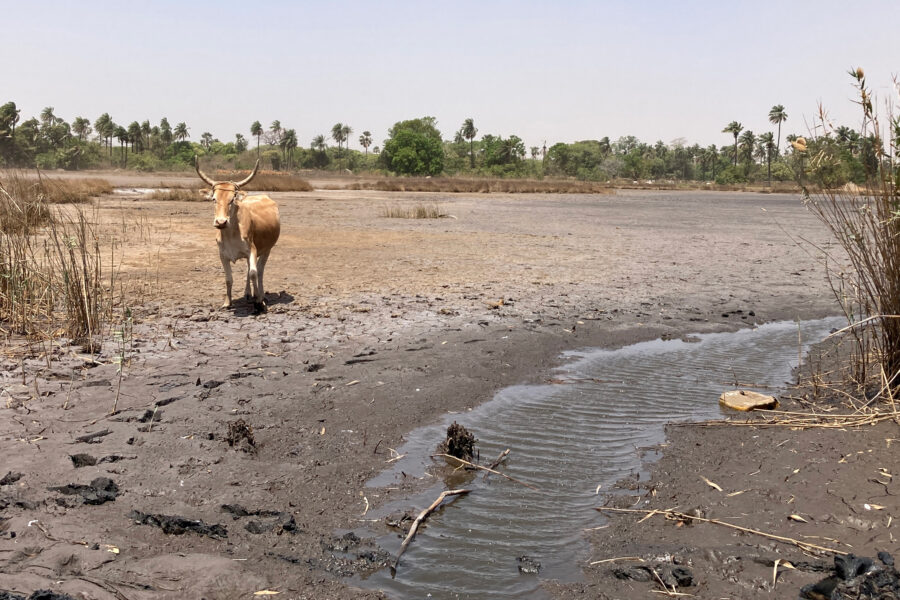
The agreement is the latest to rein in groundwater use in the region. For generations, the Willcox groundwater basin enabled small family farms to thrive under the desert sun. But in 2015, Riverview moved to the area, irrigating tens of thousands of acres to raise crops to feed their cows, and the aquifer rapidly declined. Far more water is pumped from the basin than goes in, and the signs of the aquifer’s collapse have begun to show, with fissures splitting roads and homeowners’ wells going dry.
Nearly 80 percent of Arizona has no regulations on the use of groundwater, which is the main source of water for most communities. That’s led to industrial agriculture operations pumping unlimited amounts of water, leaving communities like Willcox vulnerable to unsustainable groundwater use.
“This settlement sets a new precedent in Arizona—one where businesses commit to being good neighbors to the communities they operate in and make meaningful efforts to reduce pumping of one of our most precious resources—groundwater,” Mayes said announcing the deal.
In a statement, Riverview said it values land stewardship and knows a healthy environment is essential to its operations. The company recognizes the groundwater conditions of the Willcox basin and wants to be part of the solution, it said.
“Attorney General Mayes has helped highlight these challenges, and we appreciate her efforts in identifying these tangible steps to help Arizonans in need,” the statement says. “By working together with state and local leaders, we can strengthen local water access and build a more sustainable future.”
Local homeowners, smaller farmers in the area and environmentalists for years have called on the state to pass legislation to limit pumping in the Willcox area and protect groundwater for future generations, but legislation to protect the area and others like it have failed. That led Gov. Katie Hobbs and the Arizona Department of Water at the end of 2024 to begin the process of forming an Active Management Area (AMA)—the one tool the state has to introduce regulations for an aquifer—in the Willcox basin.
The final details of the Willcox AMA are still being ironed out, but the Attorney General Office’s agreement with Riverview will pave the way for over 100,000 acre-feet of water to be saved from pumping by 2040. One acre foot is enough water to supply two to three households in Arizona for a year.
Far more will need to be done to protect the aquifer. State data shows more than 100,000 acre feet of water is pumped out of the aquifer than is replenished by rain or other sources and that the groundwater has been drawn down so low that it’s beneath the average well depth of the community. Riverview itself owns more than 30,000 acres in the Willcox basin and leases additional acreage, and other large farming operations dot the landscape.
Community members who attended the agreement’s announcement Thursday said more needs to be done, but they were thankful for the action taken and recognized it as a step in the right direction.
“It’s an important first step because it at least acknowledges there is a consequence to having this type of agricultural activity in a desert like this,” said Steven Kisiel, a local who had his well run dry a decade ago and has since helped organize the community’s response to groundwater pumping in the region.
Three months ago, Mayes came to him and others outlining the proposed agreement, requesting their feedback and asking if she should fight for more concessions, perhaps through litigation, as she has done in another community facing a similar situation.
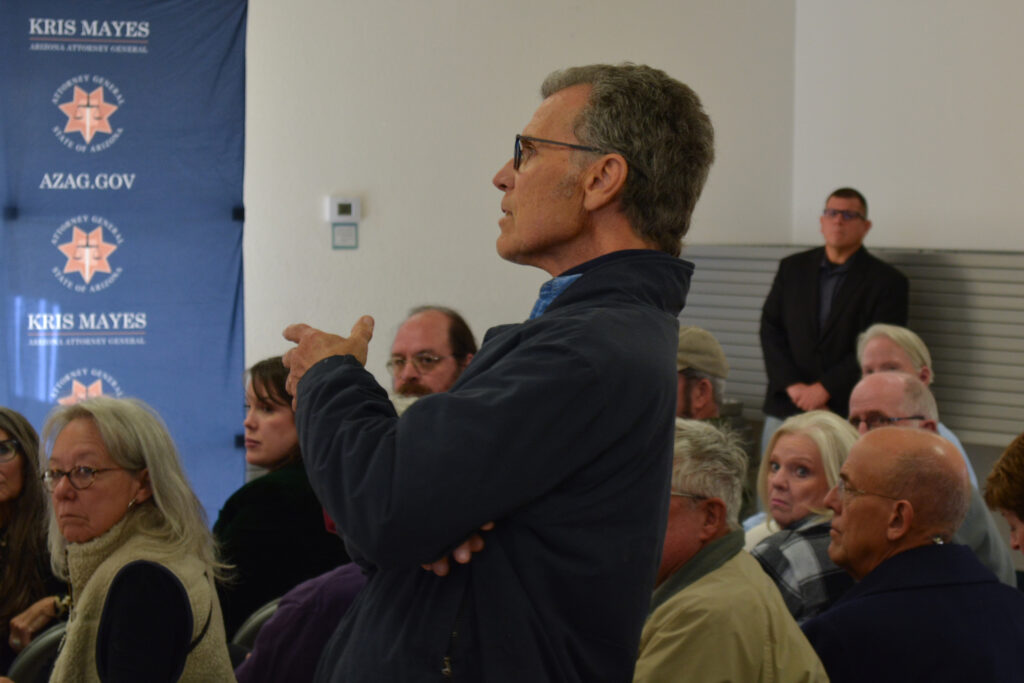
“‘It’s a drop in the bucket,’” he says the community members responded, mindful that they could lose their champion when Mayes faces reelection this year. “‘But we know that if you get defeated next November as attorney general, this [deal] goes away completely and we know these court cases can go on for years.’
“Even though this wasn’t perfect, this is something we have now in our pockets,” Kisiel said. “It says, ‘Yes, Riverview is accepting some responsibility for the harm that they’ve caused to various homeowners.’”
In the Willcox basin, a couple hundred residential wells have run dry over the past decade. Redrilling a well deeper to reach water can cost tens of thousands of dollars, and is perhaps only a temporary solution if the aquifer continues to decline.
This story is funded by readers like you.
Our nonprofit newsroom provides award-winning climate coverage free of charge and advertising. We rely on donations from readers like you to keep going. Please donate now to support our work.
Donate NowThe $11 million to fund affected residents is split in half between two accounts. One is for homeowners within 1.6 miles of a well owned by Riverview, with funds administered by the company. The other half of the funds will go to residents more than 1.6 miles from a Riverview well, and handled by a nonprofit, the Arizona Community Foundation.
The funds are designed to be proactive to help those who may be affected going forward, but can also go to those already impacted. The money can be used to redrill wells, install water fill stations and pay to have water hauled to homes.
Sharon Megdal, director of the University of Arizona’s Water Resources Research Center, said the agreement is a huge step forward for the Willcox basin and a precedent-setting agreement.
“The question of whether all of this will be enough for the long-term sustainability of this region, which is fully dependent on groundwater, I think that remains to be seen,” she said. “But I think the good news is that through the monitoring, the reporting that will occur because of the formation of the AMA, we’ll know what the status is much better than if we weren’t doing anything to enact conservation.”
Everyone, she said, agrees there is a problem across the state with drought. But the question is what to do to move forward and address it. Collaboration and deals like this will be essential to figuring that out.
“If we run out of groundwater, if the groundwater levels go down so low that it is prohibitively expensive to pump that water, or water quality issues arise that require expensive treatment, that’s not good for anybody,” she said.
Mayes said she will continue to push for other large industrial agricultural operations to enter similar agreements, both in Willcox and elsewhere in the state. A former professor of energy and environmental law, Mayes has made water and climate issues top priorities for her office, taking on major corporations that she sees as threats to rural Arizona communities.
She hopes, too, the deal will help push the state legislature to take further action. “This is another flare sent up from rural Arizona to the legislature that they need to get their act together and do something significant for rural Arizona.”
About This Story
Perhaps you noticed: This story, like all the news we publish, is free to read. That’s because Inside Climate News is a 501c3 nonprofit organization. We do not charge a subscription fee, lock our news behind a paywall, or clutter our website with ads. We make our news on climate and the environment freely available to you and anyone who wants it.
That’s not all. We also share our news for free with scores of other media organizations around the country. Many of them can’t afford to do environmental journalism of their own. We’ve built bureaus from coast to coast to report local stories, collaborate with local newsrooms and co-publish articles so that this vital work is shared as widely as possible.
Two of us launched ICN in 2007. Six years later we earned a Pulitzer Prize for National Reporting, and now we run the oldest and largest dedicated climate newsroom in the nation. We tell the story in all its complexity. We hold polluters accountable. We expose environmental injustice. We debunk misinformation. We scrutinize solutions and inspire action.
Donations from readers like you fund every aspect of what we do. If you don’t already, will you support our ongoing work, our reporting on the biggest crisis facing our planet, and help us reach even more readers in more places?
Please take a moment to make a tax-deductible donation. Every one of them makes a difference.
Thank you,

Wyatt Myskow
Reporter, Phoenix
Wyatt Myskow covers drought, biodiversity and the renewable energy transition throughout the Western U.S. Based in Phoenix, he previously reported for The Arizona Republic and The Chronicle of Higher Education. Wyatt has lived in the Southwest since birth and graduated from Arizona State University with his bachelor’s degree in journalism.