

The anti‑government protests sweeping across Iran, from major cities to rural towns, are fueled by anger over economic collapse and political repression. But beneath the headlines of currency devaluations and street clashes lies a deeper, more permanent driver of dissent: ecological calamity.
Decades of ignoring scientists, persecuting activists and greenlighting corrupt development schemes have triggered a water crisis so severe that President Masoud Pezeshkian warned in November that Tehran’s residents may eventually have to evacuate the capital city, which is sinking as dried-up aquifers give way.
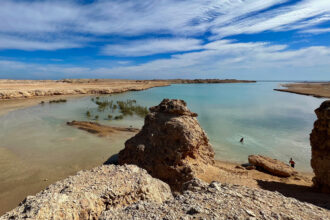
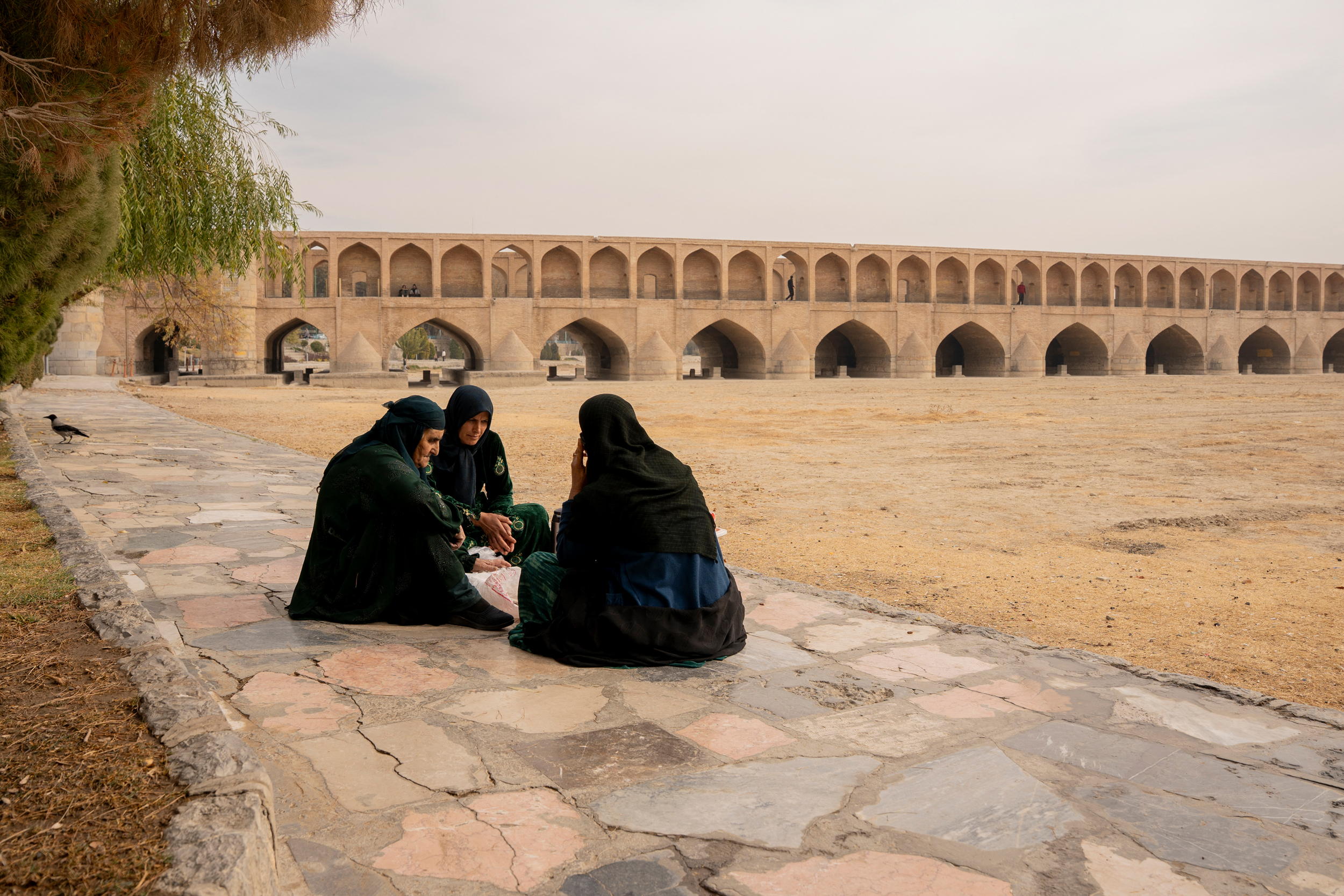
The devastation extends far beyond Tehran. Lake Urmia, once one of the world’s largest salt lakes, has shriveled to less than 10 percent of its volume, while the iconic Zayandeh River has sat dry for years. Wildfires have ravaged the parched Hyrcanian forests, a UNESCO World Heritage site. In the oil-rich Khuzestan province, home to Iran’s Arab minority, state-led water diversion has devastated the local economy and inflamed ethnic grievances.
Iranians, and many experts, blame the government, one of the world’s most repressive regimes.
Environmental issues tie “into all the other grievances that activists and citizens and protesters have over economic and political issues,” said Eric Lob, a nonresident scholar at the Carnegie Middle East Program and an associate professor at Florida International University. “It’s all interconnected.”
The human cost is staggering. Crumbling infrastructure, poorly designed irrigation systems and overdrawn aquifers have left farmers unable to plant crops and cities forced to ration supplies. Tens of thousands of people, including children, die prematurely each year from severe air and water pollution. Water shortages and power outages have shuttered businesses and left ordinary Iranians “worried about whether they’ll have enough water for drinking, bathing and cleaning,” Lob said.
Water stress has also become a source of political contention and a tool of political control, he said. Ethnic minority regions on Iran’s periphery have seen their water supply diverted to central provinces dominated by the Persian majority, creating environmental “winners and losers” and deepening resentment.
In Khuzestan, for example, national government policies have diverted water from the Karun River to central plateau provinces, reinforcing perceptions that Tehran prioritizes politically connected agriculture and industrial interests over local needs.
Gregg Roman, executive director of the Middle East Forum, pointed to recent protests over water access in the Sistan and Baluchestan province, where demonstrators in 2023 marched with signs reading “Sistan is thirsty for water, Sistan is thirsty for attention.”
“These aren’t separate from the current uprising,” Roman said of past water protests. “They’re precursors. Economic and environmental grievances are inseparable when your tap runs dry and your crops die.”
Student groups have also identified Iran’s ecological emergencies as driving unrest.
“Today, crises have piled up: poverty, inequality, class oppression, gender oppression, pressure on nations, water and environmental crises. All are direct products of a corrupt and worn-out system,” student activists said in a December statement.
The current protests, which erupted in late December, are the largest since 2022-2023. The government has responded with a communication blackout, cutting off internet access nationwide, and violent crackdowns. Human rights organizations estimate thousands have been killed, and even more arrested. Iran has a history of executing protestors, often by public hanging.
Lob traced a direct line between today’s uprising and the regime’s historical environmental failures.
Since the 1979 revolution, he said, the government has used rural development projects to increase political legitimacy and popular support—a process that gave rise to a “water mafia” within the military establishment and the construction of hundreds of dams across the country.
“Organizations close to the government and military were able to get contracts for these projects,” Lob said. “The goal was power and profit-seeking over environmental protection and sustainability.”
This story is funded by readers like you.
Our nonprofit newsroom provides award-winning climate coverage free of charge and advertising. We rely on donations from readers like you to keep going. Please donate now to support our work.
Donate NowThis profit-driven mismanagement, compounded by climate change-driven drought, international sanctions and limited investment, has led to land subsidence so severe that infrastructure such as roads and buildings is cracking. In Tehran, the crisis reached a breaking point this winter as reservoirs plummeted below 10 percent capacity.
“The state can no longer ignore the reality on the ground that people have sounded the alarm on for years,” Lob said.
Repression in Iran
Niloufar Bayani thought that tracking endangered wildlife would help save Iran’s critically endangered Persian cheetah. Instead, it landed her in one of the country’s most notorious prisons.
Inside Evin Prison, Bayani was held in solitary confinement and interrogated in 12-hour stretches as officials pressed her to confess to espionage. Interrogators threatened her with sexual assault, injections of hallucinogenic drugs and the arrest and torture of her 70-year-old parents, showing her images of torture devices to underscore their threats.
“Scientists and activists have been repressed by the state because what they were saying was inconvenient.”
— Eric Lob, Carnegie Middle East Program nonresident scholar
After six years of detention, Bayani and seven of her colleagues were released in 2024—the group’s leader, Kavous Seyed-Emami, died in Evin Prison just weeks after his arrest.
The detentions and death have become a stark example of how Iran’s environment, and those working to protect it, are entangled with a repressive security state, even as the nation’s environmental crises deepen.
“Scientists and activists have been repressed by the state because what they were saying was inconvenient,” Lob said.
Among them is Kaveh Madani, a water management expert forced into exile after his proposed solutions to Iran’s water crisis, including reducing reliance on dams, threatened the Islamic Revolutionary Guard Corps’ interests. In 2024, government security forces arrested poet Peyman Farahavar, later sentencing him to death over his writing critical of environmental destruction. And last year, the crackdown expanded to include grassroots activists Sabah and Ramin Salehi, cousins who were arrested for their work protecting the Zagros forests.
“These individuals were trying to do their jobs—articulating the urgency of the issue and raising public awareness—and they were punished for it,” Lob said.
Iran’s environmental crises are not unique to the country, or even the region.
From neighboring Iraq to arid parts of the United States, including California and the Southwest, governments are grappling with dwindling water supplies and the political and socioeconomic consequences of how they are managed, Lob said.
In Iran, the problem is magnified by an agriculture sector that consumes the majority of the nation’s water, often inefficiently. Analysts say years of inadequate oversight and short-term fixes have deepened the crisis, particularly for farmers and rural communities whose livelihoods depend on reliable water access.
“Water rights, pollution and climate impacts are apolitical on their face but lead directly to questions about governance, corruption and regime legitimacy,” said Roman.
About This Story
Perhaps you noticed: This story, like all the news we publish, is free to read. That’s because Inside Climate News is a 501c3 nonprofit organization. We do not charge a subscription fee, lock our news behind a paywall, or clutter our website with ads. We make our news on climate and the environment freely available to you and anyone who wants it.
That’s not all. We also share our news for free with scores of other media organizations around the country. Many of them can’t afford to do environmental journalism of their own. We’ve built bureaus from coast to coast to report local stories, collaborate with local newsrooms and co-publish articles so that this vital work is shared as widely as possible.
Two of us launched ICN in 2007. Six years later we earned a Pulitzer Prize for National Reporting, and now we run the oldest and largest dedicated climate newsroom in the nation. We tell the story in all its complexity. We hold polluters accountable. We expose environmental injustice. We debunk misinformation. We scrutinize solutions and inspire action.
Donations from readers like you fund every aspect of what we do. If you don’t already, will you support our ongoing work, our reporting on the biggest crisis facing our planet, and help us reach even more readers in more places?
Please take a moment to make a tax-deductible donation. Every one of them makes a difference.
Thank you,