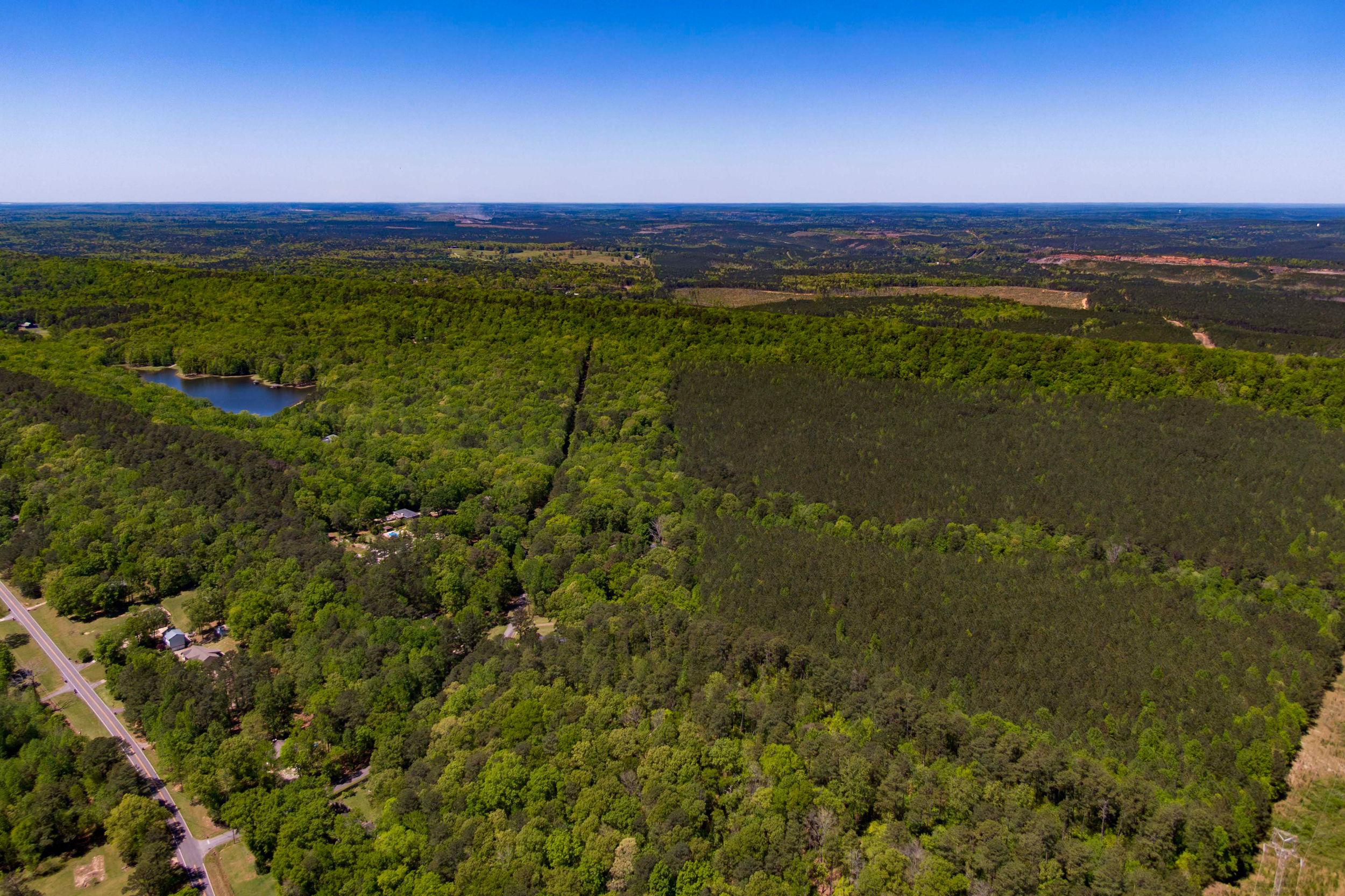


BESSEMER, Ala.—Logistic Land Investment LLC, the developer behind Project Marvel, a $14.5 billion proposed data center project in central Alabama, will request the rezoning of an additional 900 acres of land from agricultural to light industrial use, according to a Bessemer city council member.
Cleo King, who represents District 7, said in an interview Wednesday that city attorney Aaron Killings informed the city council at Tuesday’s meeting about the request. Killings said the newly rezoned land would allow the developer to assuage concerns over a possible conflict with the Northern Beltline, a road project that may impact the project site.
In November, a majority of the Bessemer City Council approved the rezoning of nearly 700 acres of agricultural land in the city, which is located just southwest of Birmingham.
Logistic Land Investment is owned by TPA Group, an Atlanta-based developer.
Residents who live near the proposed data center site have been nearly universally opposed to the project, which if built to full capacity would include 18 buildings the size of Walmart Supercenters and consume a massive amount of water and electricity.
King said that he is wary of the project and its impacts; he was one of two council members to vote against the previous rezoning.
“I continue to be skeptical of this process,” he said.
King said that instead of pushing through rezoning proposals without engaging meaningfully with residents, Bessemer should be taking a more thoughtful, measured approach to vetting Project Marvel. He pointed to Birmingham, which is considering a moratorium on data center development, as a better example of how local governments should approach the issue.
“Birmingham officials are doing their due diligence,” he said. “I think that’s something that we should have done as well.”

Mary Rosenboom, a resident who lives near the proposed data center site, said that any attempt by the developer to acquire and rezone additional land is deeply troubling.
“It terrifies me about what will come,” she said. “These developers have no regard for the people who live here.”
Residents like Rosenboom have opposed Project Marvel from its inception, arguing that the construction and operation of a hyperscale data center would be detrimental to their quiet enjoyment of their homes and lead to significant economic and environmental problems.
“All this does is put money in big tech’s pockets at the expense of the people,” she said. “I think this is something where every resident needs to standing up and screaming ‘No, no, no.’”
In November, the Alabama Department of Transportation wrote to the project developers to express concern over a potential conflict between the siting of Project Marvel and the eventual construction of the Northern Beltline, a $5 billion road project some have described as a “road to nowhere.”
Developers quickly said they’d do whatever was necessary to avoid any conflict with the beltline project, which has been repeatedly lauded by political insiders like Sen. Katie Britt, who previously served as chief of staff for Sen. Richard Shelby, a longtime supporter of the Northern Beltline.
At Tuesday’s meeting, Killings also suggested that the rezoning of additional land would provide the developer the opportunity to avoid some of the potential environmental impacts of the project.
Rosenboom said that argument doesn’t fly with her. Developers have previously said the data center’s construction would cause no environmental impacts, though experts have disagreed.
“If there’s no environmental impact, how would this newly rezoned land mitigate an impact that doesn’t exist?” Rosenboom asked. “It doesn’t make any sense.”
Charles Miller, policy director for the Alabama Rivers Alliance, an environmental nonprofit that’s followed the evolution of Project Marvel closely, said Wednesday that the organization will continue to support residents however it can.
“We will continue to help the residents of Red Mountain Heights and Rock Mountain Lakes get answers about this misguided and ill-considered proposal,” Miller said. “Now that the proposed footprint of this project has apparently doubled overnight, without advance warning or public notice, it is even more critical for the Bessemer City Council and TPA Group to respond to residents’ concerns.”
Representatives of Logistic Land Investment did not respond to a request for comment.
Inside Climate News has requested a copy of the entity’s new application for rezoning from city officials but has not yet heard back.
About This Story
Perhaps you noticed: This story, like all the news we publish, is free to read. That’s because Inside Climate News is a 501c3 nonprofit organization. We do not charge a subscription fee, lock our news behind a paywall, or clutter our website with ads. We make our news on climate and the environment freely available to you and anyone who wants it.
That’s not all. We also share our news for free with scores of other media organizations around the country. Many of them can’t afford to do environmental journalism of their own. We’ve built bureaus from coast to coast to report local stories, collaborate with local newsrooms and co-publish articles so that this vital work is shared as widely as possible.
Two of us launched ICN in 2007. Six years later we earned a Pulitzer Prize for National Reporting, and now we run the oldest and largest dedicated climate newsroom in the nation. We tell the story in all its complexity. We hold polluters accountable. We expose environmental injustice. We debunk misinformation. We scrutinize solutions and inspire action.
Donations from readers like you fund every aspect of what we do. If you don’t already, will you support our ongoing work, our reporting on the biggest crisis facing our planet, and help us reach even more readers in more places?
Please take a moment to make a tax-deductible donation. Every one of them makes a difference.
Thank you,

Lee Hedgepeth
Reporter, Alabama
Lee Hedgepeth is Inside Climate News’ Alabama reporter. Raised in Grand Bay, Alabama, a small town on the Gulf Coast, Lee holds master’s degrees in community journalism and political development from the University of Alabama and Tulane University. Lee is the founder of Tread, a newsletter of Southern journalism, and has also worked for news outlets across Alabama, including CBS 42, Alabama Political Reporter and the Anniston Star. His reporting has focused on issues impacting members of marginalized groups, including homelessness, poverty, and the death penalty. His award-winning journalism has appeared in publications across the country and has been cited by the New York Times, the Wall Street Journal and the Washington Post, among others.