

COLUMBIANA, Ala.—At first, no one knew about the non-disclosure agreement.
Columbiana’s then-mayor, David Mitchell, had signed the secrecy agreement with DigiPowerX, a data center developer, without consulting City Council members or the public.
The undated agreement, obtained by Inside Climate News through a public records request, prohibited Mitchell from disclosing any information the developer deemed confidential “whether in oral, written, graphic, electronic, or any other form.” Such information, the agreement outlined, was to be held “in strictest confidence for the sole and exclusive benefit” of the developer.
Mitchell did not respond to a request for comment.
The NDA, published here for the first time, would later become a major point of contention for residents of Columbiana, the small town seat of Alabama’s richest county, just south of Birmingham. But once word of the NDA surfaced, it was already too late to stop the expansion.
Now, despite a resounding August 2025 electoral defeat of the mayor who signed the agreement, the city’s new administration, led by Mayor Lisa Davis—the first woman to serve in the role—has been hamstrung by the former mayor’s action. DigiPowerX, a former cryptomining operation that has now pivoted to AI data center, will soon expand its footprint in the small town, and city officials say there’s not much they can do given the former administration’s approval of the project.
“It’s apparent that this was some behind-the-scenes bullshit,” a lifelong resident of Columbiana, Cody Holliman, said at Thursday’s town hall meeting. “Is there anything that can be done to stop this?”
Mayor Davis was frank in her reply.
“I appreciate your comment,” she said before answering. “No.”
Holliman grabbed his coat and headed for the exit.
“Well, that’s what everybody wants to know,” he said. “Y’all have a good night.”
As he exited, half a dozen other residents followed, some shouting as they left.
“You can’t be transparent now,” one resident yelled from the exit as police approached. “It’s already happening.”
The crowd applauded.
Davis quickly apologized.
“I’m very sorry about that,” Davis said. “Those things were not my decision. So I’m very sorry. I am doing this community town hall to try and bridge a gap in communication so that a business that’s coming in that was already approved by a prior administration, so that we can try to make the best out of the situation.”
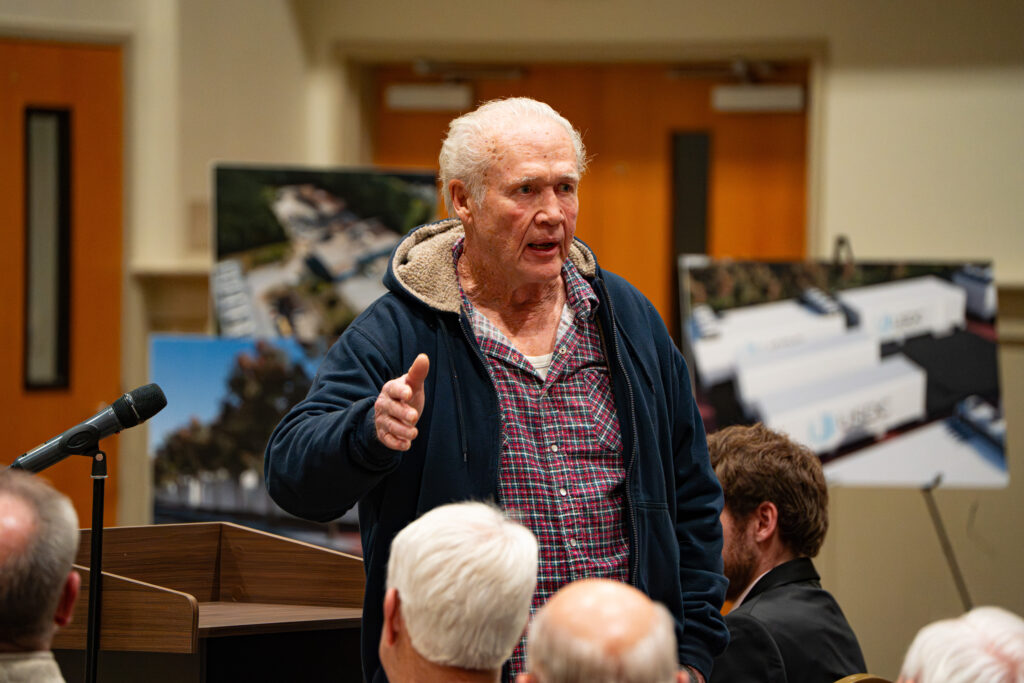
According to representatives of the company, DigiPowerX’s phase one expansion is set to be completed in February or March this year. The expansion of the company’s existing business, which had focused on bitcoin mining, will include a pivot to serving AI customers, though the company’s representative refused to disclose who the end user may be.
Under phase one, the company’s new footprint will include 17 modular structures that will house glycol-cooled servers at the site of a former foundry in the city’s industrial park, though the location is less than 2,000 feet from Columbiana Middle School.
During the meeting, Council member Karen Lilly had strong words for representatives of DigiPowerX.
“Have you visited Columbiana Middle School? We have a lot of citizens that stay right by the data center. Have you visited the neighborhood?” she asked.
“We’ve driven past,” said DigiPowerX vice president of operations Daniel Rotunno.
Lilly asked if company representatives had introduced themselves to the school’s principal or neighbors who live near the site.
“We’ve just been talking to the city council right now,” a representative said.
After the meeting, Lilly said the company’s answers were infuriating.
“They need to know firsthand from the people what their concerns are,” Lilly said.
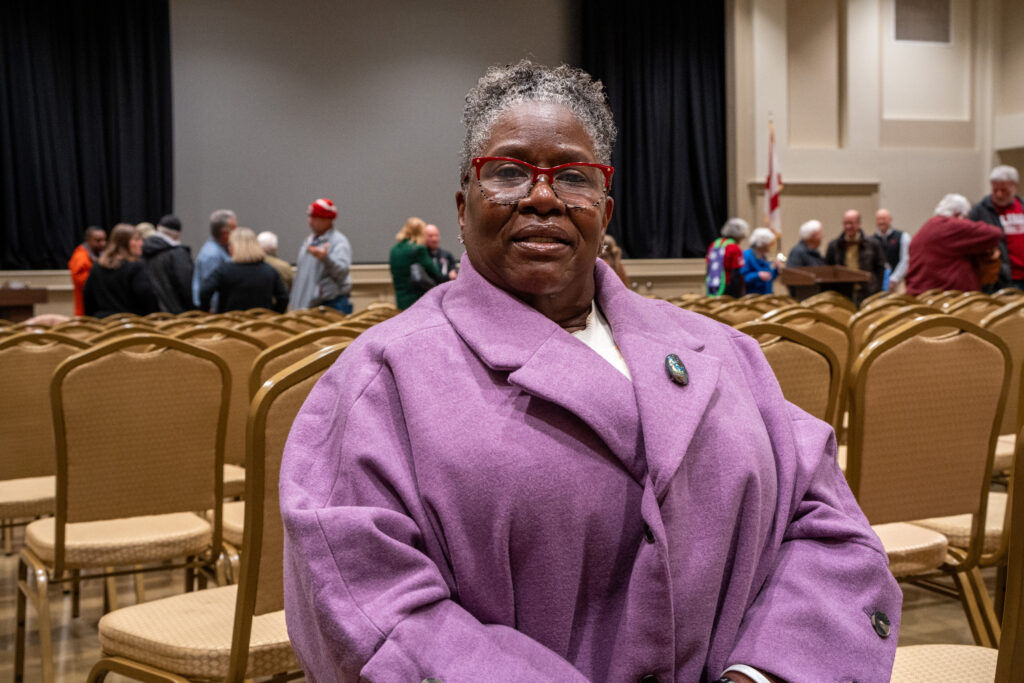
For her, a major concern is air pollution caused by backup diesel generators that will be located on site, particularly given the facility’s proximity to a school.
“A lot of kids have asthma,” she said. “We have a lot of kids that have other health problems. I don’t want them to go through having more issues with their health because of this.”
Rotunno said that the facility will use up to 22 megawatts of electricity during phase one—enough energy to power all the residences in Columbiana many times over. Backing up that amount of power could require around seven diesel generators, though a firm number has not yet been determined, he said.
Exposure to diesel exhaust can lead to “serious health conditions,” according to the EPA. Diesel fumes are “likely to be carcinogenic to humans,” according to the federal agency. The International Agency for Research on Cancer also labels diesel exhaust as “carcinogenic to humans.”
A report produced by researchers from the University of California, Riverside, and published by the think tank Next 10 in 2025, found that emissions from onsite backup diesel generators at data centers have a significant and growing impact on public health. The generators “emit nitrogen oxides and fine particulate matter that worsen respiratory and cardiovascular disease,” the report concluded.
Rotunno said that the company’s phase two plans will increase the facility’s energy consumption to as much as 70 megawatts. That’s enough energy to power between 28,000 and 63,000 homes, depending on usage.
Davis said that though she’s had a healthy skepticism of the data center developer, she feels they have made some concessions given the realities on the ground in Columbiana.
DigiPowerX agreed to switch to a glycol-cooled, closed-loop system after the new administration made clear that the town of around 4,500 did not have the capacity to supply the company with industrial amounts of water.
Davis said she’s also in communication with the mayor of North Tonawanda, New York, the site of another data center operated by the same company. There, noise complaints led city officials to institute a temporary ban on similar facilities.
“We are interested in finding solutions, but we are making sure that we’re following proper procedures because it is such a sensitive topic,” Austin Tylec, mayor of North Tonawanda, told Noah Wortham of the Shelby County Reporter. “Currently, we are still under a moratorium with data mining centers, or data centers, specifically the creation of new ones or expanding them.”
Davis said she’ll continue to push for meaningful engagement between the company and residents and that her administration will do whatever it can to ensure the expanded facility will have as little impact as possible on residents.
One resident said he’s not only concerned about data centers’ impact in his town.
“How many Columbianas will there be in the state of Alabama?” he asked.
While there’s no official count of data center projects across the Yellowhammer State, cities large and small have begun to reckon with the prospect of data centers of all sizes aiming to move into residents’ back yards. Almost universally, residents have opposed the developments, citing concerns over energy and water usage, noise, air and light pollution, as well as the possibility of rising electricity bills, of which Alabamians already pay the highest in the nation.
This story is funded by readers like you.
Our nonprofit newsroom provides award-winning climate coverage free of charge and advertising. We rely on donations from readers like you to keep going. Please donate now to support our work.
Donate NowThe lack of transparency around such projects, too, has been a major sticking point for residents. In Bessemer, a Birmingham suburb located about 25 miles northwest of Columbiana, Mayor Kenneth Gulley, the city attorney and at least one economic development officer signed NDAs related to a massive, 4.5 million square foot data center development called Project Marvel. Bessemer officials have refused to publicly release copies of the agreement and have greenlit the project over the near-universal opposition of residents.
Requiring local officials to sign NDAs has become standard operating procedure for data center developers across the country, who are in fierce competition with one another to produce the computational power required by the tech giants to win the race to develop artificial intelligence, or AI, systems.
And while Columbiana’s new mayor pledged not to sign an NDA related to the proposed data center expansion, others involved in the project may still be subject to secrecy agreements.
Amy Sturdivant, president and CEO of Shelby County’s economic development organization, was quick to respond when asked at Thursday’s town hall meeting whether she or staffers had signed NDAs related to the DigiPowerX expansion.
Mayor Davis handed Sturdivant, who was seated in the audience, a microphone to respond. Sturdivant wouldn’t need it long.
“No comment,” she said. More than a hundred attendants groaned in unison.
“Well there you go,” one resident yelled.
About This Story
Perhaps you noticed: This story, like all the news we publish, is free to read. That’s because Inside Climate News is a 501c3 nonprofit organization. We do not charge a subscription fee, lock our news behind a paywall, or clutter our website with ads. We make our news on climate and the environment freely available to you and anyone who wants it.
That’s not all. We also share our news for free with scores of other media organizations around the country. Many of them can’t afford to do environmental journalism of their own. We’ve built bureaus from coast to coast to report local stories, collaborate with local newsrooms and co-publish articles so that this vital work is shared as widely as possible.
Two of us launched ICN in 2007. Six years later we earned a Pulitzer Prize for National Reporting, and now we run the oldest and largest dedicated climate newsroom in the nation. We tell the story in all its complexity. We hold polluters accountable. We expose environmental injustice. We debunk misinformation. We scrutinize solutions and inspire action.
Donations from readers like you fund every aspect of what we do. If you don’t already, will you support our ongoing work, our reporting on the biggest crisis facing our planet, and help us reach even more readers in more places?
Please take a moment to make a tax-deductible donation. Every one of them makes a difference.
Thank you,

Lee Hedgepeth
Reporter, Alabama
Lee Hedgepeth is Inside Climate News’ Alabama reporter. Raised in Grand Bay, Alabama, a small town on the Gulf Coast, Lee holds master’s degrees in community journalism and political development from the University of Alabama and Tulane University. Lee is the founder of Tread, a newsletter of Southern journalism, and has also worked for news outlets across Alabama, including CBS 42, Alabama Political Reporter and the Anniston Star. His reporting has focused on issues impacting members of marginalized groups, including homelessness, poverty, and the death penalty. His award-winning journalism has appeared in publications across the country and has been cited by the New York Times, the Wall Street Journal and the Washington Post, among others.