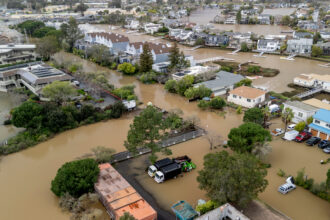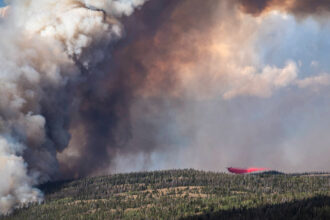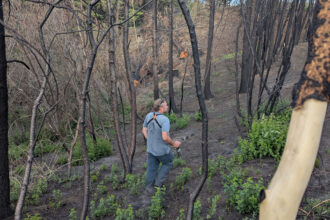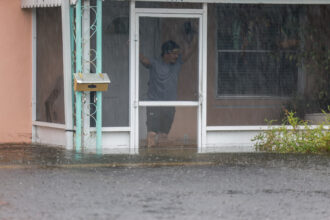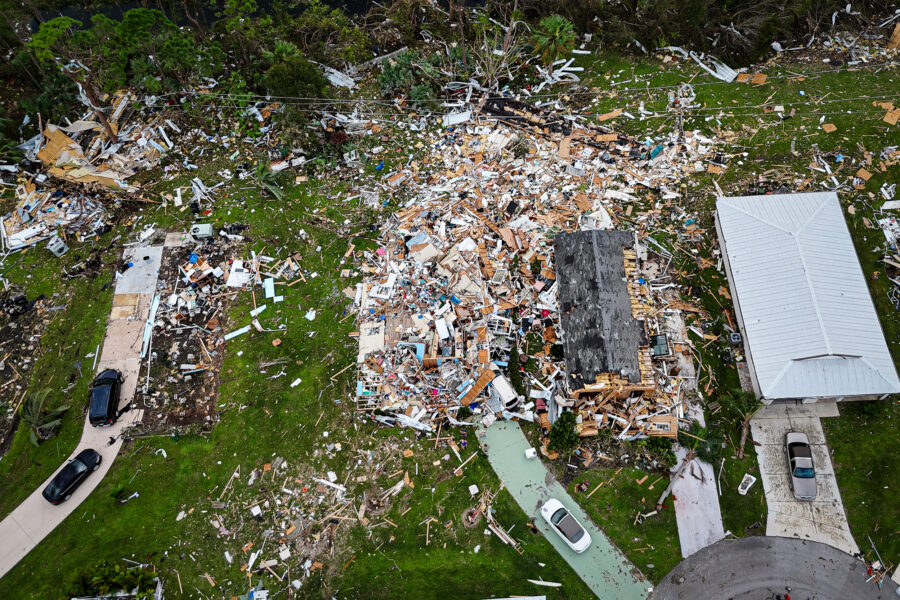
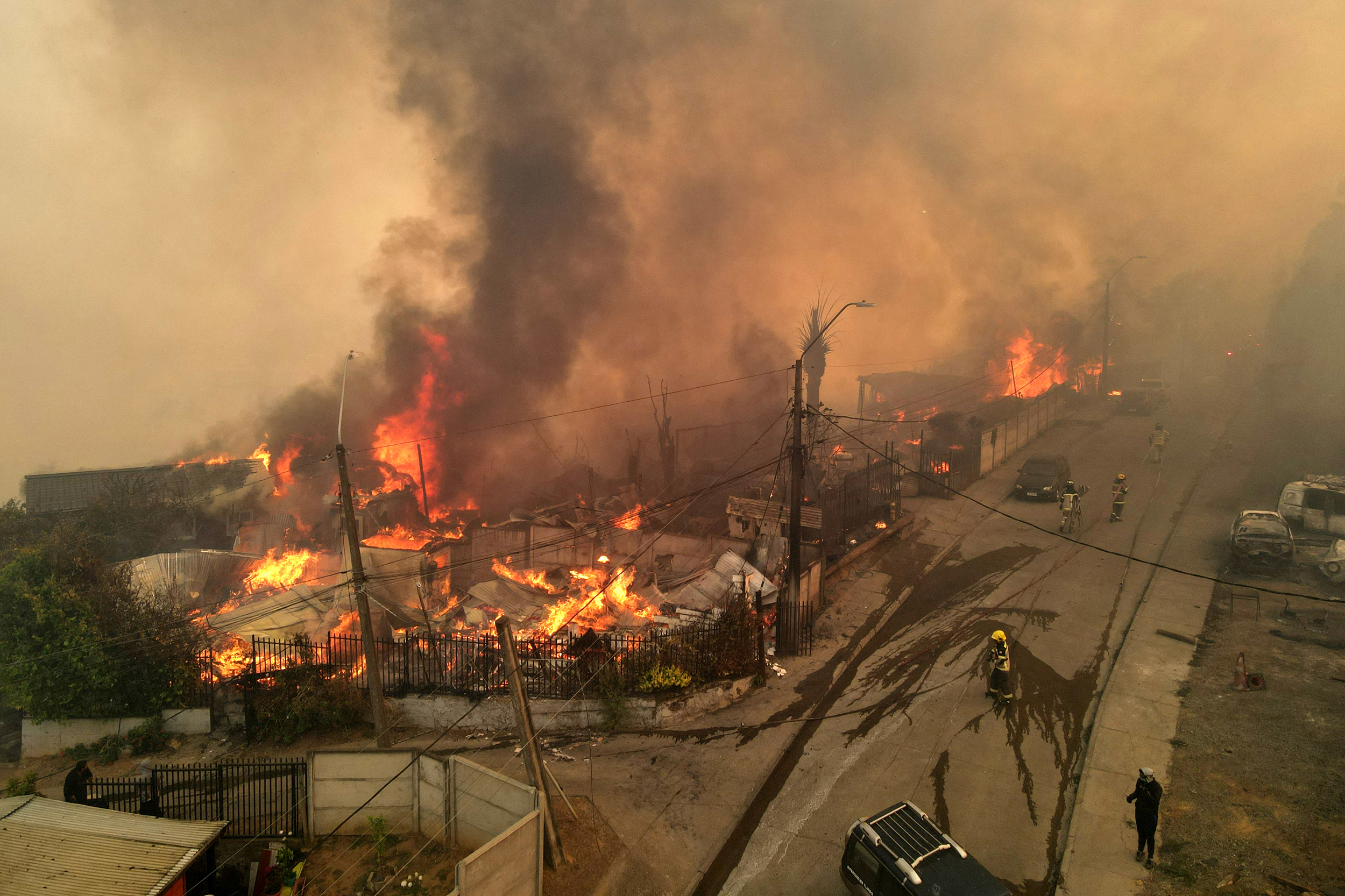


More than thirty wildfires ripped through Chile this weekend, killing 19 and burning more than 135 square miles and hundreds of homes in the regions of Biobío and Ñuble.
Meanwhile, fires have raged for several weeks across the border in southern Argentina, burning across at least sixty square miles, including homes and native forests, but with no reported deaths.
The two countries are in the middle of an extended heatwave, and high winds have supercharged the spread of fires through already-dry native vegetation and forest plantations, explained Miguel Castillo, director of the Forest Fire Laboratory at the University of Chile.
“Climate change, humidity conditions, strong winds, or a large number of consecutive days with temperatures above 30°C [86 degrees, Fahrenheit],” all contribute to the increasing frequency of large, deadly wildfires, said Castillo.
While the number of forest fires in Chile is below its historical mid-January average, the damage and area burned by the ongoing fires is extreme, he said.
“The number of fires is one thing, and the size of the fires is another. And in terms of the size of the fires, we have an issue to resolve because they are increasingly getting out of control,” said Castillo.
In 2023, drought-stricken eucalyptus and pine plantations fueled megafires that killed more than 20 Chileans, injured 2,000, and destroyed thousands of homes in Biobío and Ñuble.
The following year, forest fires in the Valparaíso region killed over 130, making it the deadliest fire in the country’s history.
This weekend, the Chilean government evacuated more than 50,000 people from Biobío and Ñuble, where the largest fires burned. On Sunday, President Gabriel Boric declared a state of catastrophe in the two regions, allowing the country’s armed forces to be deployed as firefighters and aid workers.
CONAF, the state-owned nonprofit organization that manages Chile’s forests and national parks, and SENAPRED, the state’s disaster response agency, reported deploying 400 firefighters and 36 aircraft to the region on Sunday.
Meanwhile, Argentinians have begun returning to their scorched communities two weeks after the fires first broke out in the Chubut province.
As residents attempt to rebuild, those most affected by the fire are the families that relied on income tied to their land, said Sofia Nemenmann, an environmental activist involved in wildfire prevention in Patagonia. “There are families that beekeep, families that produce with their gardens, and those are the families that lost the most. Because they lost not only their homes but also their source of income.”
Nemenmann and her partner have spent the last few weeks travelling to communities affected by the fires to help residents rebuild. But ongoing heat and strong winds threaten to set contained fires loose once more, she said. In Puerto Patriada, where a wildfire continues to burn in the nearby mountains, the air is still thick with smoke.
“We are concerned every day that it is hot or every day that it is windy,” said Nemenmann. “Those are days when we already know there will be more fires due to weather conditions.”
The federal response to weekslong fires in Argentina is markedly different from the situation rapidly unfolding in Chile. When the Patagonia fires began on January 5th, nearly a week passed before President Javier Milei addressed the emergency, posting an AI-generated image of him shaking hands with a firefighter.
But since taking office in 2023, Milei slashed Argentina’s fire management budget by more than 70 percent. The 2026 budget includes further cuts to the National Fire Management Service, nearly halving the funds for what employees of the Argentine national park office say is an agency that’s already understaffed.
During his campaign, Milei repeatedly argued that environmental protections are government overreaches that hinder business growth. He has also expressed great skepticism about climate change, going so far as to call it a “socialist hoax.”
Climate denial in Argentina is “very dangerous,” said Nemenmann. “It generates concrete, tangible impacts. It generates public policy, a policy that denies the root of the problem.”
For example, the country treats forest fires as isolated crimes with a “culprit” and “victims,” Nemenmann said. It’s generated a reactive system that “only works to put out fires” rather than investing in prevention and mitigation, she says.
National Security Minister Alejandra Monteoliva was quick to blame the Argentine wildfires on “terrorist groups called Mapuches,” referring to Indigenous communities in Patagonia that have fought with the government over land rights and the presence of extractive industries in the area.
In a radio interview, Carlos Diaz Mayer, the chief prosecutor of the Chabut province, flatly dismissed Monteoliva’s accusation. “There’s nothing involving them in this case. I would straightforwardly reject that accusation.”
Both Argentina and Chile will face many more forest fires before the South American summer is over. The forest fire season has not yet peaked in the southern tip of the continent, typically doing so during the first half of February.
In her work with communities impacted by wildfires, Nemenmann has observed that the first point of contact or help following a disaster is most often a neighbor. “In some way, this also gives us the strength and the certainty that people are willing to learn to live with fires,” she said. “We know we have to learn to live with fires.”
About This Story
Perhaps you noticed: This story, like all the news we publish, is free to read. That’s because Inside Climate News is a 501c3 nonprofit organization. We do not charge a subscription fee, lock our news behind a paywall, or clutter our website with ads. We make our news on climate and the environment freely available to you and anyone who wants it.
That’s not all. We also share our news for free with scores of other media organizations around the country. Many of them can’t afford to do environmental journalism of their own. We’ve built bureaus from coast to coast to report local stories, collaborate with local newsrooms and co-publish articles so that this vital work is shared as widely as possible.
Two of us launched ICN in 2007. Six years later we earned a Pulitzer Prize for National Reporting, and now we run the oldest and largest dedicated climate newsroom in the nation. We tell the story in all its complexity. We hold polluters accountable. We expose environmental injustice. We debunk misinformation. We scrutinize solutions and inspire action.
Donations from readers like you fund every aspect of what we do. If you don’t already, will you support our ongoing work, our reporting on the biggest crisis facing our planet, and help us reach even more readers in more places?
Please take a moment to make a tax-deductible donation. Every one of them makes a difference.
Thank you,

Anika Jane Beamer
Reporter, Iowa
Anika Jane Beamer covers the environment and climate change in Iowa, with a particular focus on water, soil and CAFOs. A lifelong Midwesterner, she writes about changing ecosystems from one of the most transformed landscapes on the continent. She holds a master’s degree in science writing from the Massachusetts Institute of Technology as well as a bachelor’s degree in biology and Spanish from Grinnell College. She is a former Outrider Fellow at Inside Climate News and was named a Taylor-Blakeslee Graduate Fellow by the Council for the Advancement of Science Writing.