

While President Trump claimed earlier this month that Greenland was surrounded by Chinese destroyers and Russian submarines, the reality out on the water was different.
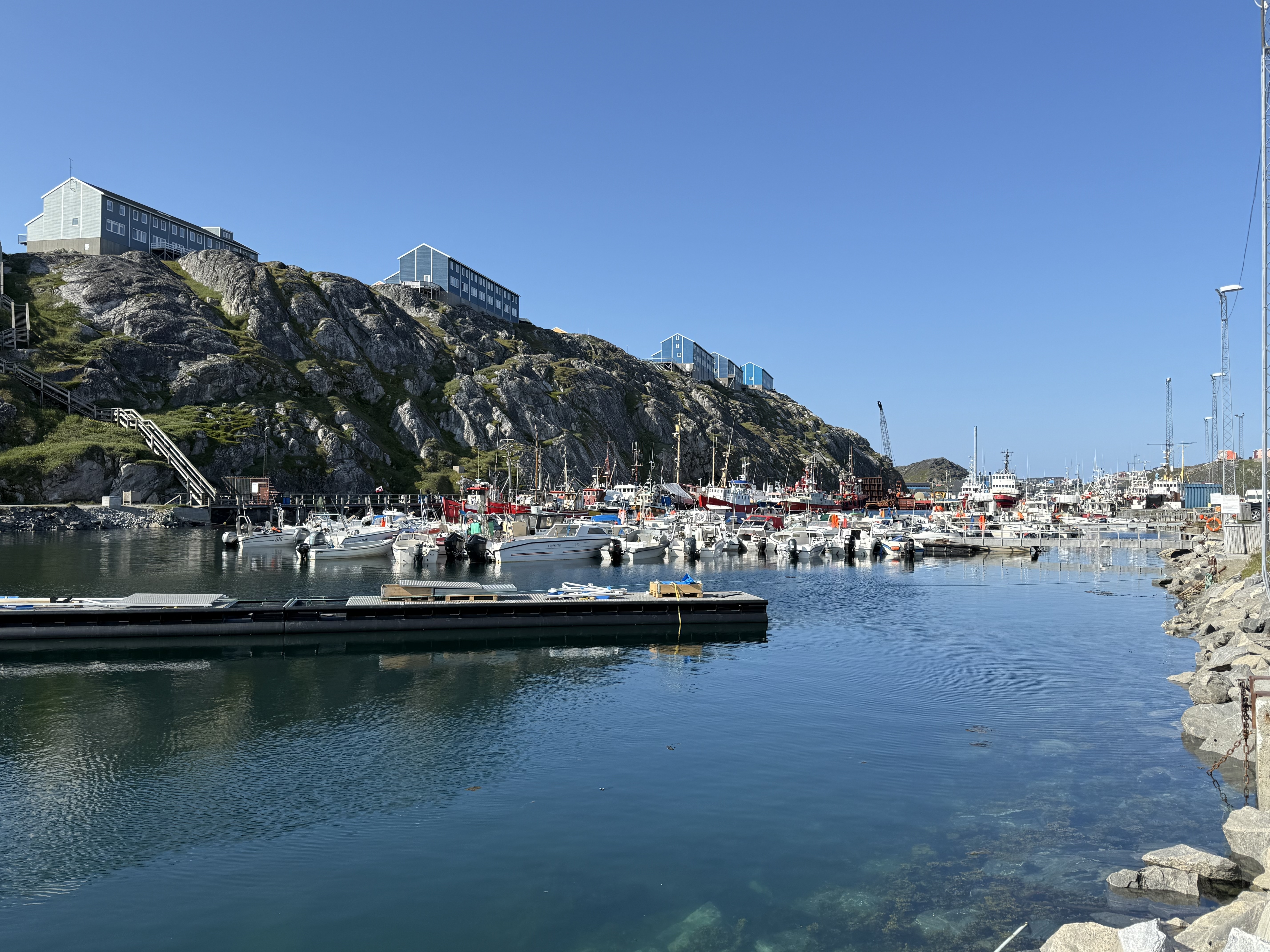
The only verifiable fleet was, in fact, the nearly 4,000 fishermen on the hunt for northern prawns, Greenland halibut and Atlantic cod. Even as the Kingdom of Denmark—responsible for the nation’s military protection—increased naval patrols and landed elite Arctic forces in Nuuk harbor, the fleet of fishing trawlers dwarfed all military presence.
After a tense week in trans-Atlantic diplomacy, Trump’s suggestion of a “framework of a future deal” to protect U.S. national security interests has ostensibly ended the Greenland impasse. However, Greenland’s ability to defy global superpowers is fuelled less by rare earth minerals or military bases than by a climate-driven surge in cod. As Arctic waters warm and sea ice retreats, Trump may learn he cannot buy a nation whose sovereignty is increasingly underscored by the movement of fish.
In Greenland, sub-surface species drive the economy, and are imbued in the cultural identity of this remote realm. Ultimately, the fate of Arctic geopolitics won’t be decided in Washington, Beijing, or Moscow, but by the fishing fleets off Nuuk, and by the high-valued species they chase.
When Donald Trump returned to office last year, he was quick to set his sights on the autonomous island territory. “One way or the other, we’re going to get it,” he told Congress on March 4, 2025. Yet, when many Greenlanders went to the ballot box just one week later, on March 11, 2025, the biggest issue of the day was not U.S. threats but rather, fish.
“The election was very much related to the fishing industry and the disappointment many people felt with the previous government on this subject,” said Christian Keldsen, director of the Greenland Business Association. “The winner of the election, Mr. Jens-Frederik Nielsen, seemed to have a good grasp on the fishing community.” His promise to unleash the fishing fleet from restrictions earned him 4,850 personal votes, the most of any candidate on the day.
Seafood amounts to 98 percent of Greenland’s total export value—over $550 million in 2024—and employs 15 percent of the nation’s 56,000 people. The introduction of a new fisheries law by the previous government, Inuit Ataqatigiit, that placed limits on who could obtain permits, became a major policy debate. The pro-business Demokraatit party won 10 of the 31 parliamentary seats on a platform of reversing such fishing regulations and protecting the economic and cultural lifeblood of Greenland.
As American economists and security experts have eyed Greenland’s mineral reserves this week—an industry that would require decades of infrastructure development in harsh, remote locations like Kvanefjeld and Tanbreez—they have fundamentally failed to recognize Greenland for what it is: A fisheries democracy.
Financially, the country’s largest single employer is Royal Greenland, a 100 percent state-owned fishing company that employs 2,000 people, operates 37 plants and runs 10 state-of-the-art trawlers. This nationwide industry buy-in was cemented when the state pension fund (SISA) acquired a stake in Polar Seafood, the nation’s largest private fisheries company, in late 2025, tying nearly 80 percent of the population to the success of the surrounding seas.
Given the Greenlandic Ice Sheet makes the island’s interior uninhabitable, every permanent town and settlement is perched along the coast. With no roads to connect communities, the ocean has been the highway for Inuit people since their arrival 4,500 years ago: Every settlement is a de facto fishing port. Even American military relics have been paved over by the fishing industry; the Cold War-era U.S. Air Force Sondrestrom Air Base in Kangerlussuaq now serves as a tourist airport and a base for local fishing activities.
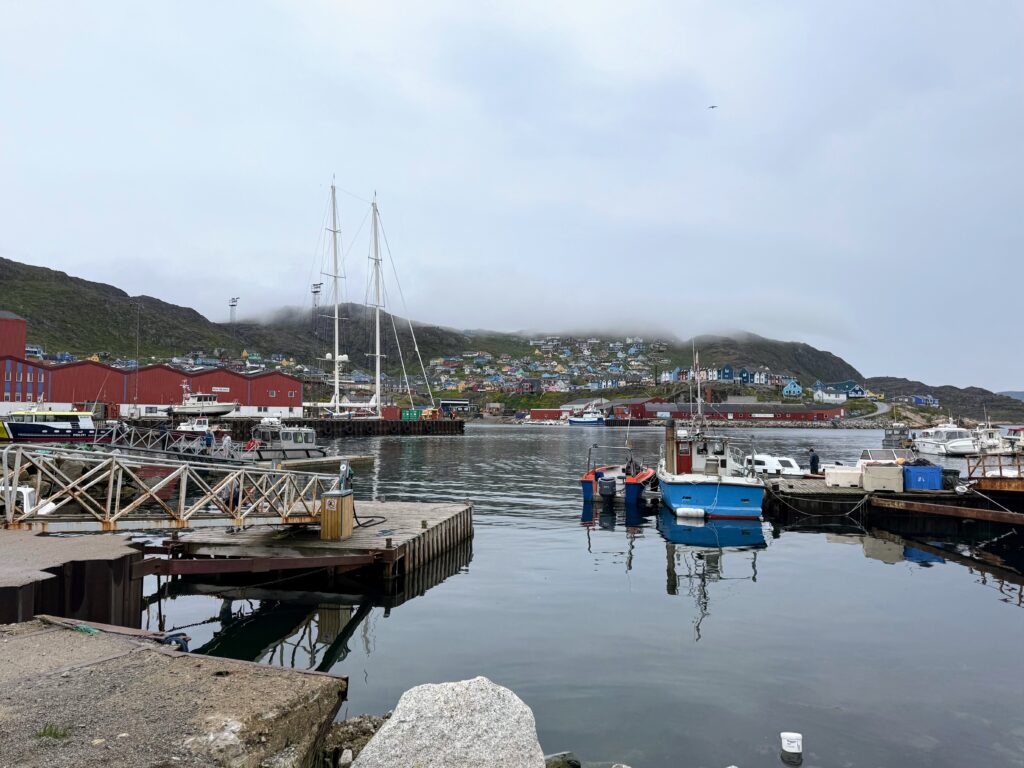
President Trump’s now-reversed 10 percent tariff threat would truthfully have had little impact on Greenlandic exports. The U.S., for all its economic interest in the island, is not even a top five trading partner, taking in just $33 million in imports from the island annually—a fraction of the $376 million Greenland exported to China. “Tariffs would just send the limited amount of export to other and more lucrative markets,” said Keldsen.
Indeed, while United Airlines’ seasonal New York-to-Nuuk flights were celebrated as a geopolitical bridge, the real value of the new 2,200-meter Nuuk runway is not tourists but cargo. Opened in late 2024, the increased runway capacity allows exporters to now fly fresh, high-value cod, halibut and snow crab to global markets. With fresh fish garnering a 20 to 30 percent premium, high-speed delivery could effectively double the value of the entire U.S. trade corridor in a single year. And business is booming.
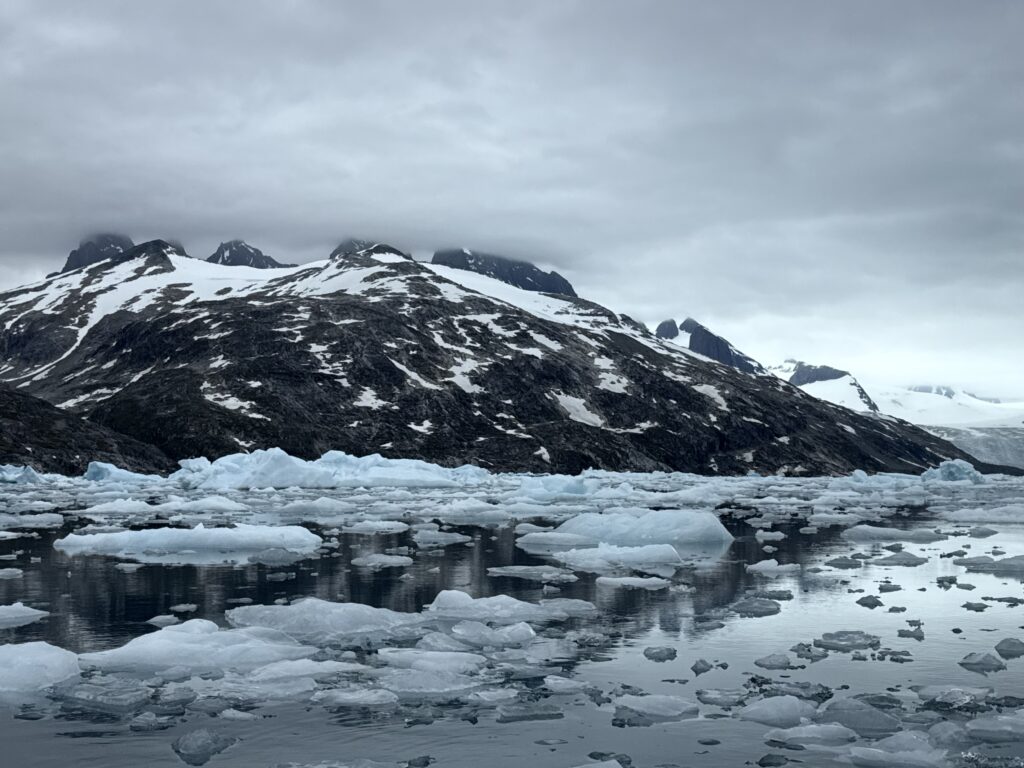
While the Greenland Ice Sheet’s annual melting of 270 billion metric tons of ice has wrought damage to Indigenous traditions, there have been some unexpected biological upsides. In 2025, cod export values increased 69.6 percent. Driven not only by a 14.6 percent rise in prices but also by the Atlantification of waters—the influx of warmer, saltier Atlantic water driving fish species poleward.
“Because of that ice, that part of the ocean is almost sterile, and suddenly now you’re giving it life, you’re giving it energy, you’re giving it light,” said Ken Whelan, vice president of the Atlantic Salmon Trust, who has conducted multiple fisheries research expeditions to southern Greenland’s Qaqortoq. The melting ice releases micronutrients into fjords that become ideal breeding and grazing grounds for valuable species.
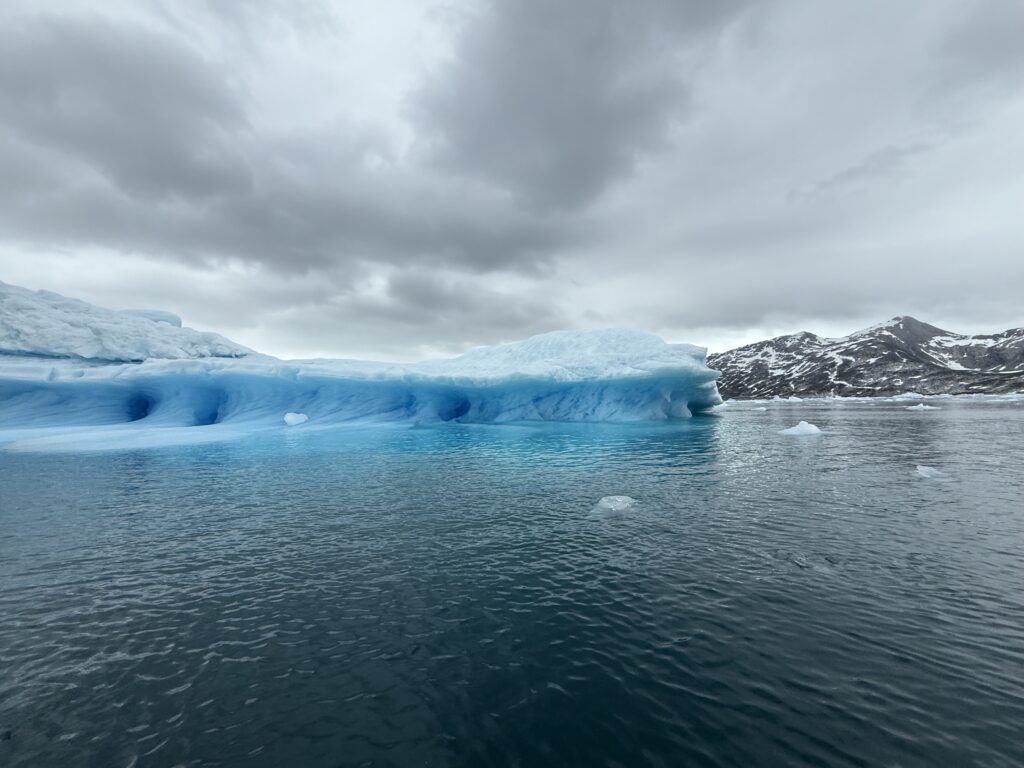
Although the same process has seen coldwater shrimp move even further north, leading to a 12.9 percent decrease in such exports last year, the industry is undergoing significant transition and looking to ride the wave of change. “The seas around there are booming in terms of food. So the cod population has shot up as well,” said Whelan.
This has brought lucrative blue economy agreements like the Norwegian and Greenlandic quota swap, signed on January 8, 2026. Trading some 7,000 tons of fishing allowances between Greenlandic waters and the Barents Sea, the deal highlights how the island’s diplomacy relations are forged less at Davos than out on deck.
As voiced in a Wednesday Facebook post by local politician Aaja Chemnitz, Greenland has long maintained a “nothing about us, without us” approach to both sovereignty and fisheries. As Greenland maintains ultimate decision-making power on the island’s natural resources, fishermen will likely be the crucial voting bloc that any successful agreement with the United States would need to convince.
Against the backdrop of American expansionism, Greenland’s politics remain resolutely fish-focused. In 1985, they left the European Union’s predecessor to reclaim independent control over their waters. In 2021, they banned uranium mining over concerns mineral extraction would pollute nearby fjords and harm fish species. And now, as the Trump administration looks to negotiate a 19th-century style of land control for stationary missile silos and rare-earth mineral mines, it appears to have forgotten that it’s operating in a modern, climate defined era. One where Greenland’s fluid economy remains dictated by fish on the move, and a citizenry unwilling to cede control of the seas that have fed them for centuries.
About This Story
Perhaps you noticed: This story, like all the news we publish, is free to read. That’s because Inside Climate News is a 501c3 nonprofit organization. We do not charge a subscription fee, lock our news behind a paywall, or clutter our website with ads. We make our news on climate and the environment freely available to you and anyone who wants it.
That’s not all. We also share our news for free with scores of other media organizations around the country. Many of them can’t afford to do environmental journalism of their own. We’ve built bureaus from coast to coast to report local stories, collaborate with local newsrooms and co-publish articles so that this vital work is shared as widely as possible.
Two of us launched ICN in 2007. Six years later we earned a Pulitzer Prize for National Reporting, and now we run the oldest and largest dedicated climate newsroom in the nation. We tell the story in all its complexity. We hold polluters accountable. We expose environmental injustice. We debunk misinformation. We scrutinize solutions and inspire action.
Donations from readers like you fund every aspect of what we do. If you don’t already, will you support our ongoing work, our reporting on the biggest crisis facing our planet, and help us reach even more readers in more places?
Please take a moment to make a tax-deductible donation. Every one of them makes a difference.
Thank you,

Johnny Sturgeon
Fisheries Reporter
Johnny Sturgeon is a London-based reporter covering fisheries and aquaculture. Joining us from the Outlaw Ocean Project, he has experience producing in-depth maritime investigations for nonprofit newsrooms. A former boatbuilder, he holds a B.A. in History & Politics from the University of Oxford, and an M.S. from Columbia Journalism School.