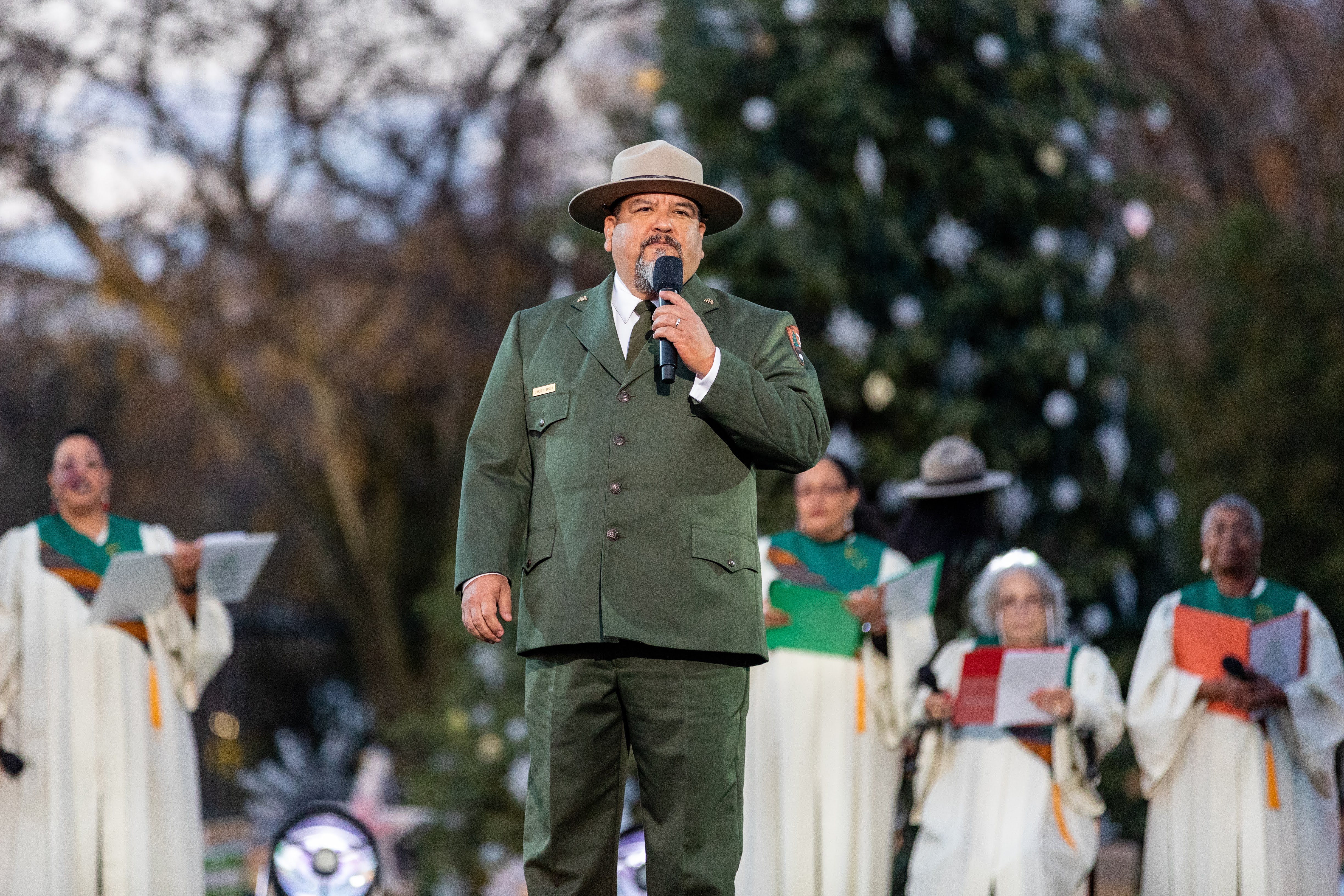


PENDLETON, Ore.—With the second coming of Donald J. Trump, the first Native American director of the National Park Service packed up his belongings in Washington, D.C., and retreated here to the sagebrush outback of eastern Oregon.
Charles F. Sams III, whose Native name is Mocking Bird with Big Heart and who spent three and a half years in the Biden administration managing 85 million acres of public land, now lives in a modest suburban house not far from the Confederated Tribes of the Umatilla Indian Reservation where he grew up.
From his subdivision with a view of Oregon’s Blue Mountains, Sams has had more than a year to watch, mourn and reflect upon what he and many other experts view as an annus horribilis for America’s national parks under Trump 2.0.
It began with a blitzkrieg of mass firings, buyouts and forced retirements. Within six months, 24 percent of the park system’s permanent staff, about 4,000 people, was gone, according to internal data analyzed by the nonprofit National Parks Conservation Association. Public workforce data released by the federal government in January shows a one-year reduction of 16 percent, or 3,076 people.
Gone were 100 park superintendents, as well as legions of biologists, archeologists, climate specialists and other scientists and managers who monitored the health of the parks, planned for their future and accounted for most of the agency’s in-house human expertise.
This sudden hollowing out of institutional knowledge, Sams said during an interview at his kitchen table, was the most pernicious aspect of the attack on the park service—one that cannot be easily righted. “It’s the biggest tragedy I see,” he said.
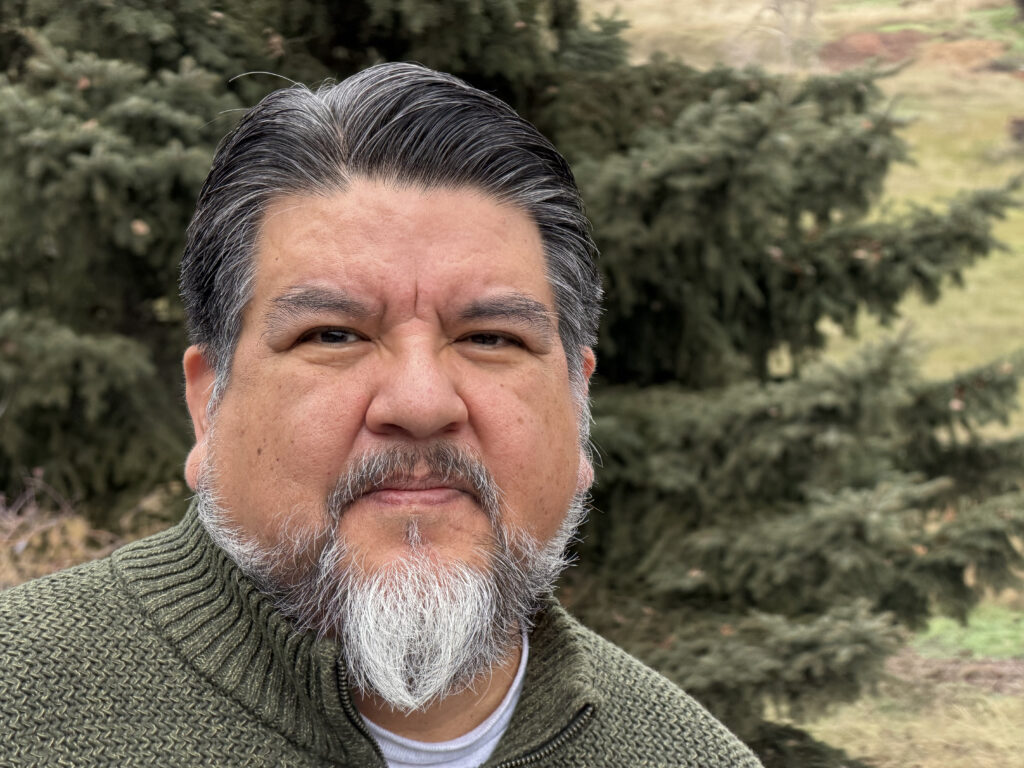
But gone, too, were park rangers and other staff who collected entrance fees, conducted tours, maintained trails and cleaned toilets. More than 90 national parks (out of 433) reported management and maintenance problems in the first half of last year, according to internal agency data obtained by The New York Times. Admission fees (80 percent of which are used for operating costs at the parks where they’re collected) went unpaid because some entrance kiosks were not staffed. With a shortage of custodial workers, scientists at Yosemite National Park had to pick up shifts cleaning campground bathrooms, according to an internal email shared with SFGate.
Sams said he was initially “perplexed” as he tried to discern a rationale for taking a wrecking ball to the National Park Service. The agency is the most popular in the federal government, with sites that in 2024 attracted more than 331 million visitors, and has had strong bipartisan support in Congress since its creation in 1916 by President Woodrow Wilson. A Pew poll last year found that 78 percent of Republicans and 79 percent of Democrats view the park service favorably.
That popularity forced the Trump administration to recalibrate its assault last year. To keep parks open during the busy summer season (and in response to court orders), it brought back some former employees and hired nearly as many seasonal workers as in previous years.
The White House, at the same time, found new targets in the parks. It went after climate-change awareness, jacked up park admission fees for foreign visitors and began removing interpretive signs regarded as potentially hurtful to the feelings of white people. The president last March issued an executive order, called “Restoring Truth and Sanity to American History,” that requires parks to “focus on the greatness of the achievements and progress of the American people” and eliminate signs that “inappropriately disparage Americans past or living.”
Since that order, references to climate change and rising seas have been removed from a national park in South Carolina that includes Fort Sumter, the island fortress in Charleston Harbor that was the site of the opening shots of the Civil War. An exhibit about George Washington’s ownership of slaves has been taken down at Independence National Historical Park in Philadelphia. Gift shops across the parks service have been told to review books for “anti-American” content, and the Trump administration has posted signs in parks asking visitors to report anonymously any interpretive information they perceive as “negative about the past.”
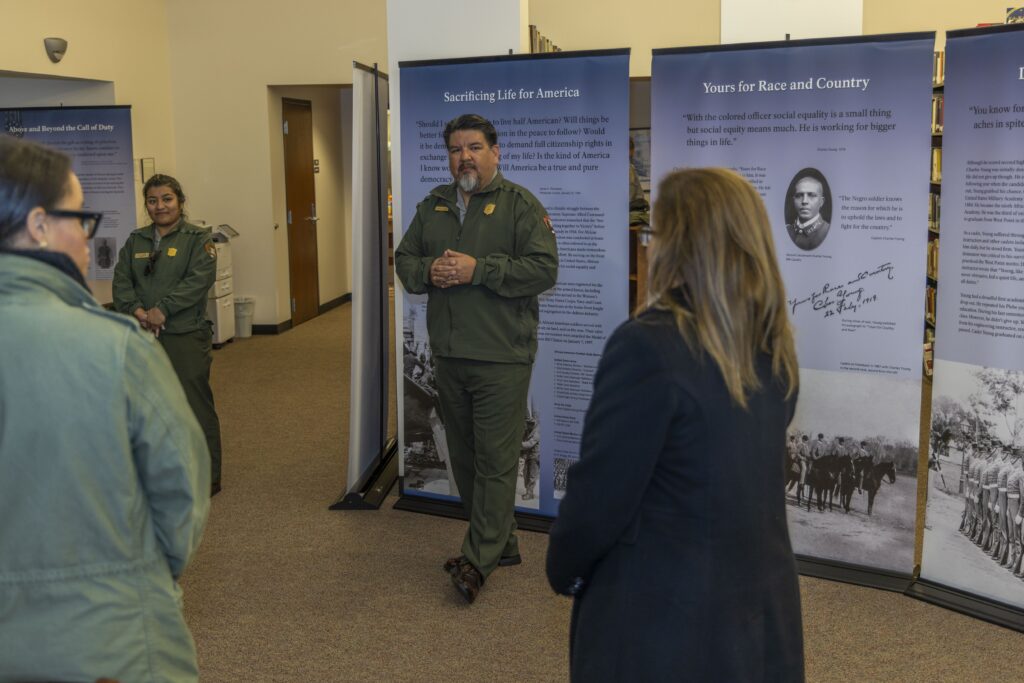
As part of Trump’s “America First” policy, admission fees for non-U.S. residents were raised at 11 popular parks by $100 per person. The move, which went into effect at the beginning of this year, triggered long lines at park entrances as identification papers were demanded, cars backed up and frustrated tourists (some foreign, most U.S. citizens) drove elsewhere.
Free admission to popular parks remains available on select days—but with a pro-Trump, anti-diversity twist. Visitors will no longer be able to get in free on Martin Luther King Jr.’s birthday. Instead, they can celebrate free access on Trump’s birthday, which is also Flag Day, and some annual passes to the parks will have Trump’s picture on them, along with an image of George Washington.
To top all this off, the Trump administration wants a 37 percent reduction in the park service budget for fiscal year 2026, although Congress appears certain to restore most of the proposed $1.1 billion cut.
Breaking a Bond
After 13 months of being a spectator to this sprawling, multifront assault, Sams is no longer perplexed. He perceives a pattern that is both familiar and painful.
His pattern-recognition skills, he acknowledges, are powerfully influenced by his Native heritage. Sams is a descendent, on his father’s side, of a long-tormented Pacific Northwest tribe, the Cayuse. It was all but exterminated by white settlers who advocated Christian conversion as they seized Cayuse land, decimated the Cayuses with infectious diseases and herded them to a reservation where white farmers soon took control of the best land. Sams is also a former tactical intelligence analyst trained by the U.S. Navy and later employed by the Defense Intelligence Agency. During Operation Desert Storm in Iraq in 1991, he was a “senior targeter” whose job was to “find the enemy and destroy them.” He later got a management degree from Concordia University in Portland.
The second Trump administration, Sams has concluded, is doing to the national parks what European settlement did to Native lands. But this time around, he said, loss and heartbreak are being exacted upon on “every American no matter your ethnicity, nationality or background. I’ve never seen it on this scale.”
“Welcome to the party,” Sams said. “Welcome to what we (Natives) have been experiencing since our ‘discovery’ by Western Europeans. This is a systematic way of trying to negate our relationship with the land, our mutual ownership of the land, our understanding of our own history.”
Sams said the Trump administration apparently views the experience of visiting the national parks as a pathway to environmental awareness, an understanding of the urgency of climate change and a shared responsibility for stewardship.
“It’s only when you have that interconnection with land that you can realize your symbiotic relationship with the natural world around you, and then you fall in love with it,” he said. “And when you fall in love with it, then you know that you have to take care of it.”
If park management withers, if services deteriorate, if interpretation of history and climate science is deceptive, Sams said, the emotional bond between the American people and their public lands could be lost.
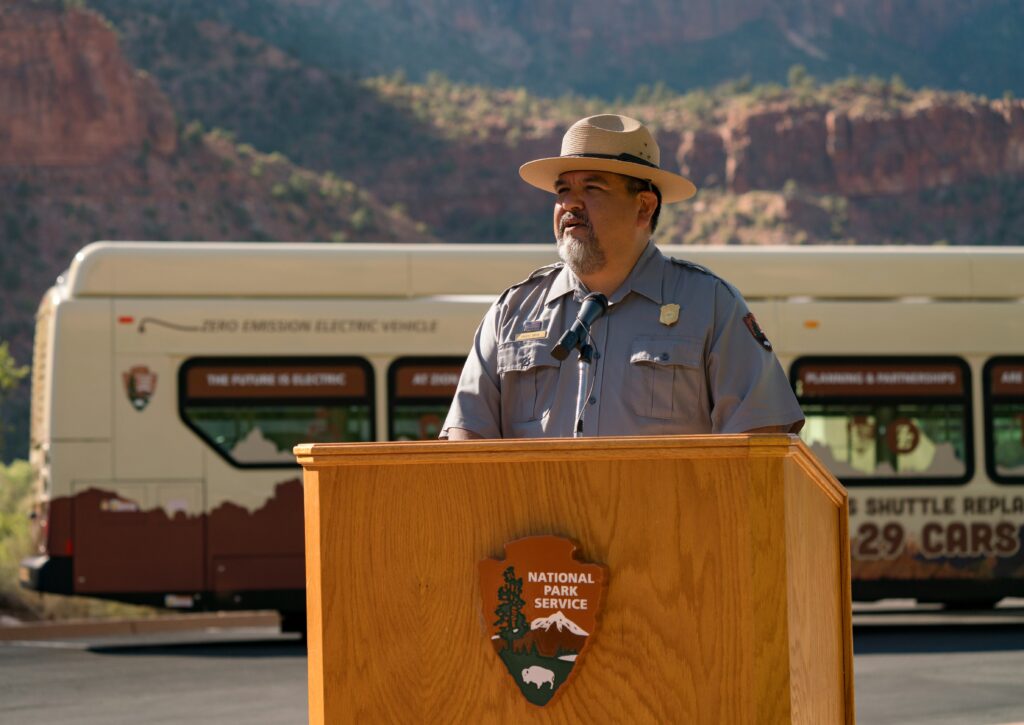
The Trump administration adamantly disputes this assessment. Interior Secretary Doug Bergum told Congress last year that the park system has “enough people to support all the programs” of previous years. (The Trump administration has not named a permanent director for the park service, centralizing power over it at the Department of Interior.)
Sams, though, is hardly alone in saying that the nation’s parks under Trump 2.0 have had a uniquely bad year and that many more bad years are on the way. That assessment is widespread among scholars and former park officials.
“This administration has cumulatively created a more serious threat to the National Park System than we have seen throughout its past history,” said Robert Keiter, the Wallace Stegner professor of law at the University of Utah and a scholar who has written many books about the history and ecology of the national parks.
Keiter said the departure of so many scientists and other specialists from the park service “threatens its ecological, cultural, and historical integrity” and will imperil one of its primary responsibilities—conserving parks for the future.
Longtime former senior officials in the park service are no less alarmed.
“What you’re seeing is unprecedented in terms of organizational chaos and uncertainty,” said Jeff Mow, who until four years ago was superintendent of Glacier National Park and a 33-year veteran of park service. He is now vice-chair of the executive council of the Coalition to Protect America’s National Parks. “You are seeing huge disruptions that are damaging critical science. They [Trump appointees] come in and break things—and see what happens.”
And morale among park rangers and other staff?
“I think it is lower than it’s ever been in the history of the park service,” said Bill Wade, executive director of the Association of National Park Rangers and a second-generation park service veteran who grew up in Mesa Verde National Park in Colorado and retired as superintendent of Shenandoah National Park in Virginia.
“I’m 84 years old,” Wade said, “and I have been around the parks all my life, and this past year was unquestionably the worst in the history of service. It’s heartbreaking and unforgivable.”
Native People and the National Parks
Sams moved back to Oregon not simply because it was home.
“I wanted to move back to a blue state that I can work in and I can fight from,” he said.
Oregon Gov. Tina Kotek, a Democrat, appointed Sams to the Northwest Power and Conservation Council, an interstate agency created by Congress to ensure reliable electricity in the region while protecting the environment. Sams also travels regularly to Yale, where he is the first director of Indigenous programs at the university’s school of environment.
Sams said his tenure as the first Native American director of the parks service was part of a historic shift in the relationship between Native people and the agency.
That relationship had long been scarred by land taking, resentment and mutual suspicion—with many national parks carved out of spectacularly scenic Indigenous lands, followed by the forced removal of tribes who’d lived there for hundreds of years.
“I knew from the very beginning that the founding of our national park system was fraught with very racist ideals and a Eurocentric value system about protecting lands,” Sams said.
As a fourth grader, he was taught a one-sided version of Pacific Northwest history—as it applied to his Cayuse ancestors—during a class tour of the Whitman Mission National Historic Site, which has been a part of National Park Service since 1936 and is located in southeast Washington State, a short drive from the reservation where Sams grew up.
Two white Presbyterian missionaries, Marcus and Narcissa Whitman, along with nine other white people, were killed by Cayuse warriors at the mission in 1847. It came to be known as the “Whitman Massacre” and when news of it reached Washington, D.C., the atrocity became a tipping point in the creation of a continental nation. President James K. Polk, an aggressive expansionist, persuaded Congress that the only way to protect white lives from Indian attack was to claim the Oregon Country (then jointly held by the United States. and Britain) as an official U.S. territory.
“I remember walking around the site and hearing the park rangers do their interpretation,” Sams said. “They said, basically, that this was a massacre site and that, unprovoked, the Cayuses attacked these missionaries who were trying to do good by bringing Christianity, light and civilization to the Native people.”
Even as a kid in primary school, Sams knew from his elders that there was much more to this story.
The factual context for the massacre was that Dr. Marcus Whitman, a physician, and his wife had been warned many times—by the Cayuses and by other white missionaries and traders—to leave the mission, which was built on Cayuse land.
The Whitmans had been welcomed by the tribal leaders in 1836 in the hope that a few white people and their white God might be helpful, beefing up the spiritual power of their own religion. But after 11 years at the mission, the Whitmans had largely given up on ministering to the Cayuses. Instead, as Whitman wrote in his letters, his focus turned to land development and welcoming ever-increasing numbers of white settlers off the Oregon Trail.
Cayuse distrust of the missionaries turned to fury shortly before the massacre, when an epidemic of measles, a white man’s disease, devastated the tribe, killing many of its children and elders. As Whitman knew and wrote about in his letters, the Cayuses had a long tradition of punishing medicine men with death, if they failed as healers. Still, as the measles epidemic worsened, as Whitman’s Native patients died in droves, the missionary doctor and his wife refused to leave Cayuse country.
“Very little of this story was told from the Native perspective at the mission site,” Sams said.
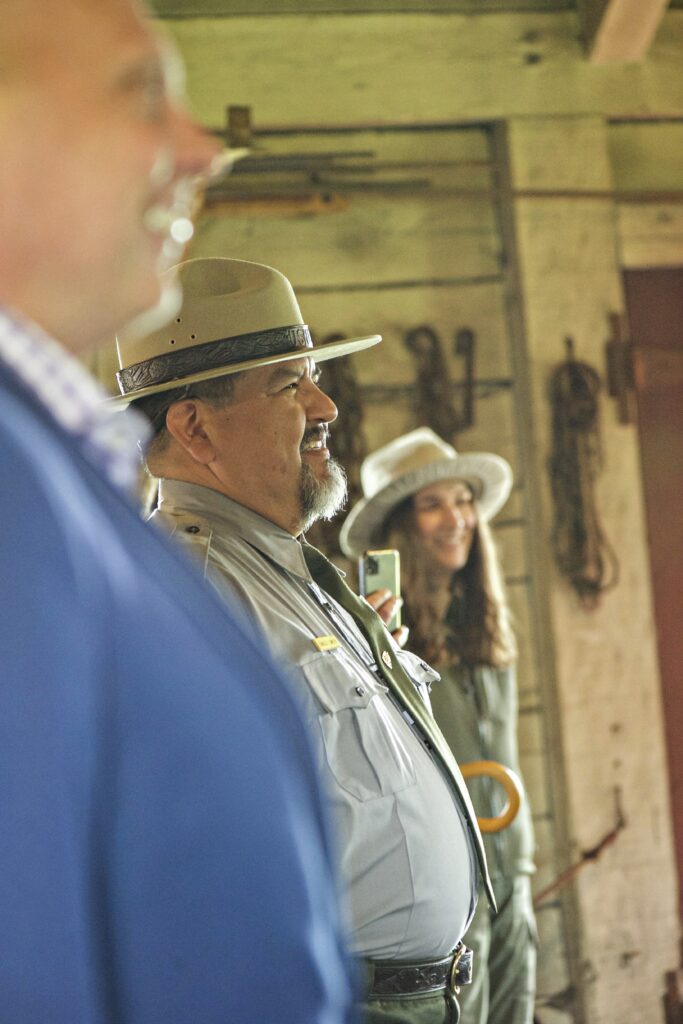
Later, though, as he traveled the United States with his family and during his military service, visiting the Grand Canyon, the Great Basin and national parks from Maine to Florida, Sams says he was impressed by the expertise of the park service in managing America’s most beautiful lands—and was captivated by the stories he heard from rangers.
“I did fall in love with the national parks because I just love the history and the learning,” he said. “I thought the rangers were master storytellers, and I started wondering what’s the full story? How could it be told? I had no idea that one day I’d be the National Park Service director.”
This story is funded by readers like you.
Our nonprofit newsroom provides award-winning climate coverage free of charge and advertising. We rely on donations from readers like you to keep going. Please donate now to support our work.
Donate NowAs director, Sams moved to enlist Native expertise in managing park land. He pushed park superintendents and local tribes to make agreements as co-managers and co-stewards of natural resources inside parks. When he became director, there were about a half dozen such agreements. When he left, there were 159.
A few have continued under Trump 2.0, Sams said, but “dozens and dozens have just stalled out. It’s because of the turmoil… the turnover of staff, reductions in force and early retirements. The champions of these agreements are not necessarily in their positions anymore.”
Sams is careful to explain that he—as director of the park service—did not initiate the revisionist shift in storytelling that has been underway in recent decades across the entire parks system, with fact-based stories about enslaved Black people, white mistreatment of Native people and the effect of climate change on forests and grasslands and rivers and wildlife.
That shift, Sams said, took off in the 1990s and continued briskly under Democratic and Republican presidents (including Trump’s first term) until last year—when Trump issued his Orwellian executive order about “truth and sanity” in American history.
Among the interpretive signage that may be changed back—thanks to that executive order—is a nuanced account of the bloodshed at the Whitman Mission. During Sams’ tenure as parks director, new signs went up across the mission site. They tell a carefully documented story—not only of murder of white missionaries, but also of white dominance, white land theft, white epidemics and an eruption of Native rage.
In Trump’s second term, all these signs are subject to review and removal, if judged to be out of sync with the president’s “focus on greatness.”
About This Story
Perhaps you noticed: This story, like all the news we publish, is free to read. That’s because Inside Climate News is a 501c3 nonprofit organization. We do not charge a subscription fee, lock our news behind a paywall, or clutter our website with ads. We make our news on climate and the environment freely available to you and anyone who wants it.
That’s not all. We also share our news for free with scores of other media organizations around the country. Many of them can’t afford to do environmental journalism of their own. We’ve built bureaus from coast to coast to report local stories, collaborate with local newsrooms and co-publish articles so that this vital work is shared as widely as possible.
Two of us launched ICN in 2007. Six years later we earned a Pulitzer Prize for National Reporting, and now we run the oldest and largest dedicated climate newsroom in the nation. We tell the story in all its complexity. We hold polluters accountable. We expose environmental injustice. We debunk misinformation. We scrutinize solutions and inspire action.
Donations from readers like you fund every aspect of what we do. If you don’t already, will you support our ongoing work, our reporting on the biggest crisis facing our planet, and help us reach even more readers in more places?
Please take a moment to make a tax-deductible donation. Every one of them makes a difference.
Thank you,