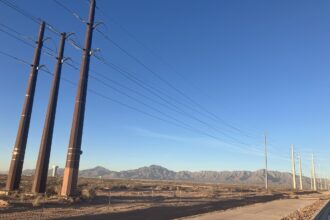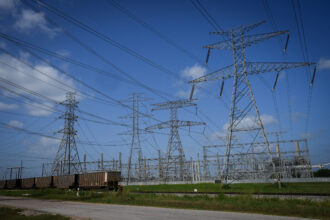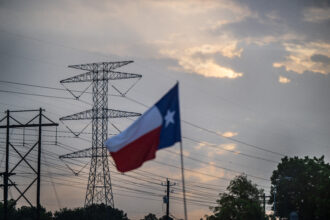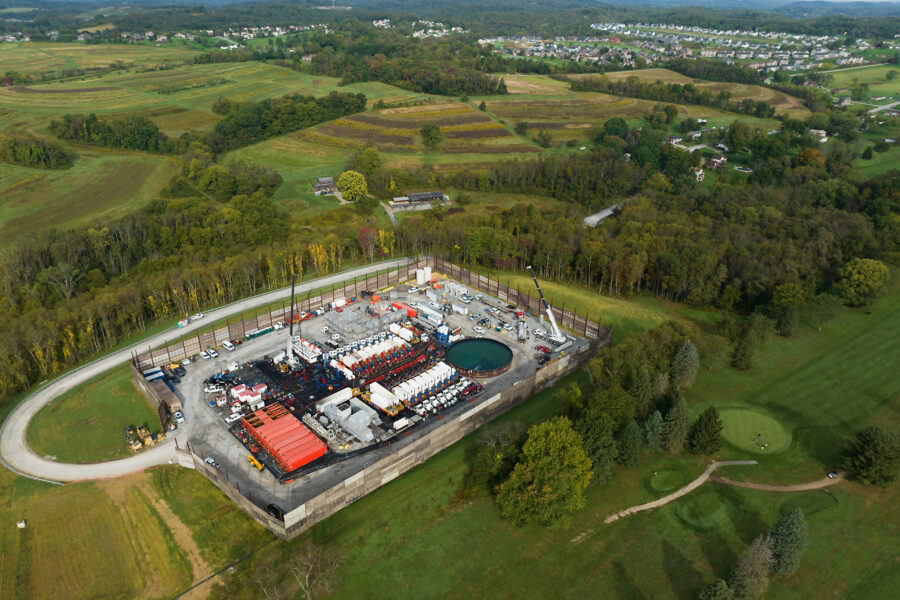


Texas’ environmental regulator this week issued the largest air pollution permit in the country to an enormous planned complex of gas power plants and data centers near the oilfields of the Permian Basin, according to an announcement from the project’s developers.
Pacifico Energy, a global, investor-owned infrastructure company, called its 7.65 gigawatt GW Ranch in Pecos County “the largest power project in the United States” in a press release this week.
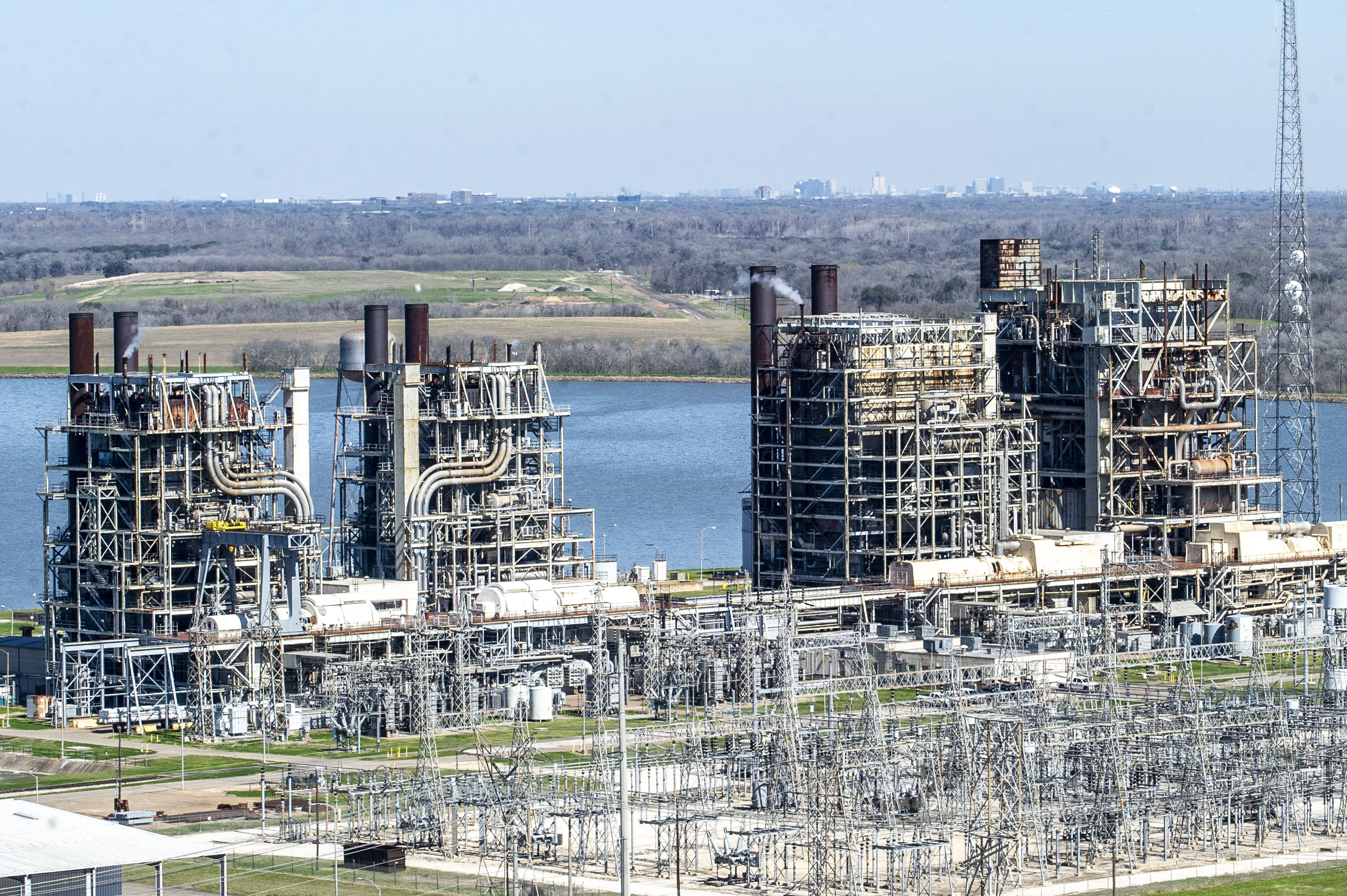
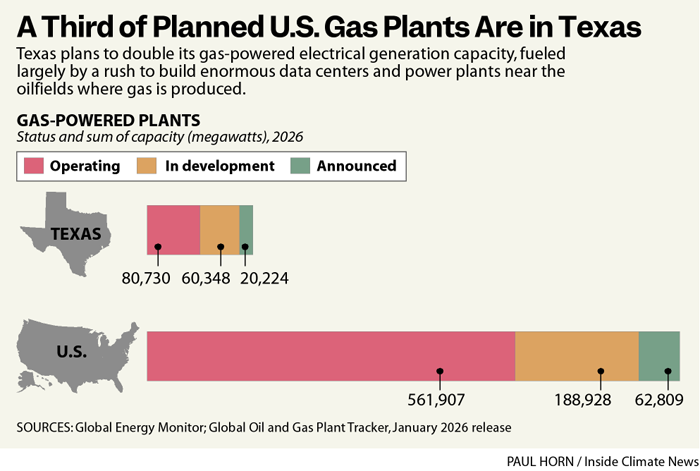
It’s among a handful of similarly colossal ventures announced during 2025 that have made Texas the global epicenter of a gas power buildout, according to data released Thursday by Global Energy Monitor (GEM).
“Massive fossil fuel infrastructure is being developed, often directly at the source of gas supply, in order to feed speculative AI demand,” said Jenny Martos, project manager for GEM’s Global Oil and Gas Plant Tracker.
Developer Fermi America applied for air permits in August for 6 GW of gas power to supply data centers at its planned complex near Amarillo. In November, Chevron announced plans to build its first-ever power plant, which would produce up to 5 GW of power for artificial intelligence in West Texas.
These are enormous volumes of energy, enough to power mid-sized cities. During 2025, the pipeline of gas power projects in development in Texas grew by nearly 58 GW of generation capacity, according to the GEM report, more than the peak power demand of the state of California.
Only China, with 50 times the population and 15 times the land, has more gas power projects in development than Texas, the GEM report said. Nearly half of all upcoming gas power projects in Texas, totalling 40 GW of capacity, are planned to directly power data centers, the report said.
“There is just an explosion of these things,” said Griffin Bird, a research analyst who tracks gas plants for the nonprofit Environmental Integrity Project in Washington, D.C. “We’re having such a tough time staying on top of new projects.”
The planned hyperscale facilities of north and west Texas, if fully built out, could be among the largest emissions sources in both the country and the world, Bird said.
Pacifico’s GW Ranch in Pecos County is authorized to release more than 12,000 tons per year of regulated air pollutants, according to permitting documents from the Texas Commission on Environmental Quality, including soot, ammonia, carbon monoxide and volatile organic compounds.
The complex can also release up to 33 million tons per year of greenhouse gases, according to permitting documents, equal to nearly 5 percent of the total annual greenhouse gas emissions of Canada.
Gas plants planned at Fermi America’s Project Matador would release up to 24 million tons per year of greenhouse gas.
“I’d be hard-pressed to think of a bigger emitter,” Bird said.
Many gas power projects for data centers with up to 500 MW of capacity—enough to power more than 200,000 homes—have received permits from the Texas Commission on Environmental Quality within a month, Bird said.
For example, Misae Gas Power applied for permits to install 206 gas generators totaling 519 MW of capacity at a data center outside San Antonio on Dec. 23. TCEQ granted the permit on Jan. 14, authorizing emissions including 133 tons per year of toxic particulate matter and 10 tons per year of cancer-causing formaldehyde.
The TCEQ did not immediately respond to a request for comment sent Wednesday evening.
In the tiny town of Blue, about 50 miles east of Austin, the TCEQ issued a permit in October for the 1.2 GW Sandow Lakes Power Plant, which is located nearby North America’s largest Bitcoin mining facility.
Neighbors in the rural community organized a group called Move the Gas Plant and formally requested a hearing from TCEQ on the air pollution permit that would authorize 460 tons per year of ammonia emissions, 153 tons of soot, 76 tons of sulfuric acid and 18 tons of other “hazardous air pollutants”—substances known or suspected to cause cancer, birth defects, reproductive issues or other serious health problems. TCEQ denied their request and issued the permits at a public meeting in October.
“It took them literally 45 seconds to bring it up and deny our request for a hearing,” said Travis Brown, spokesperson for Move the Gas Plant and a retired state Department of Agriculture employee. “There was essentially zero discussion.”
Shortly after, Sandow began construction at the site, about four miles from the home where Brown and his wife feed deer and other wildlife in the woods of rural Lee County.
“They’re going gung-ho out there,” he said. “They’ve cleared that site and bulldozed trees, installed housing for workers and power lines.”
Texas currently has 11 gas power plant projects under construction, according to GEM data. It has 102 projects under preconstruction—acquiring land, permits and contracts. Another 28 projects have been announced.
If all those plants are built, it would more than double Texas’ current gas power generation capacity.
Pacifico’s GW Ranch, if operated at full 7.65 GW capacity, could consume between 1 and 2 billion cubic feet of gas per day, according to calculations by Gabriel Collins, a researcher at Rice University’s Baker Institute for Public Policy in Houston. That’s equal to between 4 and 7 percent of gas produced in 2025 from the Permian Basin, one of the world’s most prolific shale plays.
This story is funded by readers like you.
Our nonprofit newsroom provides award-winning climate coverage free of charge and advertising. We rely on donations from readers like you to keep going. Please donate now to support our work.
Donate Now“Even for something like the Permian, that’s a very material chunk,” said Collins, a native of Midland.
Not every super-project announced in Texas will be built, he said. Some have slick public relations operations that oversell their technical and financial capacities, he said.
Even those that do get built won’t come online all at once, but slowly, 100 MW at a time, over several years. They might not ever reach their full capacity.
Still, he said, the gas-powered data center projects announced in Texas and elsewhere last year involve quantities of energy that are hard to comprehend and were seldom discussed just a few years ago.
“It’s important to help people keep a sense of perspective on these,” Collins said. “Even if they built just a small fraction of what that permit says, it’d still be a tremendous facility.”
About This Story
Perhaps you noticed: This story, like all the news we publish, is free to read. That’s because Inside Climate News is a 501c3 nonprofit organization. We do not charge a subscription fee, lock our news behind a paywall, or clutter our website with ads. We make our news on climate and the environment freely available to you and anyone who wants it.
That’s not all. We also share our news for free with scores of other media organizations around the country. Many of them can’t afford to do environmental journalism of their own. We’ve built bureaus from coast to coast to report local stories, collaborate with local newsrooms and co-publish articles so that this vital work is shared as widely as possible.
Two of us launched ICN in 2007. Six years later we earned a Pulitzer Prize for National Reporting, and now we run the oldest and largest dedicated climate newsroom in the nation. We tell the story in all its complexity. We hold polluters accountable. We expose environmental injustice. We debunk misinformation. We scrutinize solutions and inspire action.
Donations from readers like you fund every aspect of what we do. If you don’t already, will you support our ongoing work, our reporting on the biggest crisis facing our planet, and help us reach even more readers in more places?
Please take a moment to make a tax-deductible donation. Every one of them makes a difference.
Thank you,

Dylan Baddour
Reporter, Austin
Dylan Baddour covers the energy sector and environmental justice in Texas. Born in Houston, he’s worked the business desk at the Houston Chronicle, covered the U.S.-Mexico border for international outlets and reported for several years from Colombia for media like The Washington Post, BBC News and The Atlantic. He also spent two years investigating armed groups in Latin America for the global security department at Facebook before returning to Texas journalism. Baddour holds bachelor’s degrees in journalism and Latin American studies from the University of Texas at Austin. He has lived in Argentina, Kazakhstan and Colombia and speaks fluent Spanish.