

A vast wetland system that feeds water supplies for much of central and southern Africa has remained largely outside the global conservation spotlight, even as climate change and environmental degradation increased the stakes. Angola has now moved to change that.
In January, Angolan officials announced the designation of the country’s first wetland of international importance under the Ramsar Convention on Wetlands treaty. Conservation experts say the move is the culmination of nearly a decade of scientific work in close partnership with Indigenous and local communities, who have safeguarded the Angolan Highlands Water Tower for generations.
The announcement came just days before the United Nations declared that the world has entered an era of “Global Water Bankruptcy,” with humanity living far outside safe hydrological operating limits. Drought and water scarcity, the U.N. report said, are already displacing millions of people, threatening food systems and livelihoods, and fueling conflict.
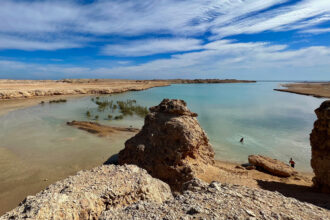
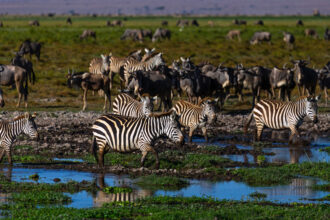
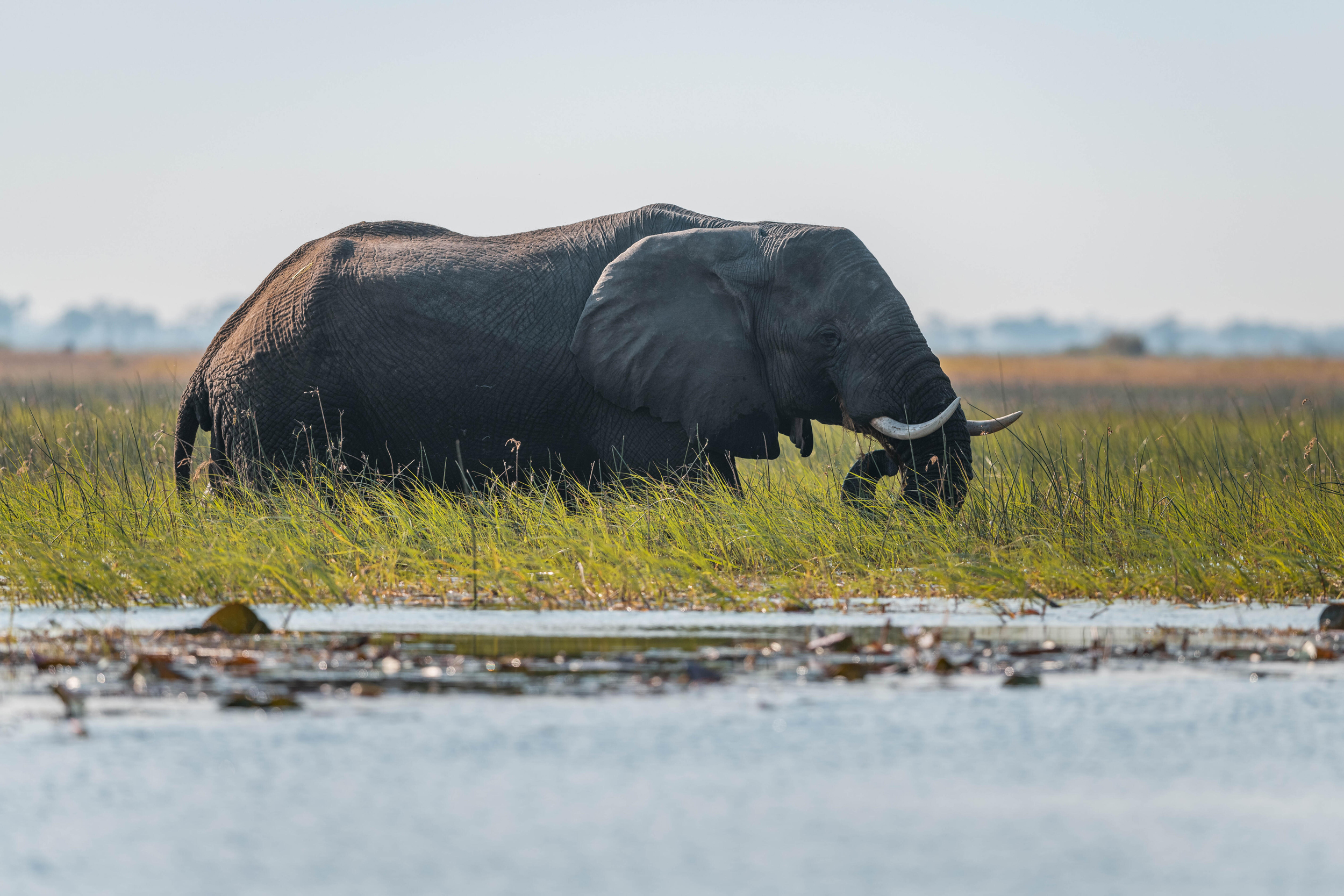
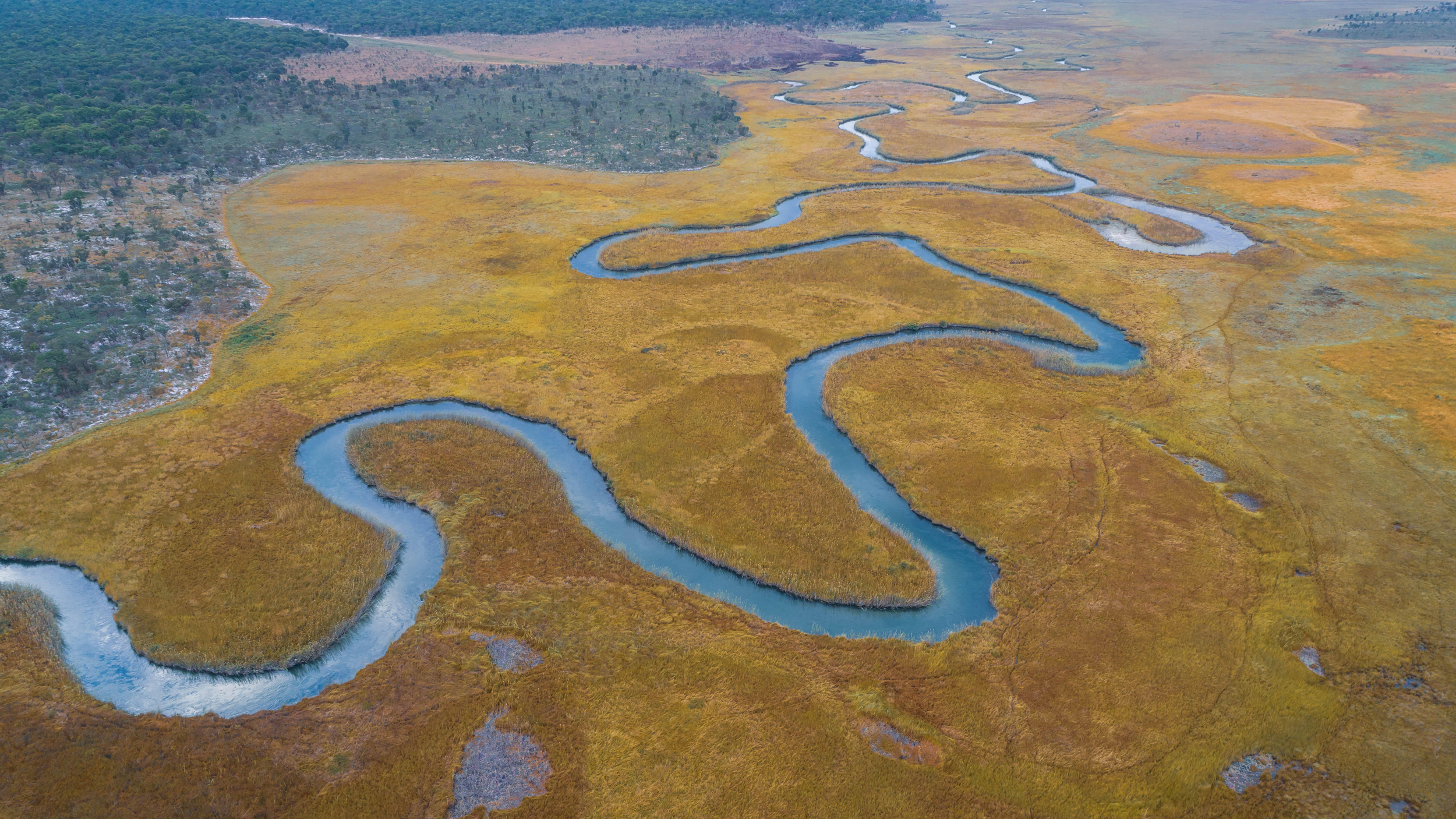
The newly listed site, Lisima Lya Mwono—meaning “source of life” in the local Luchazi language—is in eastern Angola on a high-altitude plateau of forests, lakes and headwaters. The landscape feeds some of Africa’s most important river systems, including the Congo, Zambezi and Cubango-Okavango basins, while supporting ecosystems that shelter Africa’s largest remaining elephant populations, endangered wattled cranes and iconic species that are in decline in other parts of the continent, like lions, leopards, cheetahs and wild dogs.
Spanning an area the size of Costa Rica, Lisima Lya Mwono provides fresh water for millions of people across seven nations, but it faces mounting pressure from climate change, slash-and-burn agriculture, peatland draining, unsustainable hunting and deforestation.
Ramsar designation doesn’t guarantee binding protections will follow, but it does require governments to commit to its “wise use”—balacing environmental, social and economic needs. Ramsar sites also attract global attention that can translate into increased conservation funding.
While the designation was formally submitted and announced by Angola’s government, the groundwork was laid over nearly a decade by scientists working closely with Indigenous and rural communities who have long protected the area, using customary systems to regulate land use.
“This site wasn’t protected because someone drew a line on a map, it was protected because people already had systems in place that kept it intact,” said Kerllen Costa, an environmental anthropologist with the National Geographic Okavango Wilderness Project, which has worked in the region since 2015 to secure permanent protections for the greater Cubango-Okavango Basin in Angola, Namibia and Botswana.
Costa, who is Angolan, first arrived in the region in 2016 as a field assistant, hauling nets for botanists and accompanying scientists down rivers few outsiders had ever seen.
The area is remote and riddled with landmines, a remnant of Angola’s 1975-2002 civil war. The landmines, Costa said, have paradoxically provided a layer of protection for Lisima Lya Mwono’s communities, keeping development out.
“You look in the distance and as far as your eye can see, you can see mountains covered in forest—from the center of the country all the way to Zambia, it’s just forest,” he said.
To keep it that way, it became clear to Costa and his colleagues that the project had to involve the people who lived there. He spent extended periods in remote villages, traveling with hunters and elders and, with permission, documenting a detailed body of ecological knowledge. Some of that time-tested expertise challenged conventional conservation assumptions.
Outside scientists sometimes described the area as a single, massive forest, Costa said, while elders spoke of multiple distinct forest types, each governed by its own rules. Sacred lakes and forests, believed to be protected by spiritual forces, were deliberately left untouched, with villages sited far from headwaters to avoid disturbing the sources of rivers.
“It’s a system of protection,” Costa said. “When I started connecting those dots, I realized that we really need to incorporate these perceptions.”
He and his colleagues worked with communities to create custom conservation programs based on the understanding that locals’ traditions and culture have unique conservation capabilities—a philosophy Costa calls Ñgala Okola, which means “sacred power” in the Ngoya language of Angola. One initiative focused on hunting, which had intensified as outsiders began entering the area and bypassing local authority.
Traditionally, hunters were required to seek permission from village chiefs, hunt for limited periods and return to account for what they had taken. That system eroded as outsiders flooded in.
In response, communities created a grassroots network called “the Watchers,” made up of experienced local hunters who monitor the forest, verify hunting permissions and escort unauthorized hunters back to village leaders. The system has been working, Costa said. Hunting is culturally important and remains legal, but it is once again governed by community consent and limits.
“It’s not law enforcement, it’s not rangers, it’s not weaponized,” he said. Instead, it is locals’ traditional system adapted to new circumstances.
Last year, more than 60 scientific advisors to the Wetland Convention told governments that Indigenous knowledge is “critical” to safeguarding ecosystems that sustain billions of people. These groups, the scientists said, recognize nature’s intrinsic worth.
“The value of nature should not be considered solely in monetary terms,” their report said.
A Need for Resources
Angola ratified the Wetlands Convention years ago but had never designated a Ramsar site.
Government officials were initially skeptical of adding new protected areas, Costa said, noting that many of Angola’s national parks remain underfunded and unmanaged decades after the country’s civil war.
“Why create something new if we can’t manage what we already have?” Costa recalled officials saying.
This story is funded by readers like you.
Our nonprofit newsroom provides award-winning climate coverage free of charge and advertising. We rely on donations from readers like you to keep going. Please donate now to support our work.
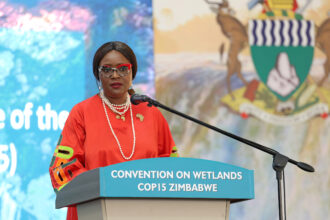
Donate NowAngola’s experience is not unique. At the COP15 wetlands summit last year, officials from lower-income countries said they were eager to scale up wetland protection but lacked the resources to do so.
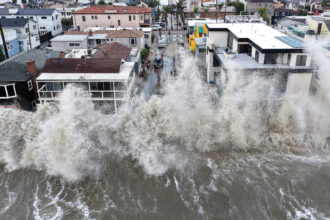
Since 1970, more than one-fifth of the world’s wetlands—a broad category ranging from peatlands and rivers to marine systems and lakes—have vanished or shrunk beyond the point of viability. Of those that remain, a quarter are classified as in “ecological distress.”
While the trend is global, the most rapid deterioration is now occurring in Africa, the Caribbean and Latin America. The shift is a result of historical patterns: North American and European nations destroyed the majority of their own wetlands during their industrialization eras. Now, developing nations are being asked to protect what remains, often without the necessary tools.
“The African continent is challenged by a lack of resources,” said Samuel Ibrahim Kobba, a Sierra Leone delegate to COP15. “We have the natural resources here, but not the financial ones.”
Angola had planned to submit several additional Ramsar nominations, Costa said, but stalled amid incomplete documentation and limited capacity. When officials needed a viable submission, they turned to the extensive, community-backed research compiled for Lisima Lya Mwono.
That documentation, compiled in partnership with the National Geographic Okavango Wilderness Project, documented 73 species new to science, at least 275 more that may also be and 300 species never previously recorded in Angola. Researchers also found the system holds the equivalent of nearly 170 million Olympic swimming pools’ worth of water.
With that Ramsar designation now in place, attention will shift to implementation, a task that presents a new set of challenges. But the international recognition could help the Angolan government attract partnerships, technical assistance and investment that can drive long-term protections.
“This is a platform,” Costa said. “What comes next depends on whether the world is willing to support what local people have already been doing for generations.”
About This Story
Perhaps you noticed: This story, like all the news we publish, is free to read. That’s because Inside Climate News is a 501c3 nonprofit organization. We do not charge a subscription fee, lock our news behind a paywall, or clutter our website with ads. We make our news on climate and the environment freely available to you and anyone who wants it.
That’s not all. We also share our news for free with scores of other media organizations around the country. Many of them can’t afford to do environmental journalism of their own. We’ve built bureaus from coast to coast to report local stories, collaborate with local newsrooms and co-publish articles so that this vital work is shared as widely as possible.
Two of us launched ICN in 2007. Six years later we earned a Pulitzer Prize for National Reporting, and now we run the oldest and largest dedicated climate newsroom in the nation. We tell the story in all its complexity. We hold polluters accountable. We expose environmental injustice. We debunk misinformation. We scrutinize solutions and inspire action.
Donations from readers like you fund every aspect of what we do. If you don’t already, will you support our ongoing work, our reporting on the biggest crisis facing our planet, and help us reach even more readers in more places?
Please take a moment to make a tax-deductible donation. Every one of them makes a difference.
Thank you,