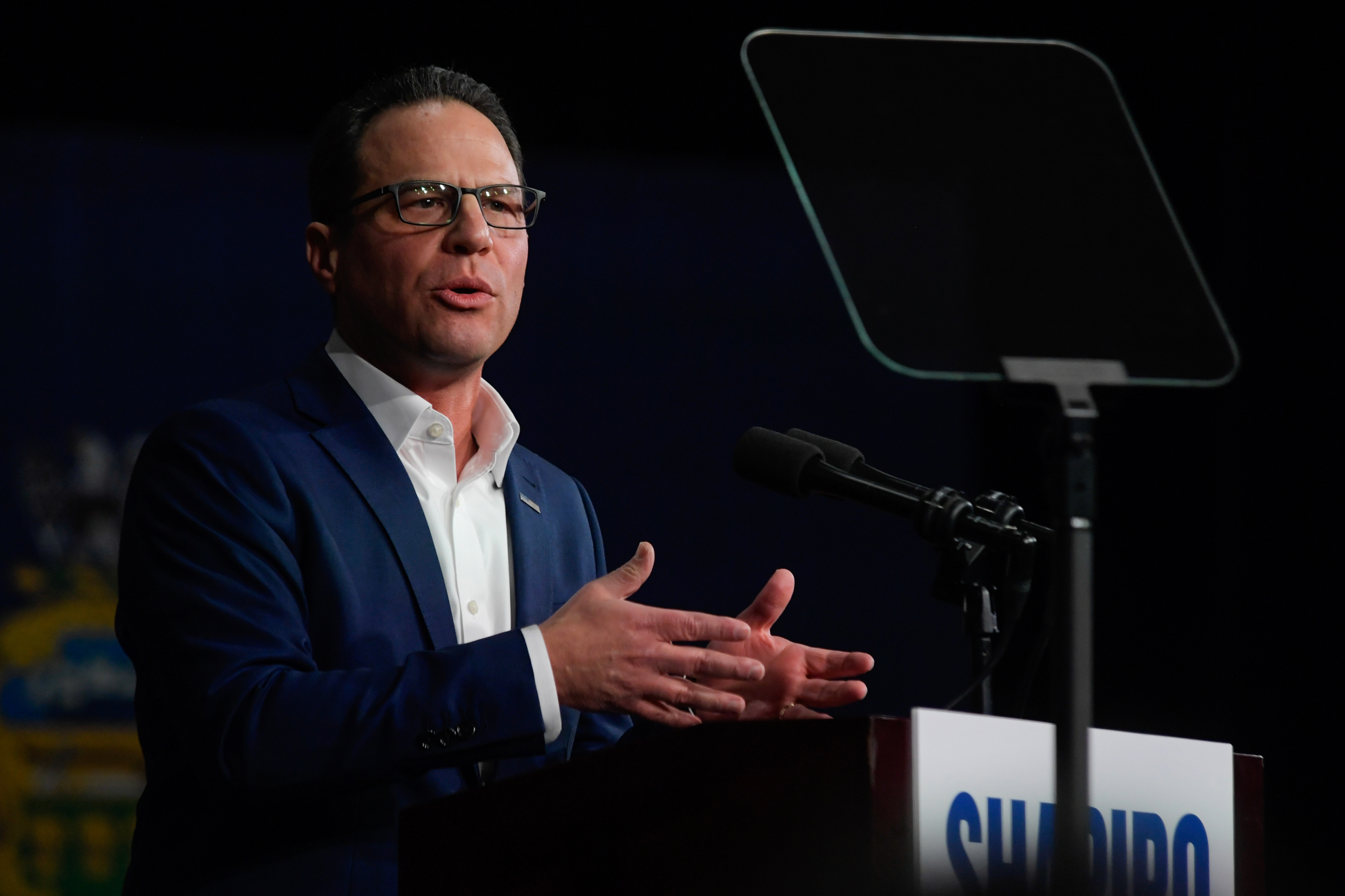


Amid a national fight over data centers, Pennsylvania Gov. Josh Shapiro is trying to welcome the economic growth they bring while suggesting ways to protect consumers from soaring electricity costs.
In a budget speech this week, Shapiro said that new data centers must bring their own power generation or fully fund new generation to meet their needs. The massive complexes underpinning artificial intelligence use as much electricity as entire cities.
The Democratic governor also said data center developers must engage with communities about their plans, and must hire and train local workers. Developers that meet the new Governor’s Responsible Infrastructure Development (GRID) standards Shapiro proposed will receive the state’s “full support,” including speed and certainty in permitting, he said.
“Pennsylvanians have raised real concerns about the impact large-scale data center development could have on communities, utility bills and the environment,” Shapiro said in the speech to support his proposed budget for fiscal 2026-2027. He said the plan would “balance innovation with accountability.”
In mid-January, Shapiro and the governors of 12 other Mid-Atlantic and Midwestern states that comprise the PJM electric grid issued a “statement of principles” alongside the Trump administration on new electric supply. That included protecting residential consumers from electric price increases resulting from the addition of data centers or other large-load users to the grid.
On the same day, PJM released a long-awaited policy designed to accommodate huge new demand from data centers while protecting affordability and reliability for other customers. The policy included a request, but not a requirement, that new large-load users should provide their own power.
Average electricity prices for Pennsylvania residents jumped nearly 50 percent between 2018 and last year, according to the state’s Independent Fiscal Office. A rapid build-out of data centers is already rippling into electric bills across the regional grid and could spike costs further as demand risks outpacing supply. PJM has a long queue of generation projects waiting for approval to connect to the grid.
According to the Pennsylvania Data Center Proposal Tracker, a citizen-run website that tracks the industry’s growth through public sources, the state now has 52 data centers projects that have either been formally proposed or are in earlier stages of preparatory work. Twenty-four of those are expected to have their own electric substation, suggesting they plan to take power from the grid rather than generating their own.
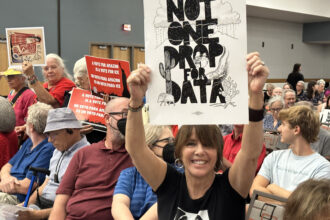
The advocacy group Food & Water Watch accused Shapiro of courting the data center industry while failing to protect consumers from higher electric bills and environmental harms coming from that development.
“The governor’s data center embrace will not help Pennsylvanians as Shapiro claims,” the organization said in a statement. “If affordability is truly a priority for the governor and the legislature, data centers cannot be a part of the conversation.”
And the Better Path Coalition of environmental advocates said data center development means even more of Pennsylvania’s abundant natural gas will be extracted and burned, increasing greenhouse gas emissions and worsening the climate crisis.
“Whether data center operators power their centers with electricity from gas-fired power plants feeding the grid or plants they build themselves, the data center boom is simply the next generation of fracking at a time when the profound on-the-ground harms of drilling and fracking are irrefutable and the climate crisis is intensifying to the point of no return,” Better Path said in a statement.
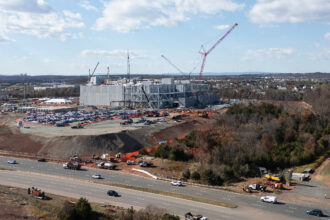
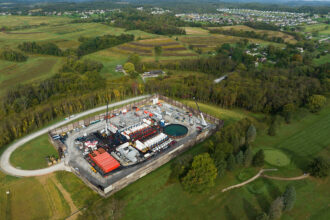
In western Pennsylvania, at least five new data centers are planned, prompting expectations of a new boom in natural gas production to power the sites in a region that has been heavily fracked for the last two decades. An old coal-burning power plant in Homer City, east of Pittsburgh, is being converted to power multiple data centers on site. It’s set to become the biggest gas power plant in the United States.
But in neighboring Delaware, state environmental officials this week blocked a plan to build a data center that would have covered 6 million square feet and used 1.2 gigawatts of power—equal to about half of what the entire state currently uses—when fully operational. The Delaware Department of Natural Resources and Environmental Control said the project, which would have taken power from the grid, would violate the state’s Coastal Zone Act by installing more than 500 backup diesel generators and building a tank farm over more than five acres.
Delaware’s action has for now stopped a project that critics said would raise retail electric bills and damage air and water quality. But state Sen. Stephanie Hansen, who has proposed a bill designed to protect ratepayers from sharing the costs of new data centers, said the state will likely face other proposals and should have the legal authority to shield residents and businesses from the industry’s effects.
“Given the growing emphasis on technology and artificial intelligence, it’s clear that data centers are here to stay — and it’s up to us to implement meaningful regulations that balance economic opportunity with energy affordability and reliability,” Hansen said in a statement.
In Pennsylvania, the House Energy Committee this week postponed action on a bill that would require state officials to draft a model ordinance that municipalities could use as a template for their own efforts to regulate the booming data center industry, including size, setbacks and noise. Some township supervisors objected to a plan to update the state’s Municipalities Planning Code with the bill’s measures, according to the prime sponsor, Rep. Kyle Donahue, a Democrat.
Donahue said he’s working on an amendment to HB2151 so it would amend a different municipal law. Donahue predicted the bill will advance from the committee.
Another model ordinance for local authorities was published in September by the environmental group PennFuture. It proposes that towns amend their zoning rules to set requirements for data centers’ size, noise, water use and visual screening. It would also require developers to present certification from a power utility that it has the capacity to supply the new plant. Any data center that plans to generate its own power would be considered separately, according to PennFuture’s model ordinance.
About This Story
Perhaps you noticed: This story, like all the news we publish, is free to read. That’s because Inside Climate News is a 501c3 nonprofit organization. We do not charge a subscription fee, lock our news behind a paywall, or clutter our website with ads. We make our news on climate and the environment freely available to you and anyone who wants it.
That’s not all. We also share our news for free with scores of other media organizations around the country. Many of them can’t afford to do environmental journalism of their own. We’ve built bureaus from coast to coast to report local stories, collaborate with local newsrooms and co-publish articles so that this vital work is shared as widely as possible.
Two of us launched ICN in 2007. Six years later we earned a Pulitzer Prize for National Reporting, and now we run the oldest and largest dedicated climate newsroom in the nation. We tell the story in all its complexity. We hold polluters accountable. We expose environmental injustice. We debunk misinformation. We scrutinize solutions and inspire action.
Donations from readers like you fund every aspect of what we do. If you don’t already, will you support our ongoing work, our reporting on the biggest crisis facing our planet, and help us reach even more readers in more places?
Please take a moment to make a tax-deductible donation. Every one of them makes a difference.
Thank you,