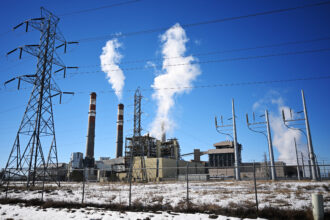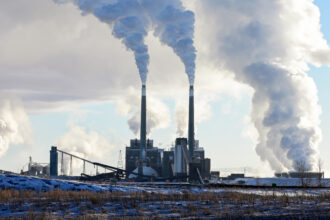


President Donald Trump plans to announce an executive order on Wednesday directing the U.S. Department of Defense to buy electricity from coal-fired power plants.
The order, first reported by The Wall Street Journal and confirmed by a White House official, comes as the administration plans to repeal the endangerment finding, a landmark climate ruling that determined greenhouse gases pose a threat to public health.
“President Trump will be taking the most significant deregulatory actions in history to further unleash American energy dominance and drive down costs,” White House press secretary Karoline Leavitt said in a written statement.
Environmental and security advocates blasted the order.
“It’s expensive, it’s outdated, and it just puts us at risk,” said Erin Sikorsky,
director of the Center for Climate & Security at The Council on Strategic Risks. “Coal is just going backwards, not forwards, for the Department of Defense.”
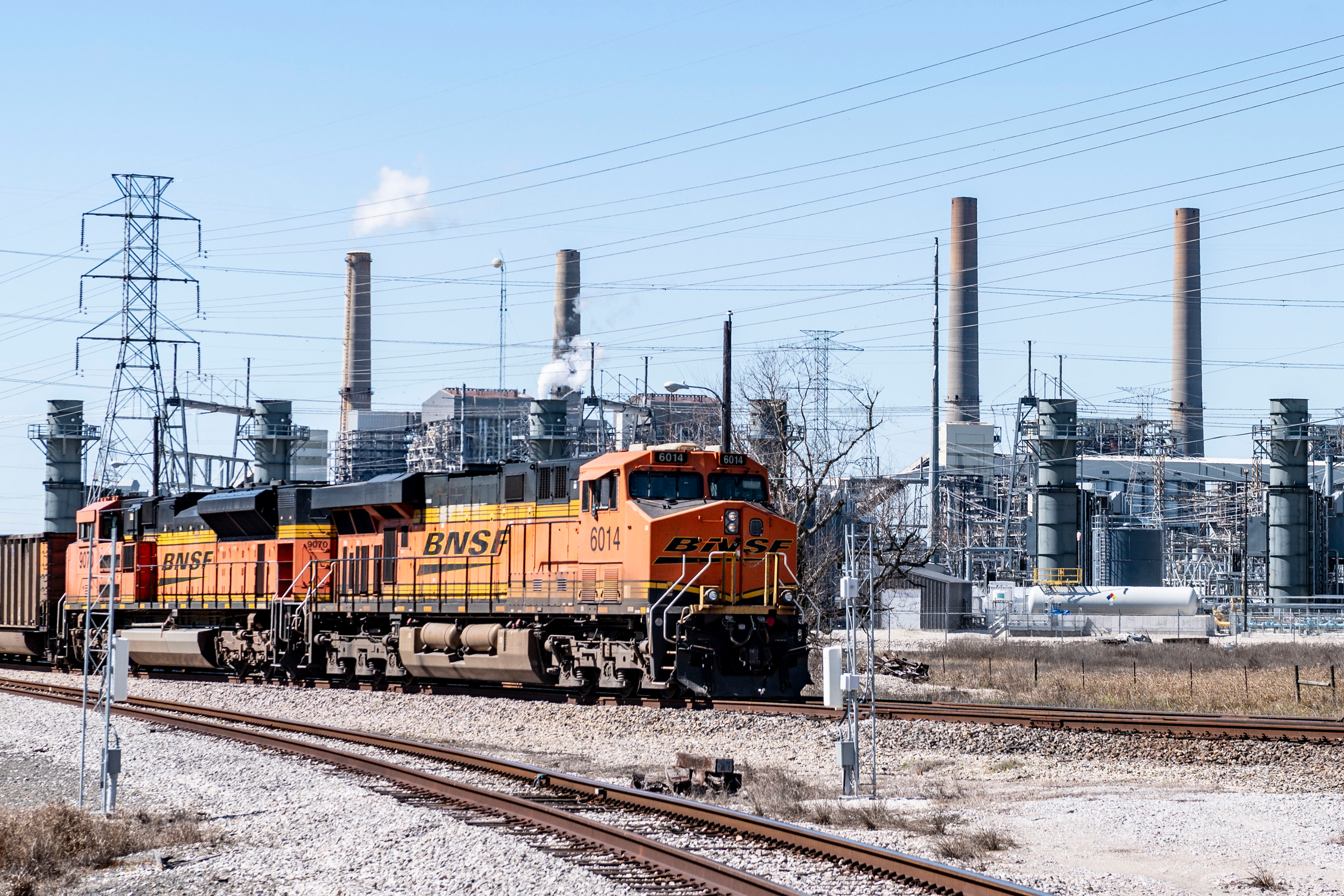
The anticipated order would direct the Defense Department to enter into agreements with coal plants to purchase electricity.
Lauren Herzer Risi, director of the Environmental Security Program at the Stimson Center, a Washington, D.C. think tank that analyzes issues related to global peace, noted that the order runs counter to the agency’s recommendations, which favor on-site microgrids with distributed energy solutions rather than centralized external power production.
Research by the National Laboratory of the Rockies, formerly the National Renewable Energy Laboratory, found that solar power combined with battery storage can enhance energy security at military bases, at “little to no added cost,” in the event of power outages.
The Department of Defense stated that it needed $5.1 billion to mitigate climate risk, according to a 2024 U.S. Government Accountability Office report. The Air Force estimated it would cost $3.6 billion to rebuild Tyndall Air Force Base in Florida after Hurricane Michael damaged it in 2018. The cost was part of the challenges the Department’s facilities face due to climate change and extreme weather, according to the GAO report.
Reinvesting in fossil fuels is an investment in climate change that further destabilizes Defense Department facilities, Risi said.
The Defense Department and U.S. Department of Energy are now working to identify which facilities and coal plants will be affected by the executive order. Separately, the administration will award funding to five coal plants in West Virginia, Ohio, North Carolina and Kentucky to recommission and upgrade the facilities, the White House confirmed.
In addition, Trump will receive the inaugural “Undisputed Champion of Coal” award on Wednesday from the Washington Coal Club, a pro-coal group with ties to the fossil fuel industry, an individual familiar with the organization said. The award will recognize the administration’s broad support of the coal industry, the individual said.
Coal power use increased slightly in 2025, according to the U.S. Department of Energy, due in part to rising costs of natural gas, as solar power continued to climb.
Sikorsky said increased reliance on coal power would put the U.S. at a strategic disadvantage by hindering investment in clean energy technologies that competitors like China are prioritizing.
China’s coal-fired power generation decreased 1.9 percent in 2025 as new solar and wind installations exceeded power demand growth, according to a report released Tuesday by Wood Mackenzie, a research and consulting firm.
Solar power is expected to increasingly dominate power production as costs continue to decline, according to the International Energy Agency. Returning to coal is a step backwards, Risi said.
“It’s going to be expensive and require manpower,” Risi said. “And ultimately it’s short-sighted, because it won’t last.”
About This Story
Perhaps you noticed: This story, like all the news we publish, is free to read. That’s because Inside Climate News is a 501c3 nonprofit organization. We do not charge a subscription fee, lock our news behind a paywall, or clutter our website with ads. We make our news on climate and the environment freely available to you and anyone who wants it.
That’s not all. We also share our news for free with scores of other media organizations around the country. Many of them can’t afford to do environmental journalism of their own. We’ve built bureaus from coast to coast to report local stories, collaborate with local newsrooms and co-publish articles so that this vital work is shared as widely as possible.
Two of us launched ICN in 2007. Six years later we earned a Pulitzer Prize for National Reporting, and now we run the oldest and largest dedicated climate newsroom in the nation. We tell the story in all its complexity. We hold polluters accountable. We expose environmental injustice. We debunk misinformation. We scrutinize solutions and inspire action.
Donations from readers like you fund every aspect of what we do. If you don’t already, will you support our ongoing work, our reporting on the biggest crisis facing our planet, and help us reach even more readers in more places?
Please take a moment to make a tax-deductible donation. Every one of them makes a difference.
Thank you,

Phil McKenna
Reporter, Boston
Phil McKenna is a Boston-based reporter for Inside Climate News. Before joining ICN in 2016, he was a freelance writer covering energy and the environment for publications including The New York Times, Smithsonian, Audubon and WIRED. Uprising, a story he wrote about gas leaks under U.S. cities, won the AAAS Kavli Science Journalism Award and the 2014 NASW Science in Society Award. Phil has a master’s degree in science writing from the Massachusetts Institute of Technology and was an Environmental Journalism Fellow at Middlebury College.