

A Wake County Superior Court judge has ruled against the cities of Asheboro, Greensboro and Reidsville, concluding that state environmental regulators can legally limit the amount of 1,4-dioxane, a likely carcinogen, that they discharge into the drinking water supply.
Judge Graham Shirley, a Republican, wrote in his opinion that the North Carolina Department of Environmental Quality followed state and federal protocols in creating the limits in the cities’ wastewater, and did so “for the purpose of protecting the health and well-being of North Carolinians.“
Attorneys for the cities filed a motion to stay the judge’s order while they appeal.
DEQ could not be reached for comment.
The decision reverses a previous ruling by Administrative Law Judge Donald van der Vaart, who in 2024 found in favor of the cities after they formally contested discharge permit limits set by DEQ.
Van der Vaart served as a DEQ secretary under Republican Gov. Pat McCrory, and often espoused anti-regulatory views.
Van der Vaart determined DEQ had “acted arbitrarily and capriciously” in “improperly calculating” the 1,4-dioxane limits and had not gone through the proper rulemaking process to set them. The ruling nullified the 1,4-dioxane permit limits.
Shirley disagreed. “Compliance with regulations and a desire to maintain or improve public health cannot be said to be a bad faith decision,” he wrote.
The U.S. Environmental Protection Agency has not established legally enforceable maximums for the chemical in drinking water, but has issued a health advisory goal of 0.35 parts per billion; DEQ based the cities’ discharge limits on EPA guidance.
Often used in solvents, degreasers and some consumer products, 1,4-dioxane is a likely carcinogen, according to the EPA. Long-term exposure can harm the liver and kidneys.
Industries that produce 1,4-dioxane, either as a compound or as a byproduct of manufacturing, discharge it in wastewater that they send to municipal treatment plants. Since traditional treatment technologies can’t remove 1,4-dioxane, it passes through the plants, then enters rivers and streams, many of which are drinking water supplies.
For years the cities named in the lawsuit discharged high concentrations of the compound. Greensboro sharply reduced the amount in its discharge as part of a 2020 consent order with the state, stemming from litigation filed by the nonprofit Haw River Assembly.
Reidsville did so after its industrial customers reduced or replaced the compound in their manufacturing processes.
However, Asheboro has continued to discharge 1,4-dioxane at levels as high as 3,520 parts per billion, in January 2025, state records show. That is 160 times greater than DEQ’s original permit limit of 22 ppb, which was based on several scientific calculations to protect the safety of the drinking water in cities and towns downstream.
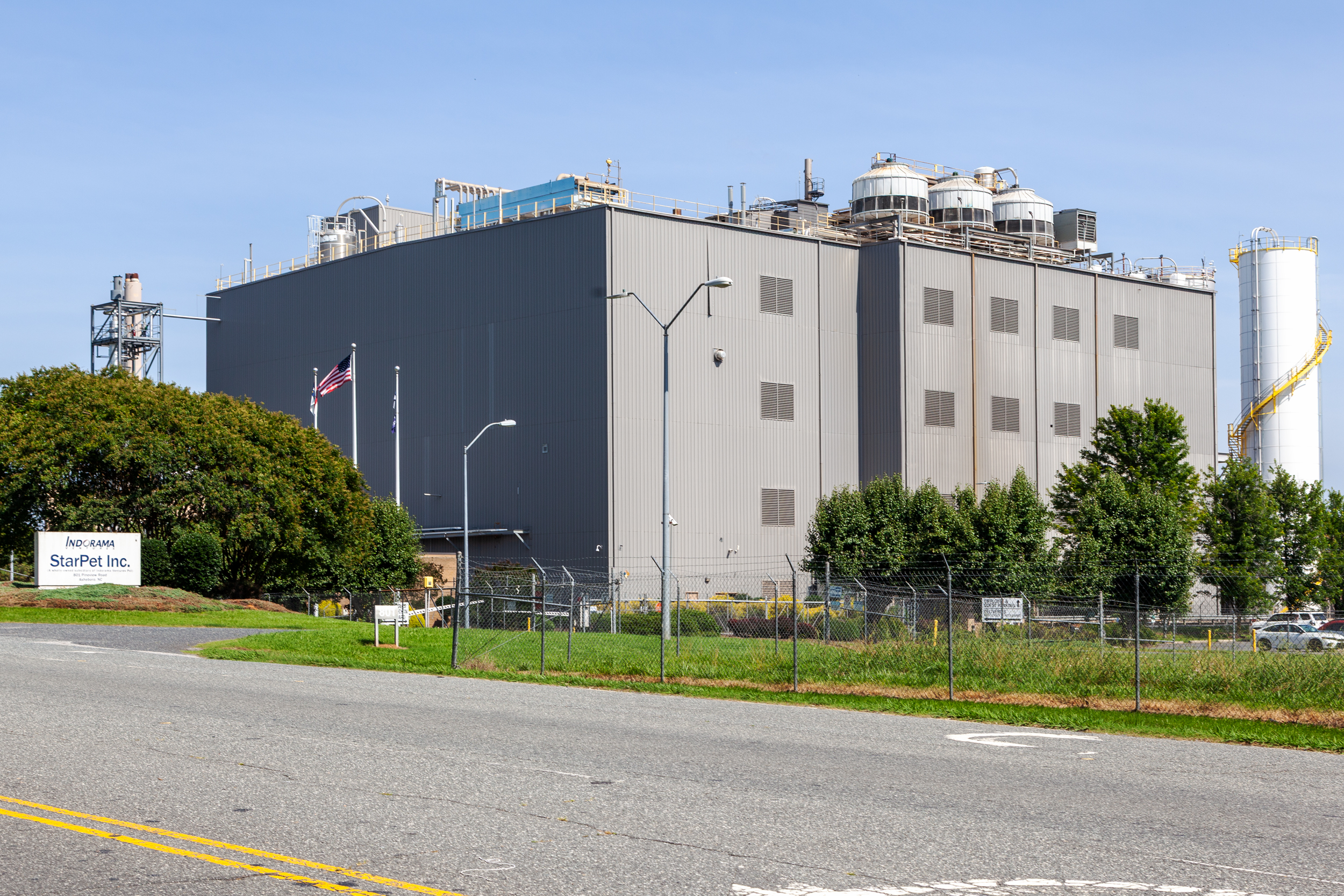
The chemical originates at StarPet, a plastics manufacturer, and the Great Oak Landfill, which discharge or ship 1,4-dioxane to the city’s wastewater treatment plant.
As recently as last November, Asheboro discharged wastewater containing 651 ppb of the compound, 30 times greater than the original permit limit.
In the final days of President Joe Biden’s administration, the EPA formally objected to Van der Vaart’s removal of the 1,4-dioxane limits from the permit. The agency held a public hearing last fall in Asheboro to receive comments on the objection but has yet to announce a finding.
Stephanie Stephens is the riverkeeper for the Deep River, which receives contaminated discharge from the cities upstream. She spoke in favor of the limits at the EPA public hearing.
Stephens said on Wednesday she was relieved at the Wake judge’s ruling. “The original pollution discharge permit issued by NCDEQ was absolutely right to limit 1,4 dioxane discharge levels,” Stephens said. “This is a victory and I am happy to hear it.”
The Southern Environmental Law Center had filed a brief in Wake County court in support of DEQ.
“The court confirmed that the law not only allows DEQ to protect our families from toxic 1,4-dioxane in our drinking water—it requires it,” said SELC Senior Attorney Jean Zhuang in a prepared statement.
“Asheboro, Greensboro, and Reidsville have spent years arguing for downstream communities to shoulder the health and monetary costs of the cities’ pollution. The Wake County Superior Court saw through the cities’ arguments and restored a key tool that can be used to protect families, communities, and drinking water utilities downstream.”
SELC is representing the Haw River Assembly and Cape Fear River Watch in a separate lawsuit against the cities over their 1,4-dioxane discharges. An SELC spokesperson said their litigation would continue.
The Wake judge’s ruling coincides with the opening of a 60-day public comment period on the controversial 1,4-dioxane minimization rules that DEQ has proposed under the EMC’s direction.
The rules would require industrial dischargers and wastewater treatment plants to conduct quarterly sampling for the compound.
At the direction of DEQ, industrial dischargers with consistent levels of 1,4-dioxane at levels above the lowest reporting concentration—1 part per billion—would have to develop a minimization plan to reduce or eliminate the compound in the receiving stream.
The proposal has received pushback from environmental advocates because it does not contain legally enforceable surface water or drinking water standards. A public hearing will likely be held, but it has not yet been announced.
EMC Chairman J.D. Solomon told Inside Climate News the Wake judge’s ruling would not affect the draft rules or the public comment period.
“Judicial rulings and information provided by EPA will certainly be part of the future rule making,” Solomon said. “For now, the EMC is focused on getting public comments on the monitoring and minimization plans, which is a necessary part of any rulemaking we do.”
About This Story
Perhaps you noticed: This story, like all the news we publish, is free to read. That’s because Inside Climate News is a 501c3 nonprofit organization. We do not charge a subscription fee, lock our news behind a paywall, or clutter our website with ads. We make our news on climate and the environment freely available to you and anyone who wants it.
That’s not all. We also share our news for free with scores of other media organizations around the country. Many of them can’t afford to do environmental journalism of their own. We’ve built bureaus from coast to coast to report local stories, collaborate with local newsrooms and co-publish articles so that this vital work is shared as widely as possible.
Two of us launched ICN in 2007. Six years later we earned a Pulitzer Prize for National Reporting, and now we run the oldest and largest dedicated climate newsroom in the nation. We tell the story in all its complexity. We hold polluters accountable. We expose environmental injustice. We debunk misinformation. We scrutinize solutions and inspire action.
Donations from readers like you fund every aspect of what we do. If you don’t already, will you support our ongoing work, our reporting on the biggest crisis facing our planet, and help us reach even more readers in more places?
Please take a moment to make a tax-deductible donation. Every one of them makes a difference.
Thank you,

Lisa Sorg
Reporter, North Carolina
Lisa Sorg is the North Carolina reporter for Inside Climate News. A journalist for 30 years, Sorg covers energy, climate environment and agriculture, as well as the social justice impacts of pollution and corporate malfeasance.
She has won dozens of awards for her news, public service and investigative reporting. In 2022, she received the Stokes Award from the National Press Foundation for her two-part story about the environmental damage from a former missile plant on a Black and Latinx neighborhood in Burlington. Sorg was previously an environmental investigative reporter at NC Newsline, a nonprofit media outlet based in Raleigh. She has also worked at alt-weeklies, dailies and magazines. Originally from rural Indiana, she lives in Durham, N.C.