

RICHMOND, Va.—Three climate and justice nonprofits filed a notice before the Virginia Supreme Court on Tuesday that they would appeal a state regulator’s approval of a new Dominion Energy natural gas plant in Chesterfield County.
Filed by Appalachian Voices, Mothers Out Front and the Chesterfield County Branch of the NAACP, the appeal would be the first of its kind under the Virginia Environmental Justice Act, a 2020 law seeking to prevent disproportionate harm to communities of color and low-income areas that have endured decades of fossil fuel pollution.
The appeal, to be filed on the groups’ behalf by the Southern Environmental Law Center, would also be the first under the Virginia Clean Economy Act, another 2020 law seeking to decarbonize Virginia’s grid by 2045, unless there’s a threat to reliability of the power supply.
“We think it’s significant,” said Emma Clancy, a staff attorney at the SELC. “There’s also a lot of new, really important requirements that were enacted in 2020, under the VCEA and the Virginia Environmental Justice Act, that should be factoring into the commission’s final determination.”
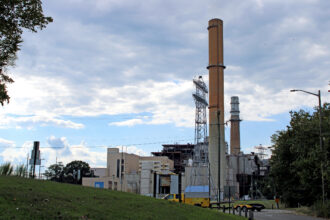
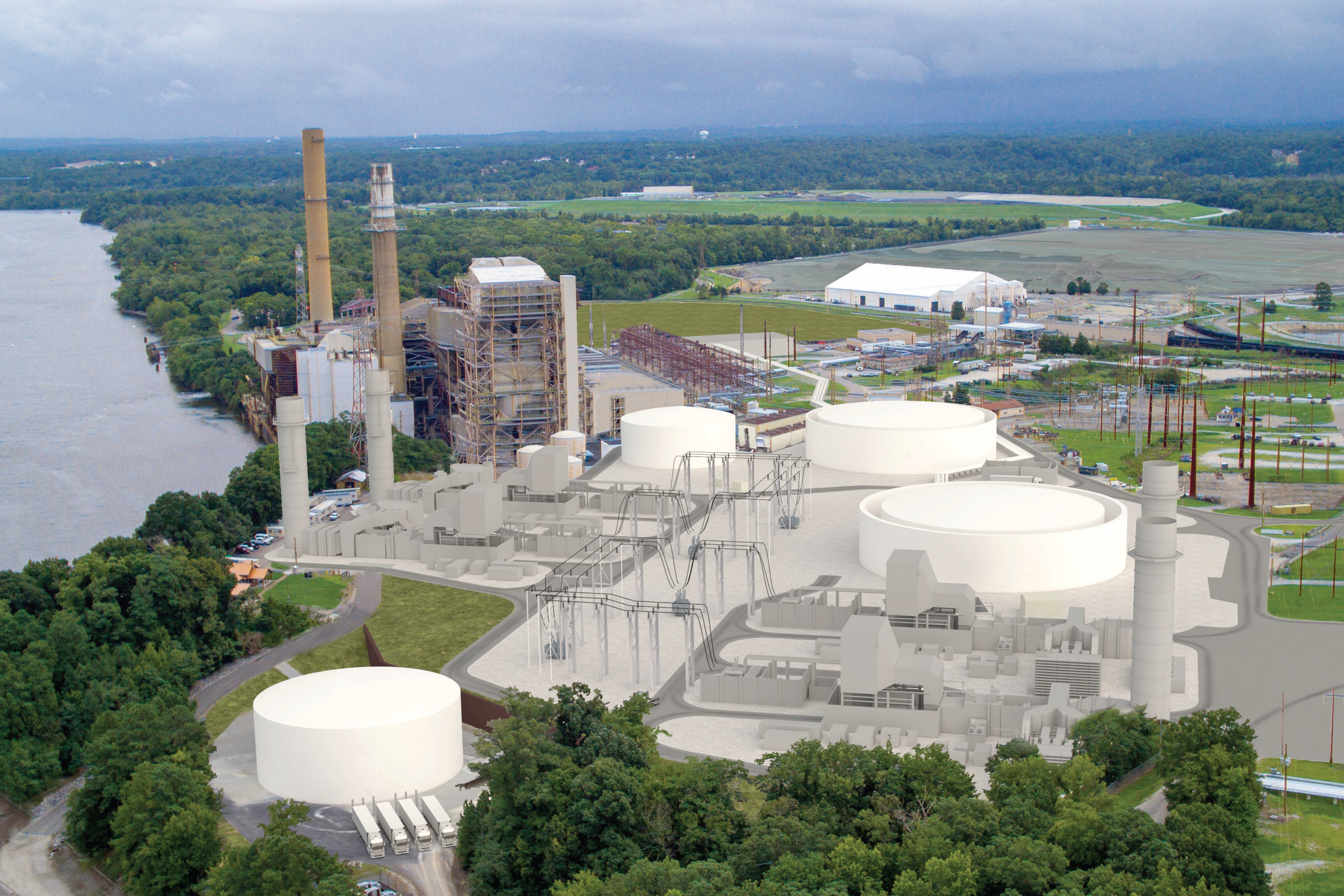
In November, the State Corporation Commission, which regulates utilities in Virginia, approved Dominion’s request to build the $1.47 billion, 944-megawatt gas plant to meet Virginia’s growing electricity needs, which are predominantly coming from data centers. Dominion wants to have the Chesterfield Energy Reliability Center’s four natural gas turbines come online in 2029. The new plant would be located in the footprint of one of the Chesterfield Power Station’s old coal units, which was retired in 2023.
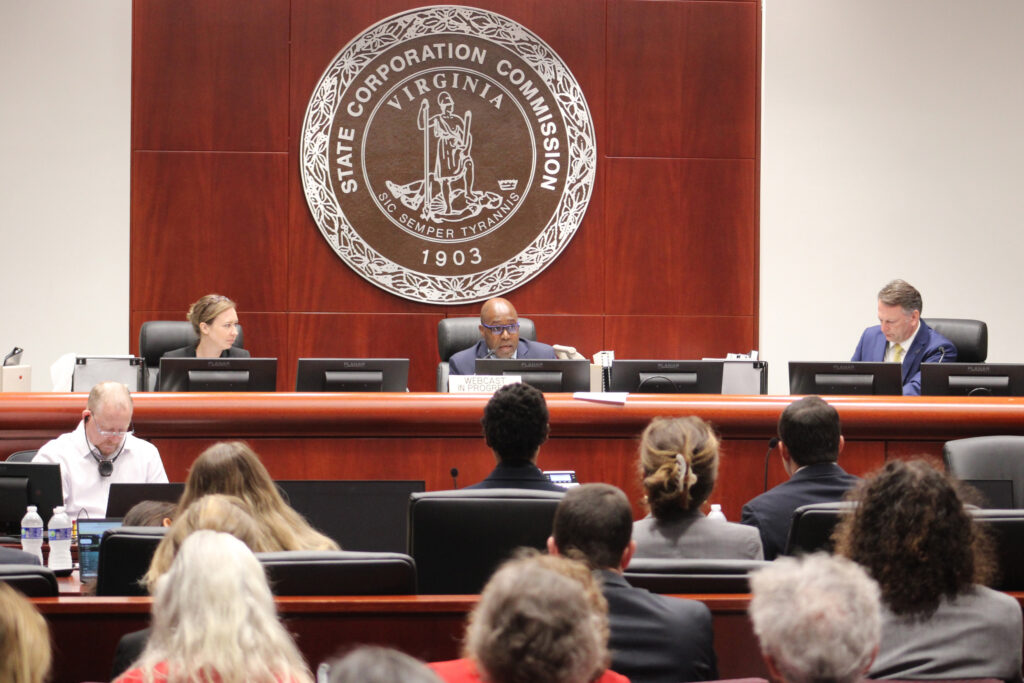
Earlier this year, the opposition groups filed a motion for reconsideration of the approval before the SCC. The groups cited flaws with the commission’s determination under the VEJA and the VCEA, but the commission upheld its decision, which prompted the impending appeal.
The issue under the VEJA, Clancy said, is that neither Dominion nor the SCC considered the brunt of the pollution the Chesterfield community would face compared to other areas of the state. Dominion had argued that putting the gas plants at the former coal plant site meant it could quickly and safely connect to the grid by relying on existing infrastructure.
Clancy pointed to an analysis filed in the case by Chris C. Lim, an assistant professor of environmental health sciences at the University of Arizona, that found the plant could lead to roughly seven premature deaths and nearly 15,000 illnesses within a 50-kilometer radius per year. The harms would be more concentrated southeast of the plant, Lim found, meaning there would be “disproportionate health burden on specific neighborhoods while affecting the broader regional population at lower intensity levels.”
“If you’re not even looking at that community, but just the brownfield site, it’s always going to make sense on a brownfield,” Clancy said. “It’s not the right decision, necessarily, when you consider the human impact.”
The issue under the VCEA analysis, Clancy said, is that the threat to grid reliability hadn’t been sufficiently proven, in part because demands from data centers can be too speculative. Companies will file applications to build and hook up to the grid in multiple locations in search of the best deal. When Ohio regulators approved ratepayer protections similar to what Virginia recently approved for Dominion’s customers, demand projections in that state dropped from 30 gigawatts to 13 gigawatts.
Clancy also said that Dominion had put forward a request for proposals that critics say limited renewables and battery storage as viable options. As a result, the proposal favored Dominion’s self-build option, which comes with a 9.7 percent profit margin the utility can also recover from ratepayers.
Under the VCEA, Dominion is only allowed to recover the costs for the new gas plant through a rate adjustment clause, or rider, if the utility has met energy efficiency requirements. That hadn’t happened, so the costs should instead be recovered through a request to increase the base rates, Clancy said. That type of case is less guaranteed for a utility than a rider.
“When you look at the sort of past cases, the SCC gets substantial deference from the Supreme Court on factual issues,” Clancy said. “They get less deference, though, on legal issues.”
Dominion did not respond to a request for comment. The SCC did not comment. Recent cases decided in its favor include a transmission line and a solar project.
The SELC has 120 days from Tuesday’s filing to submit its full appeal. The group is also suing the Virginia Department of Environmental Quality over the air permit issued for the gas plant. That case is being heard in Richmond Circuit Court.
About This Story
Perhaps you noticed: This story, like all the news we publish, is free to read. That’s because Inside Climate News is a 501c3 nonprofit organization. We do not charge a subscription fee, lock our news behind a paywall, or clutter our website with ads. We make our news on climate and the environment freely available to you and anyone who wants it.
That’s not all. We also share our news for free with scores of other media organizations around the country. Many of them can’t afford to do environmental journalism of their own. We’ve built bureaus from coast to coast to report local stories, collaborate with local newsrooms and co-publish articles so that this vital work is shared as widely as possible.
Two of us launched ICN in 2007. Six years later we earned a Pulitzer Prize for National Reporting, and now we run the oldest and largest dedicated climate newsroom in the nation. We tell the story in all its complexity. We hold polluters accountable. We expose environmental injustice. We debunk misinformation. We scrutinize solutions and inspire action.
Donations from readers like you fund every aspect of what we do. If you don’t already, will you support our ongoing work, our reporting on the biggest crisis facing our planet, and help us reach even more readers in more places?
Please take a moment to make a tax-deductible donation. Every one of them makes a difference.
Thank you,

Charles Paullin
Charles Paullin is a Richmond, Virginia-based reporter focusing on energy and environment issues. He’s won several awards for his previous work covering state policy with the Virginia Mercury and local news with the Northern Virginia Daily in the Northern Shenandoah Valley. His first reporting gig was with the New Britain Herald in Connecticut, a couple years after attending the University of Hartford, where he first studied sports journalism.